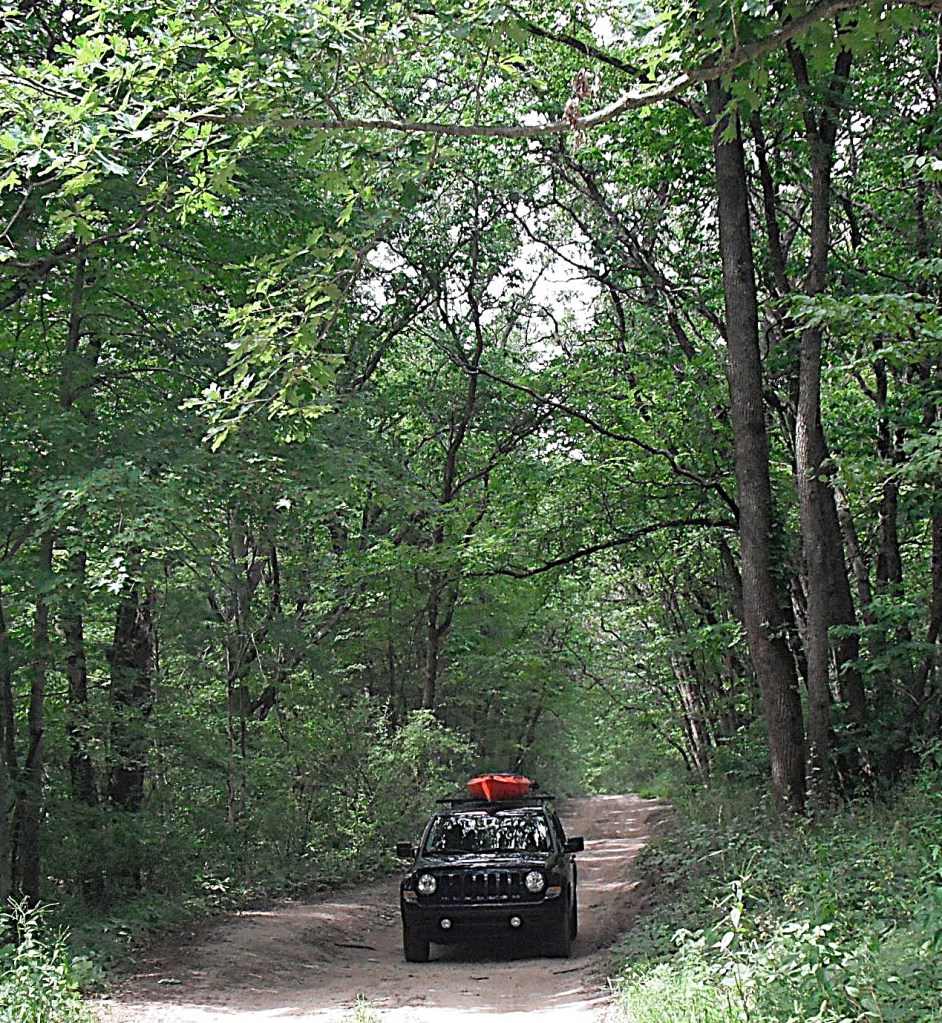
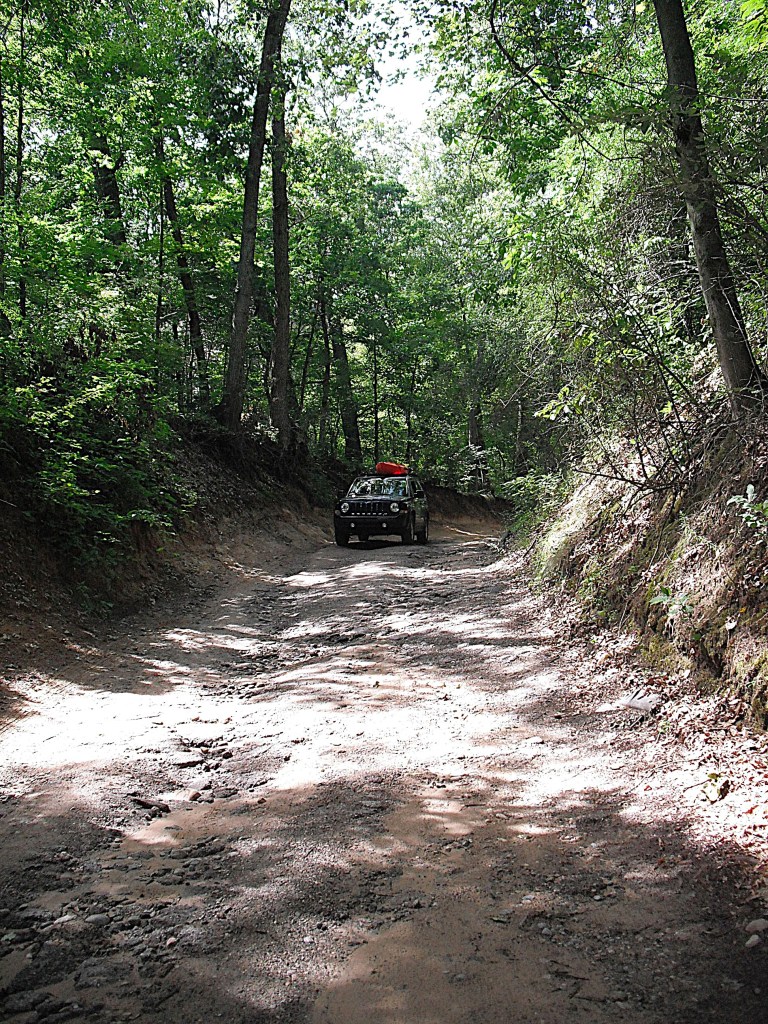
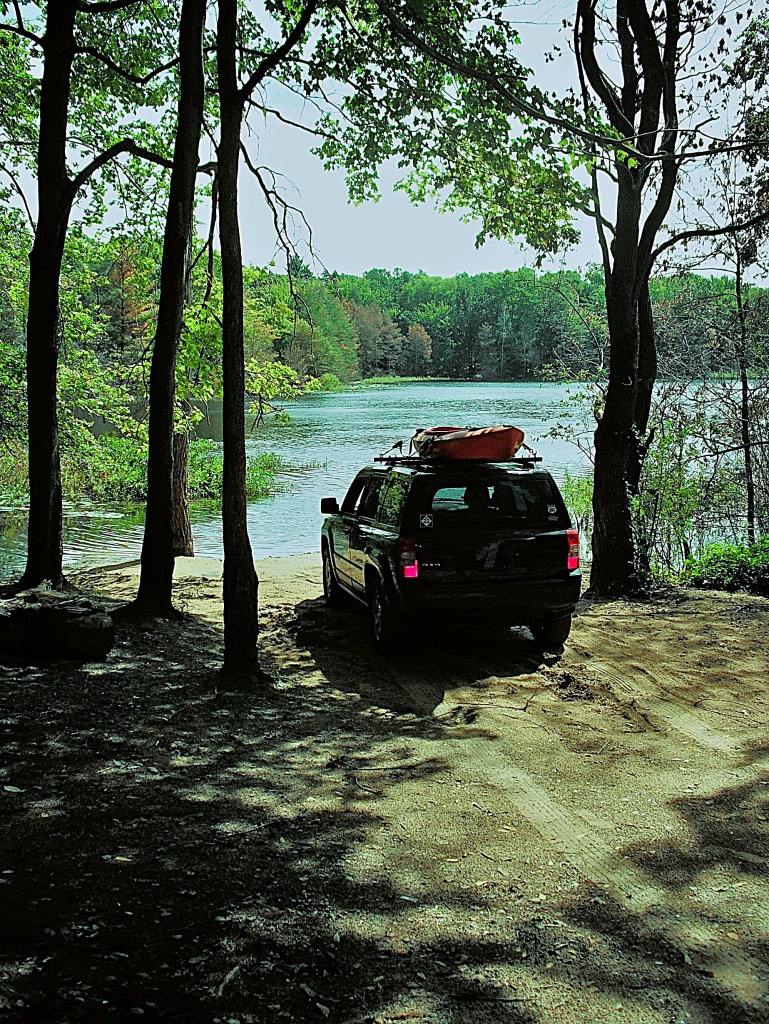
It takes some effort to get on the water at McDonald Lake. A unmaintained county road heads south from M179, just east of the Norris Road intersection. There is a house with a white fence on the corner. At first glance, the road looks like the driveway to the house, but it is a public road. It’s more like a trail than a road.
When you come to the North Country Trail kiosk on the left, there will be a McDonald Lake sign post and a side trail on the right. The side trail will take you to the lake access.
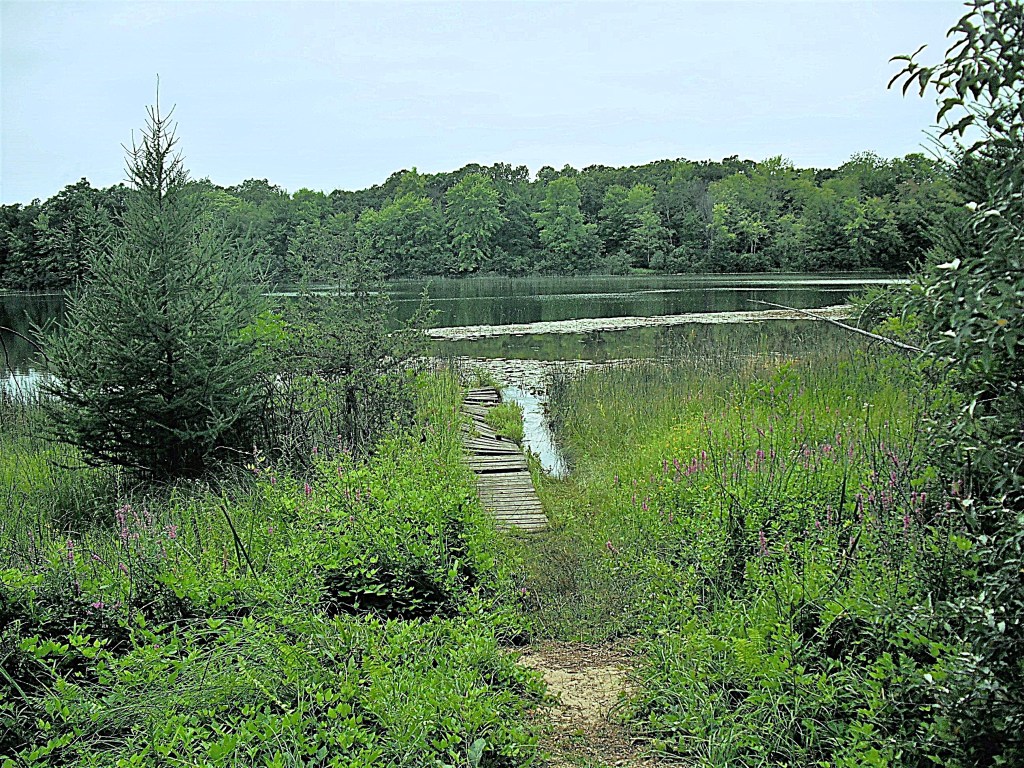
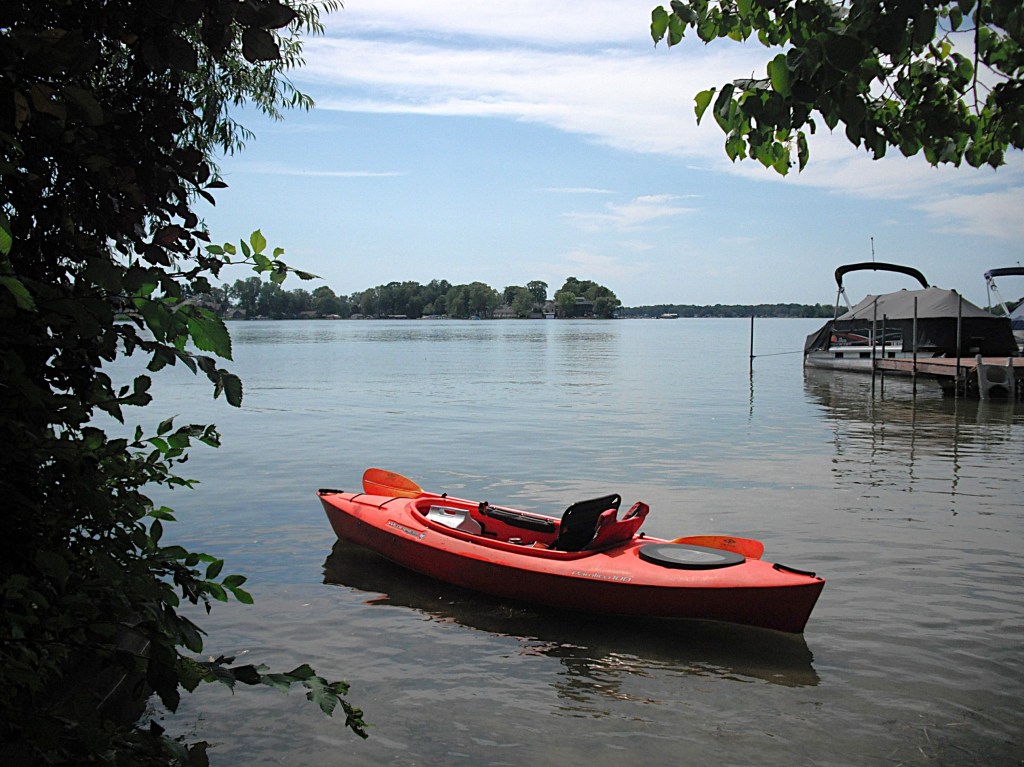
The lake is a long carry from the parking area to the shore. The footpath from the parking area goes down a big hill to the launch site. What goes down must come up. When you get to the lake, you are greeted by a rickety-looking dock, which is almost as old as I am. Several years after I wrote this, the dock was removed.
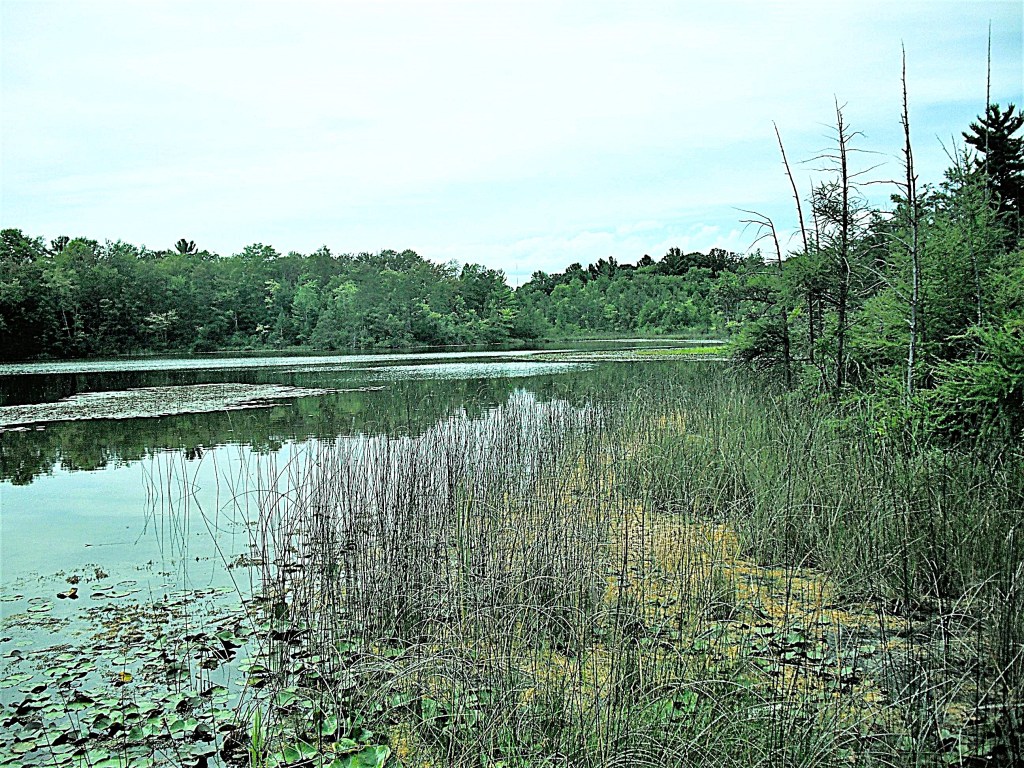
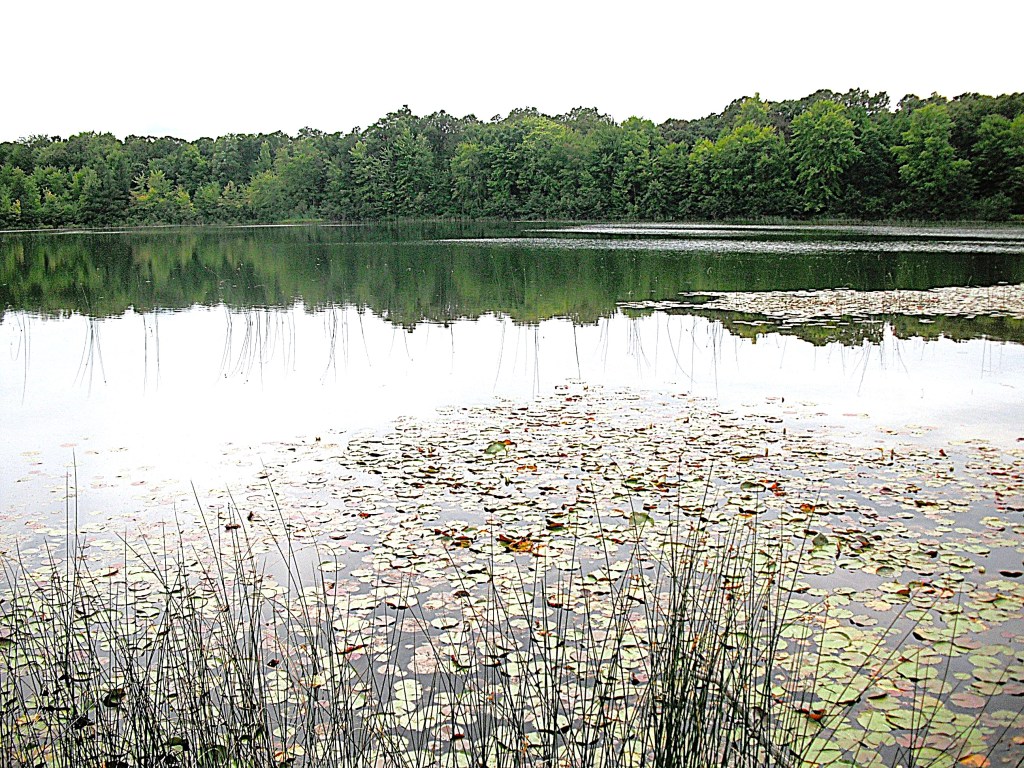
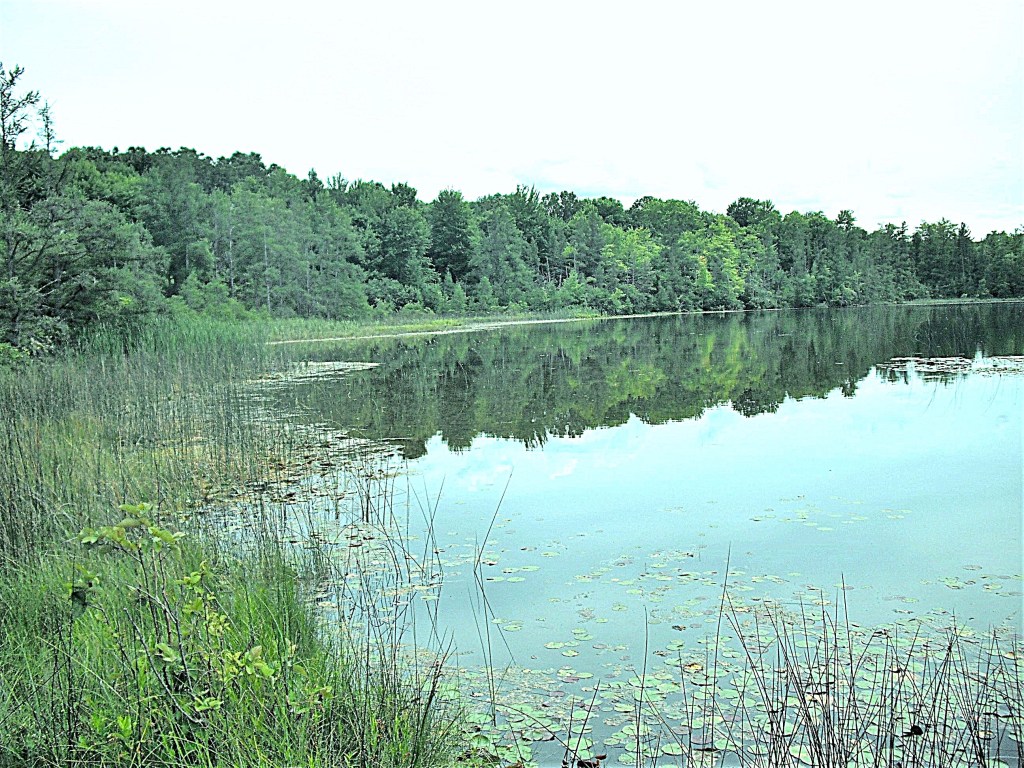
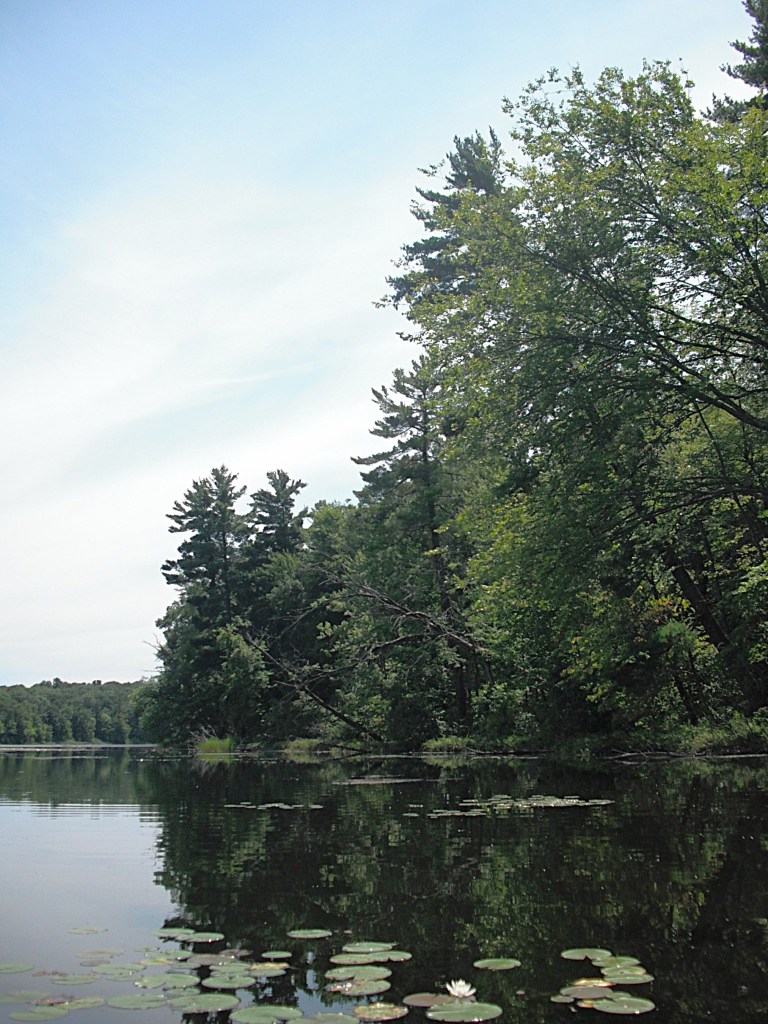
A spring flows into the lake where the dock was. The sliver of water that was alongside the dock is shallow and muddy. You may have a hard time getting away from shore. Be prepared to get muddy. Sometimes, I wonder if all the effort is worth it. When I’m finally on the lake and paddling, the scenery erases any doubt from my mind.
This urban trip is within a Kalamazoo city park called Spring Valley Park. The park is on the north side of Kalamazoo and has two entrances on Mount Olivet Road and one entrance on Brook Drive. The pond is in the center of the park and is circled by park roads. There are restrooms and a picnic area on site. The park is well kept. A tiny part of the landscape has city scenery.
Spring Valley Pond is an impoundment of Spring Valley Creek. The west part of the pond is the main basin.
The east part of the pond is a long narrow appendage of the main basin.
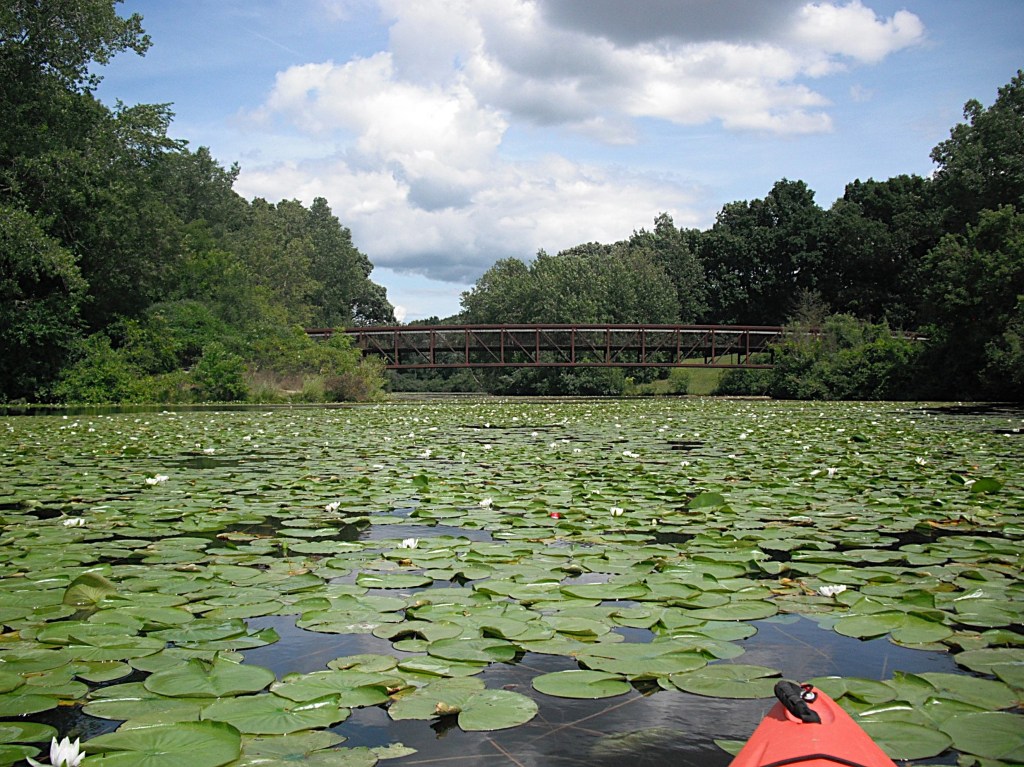
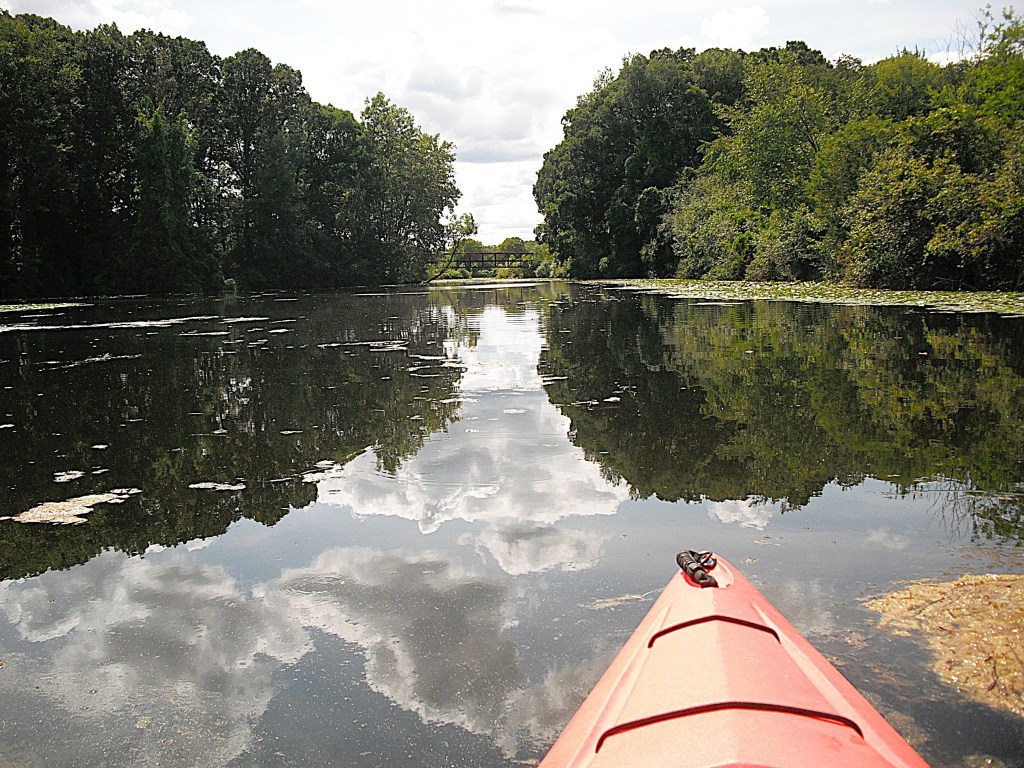
There is a pedestrian bridge at its narrowest part.
The dam is located on the west end of the main basin. Downstream from the dam, Spring Valley Creek continues on its way to the Kalamazoo River.
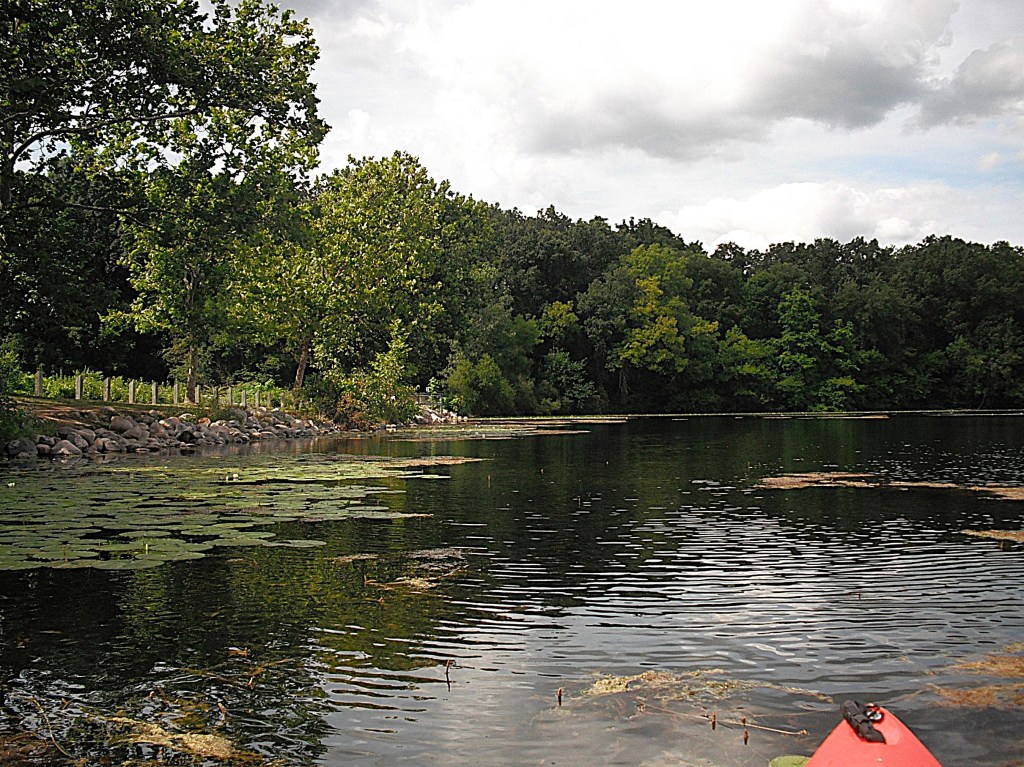
There is no formal boat launch, but there are many parking areas around the lake with water access. I used a parking area on the south end of the main basin.
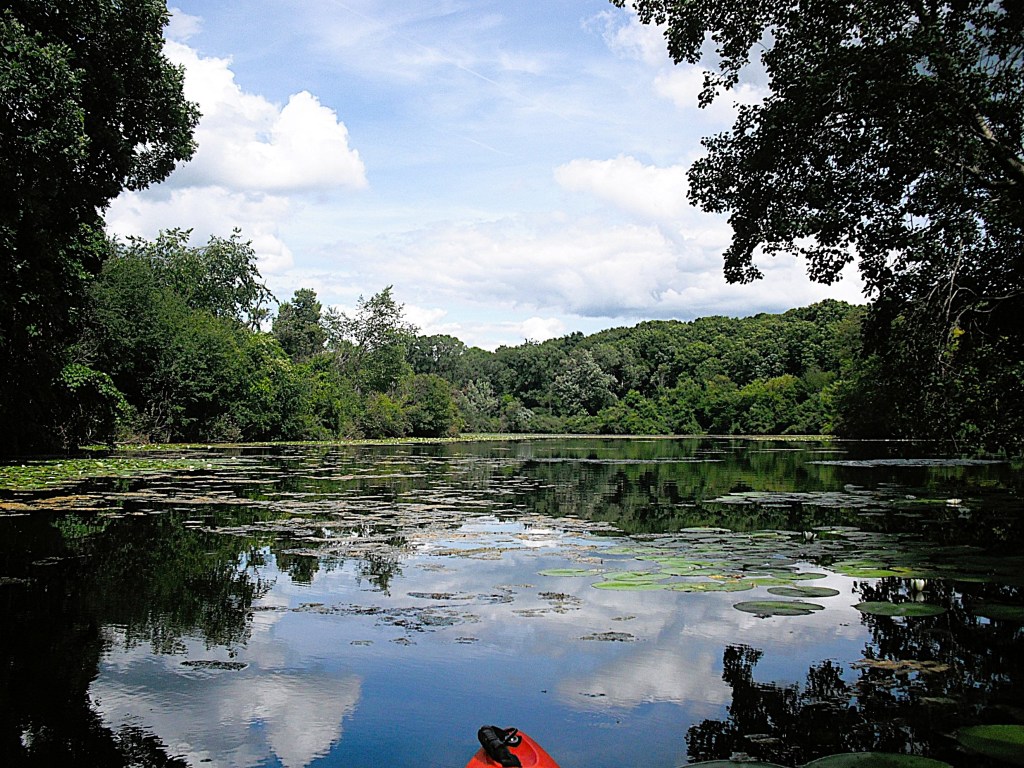
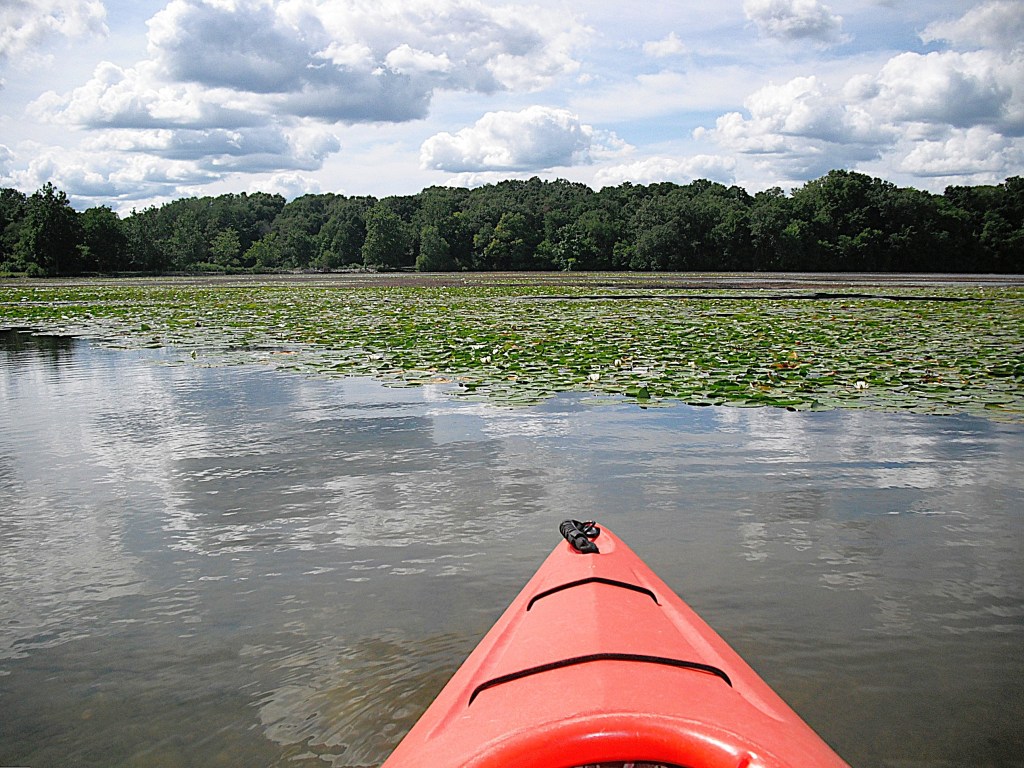
I kayaked the pond in August of 2020 and, like so many other waterways this time of year, some parts of the lake had excessive aquatic plant growth.
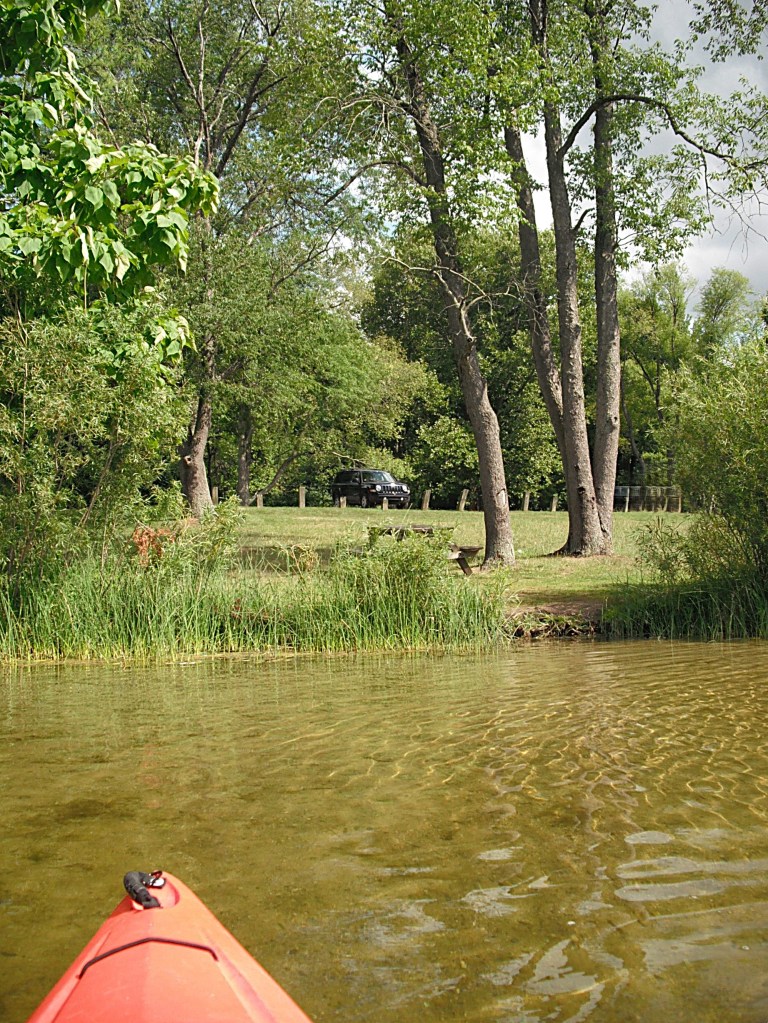
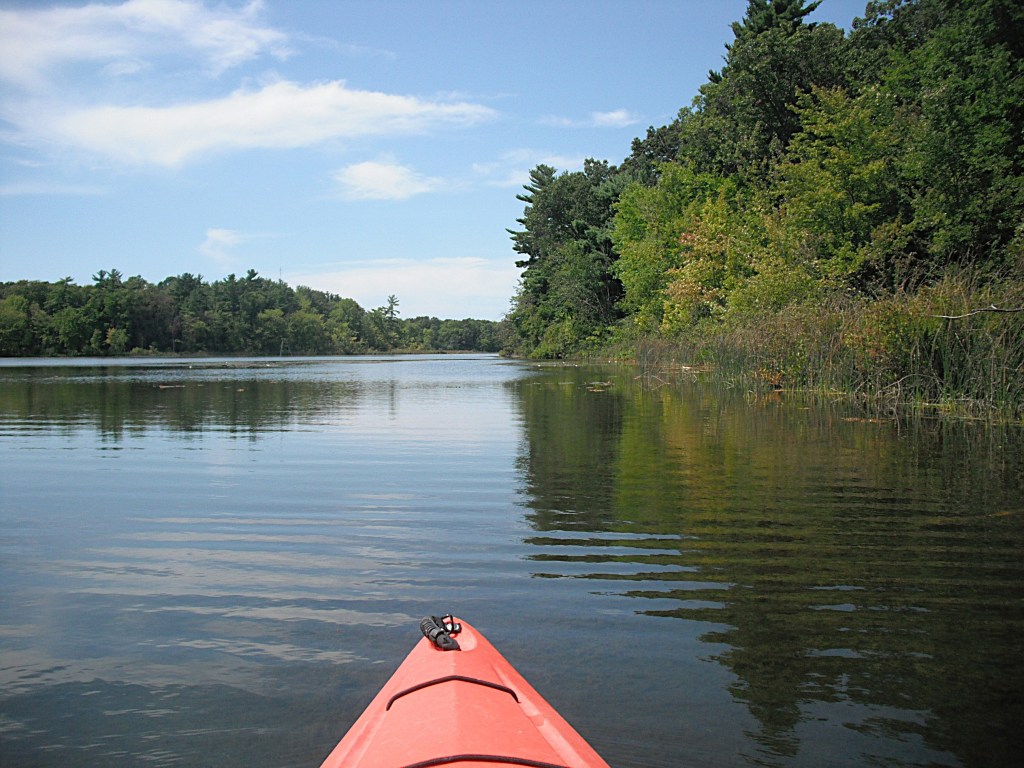
I was still able to easily paddle around the brushy shoreline.
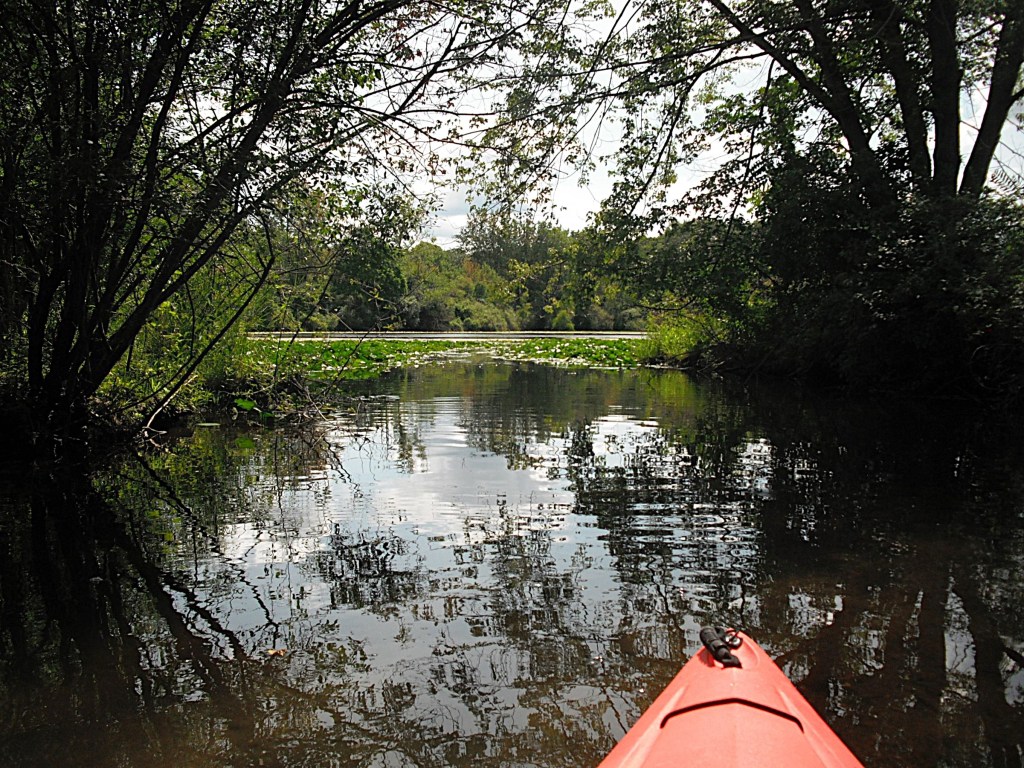
Spring Valley Creek flows into the pond at the east end of the narrow appendage.
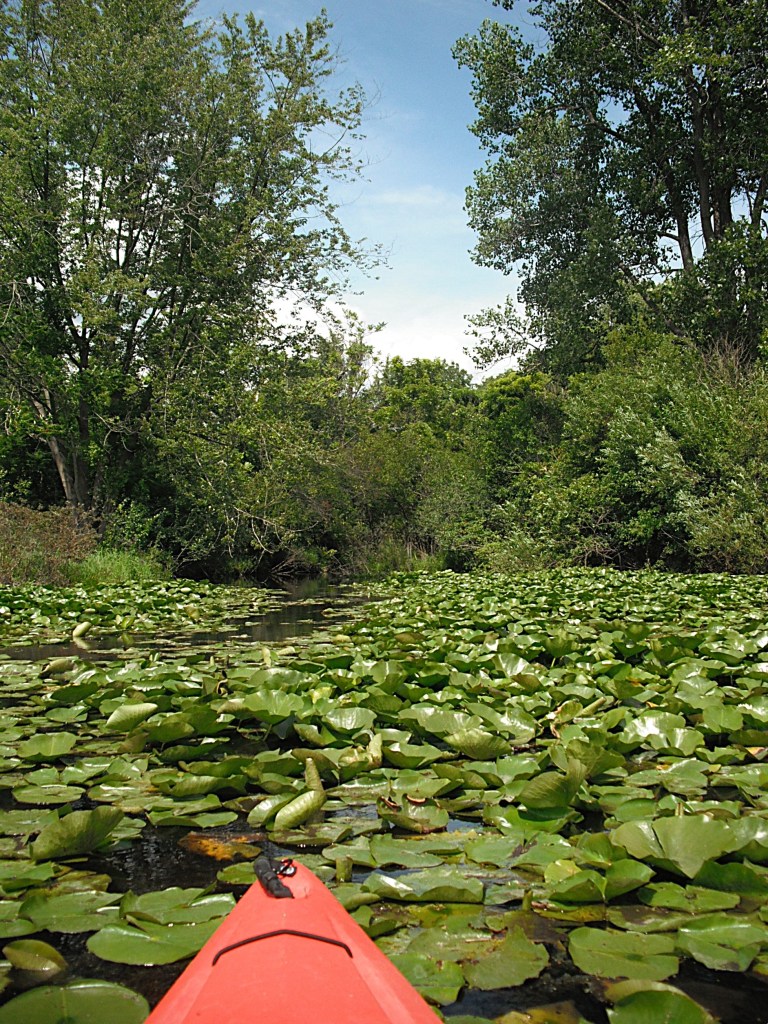
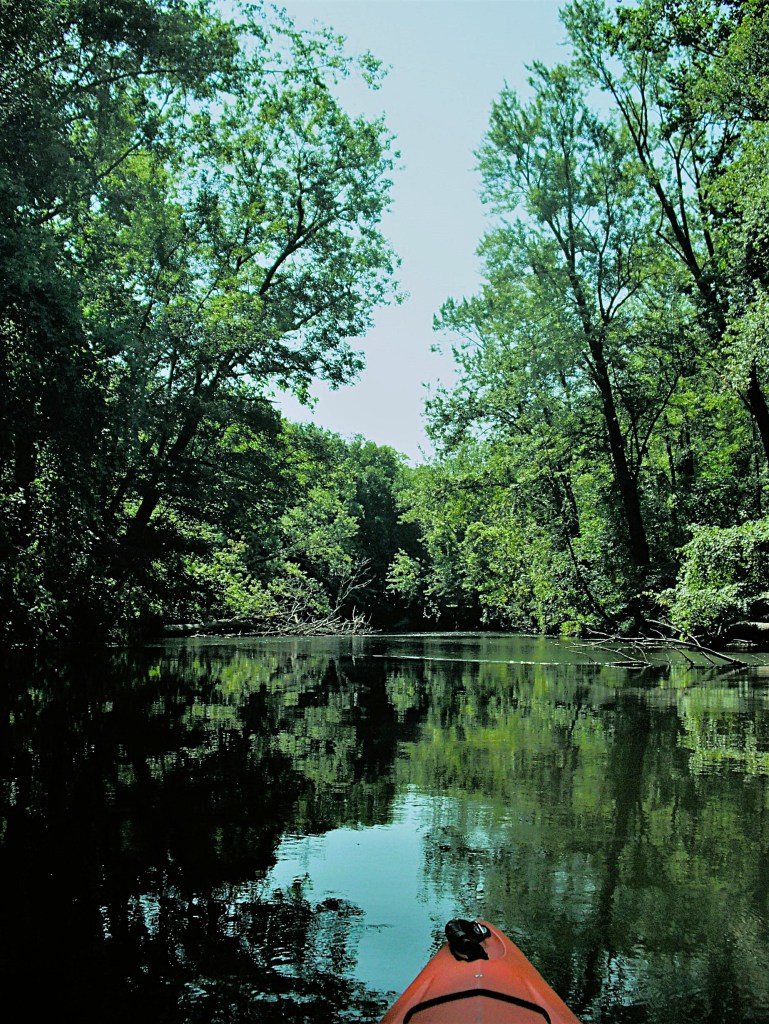
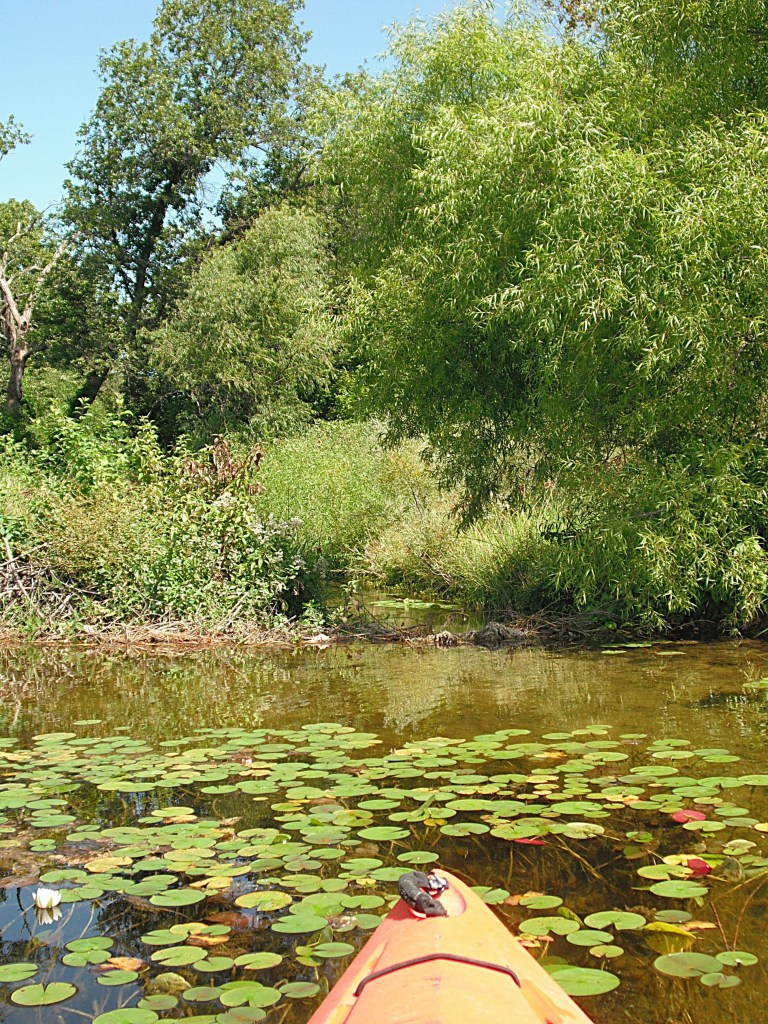
I went up the creek for a short distance before I was forced to turn around by fallen trees.
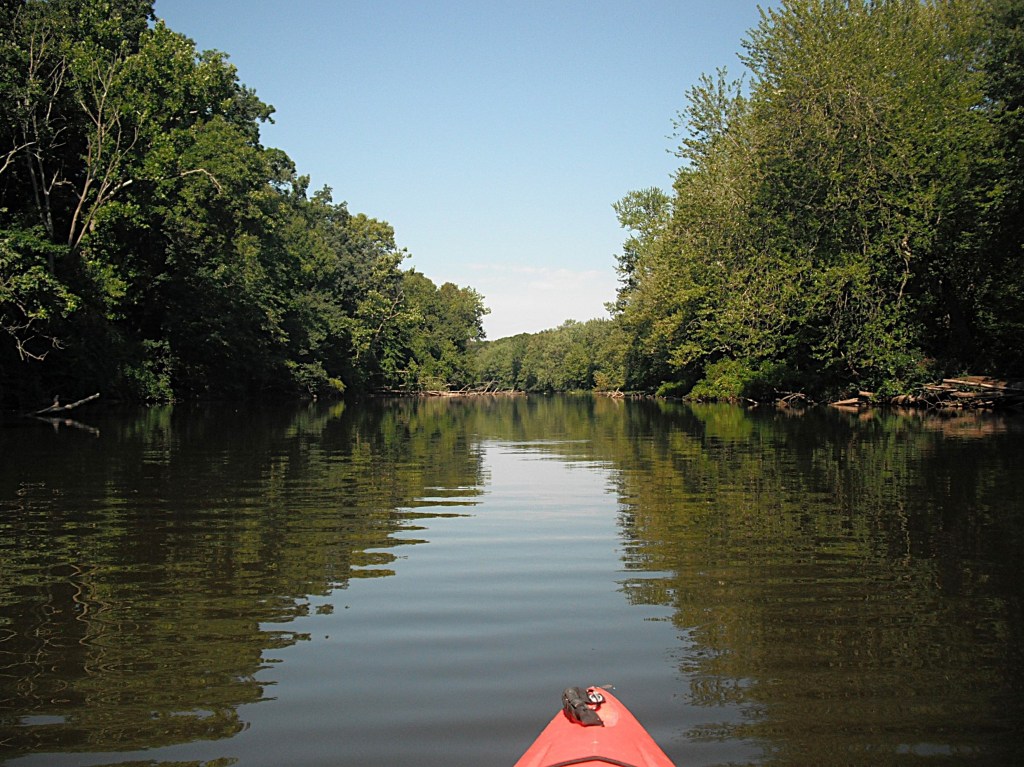
Heading down the creek, back to the lake.
I ended my trip by returning to the main basin.
If you don’t have a lot of time, but you still need your kayaking fix, then a leisure paddle around Spring Valley Pond is for you.
LEVEL PARK/OAK PARK TO FORT CUSTER STATE RECREATION AREA
The origin of this trip is in the communities of Level Park and Oak Park on the west side of the city of Battle Creek. Kalamazoo River access is at a bridge on a road that appears to have two names: Custer Drive and Clark Road. The access is on the south side of the river, on the east side of the road. A two-track trail that is between the guardrail and the woods will take you to a small parking area and a short footpath downhill to the water. A better landing is directly across the river, on the north side of the river, on the east side of the bridge. The trail to the riverbank isn’t the greatest. I recommend hauling your kayak in a truck or a SUV if you plan to use this access. You will paddle under the bridge to begin your trip.
My friend Dan, a accomplished paddler, made the trip with me.
This stretch of the river is wide with slow current and is easily paddled by kayakers of all skill levels. Almost all of the shoreline is wooded. We tried to explore around the many islands, but we were turned back by log jams, downed trees, and shallow water.
There are plenty of sandbars that invite you to take a break. We stopped for lunch and continued on with our voyage.
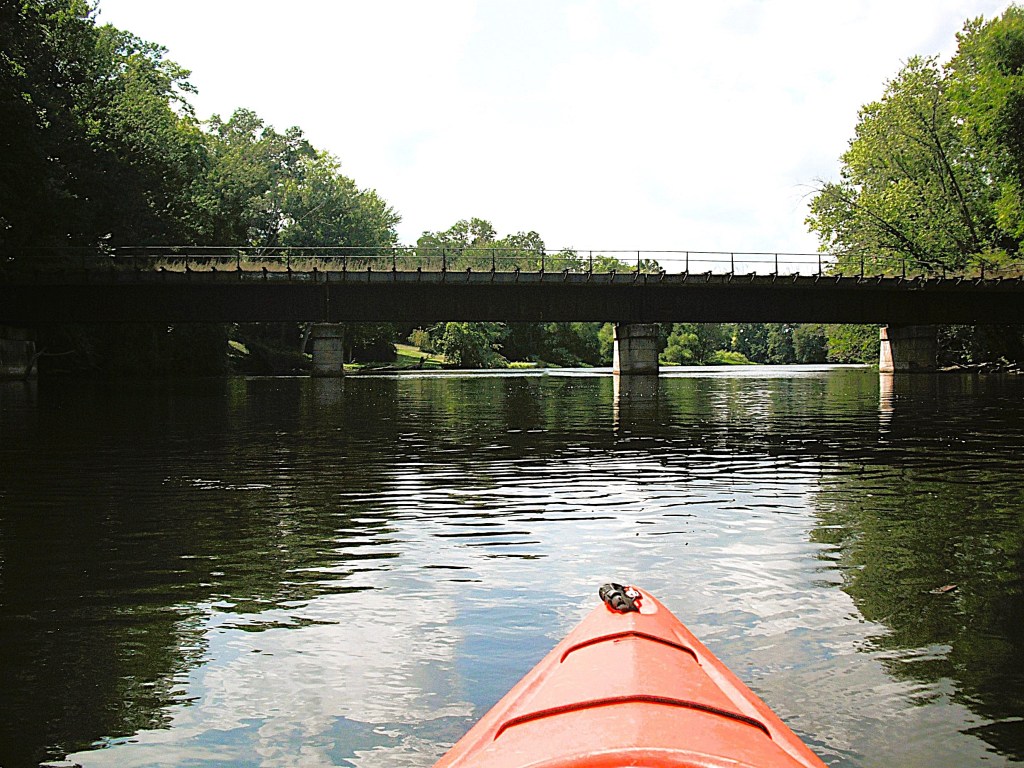
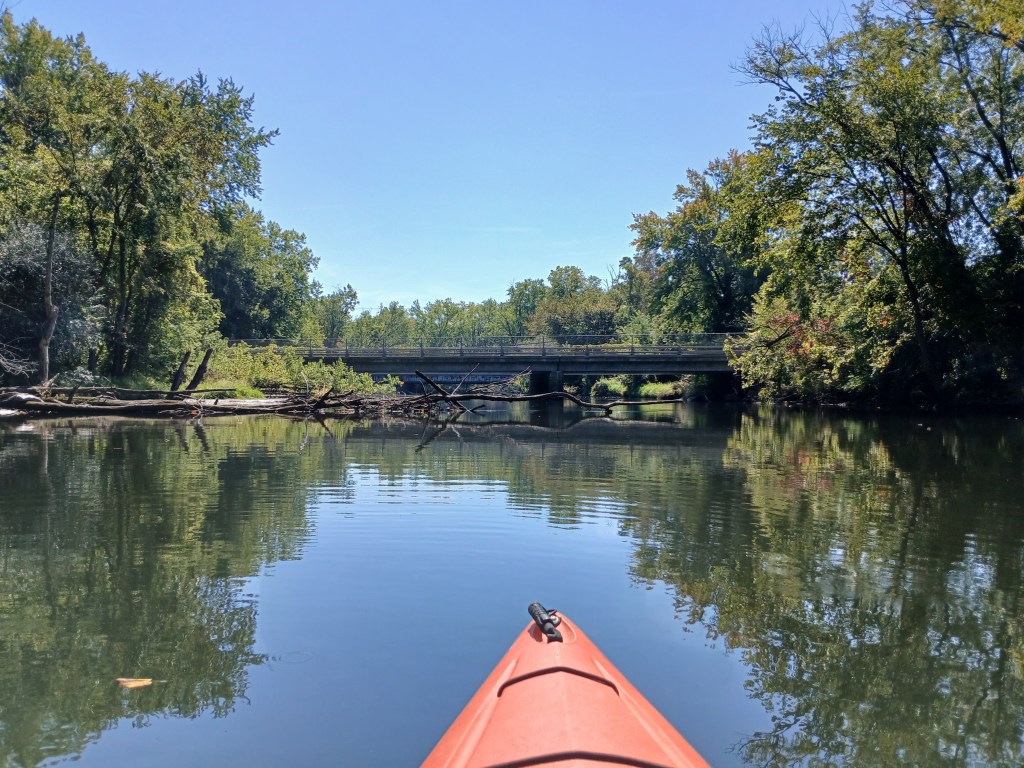
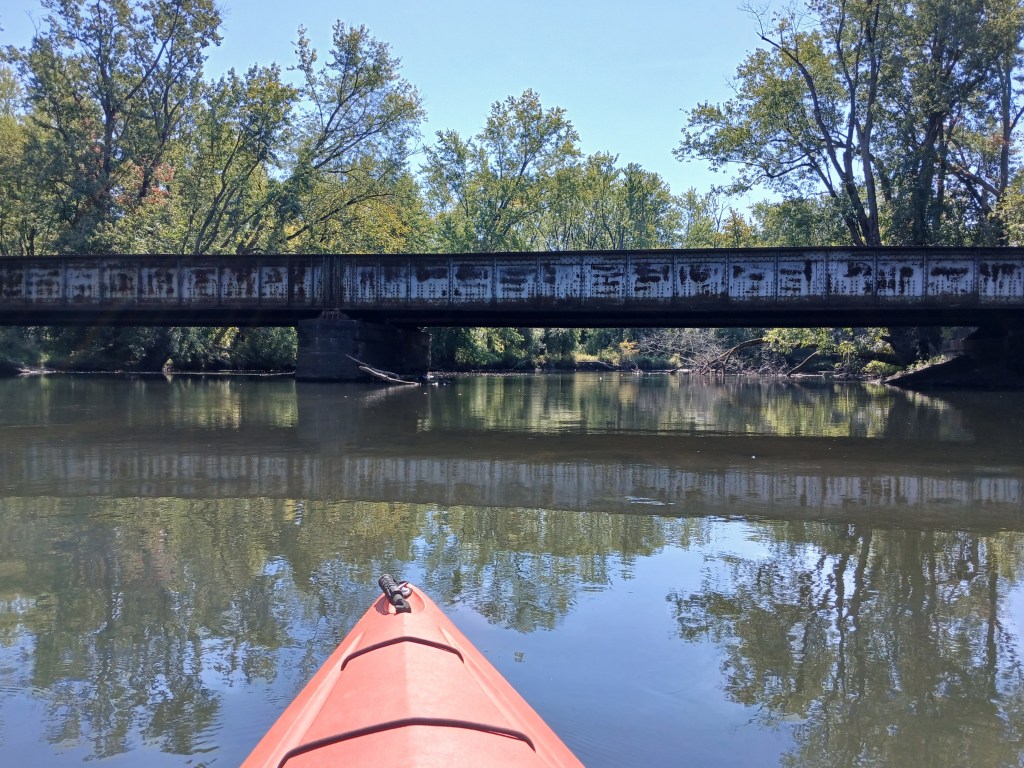
There are only two bridges to paddle under and they are on the last leg of the trip. The M96 bridge and a railroad bridge are right next to each other.
Downstream from the two bridges is a section of riffled water with a few boulders.
This part of the river forms the western boundary of Fort Custer State Recreation Area. Continuing downstream, the park boat landing is on the left (east) side of the river. This river access marks the end of the trip.
The vehicle entrance to the recreation area is on the south side of highway M96, just east of the village of Augusta. There are park signs that will direct you to the boat landing.
Besides Gun Lake, Hall Lake is one of the most visited lakes in the Yankee Springs area. I kayaked the lake on a weekday morning in August and I was surprised to have the whole lake all to myself. Hall Lake is located on the north side of Gun Lake Road, just east of Gun Lake. When you first view the lake from the road, it will draw you to its shore and compel you to kayak it. The small lake is surrounded by forested hills. The primitive landing is on the south side of the lake, just east of the dam.
It’s also a good place for a swim. The lake has three islands. A small island lies next to the shore on the east side of the lake.
The other two islands are more toward the middle of the lake.
A nature note: there is a sizable population of freshwater jellyfish in the lake. These delicate creatures are about a half inch in diameter and can be clearly seen along the shoreline.
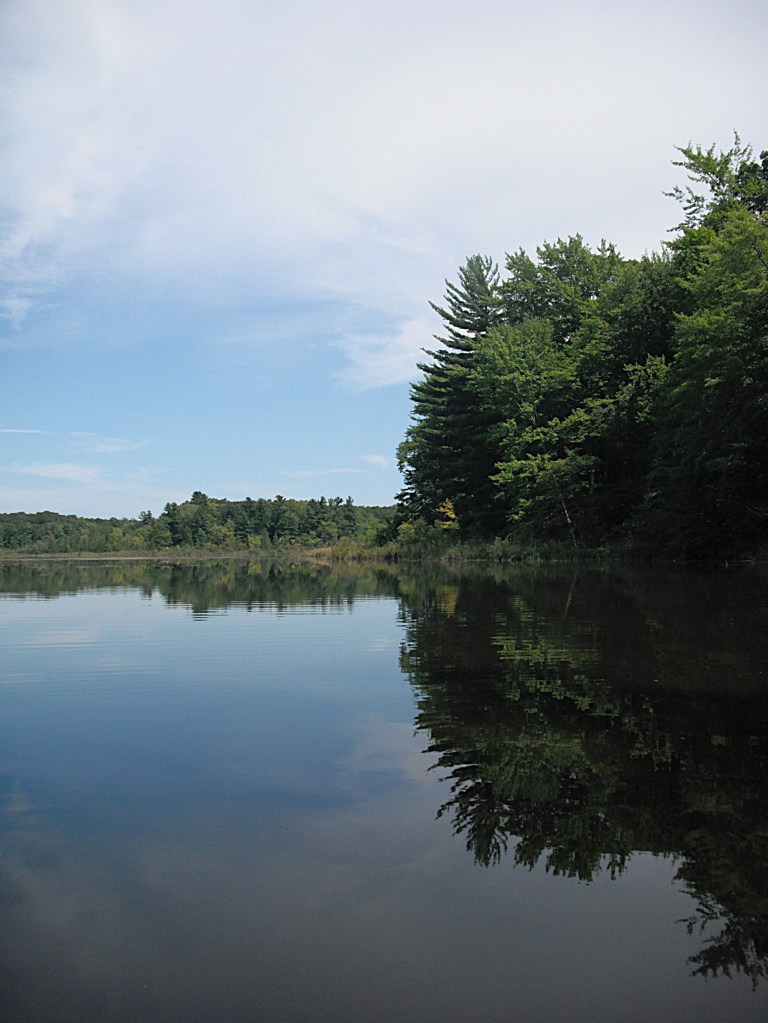
Once you’re on the water, you’ll see why Hall Lake is one of my favorites.
Long Lake (it actually is quite long) lies within the Yankee Springs State Recreation Area. To access the lake, head south on Briggs Road from M179. On the east side of the road, there is a sign that directs you to a improved trail leading to the boat launch.
Long Lake is shallow and a large portion of the lake is less than three feet deep. You would have a hard time finding water deeper than five feet. Most lakes this shallow are choked with aquatic vegetation, but not Long Lake. The whole lake is easily paddled.
The shoreline is forested with hardwoods interspersed with pine trees. In some areas, the huge pines stick up above the hardwood canopy. A shoreline cruise of the lake will reward a kayaker with splendid scenery.
On the south end of the lake is the Long Lake Outdoor Center. The center was built in 1938-39 by the Civilian Conservation Corps and is listed on the National Register Of Historic Places.
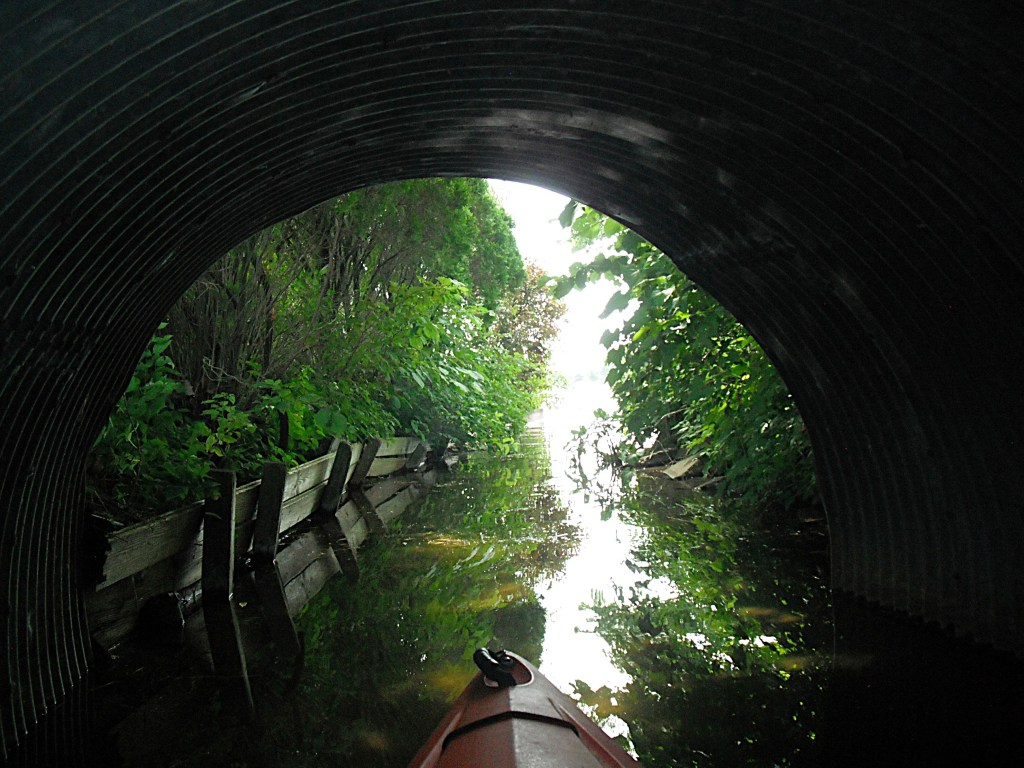
Also on the south end, there is a channel to Gun Lake. The navigable channel runs through a culvert under Gun Lake Road. It is too narrow to paddle so you must pull your way through by hand.
I was not thrilled with the spider webs in the culvert. The mouth of the channel is a good place to get out, take a break, and enjoy the view of east Gun Lake. Bairds Cove is to the east and straight south across the water is Duffy’s Point.
I returned to Long Lake and finished my tour of the lake.
Cruising along the shoreline of Long Lake will make you appreciate the scenic beauty of Yankee Springs State Recreation Area.
I have kayaked three different tributaries of the St. Joe River, but never the St. Joe itself. Curiosity finally got the best of me, so I paddled the river on a hot Saturday in August of 2020. My brother Randy helped me with car spotting. In the past, he has willingly hauled me and my kayak on numerous river voyages and I always appreciate all that he does.
The St. Joe River flows through Sturgeon Lake on the north side of the village of Colon. I decided to start my trip at the first bridge downstream from Sturgeon Lake, the Farrand Road bridge. To get to the bridge, take Farrand Road north from Colon Highway. The primitive access is on the south side of the river, right next to the bridge, on the downstream side.
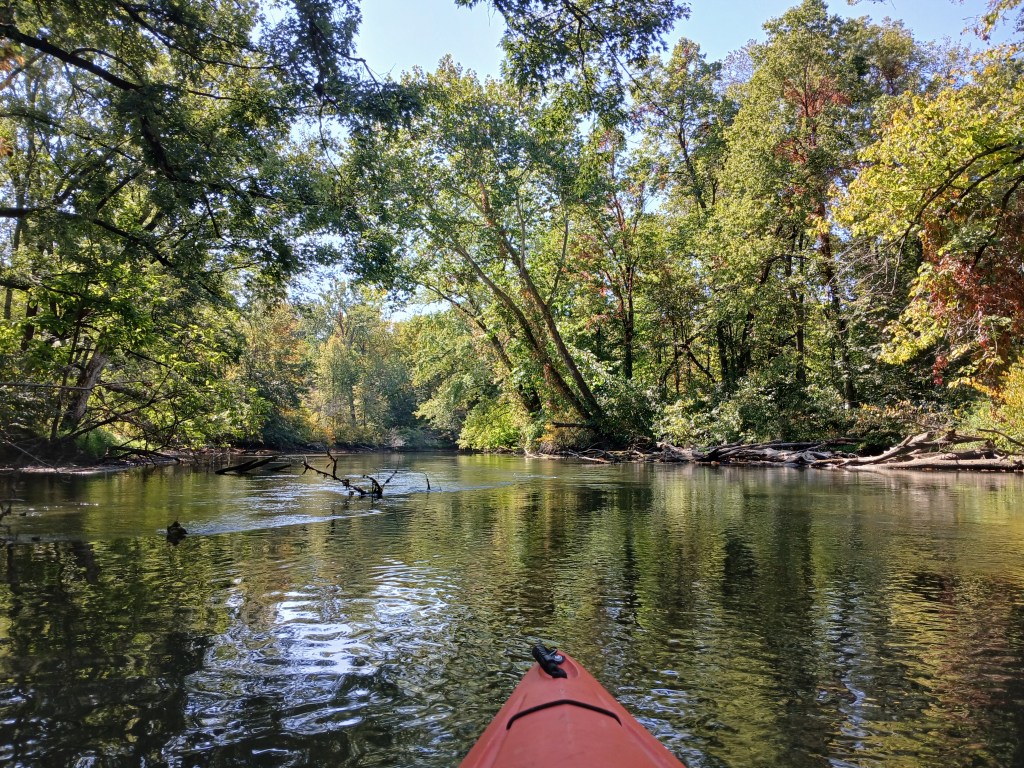
The river is wide, clear, and mostly shallow. The current is slow and there are only a few obstacles to maneuver around. It is probably one of the easiest rivers to paddle in southwest Michigan. Even though the river isn’t very challenging, the scenery makes it worth the visit.
The St. Joe water level varies from week to week. It was very low when I made this trip and shallow, rocky shoals extended across the river in places. I scraped bottom more than once, so be observant.
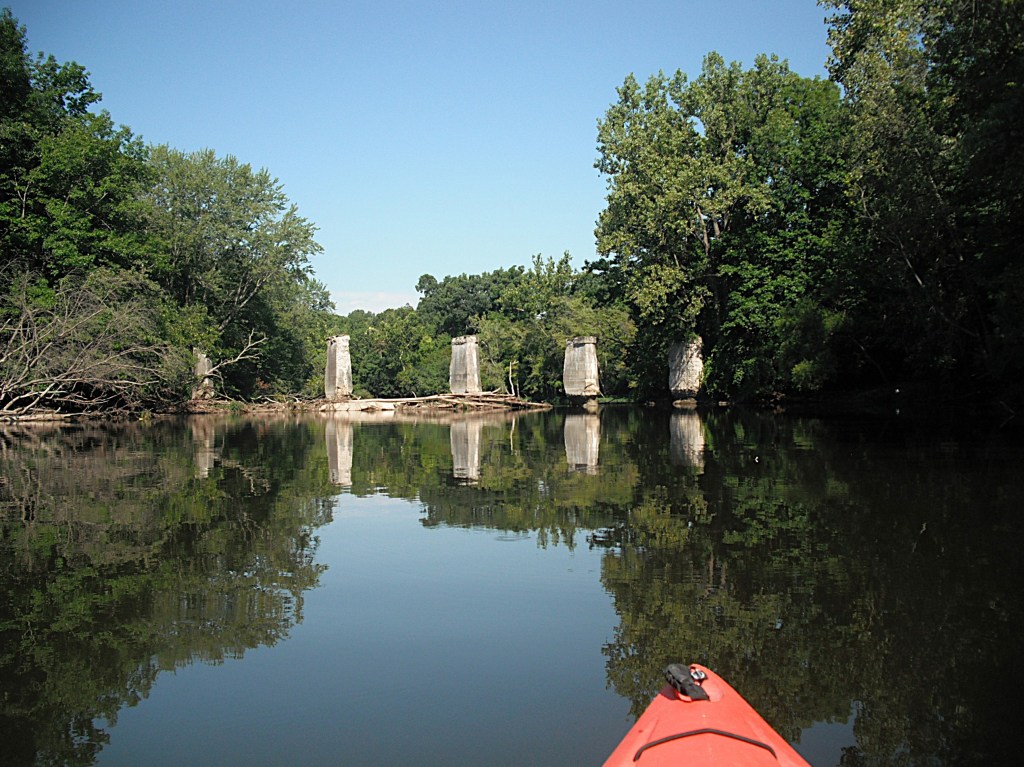
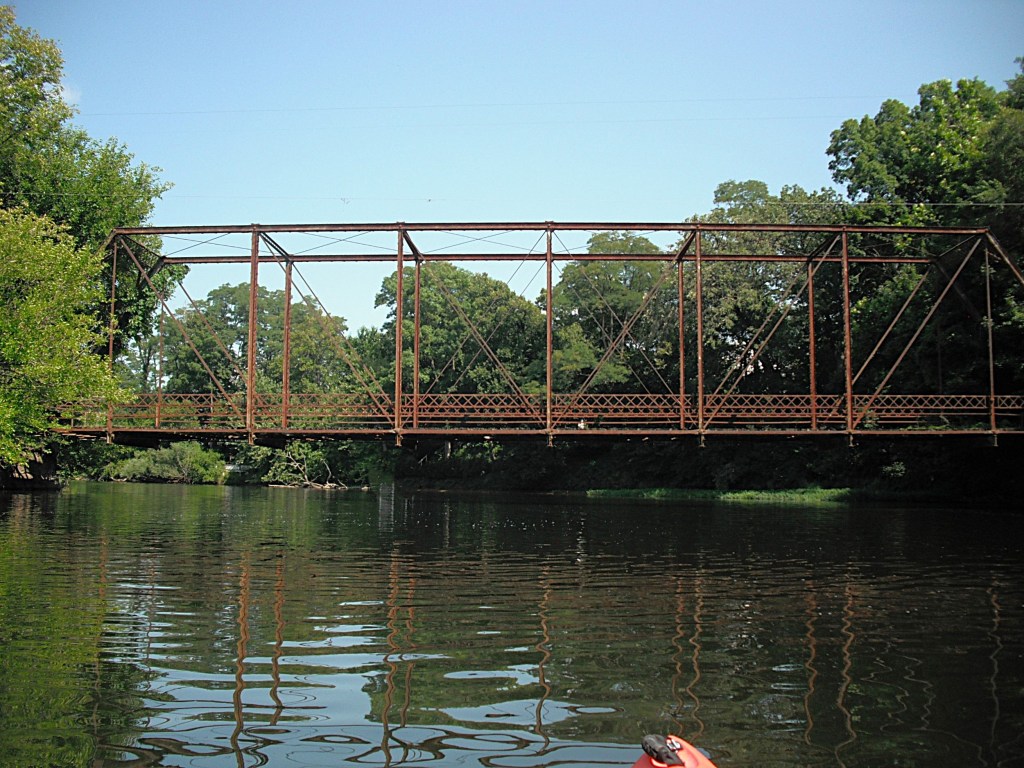
Just after you push off from the landing, you will pass by the supports of the old Farrand Road bridge. About a mile downstream are the remains of a railroad bridge that dates to 1889.
Further downstream, the river passes under a bridge that is called either Olney Bridge or Matthews Bridge. The road over the bridge is called either Bennet Road or Jacksonburg Road.
I found a nice sandbar and stopped for lunch and a cool swim.
The St. Joe flows in a westerly direction on this trip and I enjoyed the scenery of the wooded river corridor.
After crossing under the M66 highway bridge, M60 highway parallels the river’s north shore. There is some traffic noise but it’s not unbearable.
The Nottawa Road bridge marks the river’s entry into the village of Mendon. After the bridge, Reed Riverside Park and the Mendon business district are on the north side of the river. The village is pleasant to paddle through.
A brief history note: This area was first explored by a La Salle expedition in 1679.
Downstream from Mendon, the historic Marantette Bridge spans the river. It was built around 1900 and serves pedestrian traffic.
Immediately downstream is a abandoned railroad bridge that was constructed in 1873.
Sandwiched between the two bridges, on the north side of the river, is the MDNR boat landing where I ended my trip. From the landing, Railroad Street heads north and intersects with highway M60.
I was impressed with the scenery and history of this stretch of the St. Joseph River and I will gladly visit it again.
These two lakes are on the southern boundary of the city of Portage. They are situated in the middle of a “V” created by Shaver road and highway US131. Part of the Gourdneck State Game Area, a 1249 acre parcel, borders the north end of both lakes. The MDNR Big Sugarloaf Lake access site is on Shaver Road.
View from the boat ramp.
There are about a dozen homes on the west shore of Big Sugarloaf. Shaver Road is on the southeast shore, so I paddled north along the undeveloped east coast.
The north end is where Big Sugarloaf gets interesting. There is a large pond separated from the main body of the lake by a wide row of thick cattails. Marshland extends inland from the pond. There are two entrances to the pond.
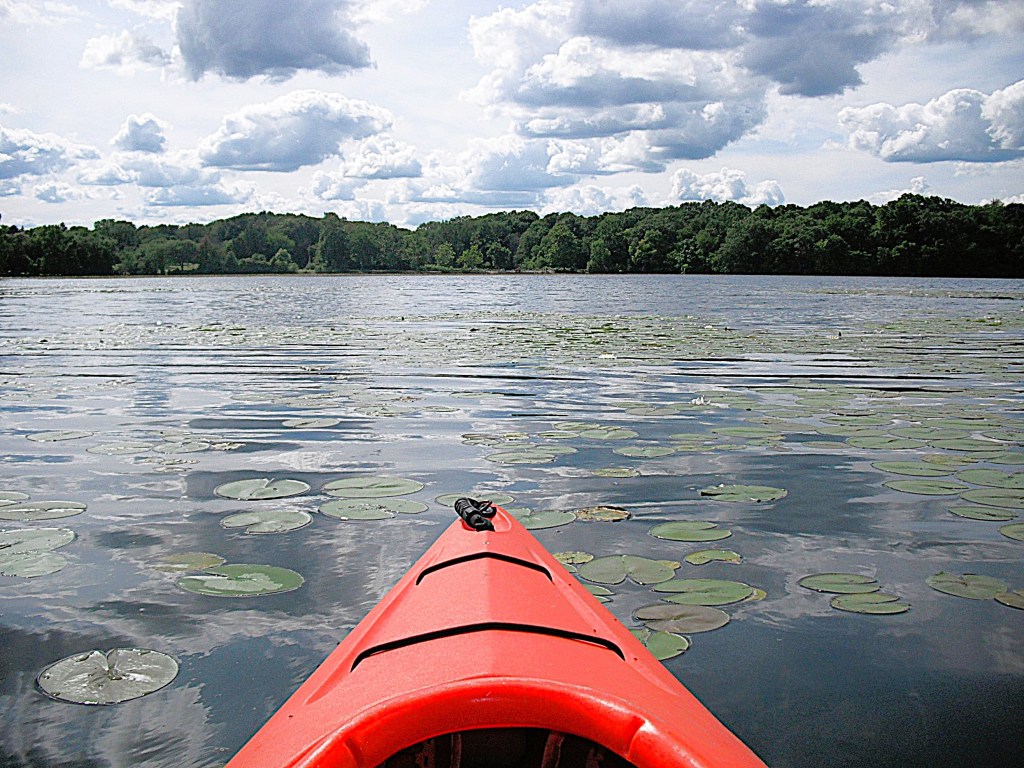
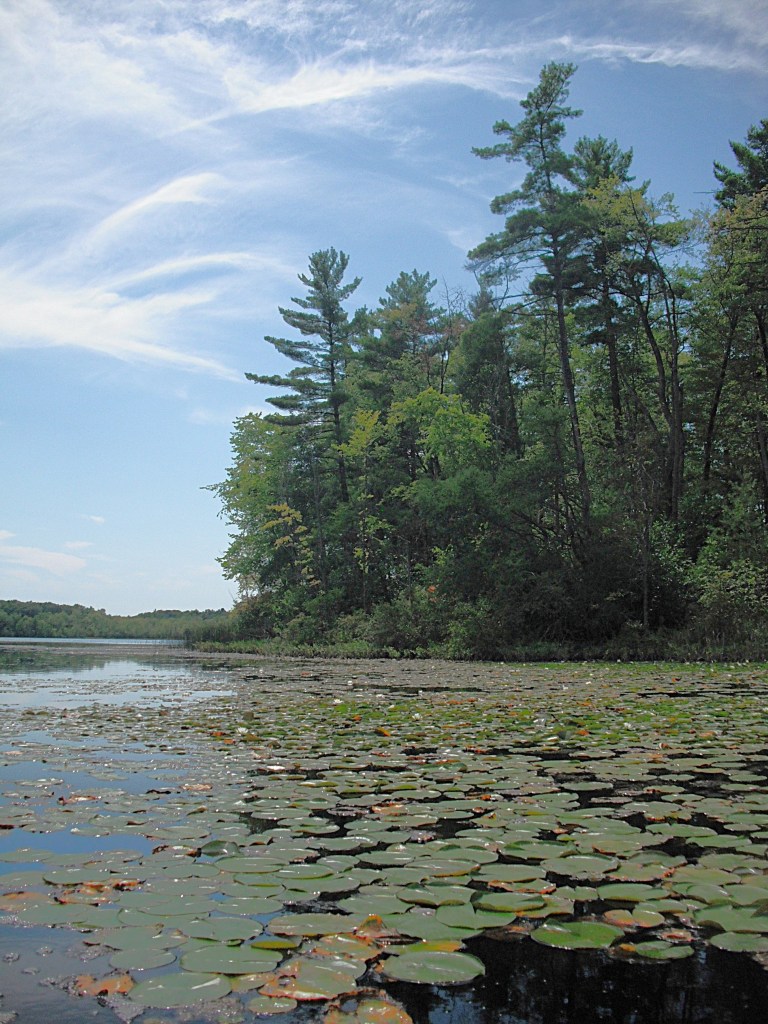
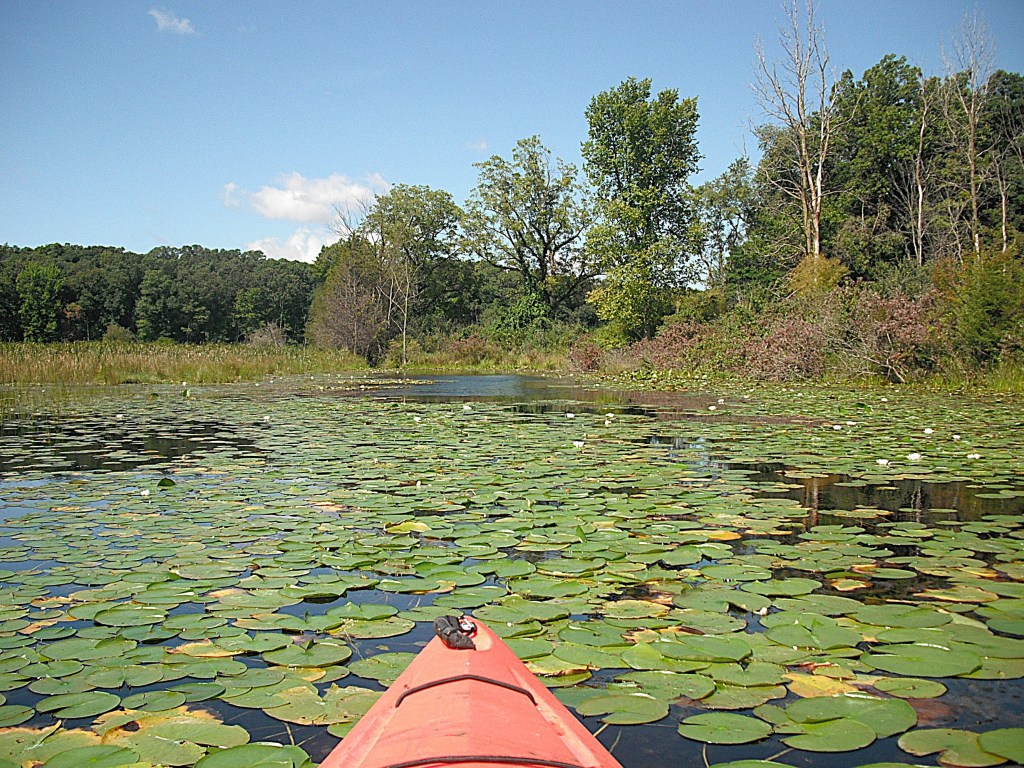
Lily pads cover parts of the pond but most of it is open water.
There were many small channels leading into the marsh.
I tried some of them but they went nowhere or they were too narrow for my boat. I still enjoyed poking around the edge of the marsh.
I left the pond and headed west to a large cove on the northwest corner of Big Sugarloaf.
About to enter the cove.
The entrance to the Little Sugerloaf channel is in this cove.
The scenic, still waters of the wide channel meander through marshland.
The channel eventually enters Little Sugarloaf Lake. I don’t spend a lot of time here. One side of the lake is lined with homes and the other side parallels the noisy highway, US131. The north end, bordering the game area, is pleasant to paddle.
I headed back to the channel.
A small unnamed creek flows into the channel from the west. I had to explore it.
I portaged a beaver dam and continued upstream.
I was stopped by a second beaver dam.
I decided not to portage and returned to the channel. I reached Big Sugarloaf and cruised part of the west shore before heading across the lake to the landing.
It’s surprising to find two scenic lakes that are so close to a large urban area.
My friend Dan and I decided to revisit this stretch of the Kalamazoo River in early September of 2025. We saw a few boaters on the river, but most of the time we had the river to ourselves.
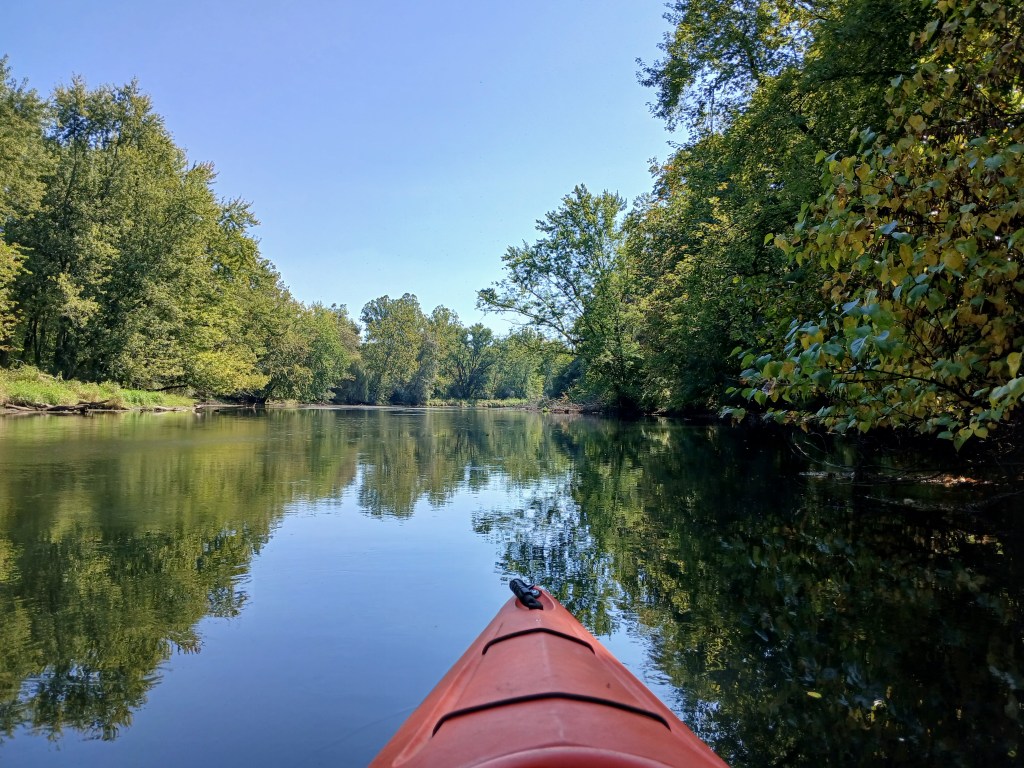
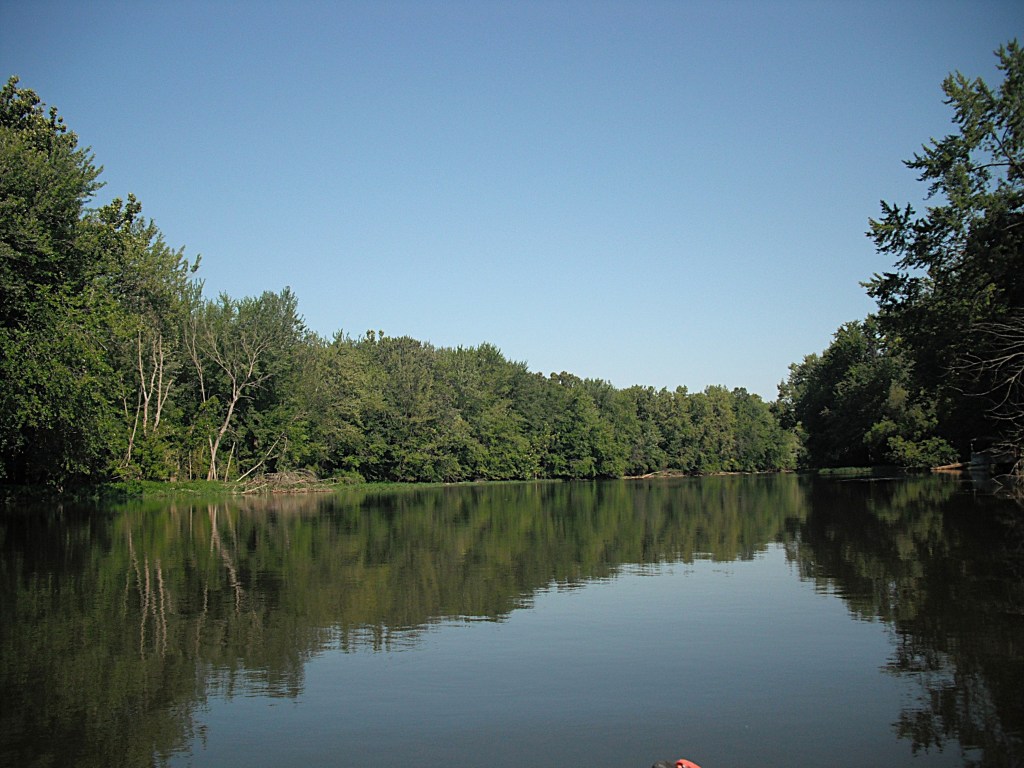
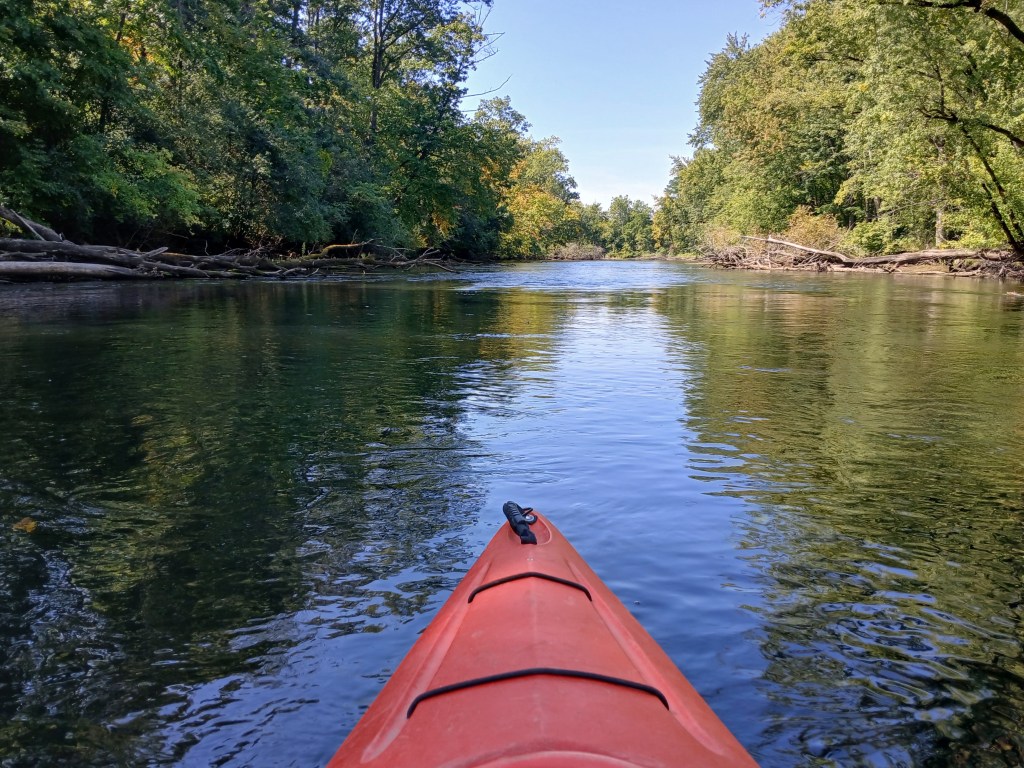
This stretch of the river is mostly wide and shallow with slow current. There are a few places with moderate current. This section of the Kalamazoo River flows in a southwesterly direction. The shoreline is wooded. There are only a few homes on the river and those are in the Galesburg area and the Augusta area. The waterway is suitable for paddlers of all skill levels. There are plenty of spots to stop for a break (dependent on water level), but the spots get fewer in number as you get closer to Galesburg.
Kayakers can choose between two landings for river access. Both are within the Fort Custer State Recreation Area. The entrance to the recreation area is on the south side of Highway M96, east of the village of Augusta. Follow the park signs to the river access.
We chose a river access that lies on a small sliver of park land on the north side of M96, between the Kalamazoo River bridge and the railroad tracks, east of Augusta.
A view downstream from the landing:
Just around the bend from the boat landing, the M96 bridge and a railroad bridge span the river.
Downstream from the railroad bridge, Augusta Creek (trout stream farther north) flows into the Kalamazoo River on the right. The creek is not navigable.
The river serves as the western boundary for the Fort Custer State Recreation Area.
Continuing downstream, the other river access is on the left. The landing features a concrete boat ramp and a vault toilet.
Scenic woodlands border the river all the way to Galesburg.
Dan decided to wet a line and landed a tackle-busting smallmouth bass.
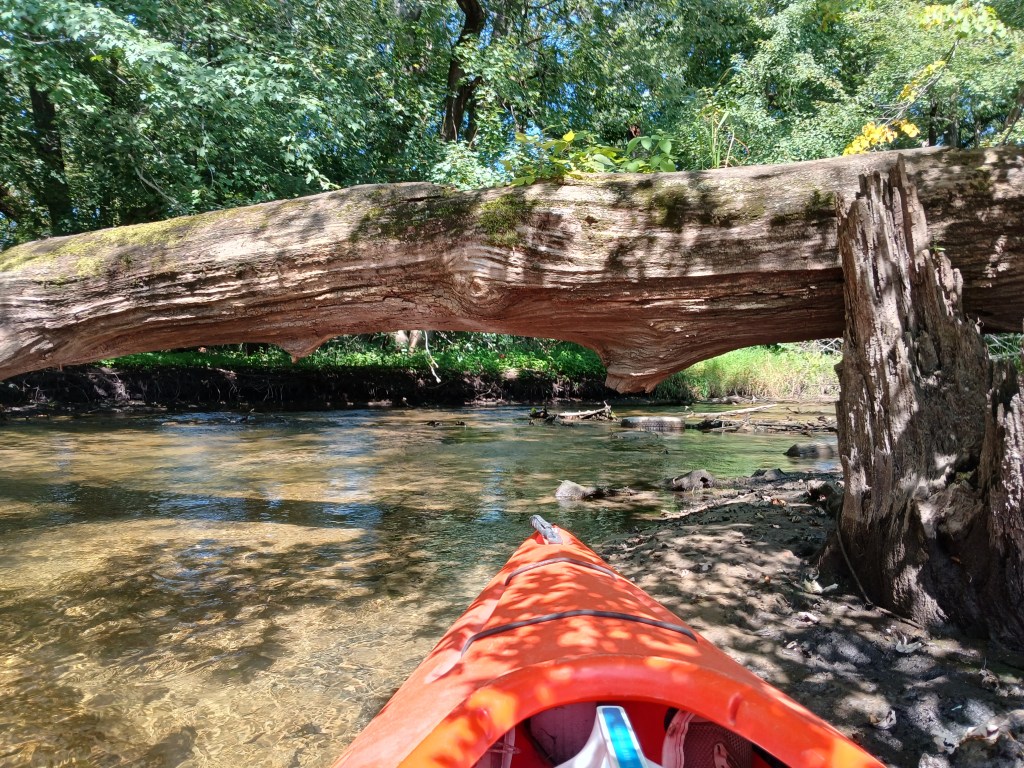
We tried to paddle up Gull Creek from the river but we didn’t get very far because of fallen trees.
The Michigan Avenue Bridge spans the river at the east end of Galesburg.
Downstream from the bridge, the Time Out Lounge is on the north riverbank. The lounge caters to kayakers, so Dan and I beached our kayaks and had a beer on the deck overlooking the river
Heading back down the river, the Kalamazoo enters a long straight stretch followed by a gentle curve. Look for two decks and a boat ramp on the north side of the river. This is the Galesburg Community Park, where your trip ends. The park is located behind the Galesburg City Hall, on Michigan Avenue. There are two entrances, one on each side of the building. A gravel road leads from the paved rear parking lot to the waterfront and the landing.
The entrance to the Deep Lake Unit of Yankee Springs State Recreation Area is on the west side of Yankee Springs Road, north of Gun Lake Road. The park hosts a campground on the east side of the lake. The Deep Lake Unit has a staging area for the network of mountain bike trails. Follow the park signs to the Deep Lake Access.
The site has a couple of picnic tables, making it a scenic, shady spot for my lunch. I have been known to take a dip in the lake here also.
The lake has a steep drop-off along most of its shoreline. The east shore is hilly and wooded.
The rest of the lake shore is flat and marshy.
Turner Creek flows into Deep Lake at the south end.
I paddled up the narrow, meandering stream for quite a long way.
Turner Creek is scenic and is definitely worth a look.
Eventually, the creek got too narrow and too shallow, so I paddled back to the lake.
The northwest end of Deep Lake has a very large marsh.
A bayou is on the north side of the marsh.
Turner Creek exits the lake at a beaver dam on the north end.
The park maintains a large pier on the northeast end of the lake. There is a footpath from the boat launch to the pier.
The pier is barely visible, just right of center.
The scenic views from Deep Lake keep me coming back, year after year.
You can reach Dagget Lake from the west by heading east on Sager Road from McKibben Road.
You can access the lake from the east by taking Sager Road west from Otis Lake Road. At times, Sager Road can be in bad shape. I recommend four wheel drive. Don’t get stuck in the middle of nowhere. The primitive access is on the south side of Sager Road, on the north end of the lake.
Barry State Game Area surrounds the lake. The hilly terrain around the lake is heavily wooded.
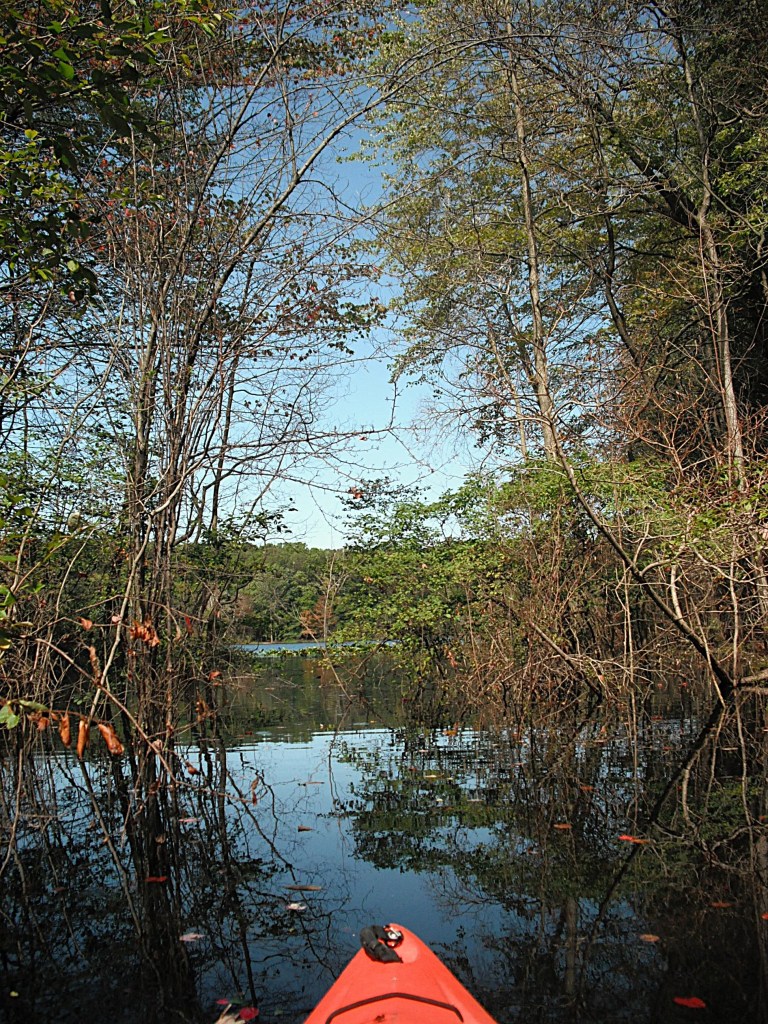
On the southeast corner, I paddled into a small flooded area of the forest. When water levels drop, this area is high and dry.
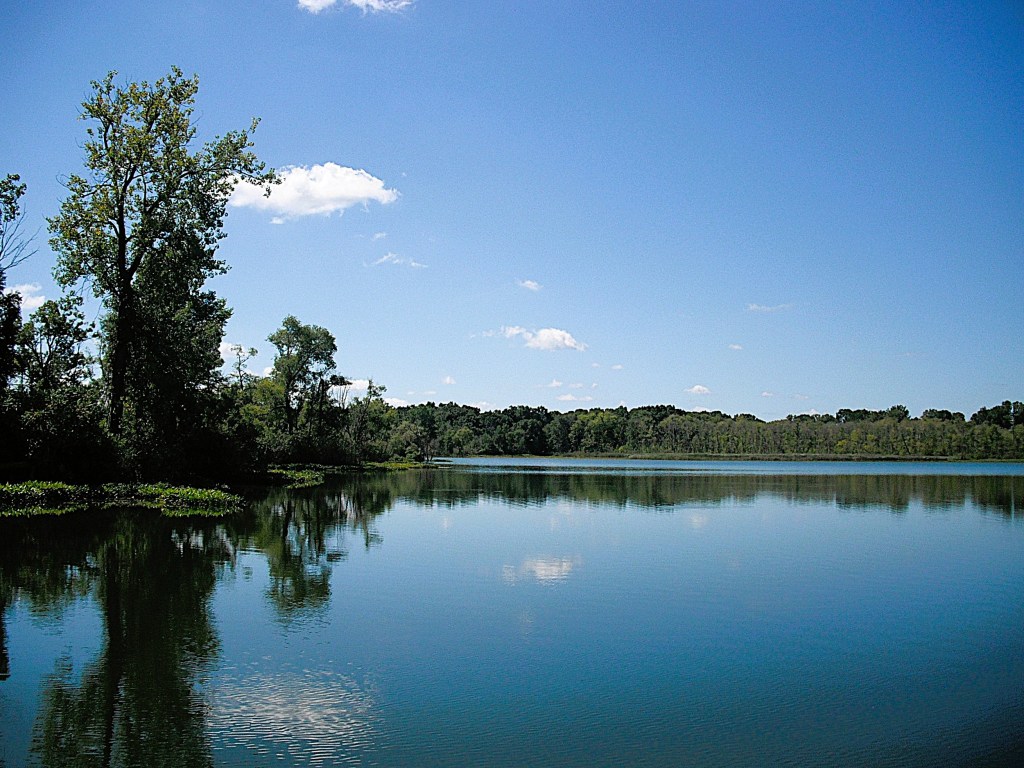
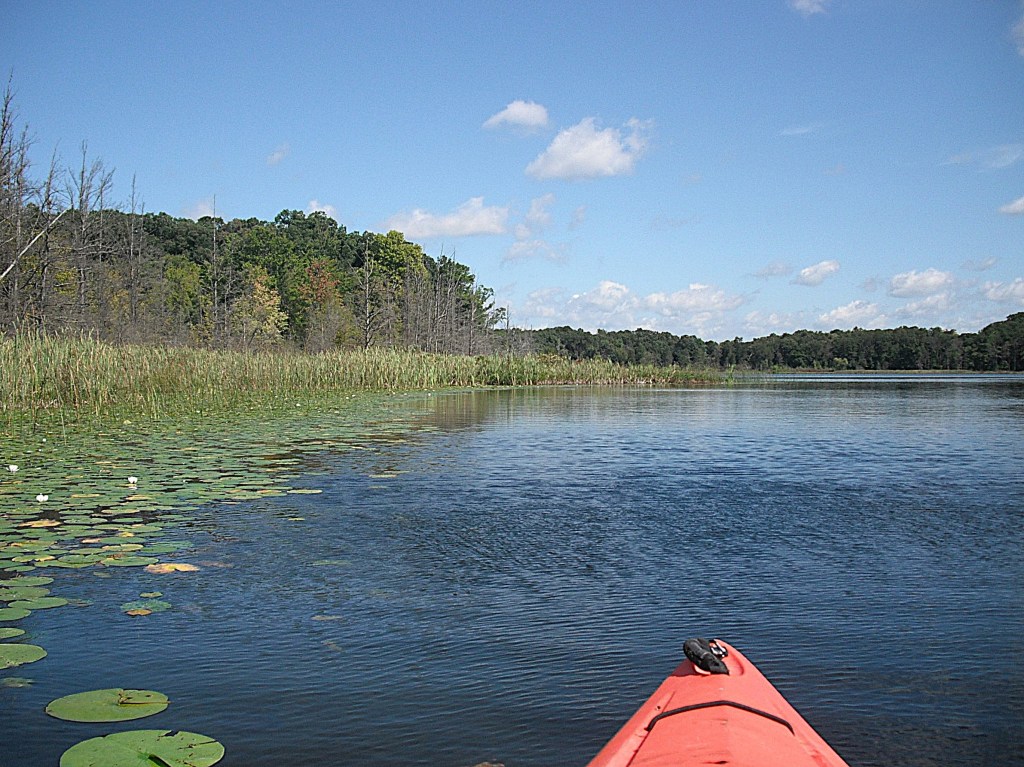
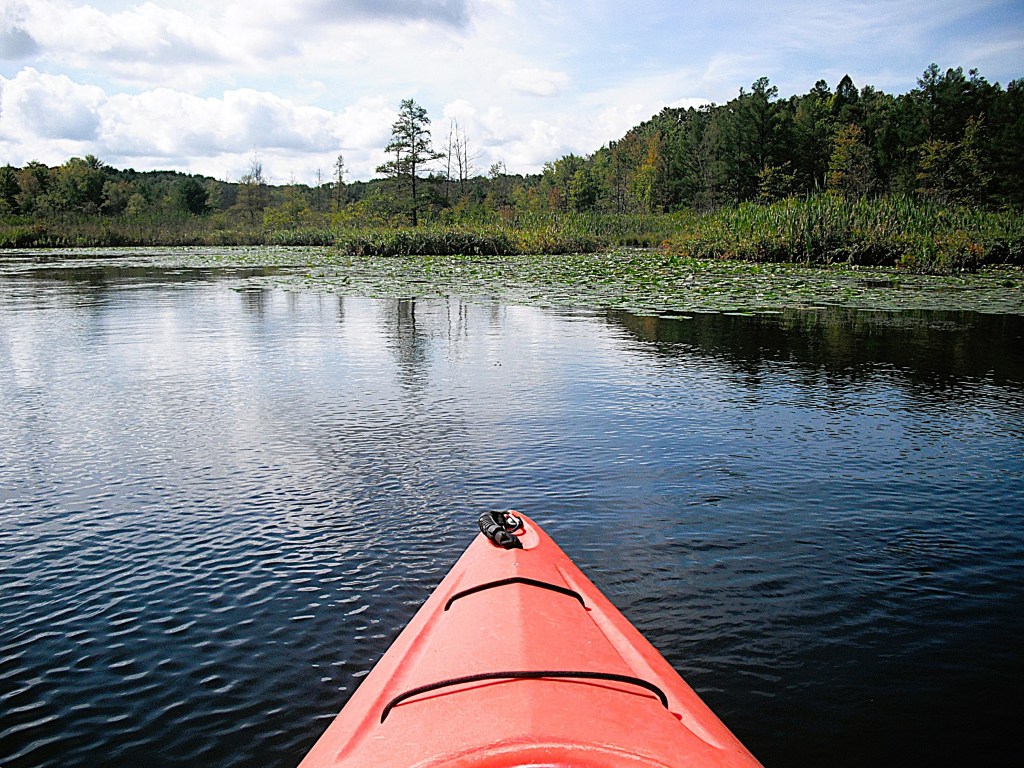
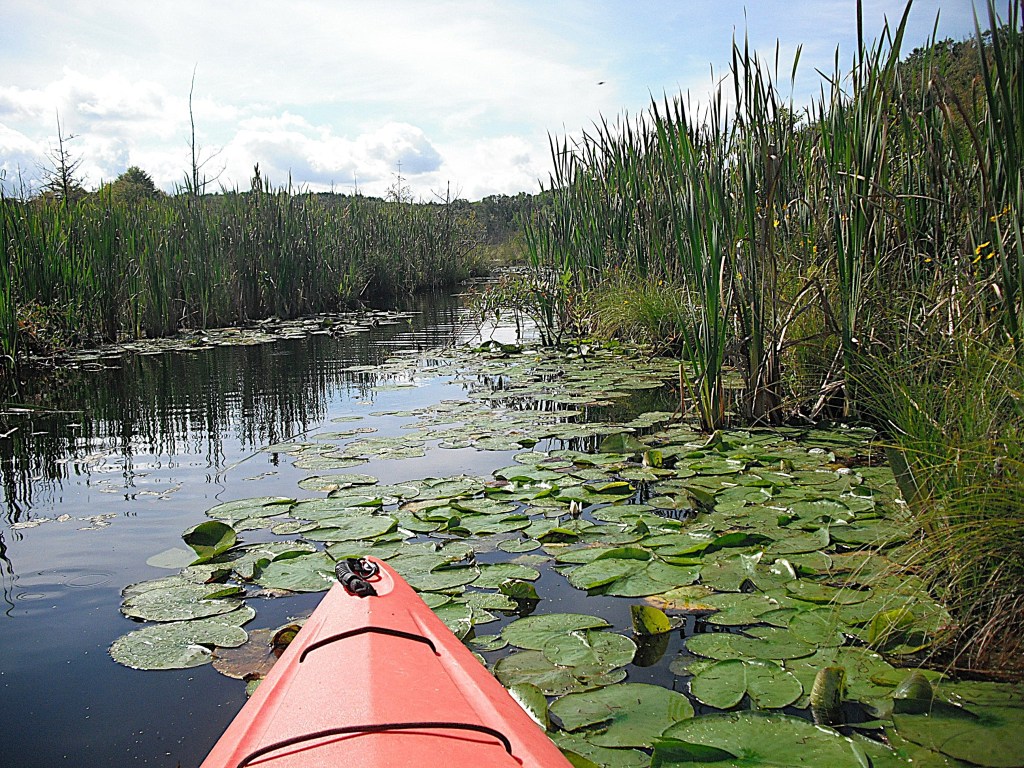
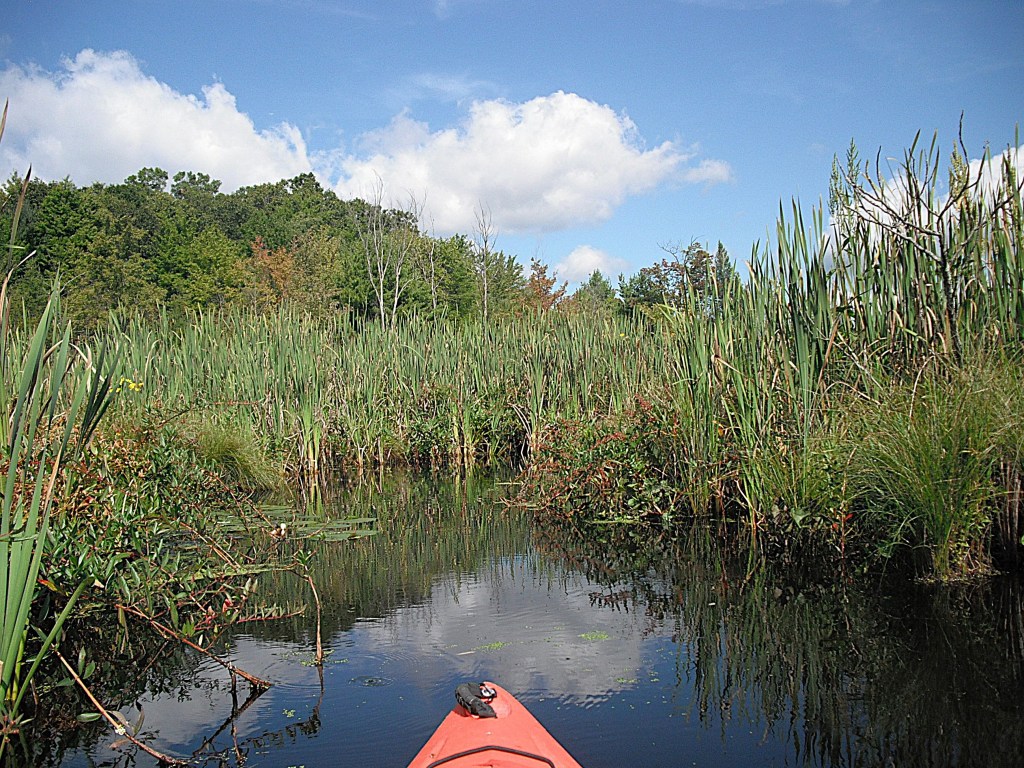
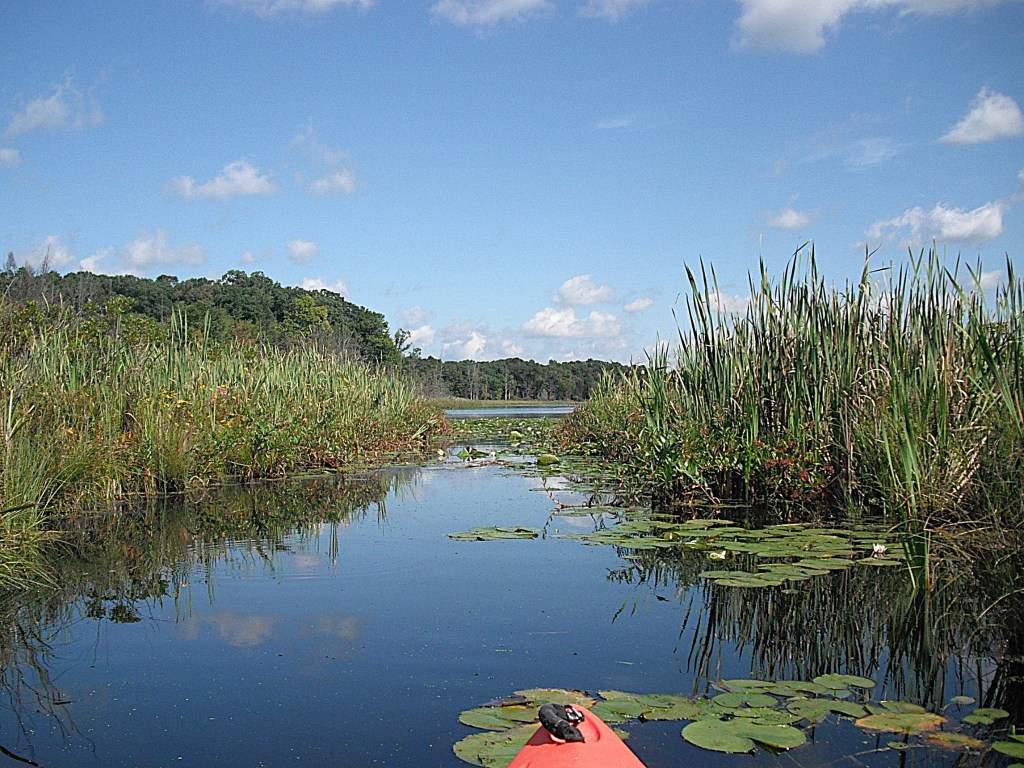
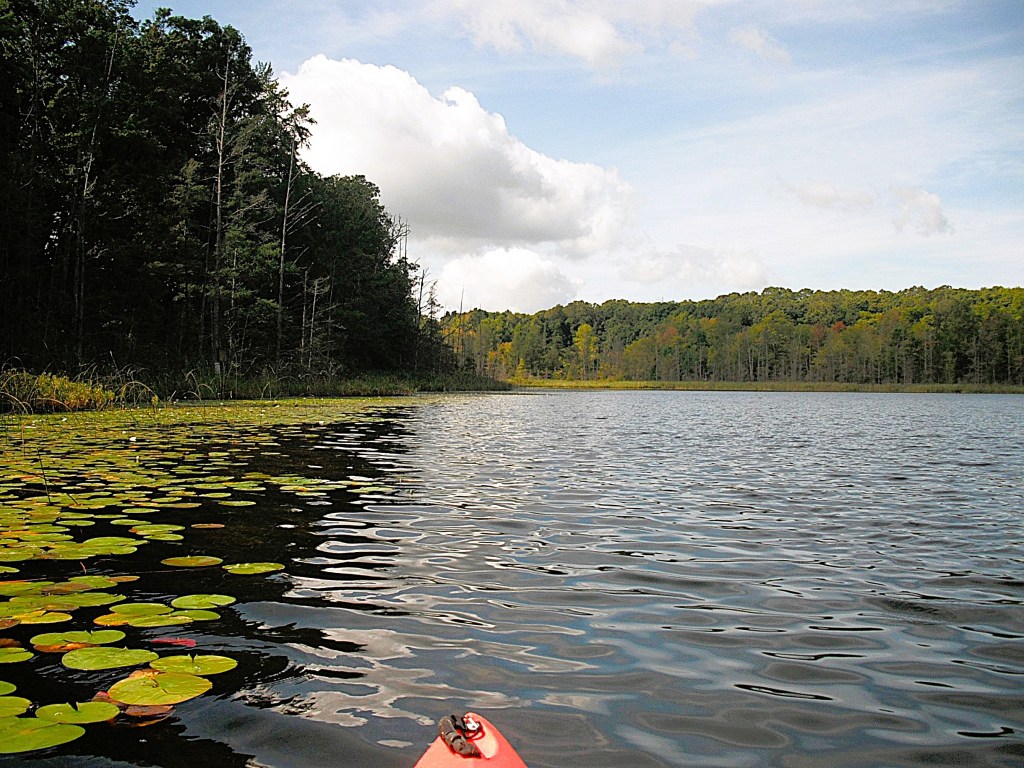
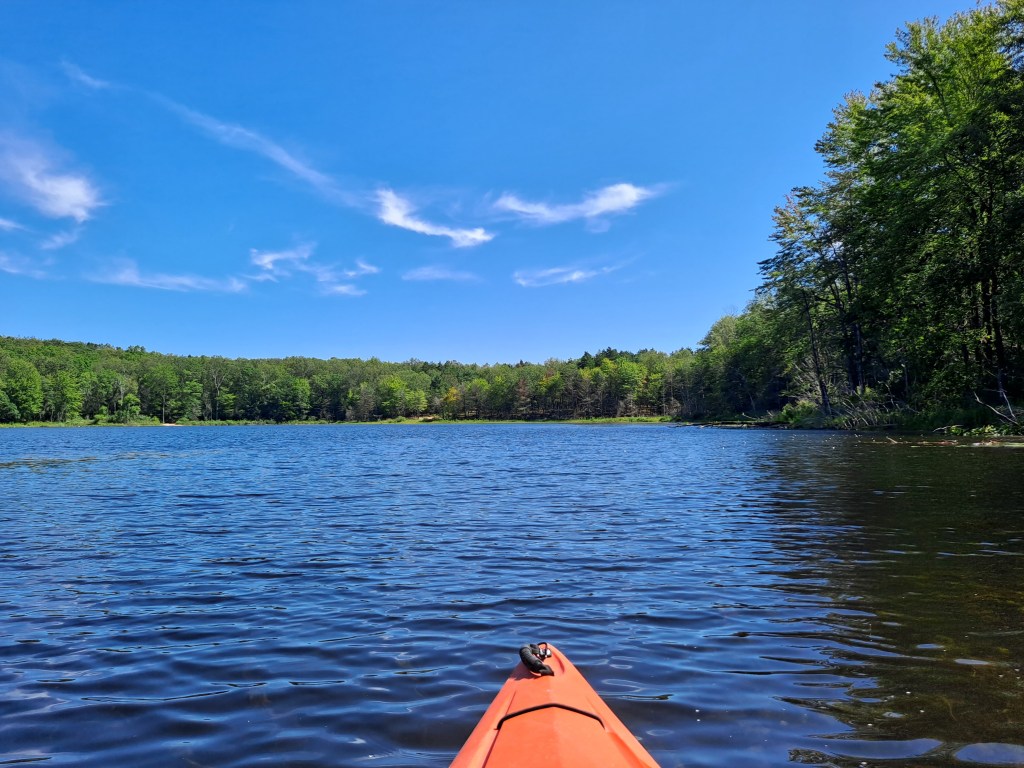
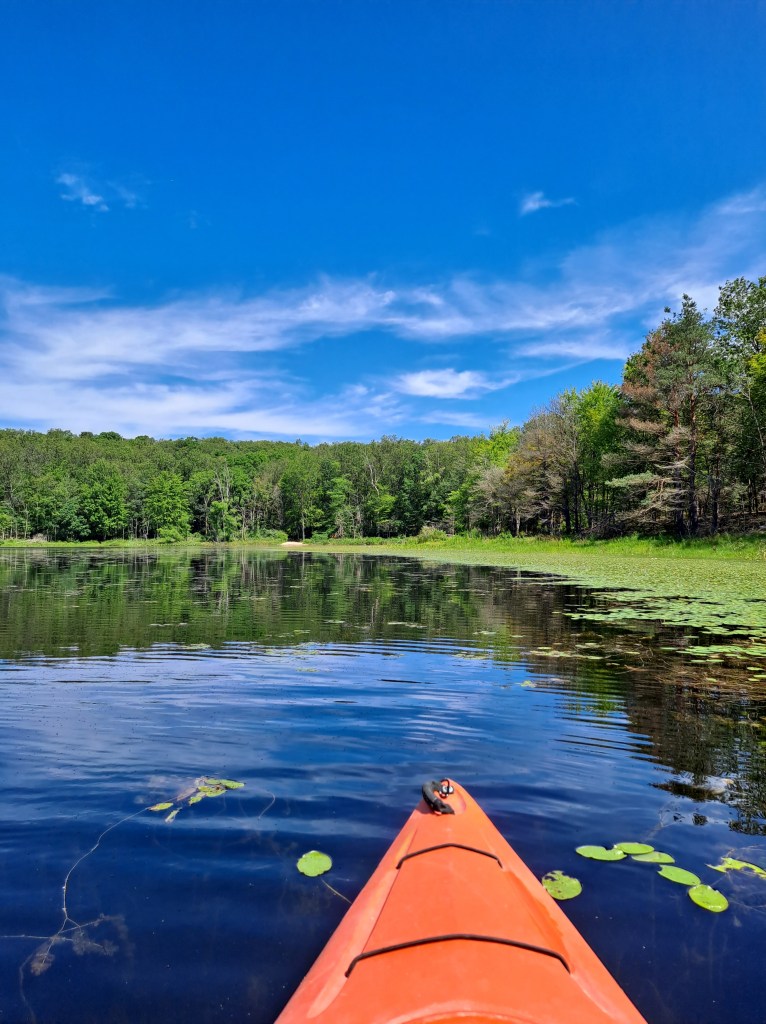
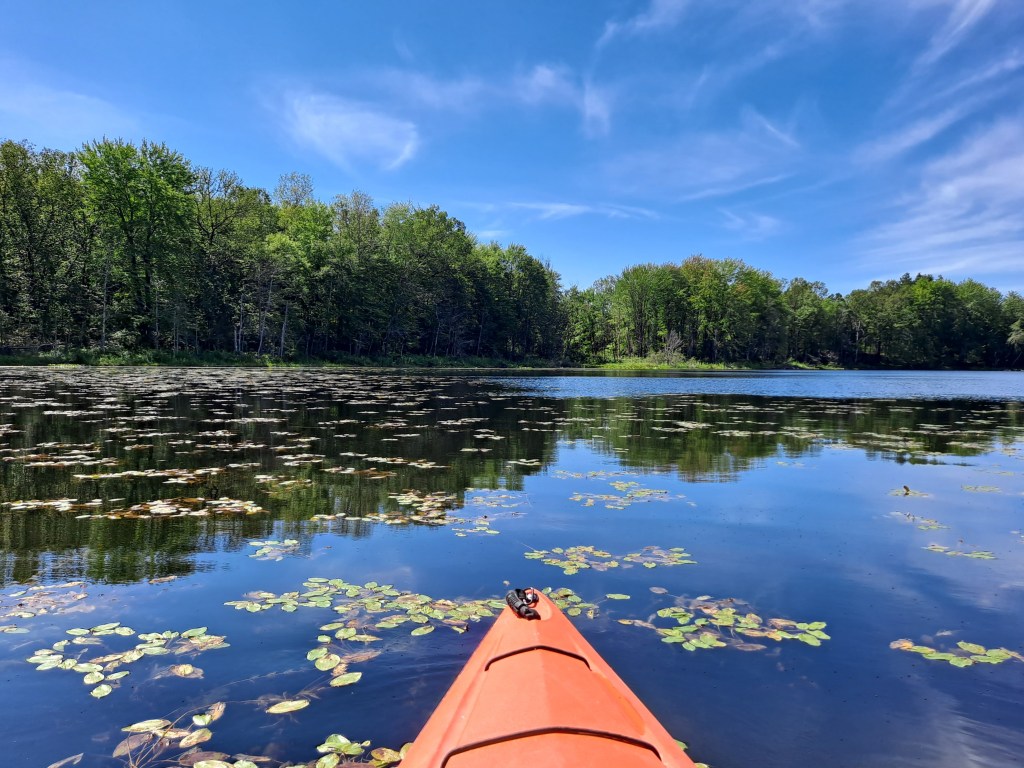
Dagget Lake may be small in size, but it is big on scenery.
















 KAYAKING SOUTHWEST MICHIGAN