PINE CREEK IMPOUNDMENT AND PINE CREEK, ALLEGAN COUNTY

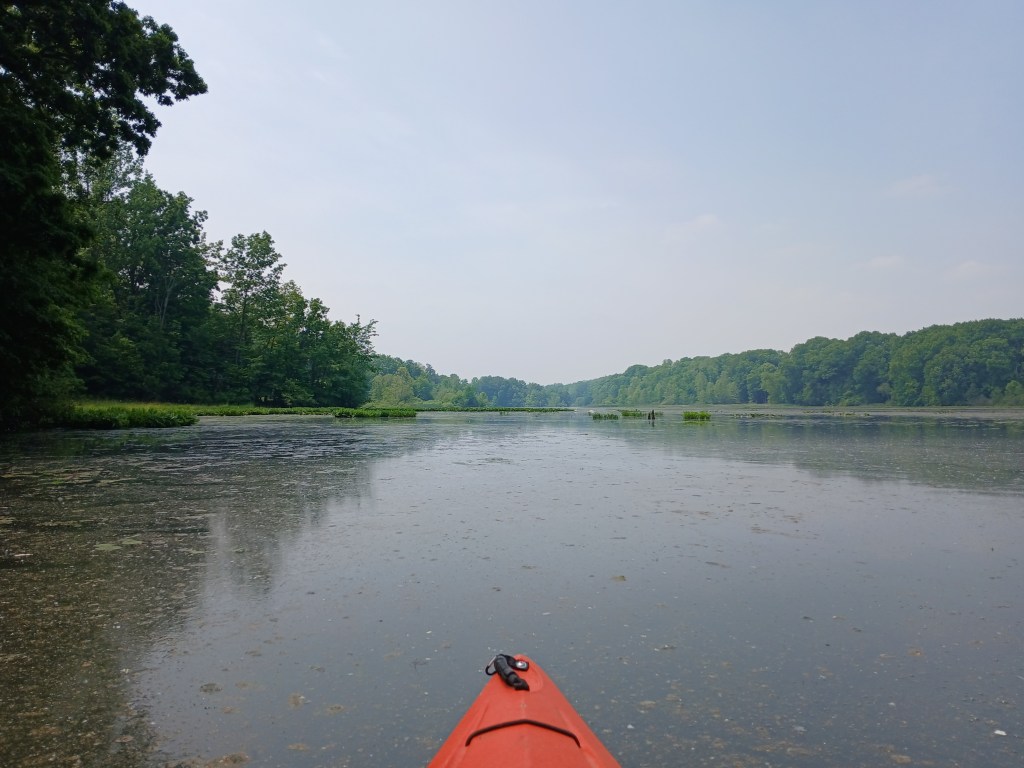
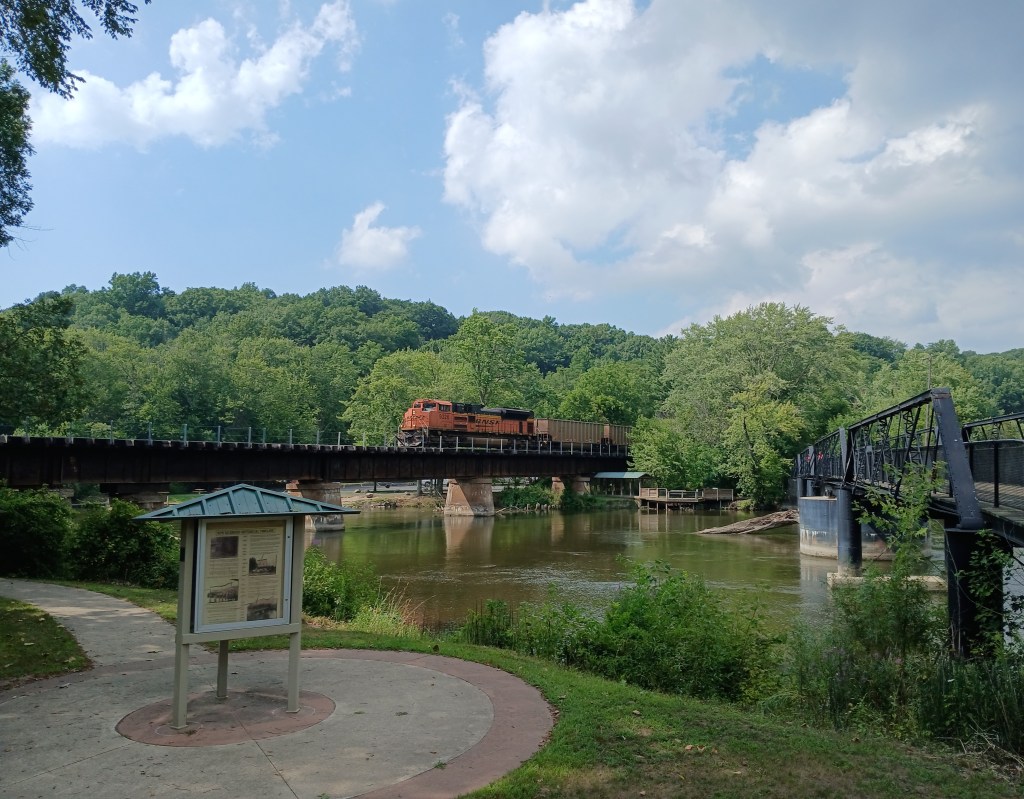
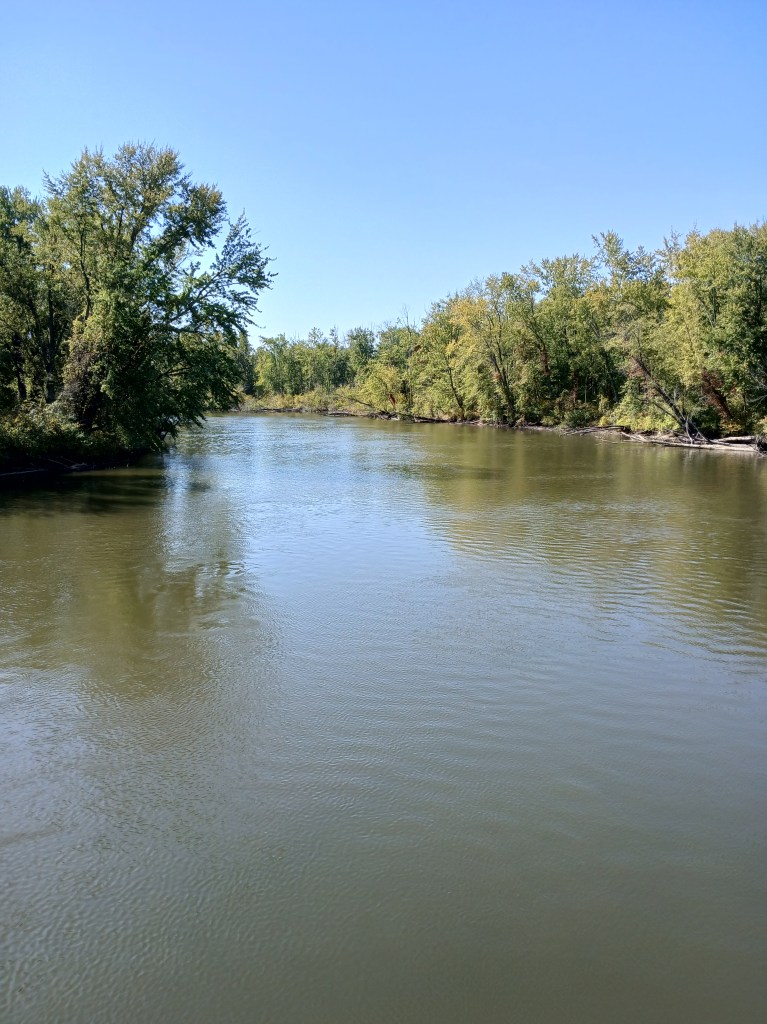
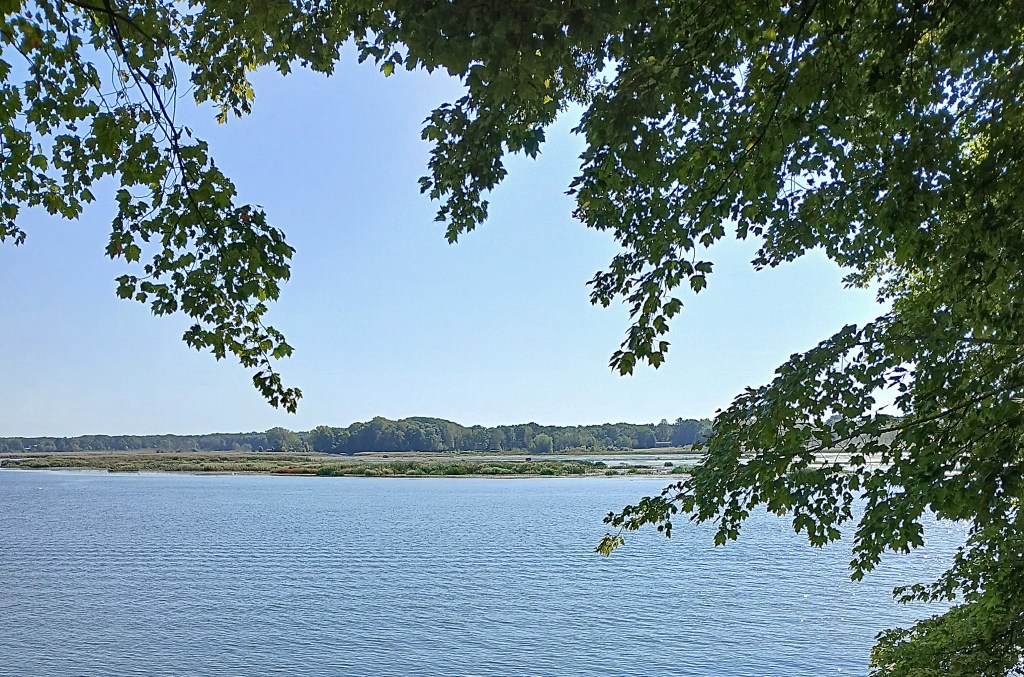
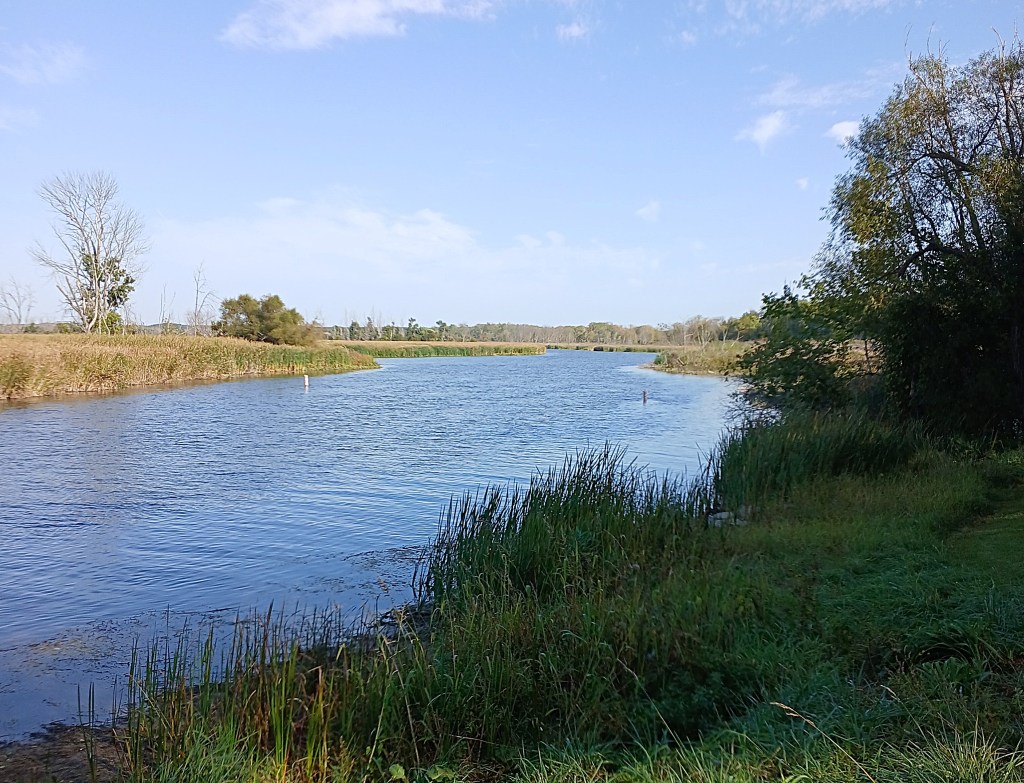
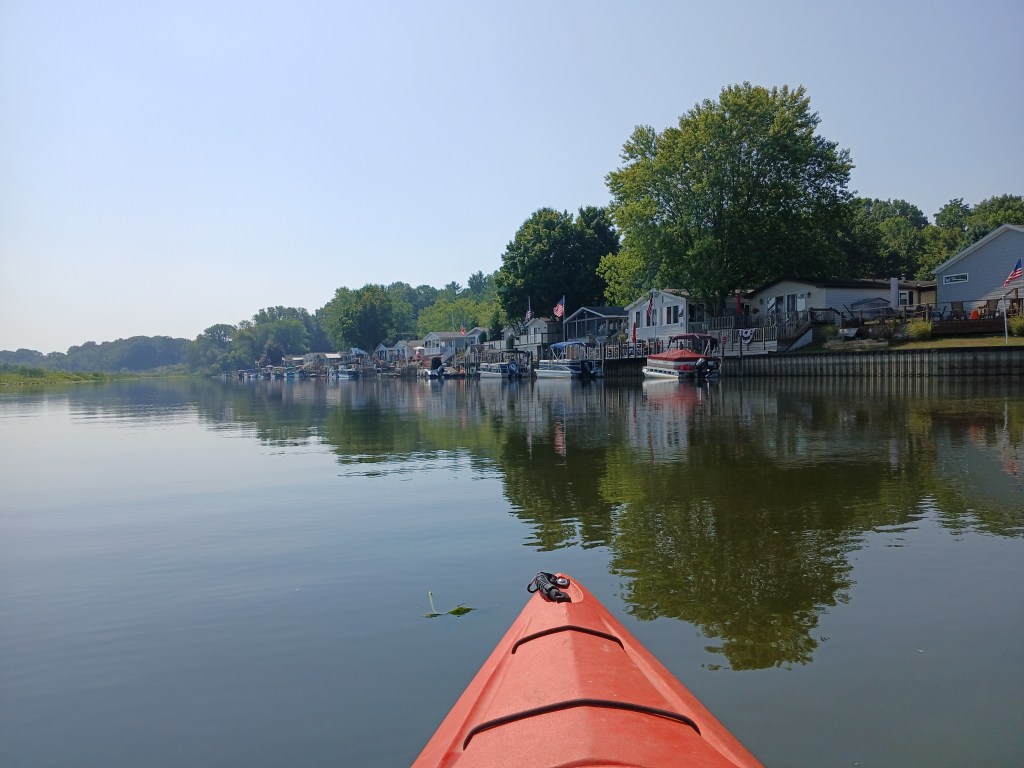
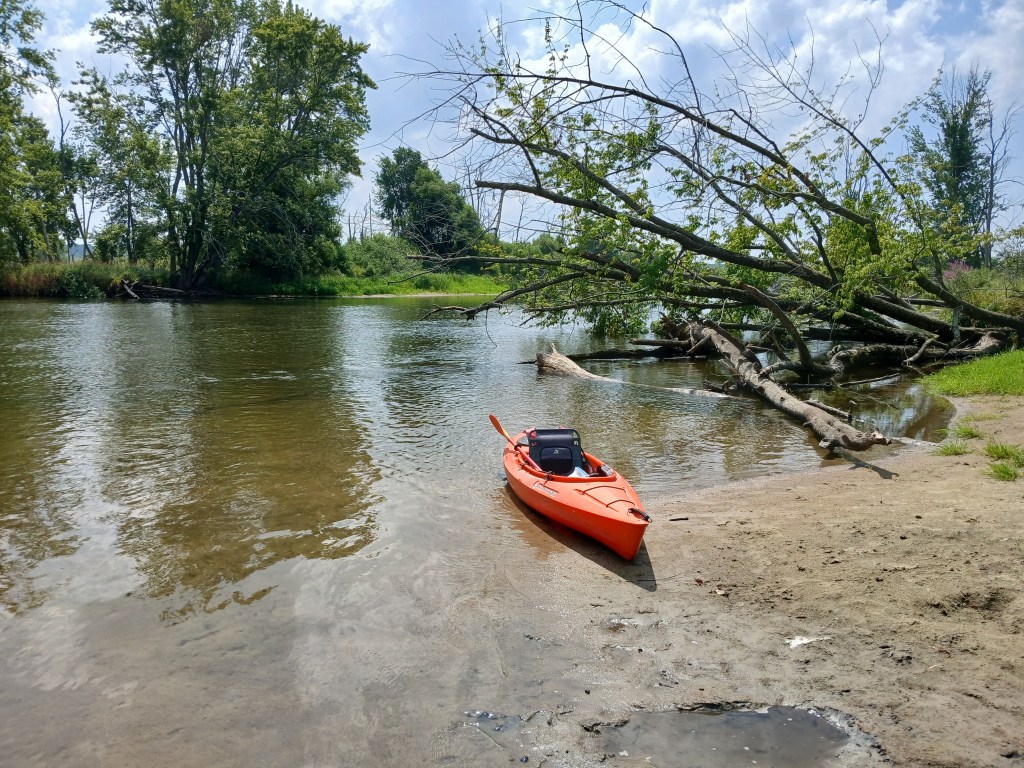
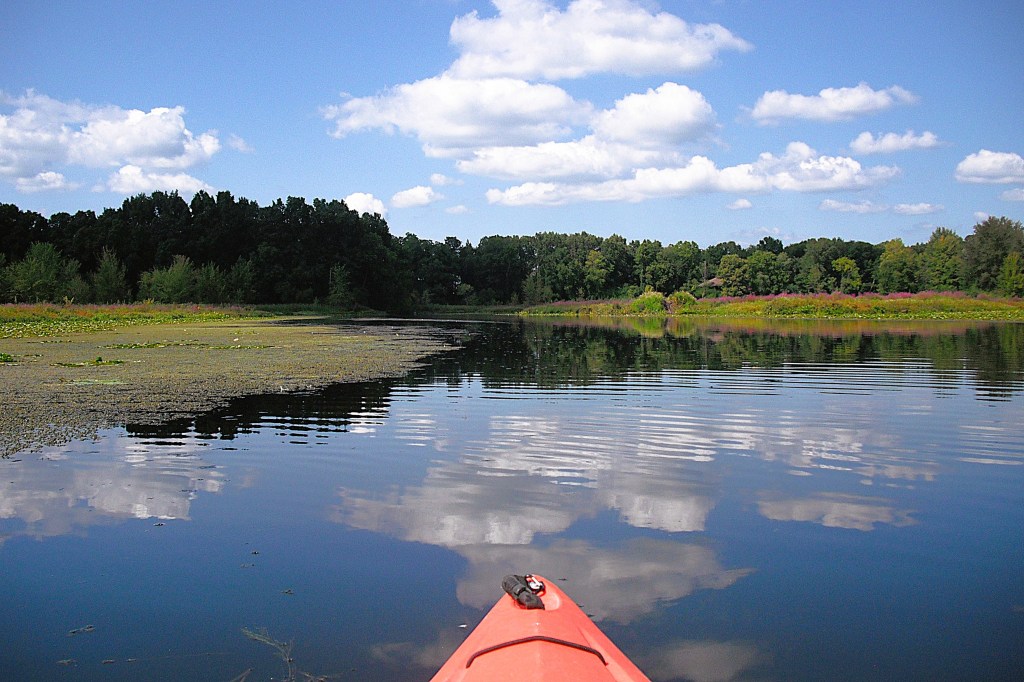
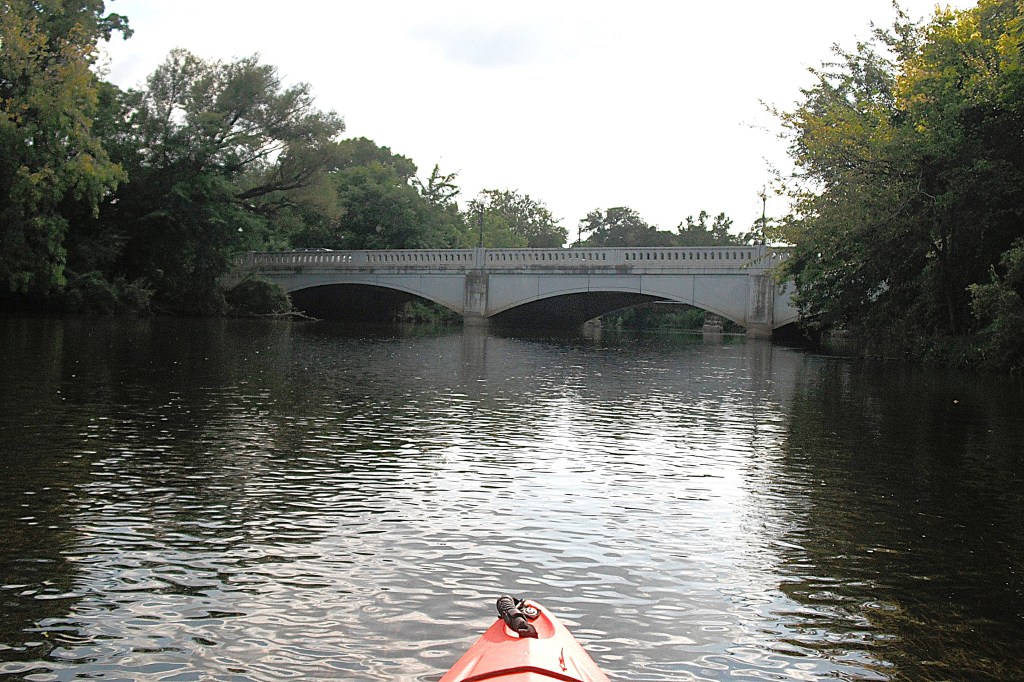
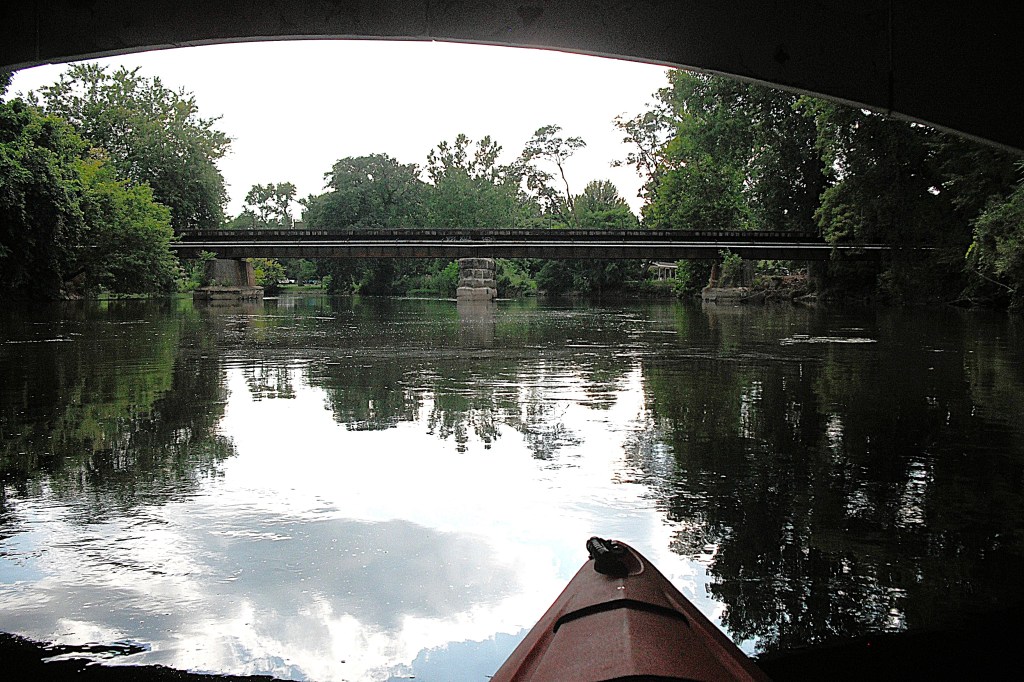
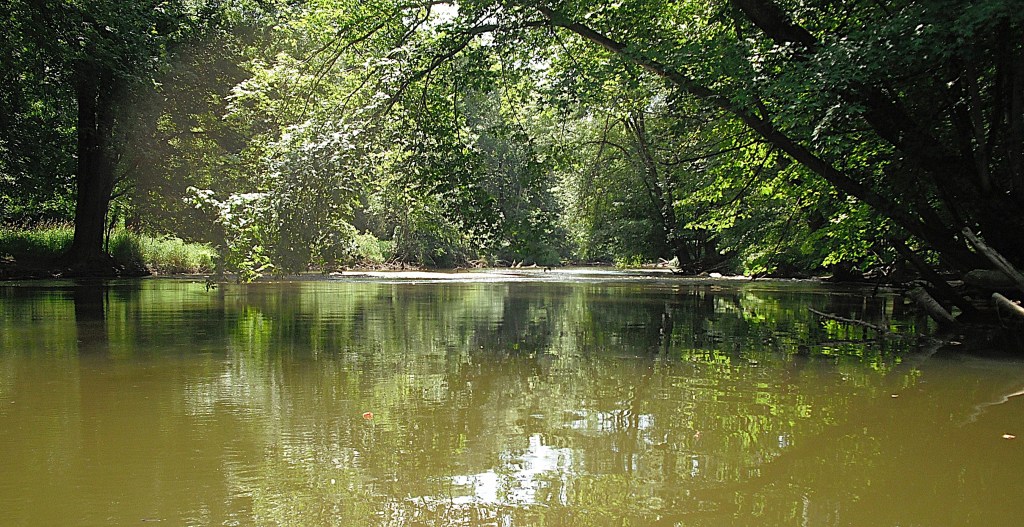
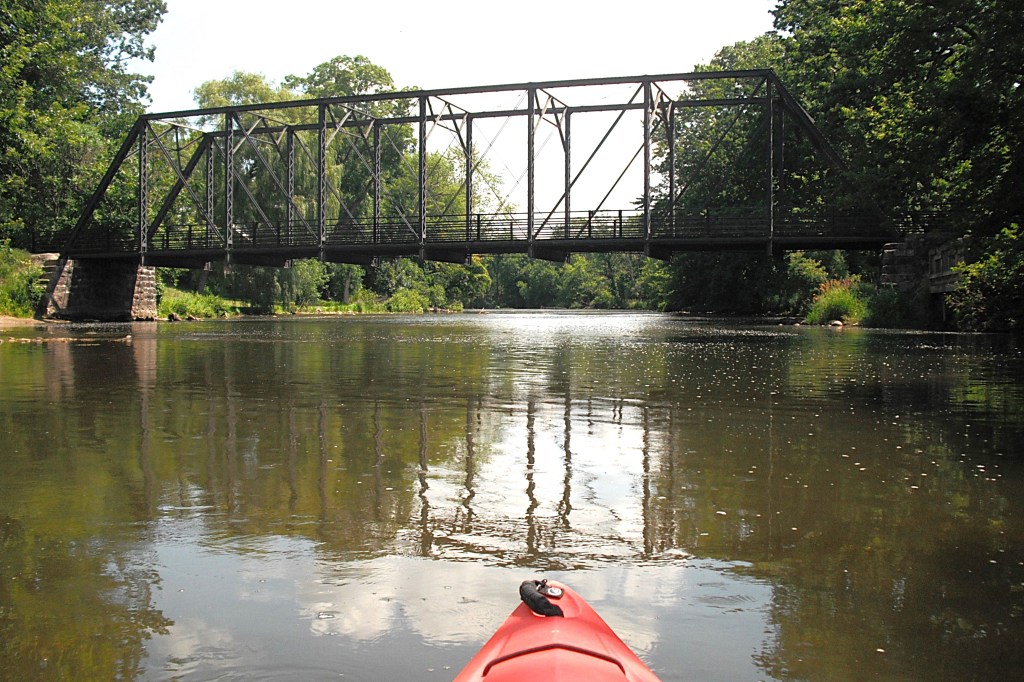
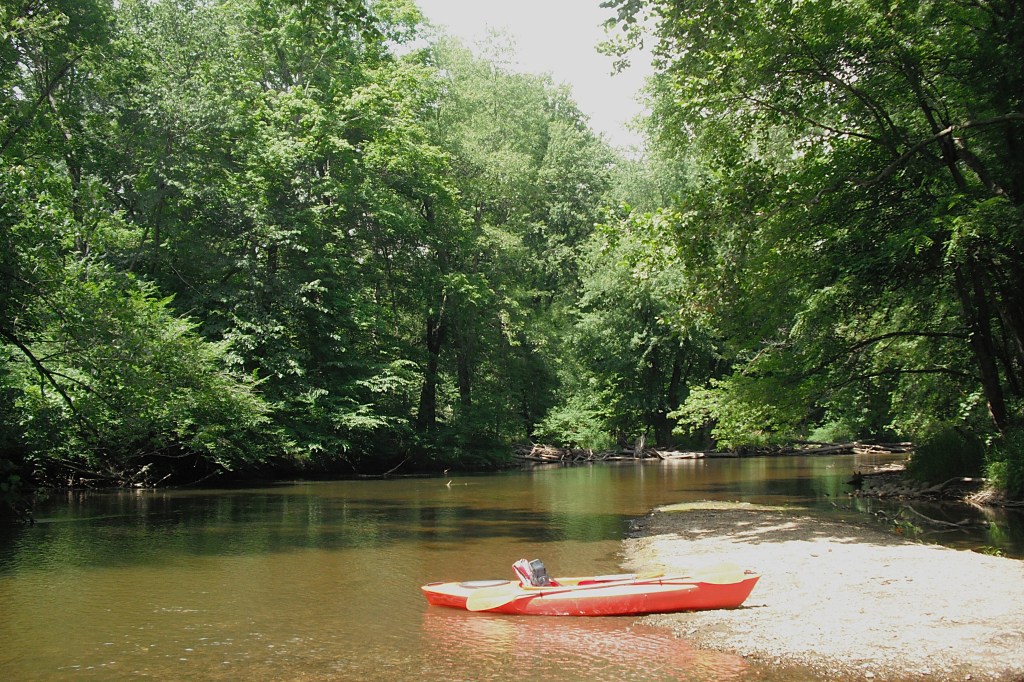
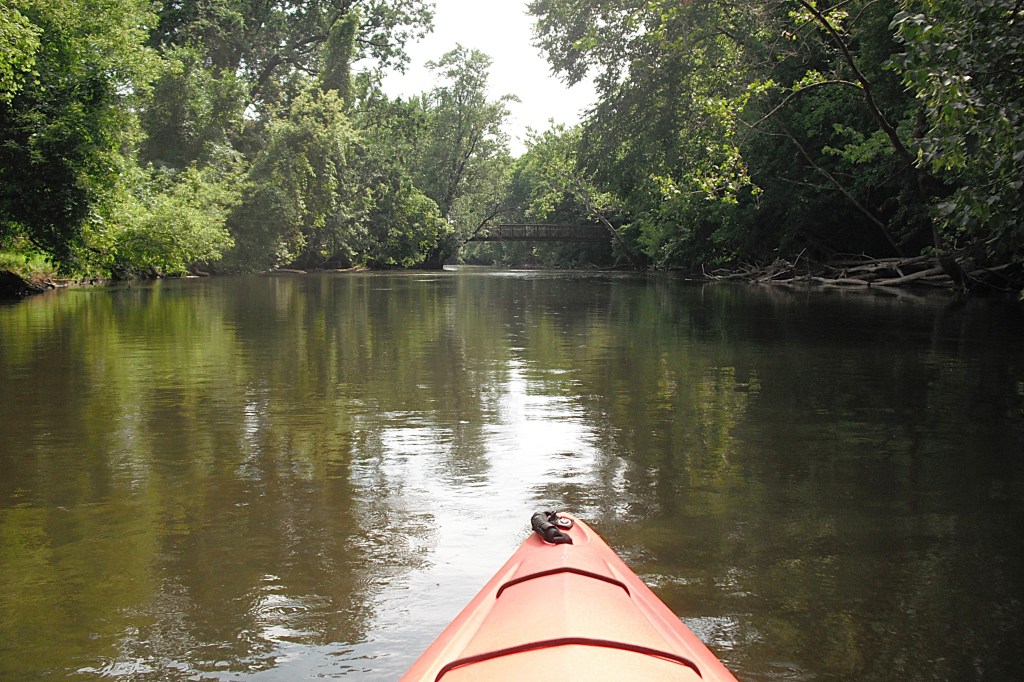
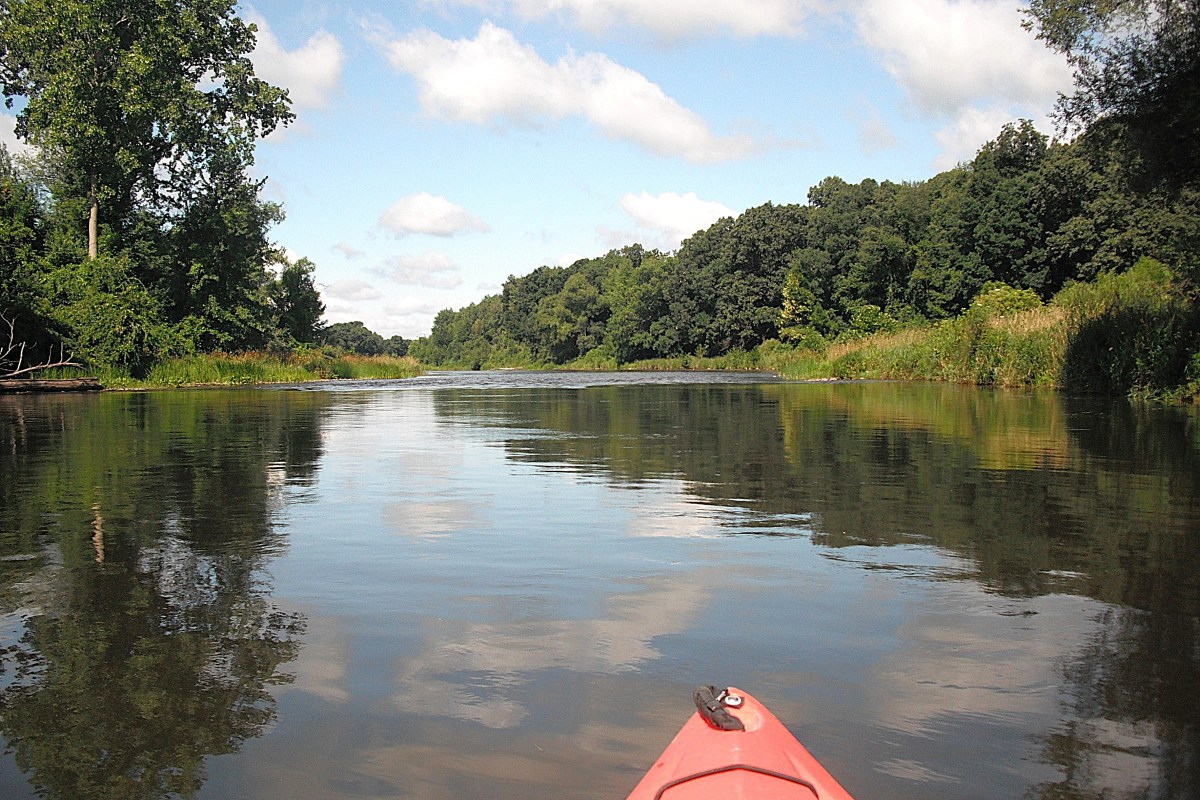
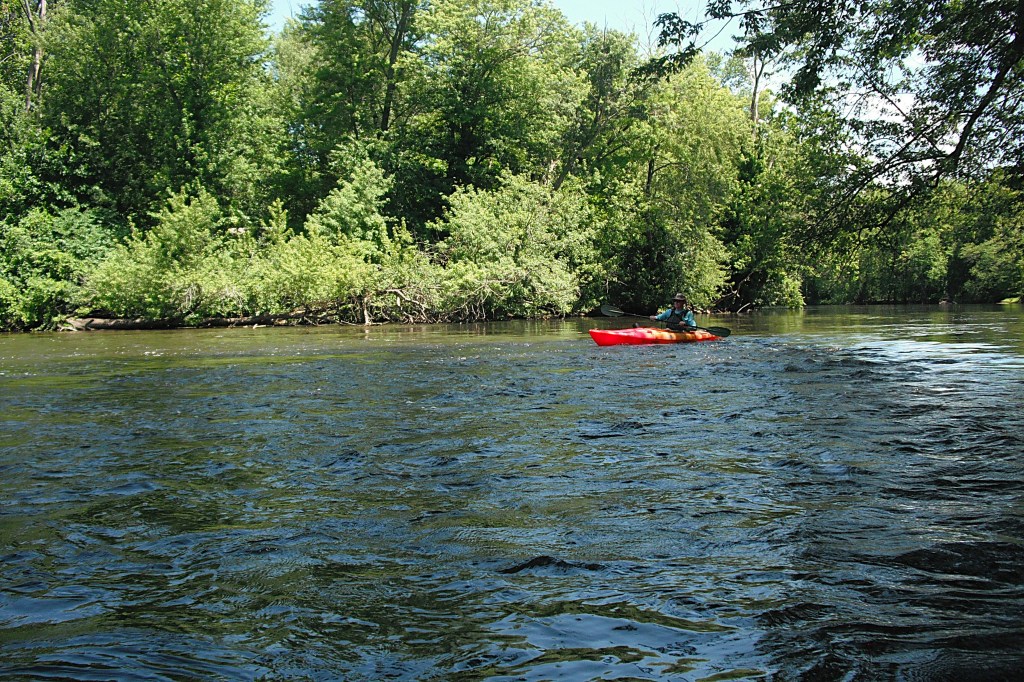
The Pine Creek watershed covers 236 square miles. Baseline Creek, Mentha Drain, and Sand Creek are tributaries of Pine Creek. The navigable portion of Pine Creek is accessed from Pine Creek Impoundment. The lake is located west of Otsego on Jefferson Road in Otsego Township, Allegan County. Pine Creek is part of the Kalamazoo River watershed. The haze in some of the photos is smoke from Canadian wildfires.
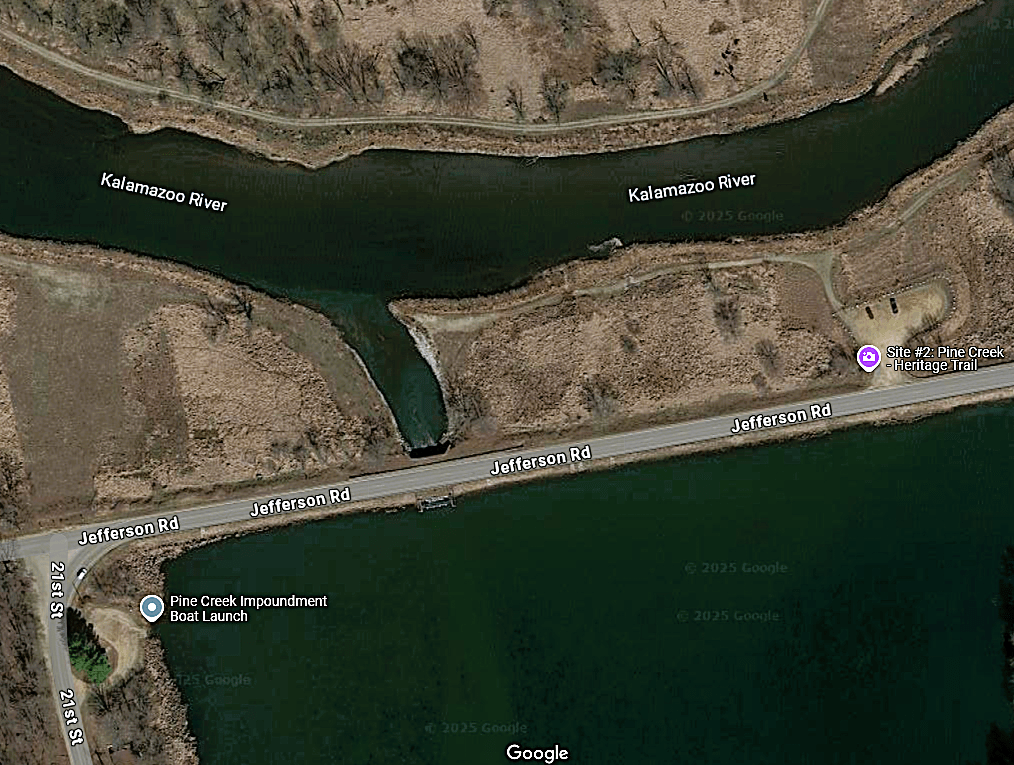
Jefferson Road is south of the Kalamazoo River and parallel to it. Pine Creek Impoundment is across the road from the river. Pine Creek flows out of the impoundment at a water level control structure next to the south side of Jefferson Road. The water flows over the control boards of the structure and through two large culverts under Jefferson Road. Then, the creek empties into the Kalamazoo River.

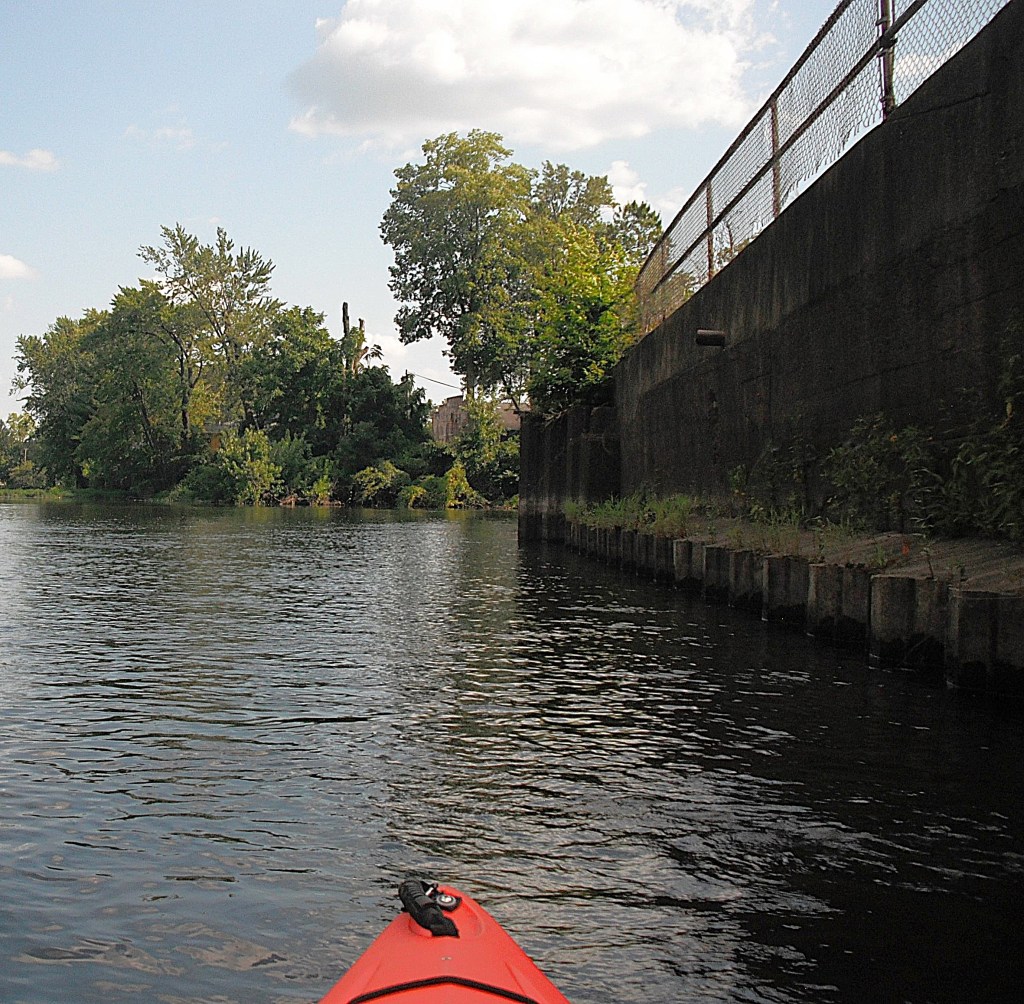
The impoundment is drawn down once every five years for fish and wildlife habitat improvement and sediment control. Check with Otsego Township or the Michigan DNR when planning a trip. During a Kalamazoo River kayak trip, I paddled up Pine Creek for a look at the dam. The control boards were removed and the lake had been drained.
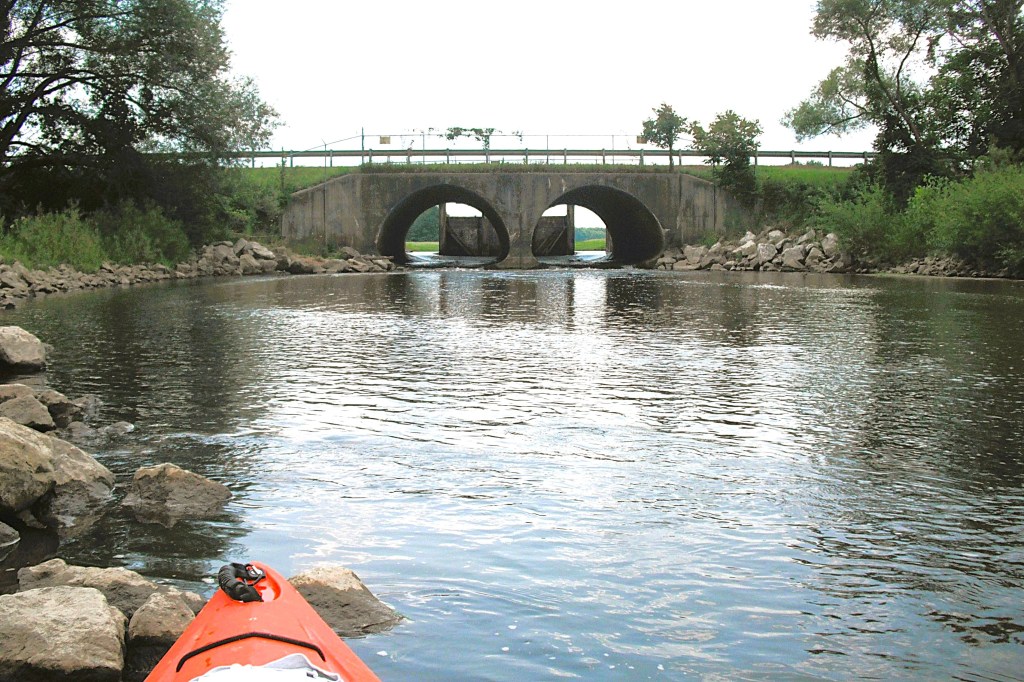
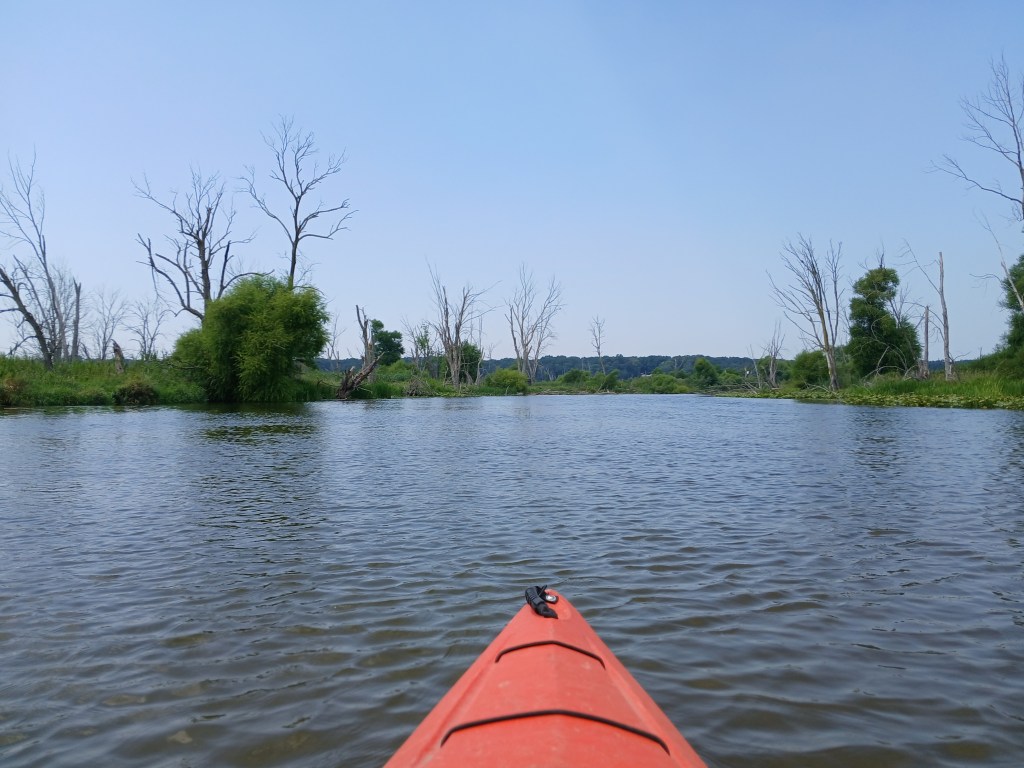
The land surrounding the impoundment and bordering the creek is private property, no trespassing. The creek flows through a swamp. I could not find a decent place to get out of my kayak and take a break. Maybe you’ll have better luck.

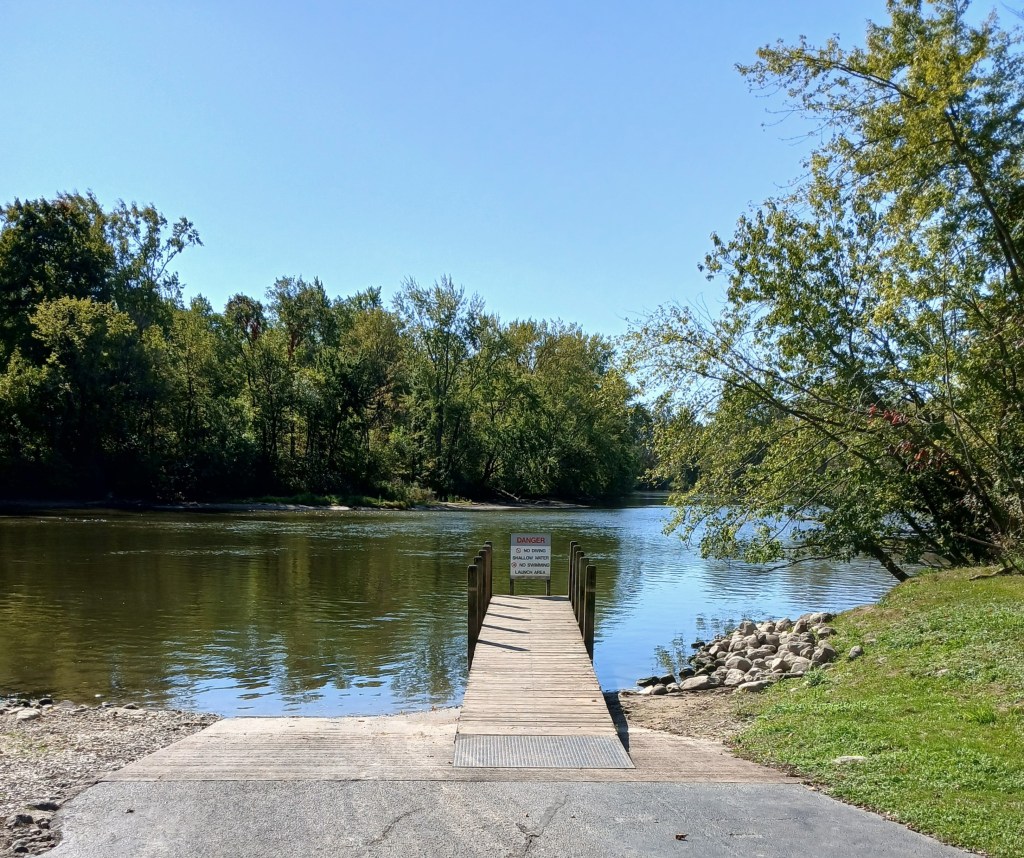
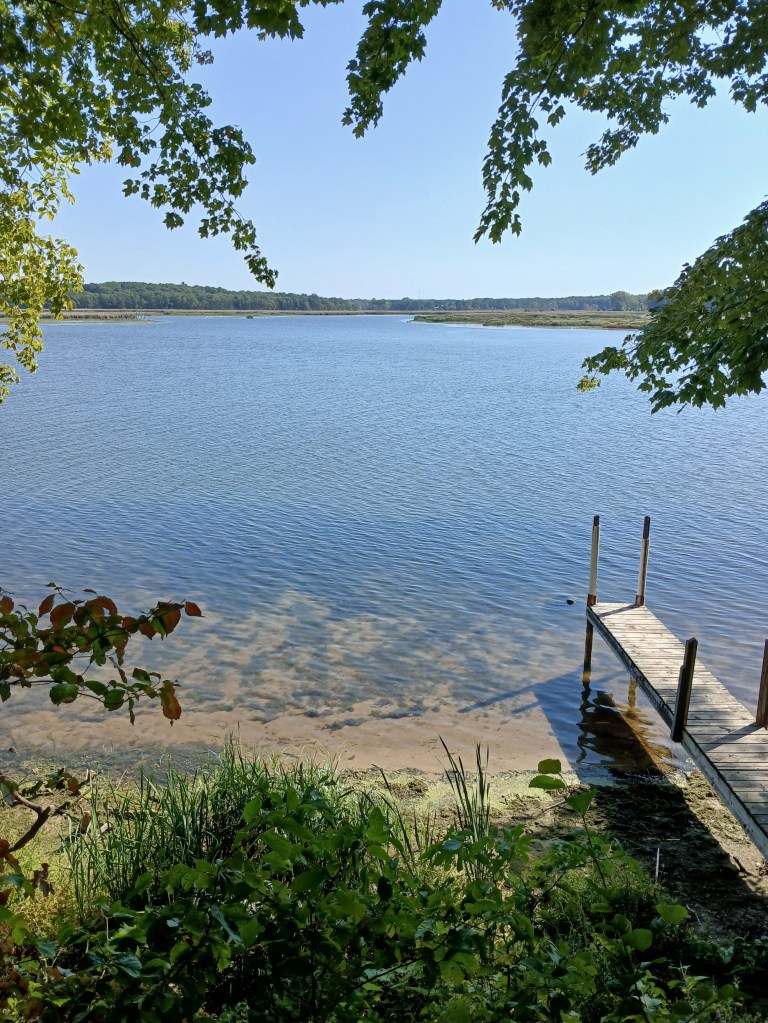
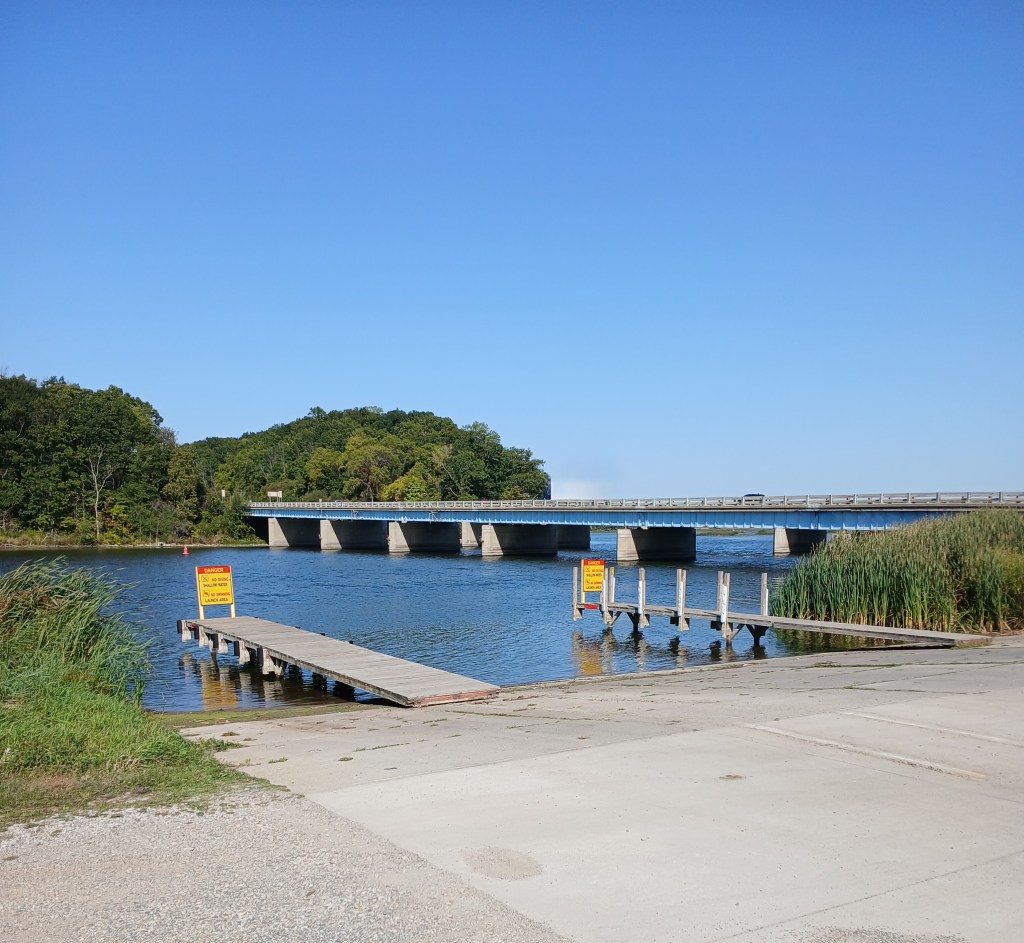
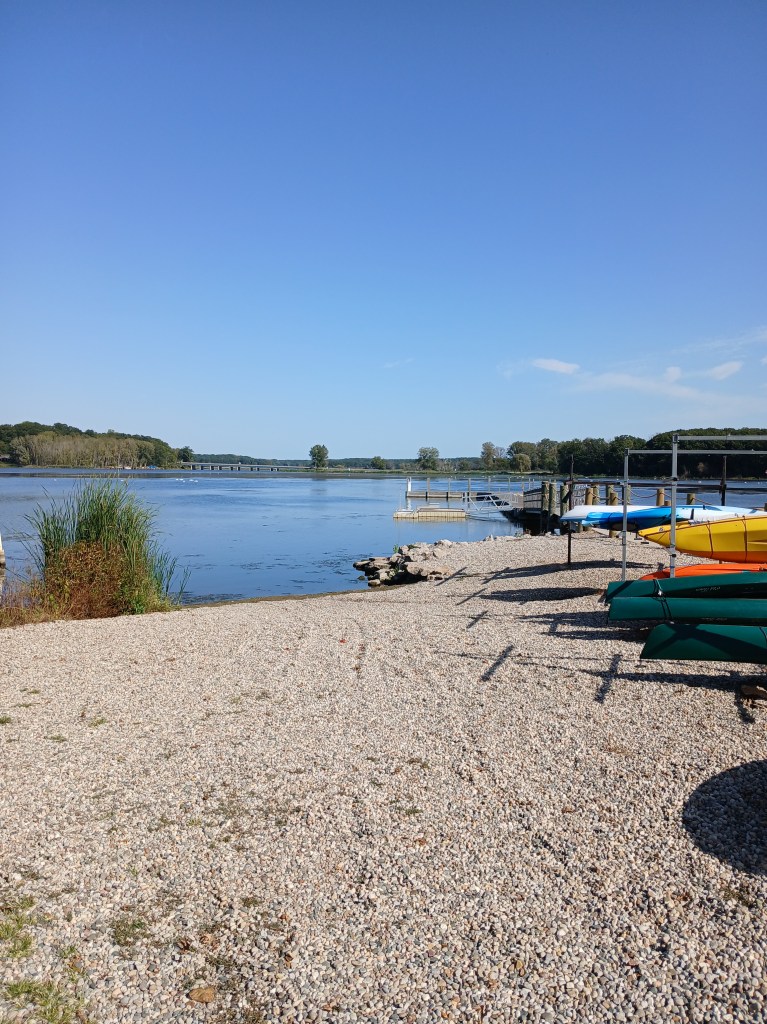
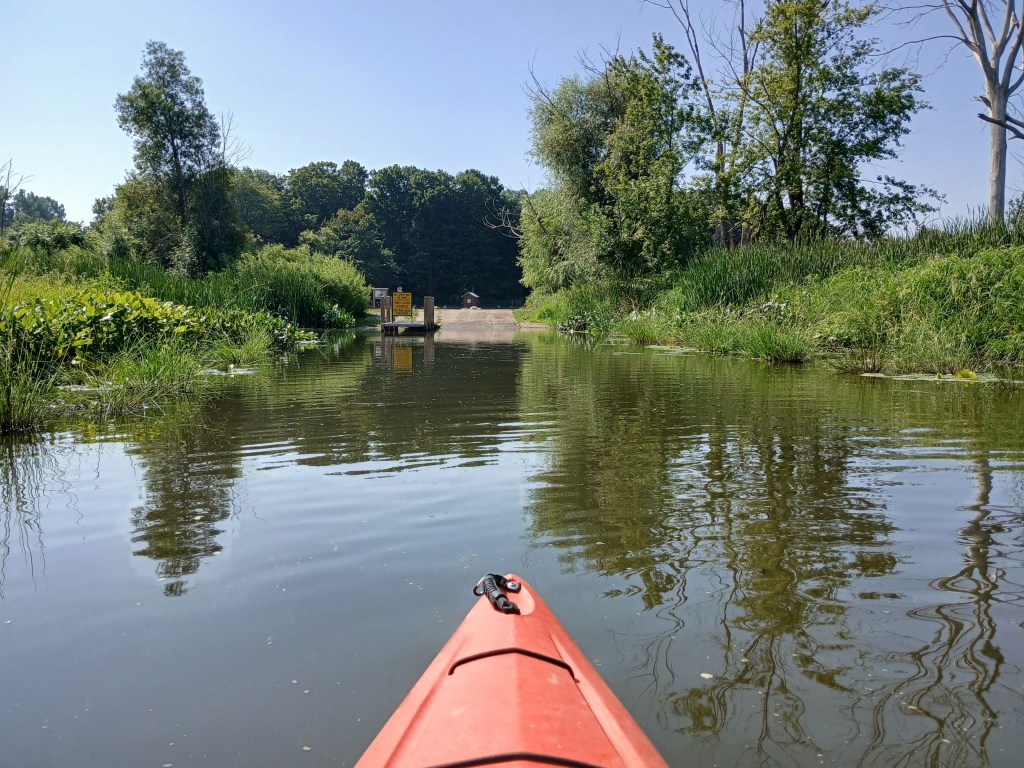
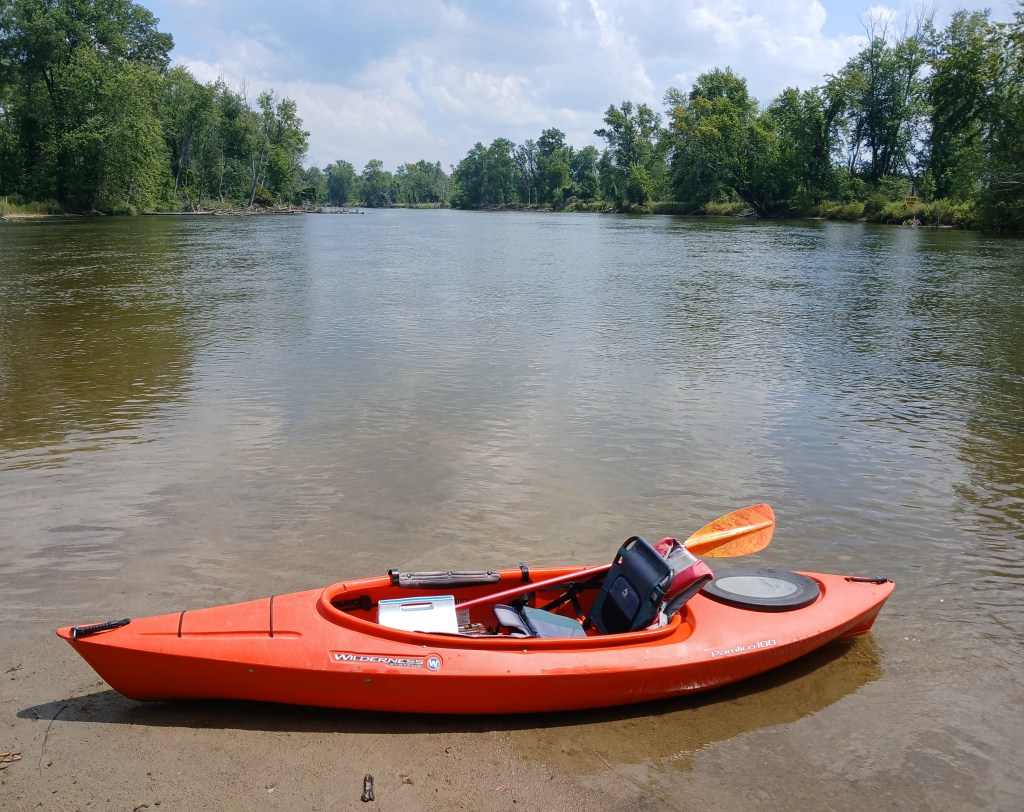
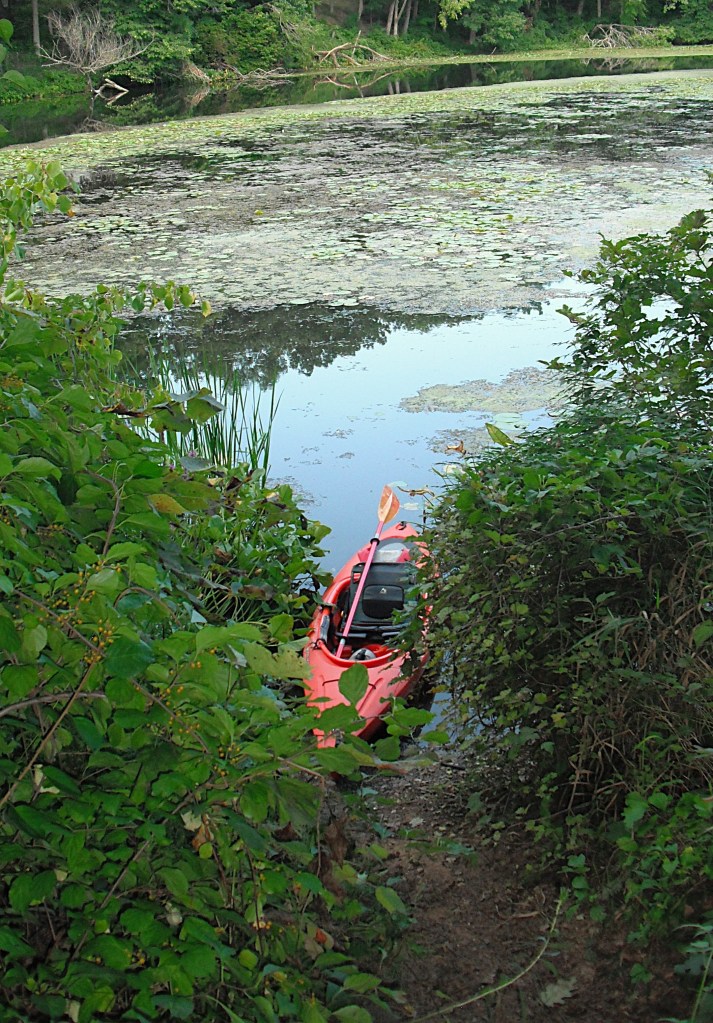
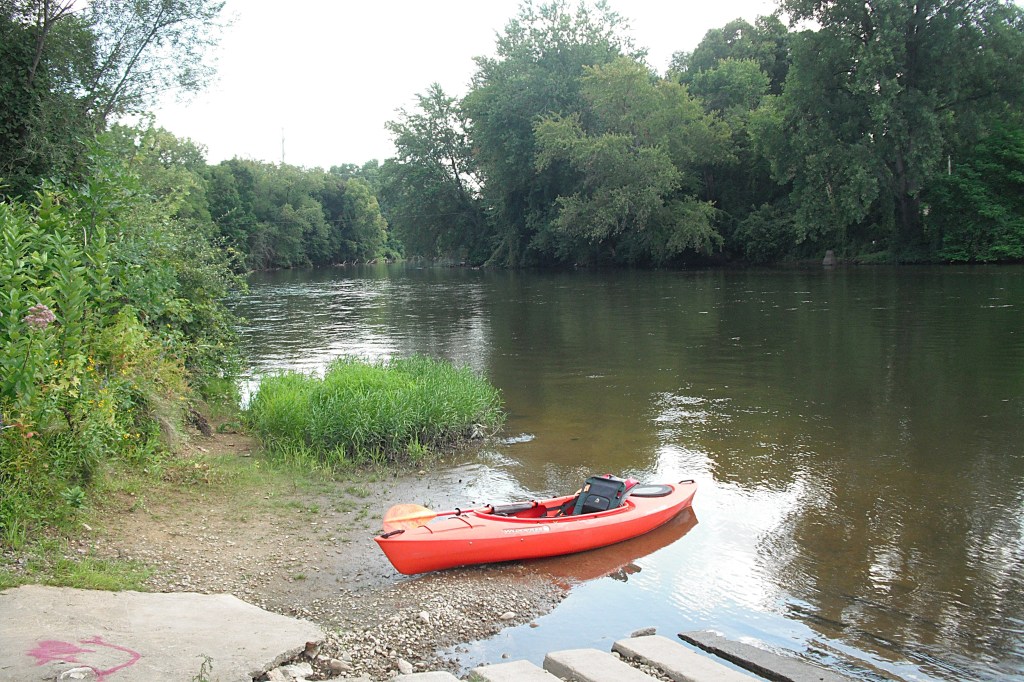
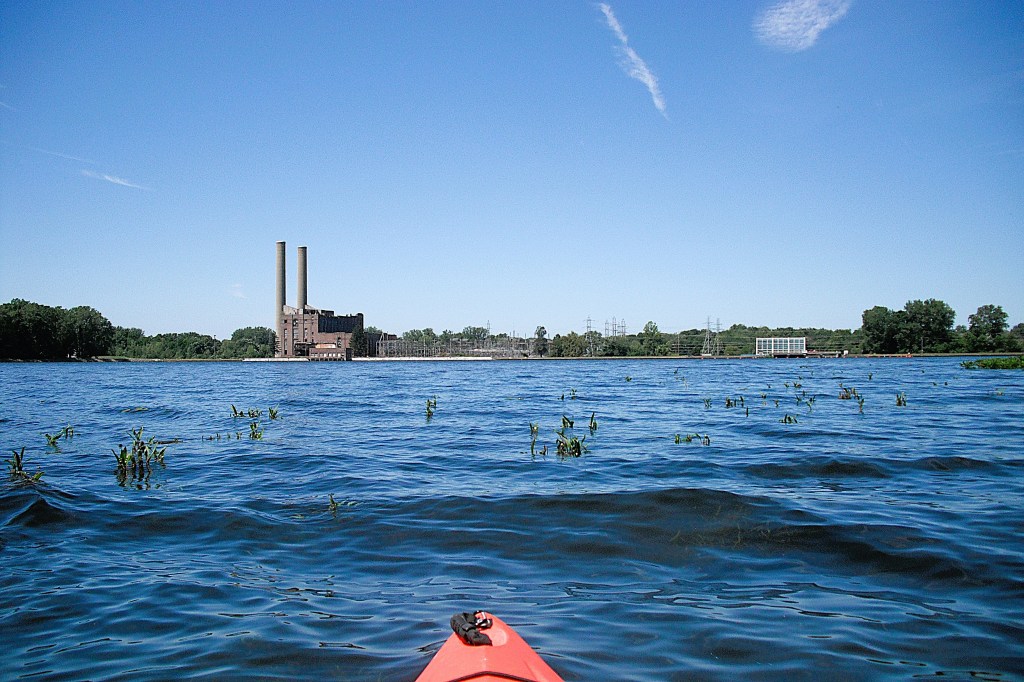
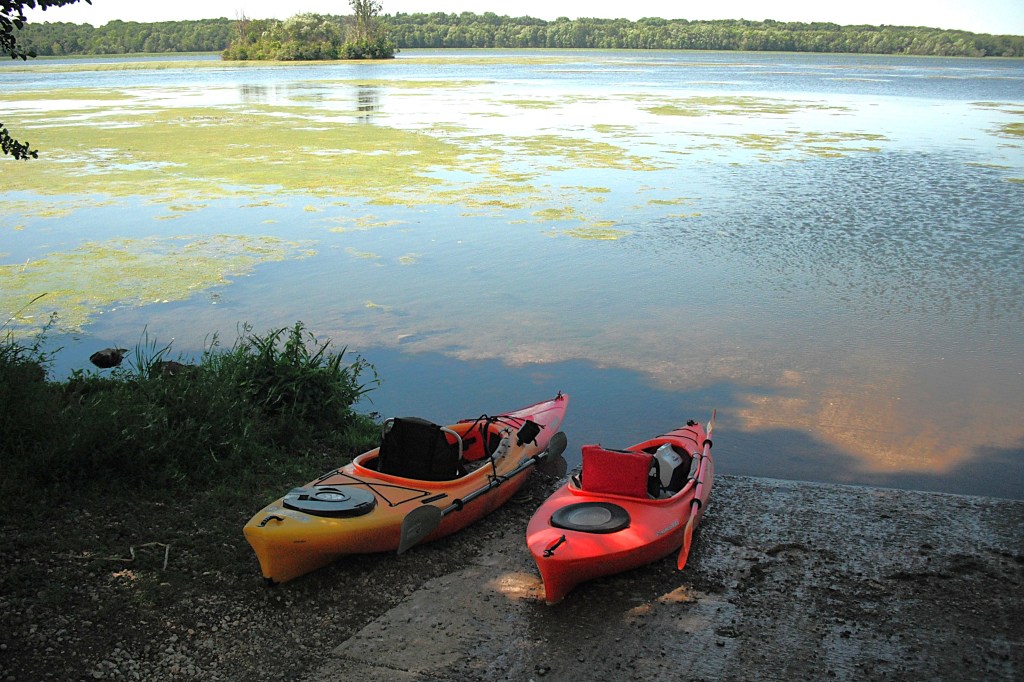
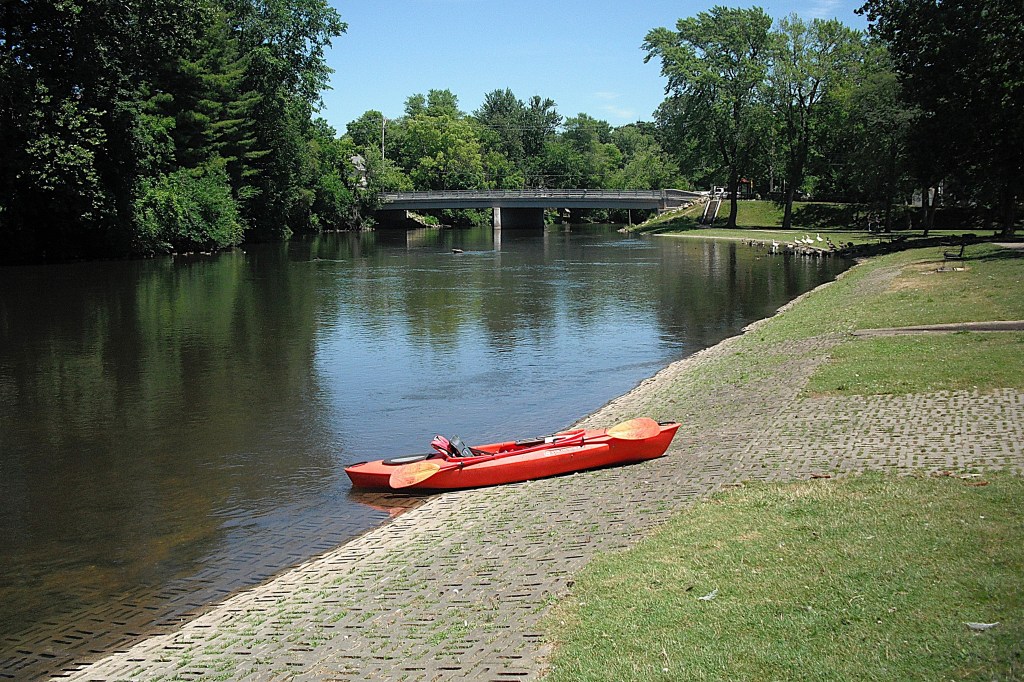
The Pine Creek Impoundment boat landing is located on the corner of Jefferson Road and 21st Street. The landing features the boat ramp along with a vault toilet and a small parking area. Jefferson Road and the water level control structure can be seen in the background.
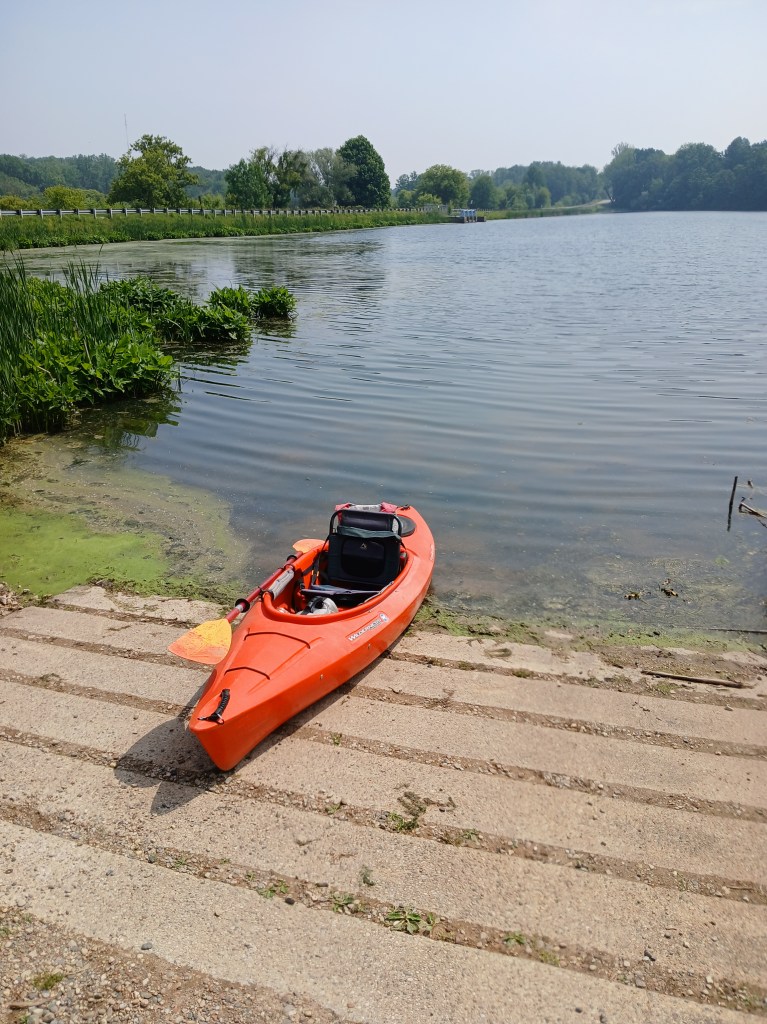
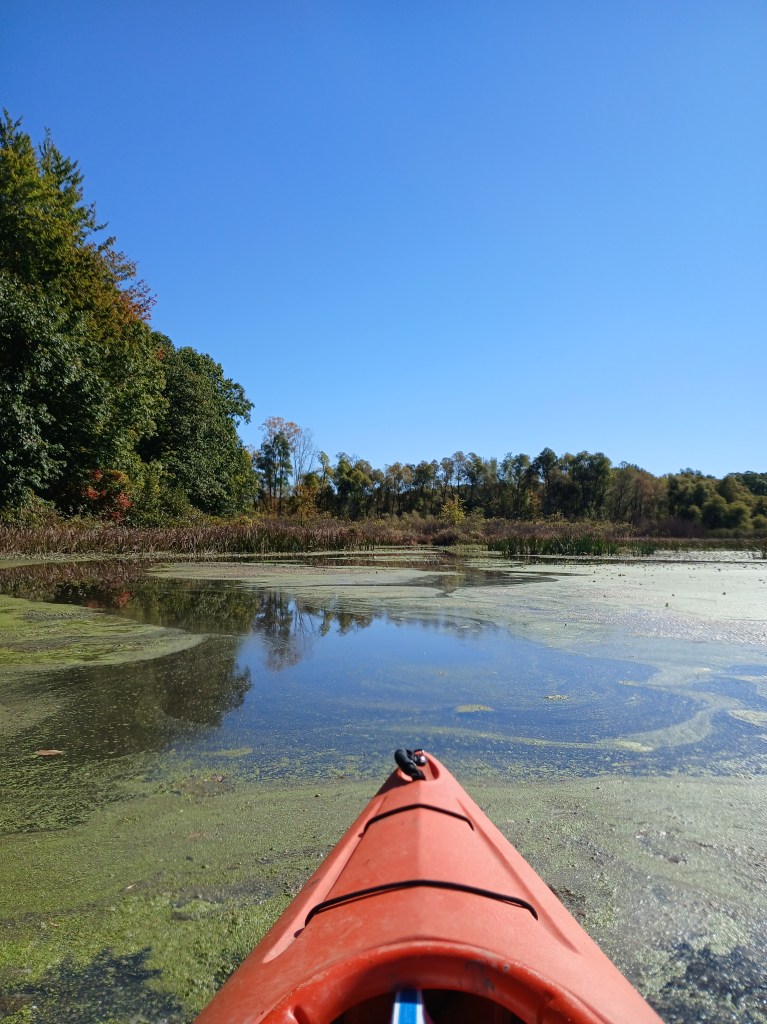
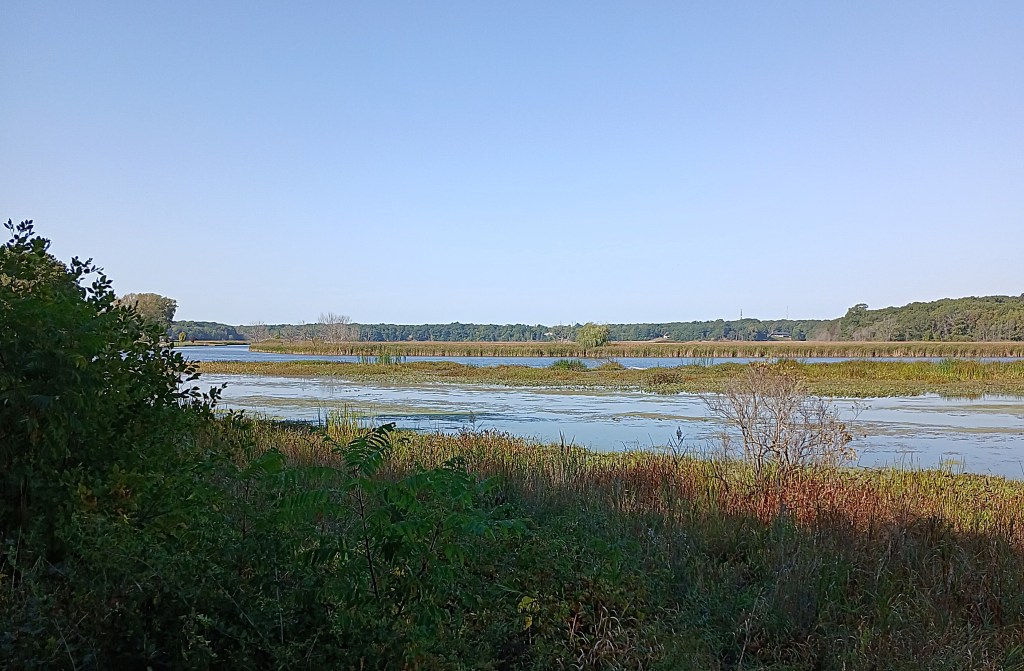
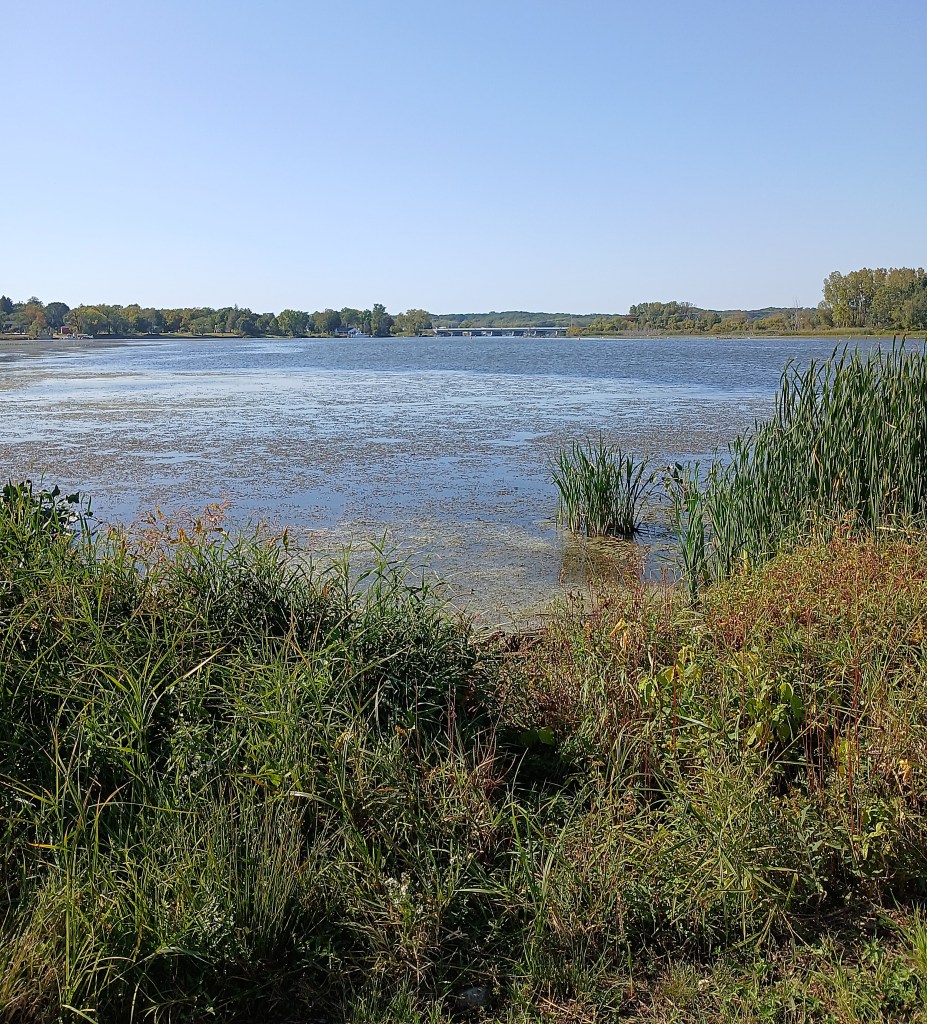
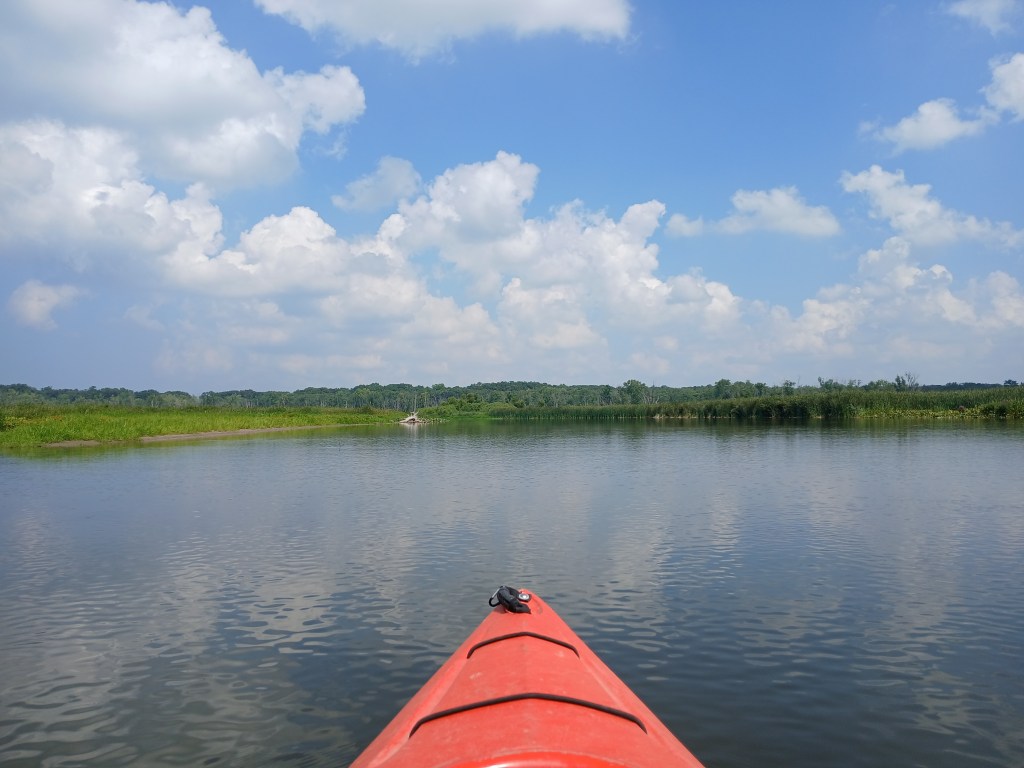
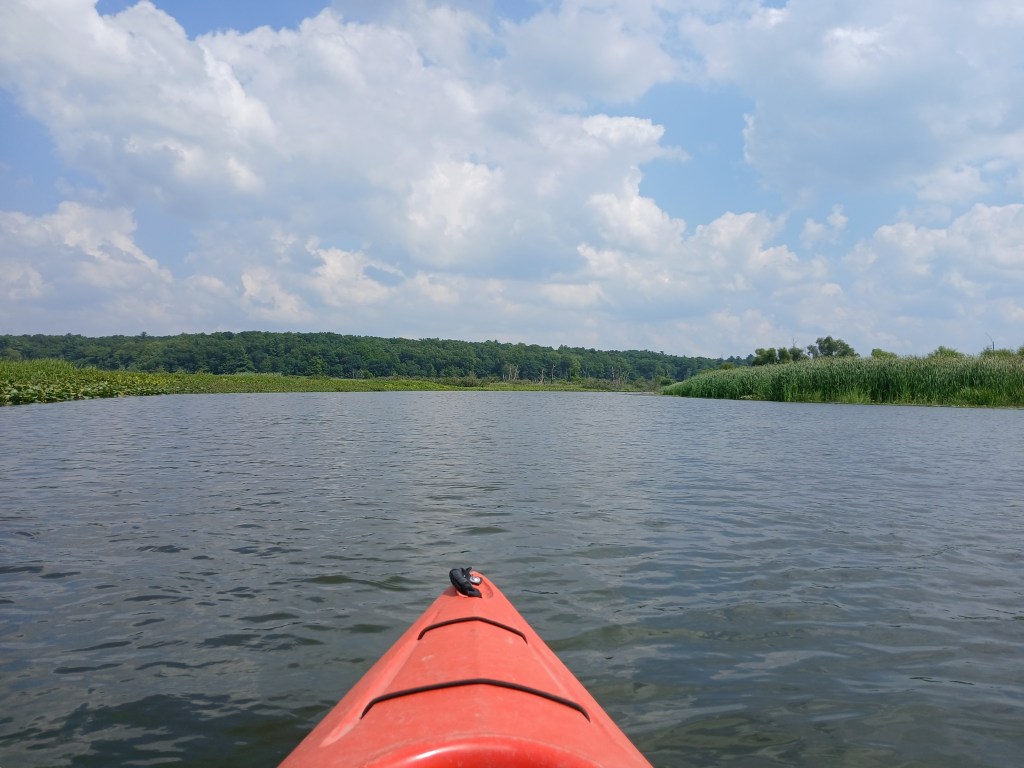
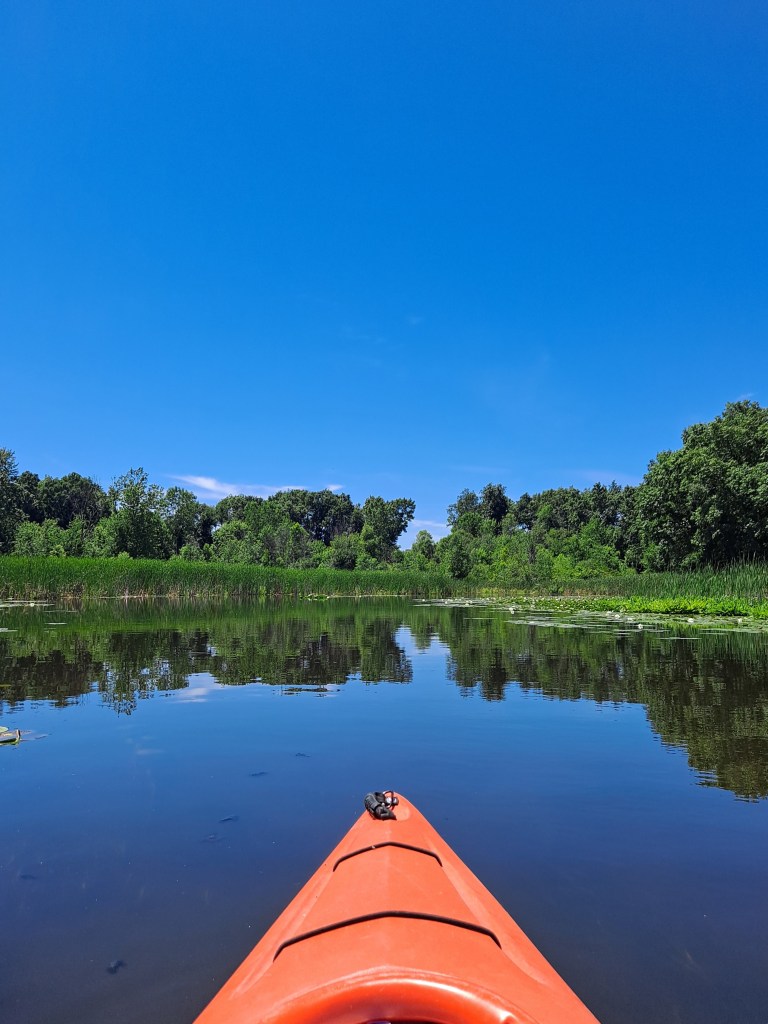
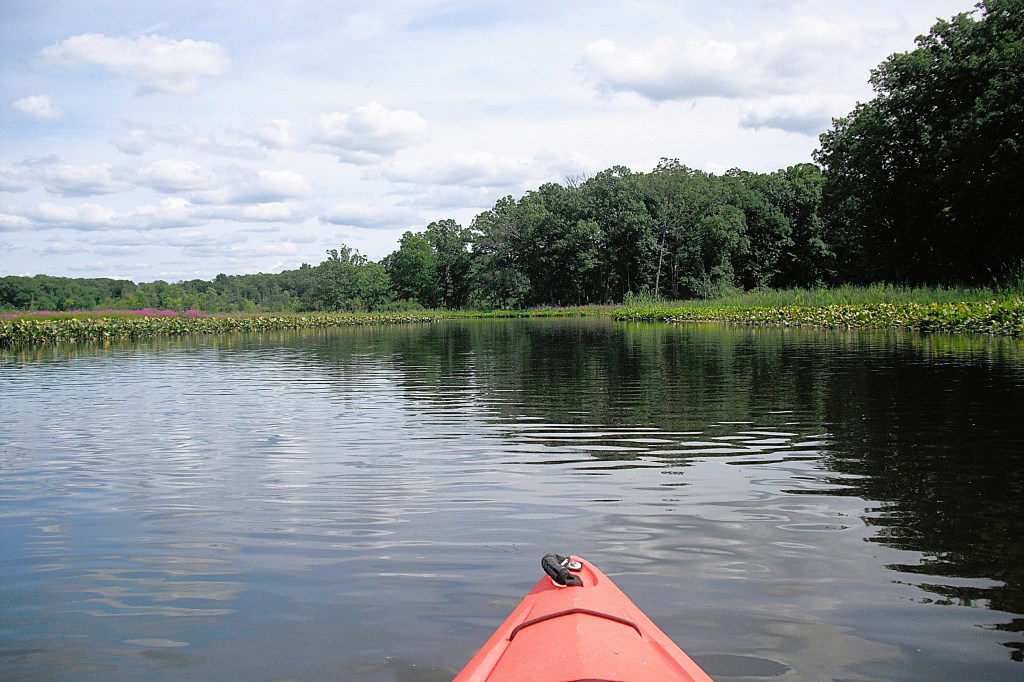
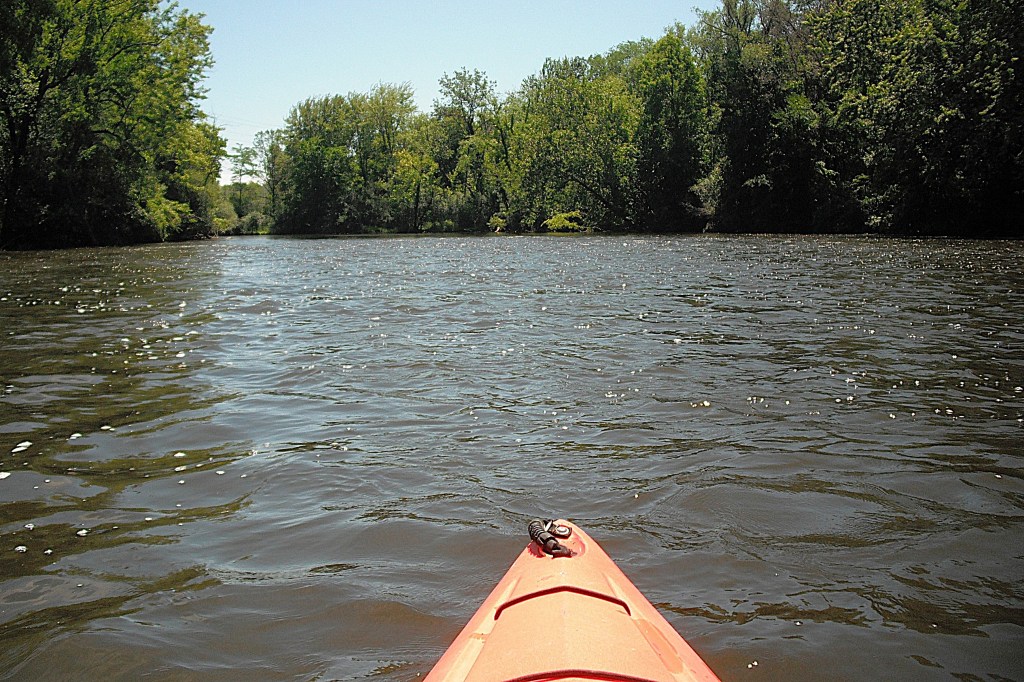
I took my trip on a weekday in early June and my kayak was the only boat on the lake. Watch for shallow water. It’s easy to get stuck in the mud. On some portions of the impoundment, aquatic vegetation can be excessive. I easily explored everyplace that looked interesting, regardless of the vegetation. I thought that the water in the impoundment was cloudy and turbid. The lake looked dirty.

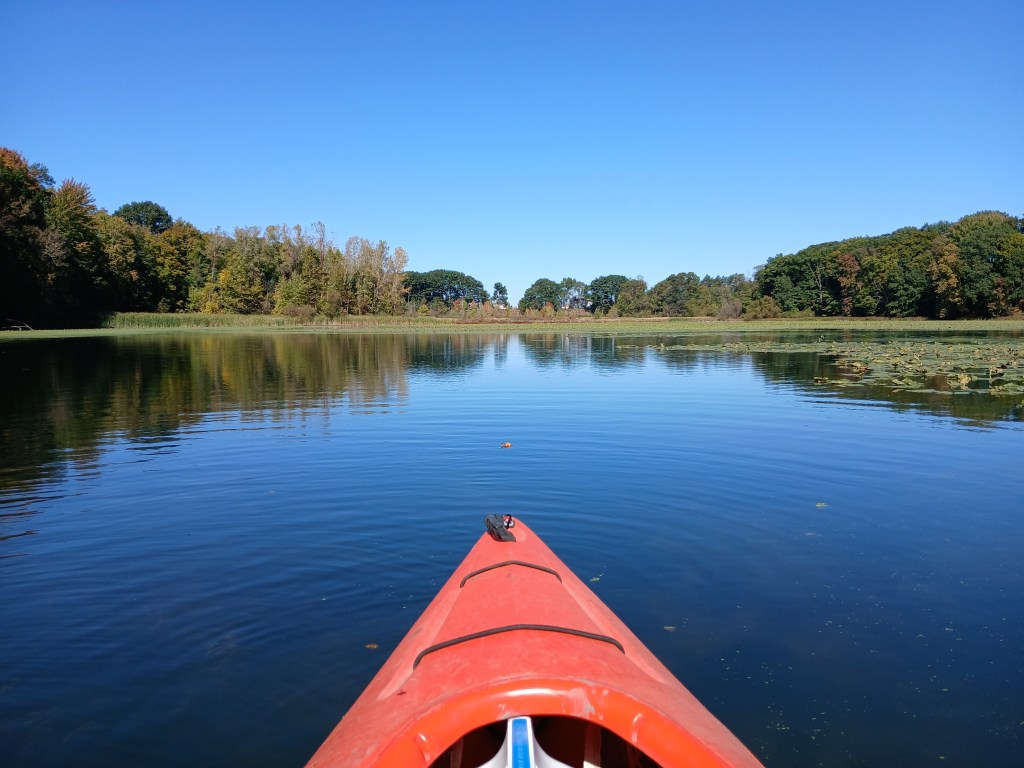
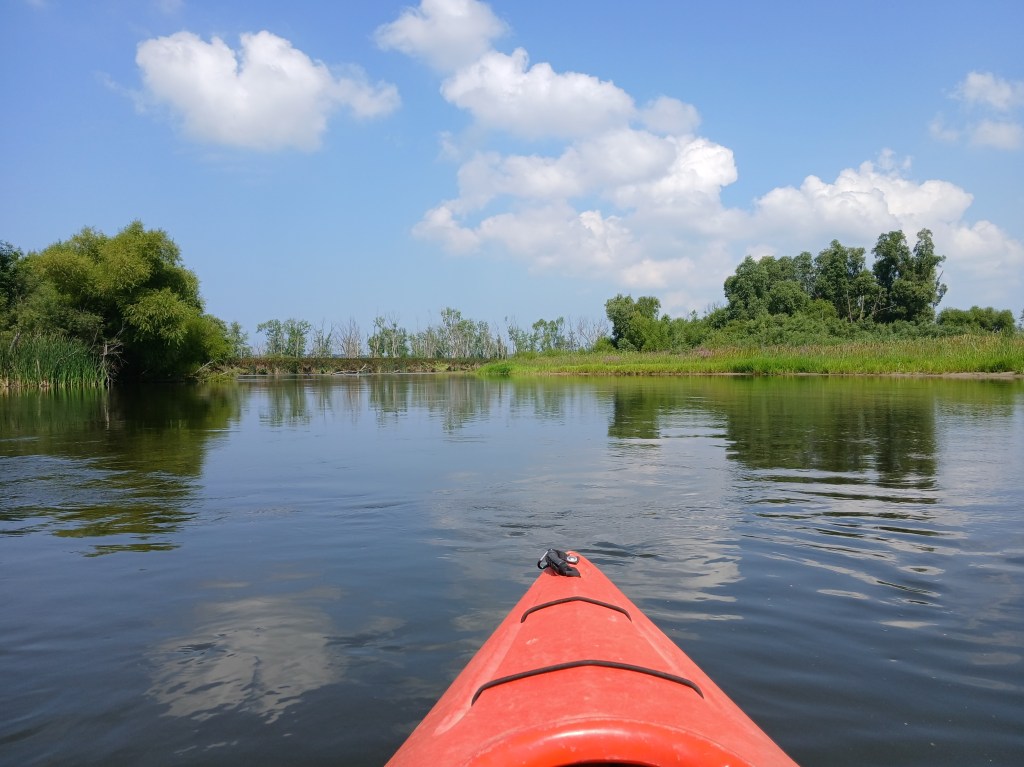
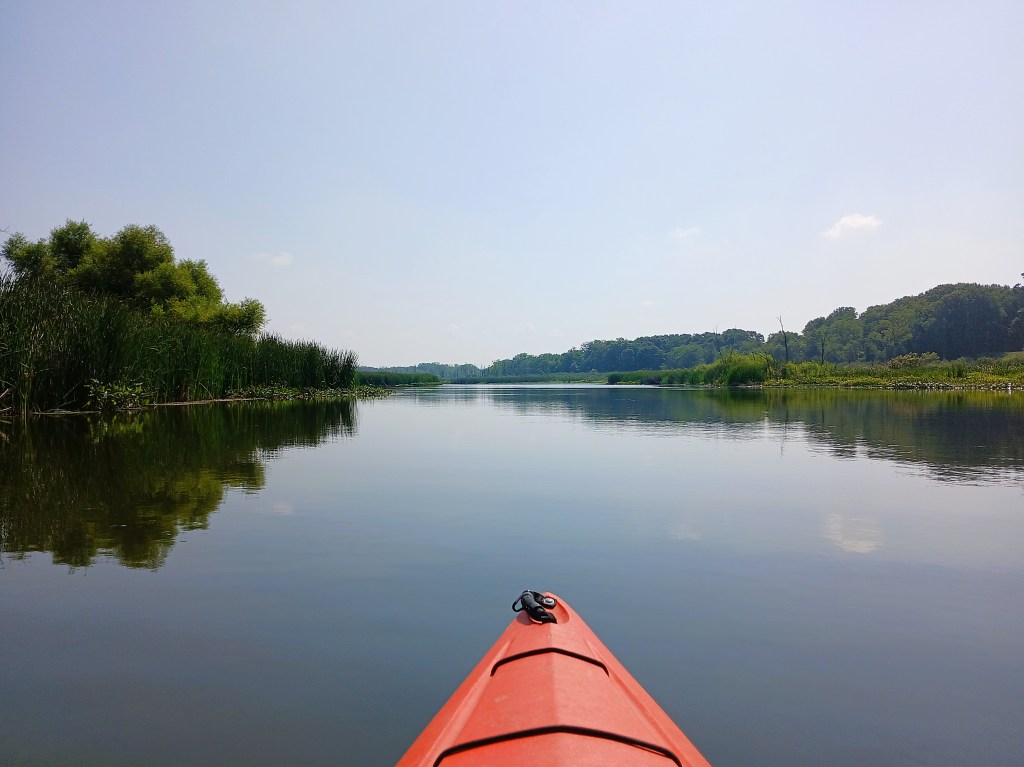
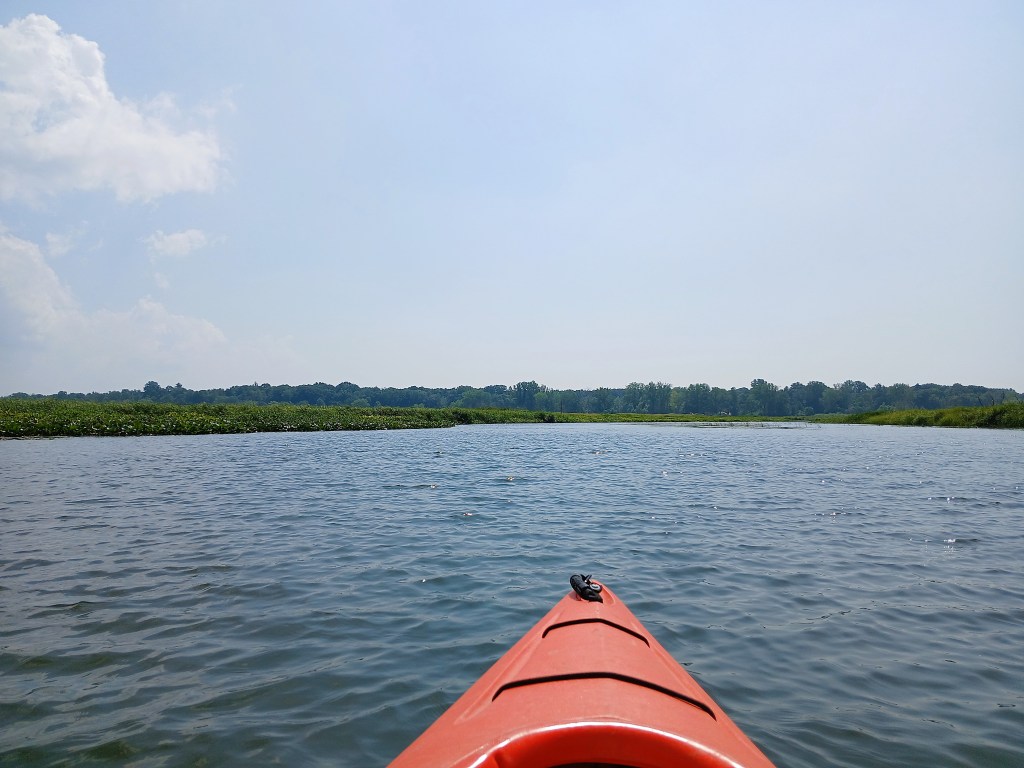
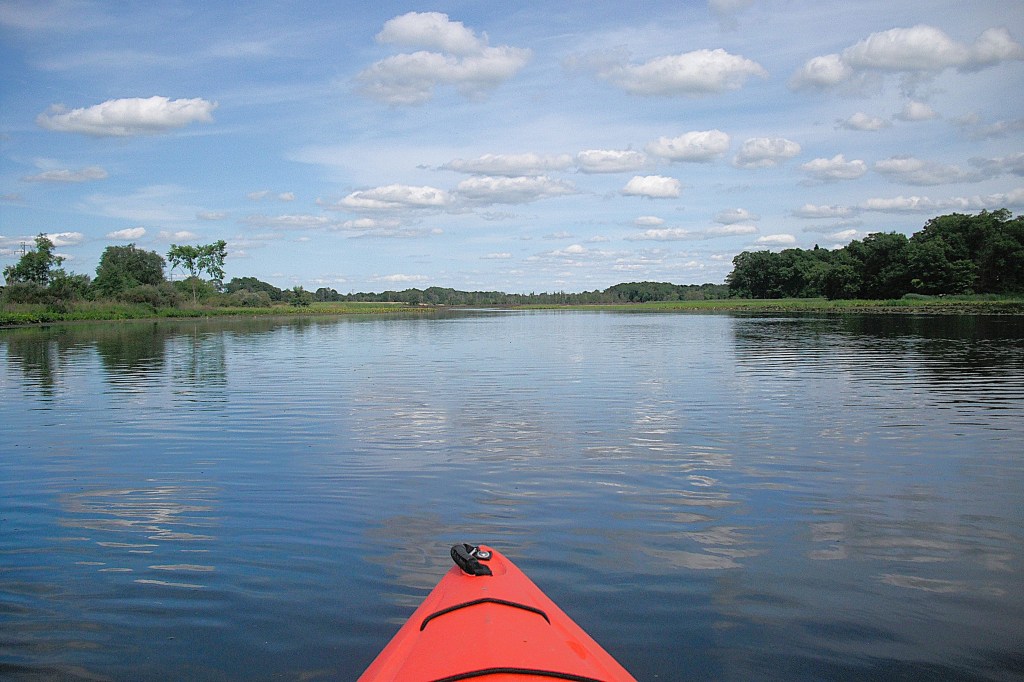
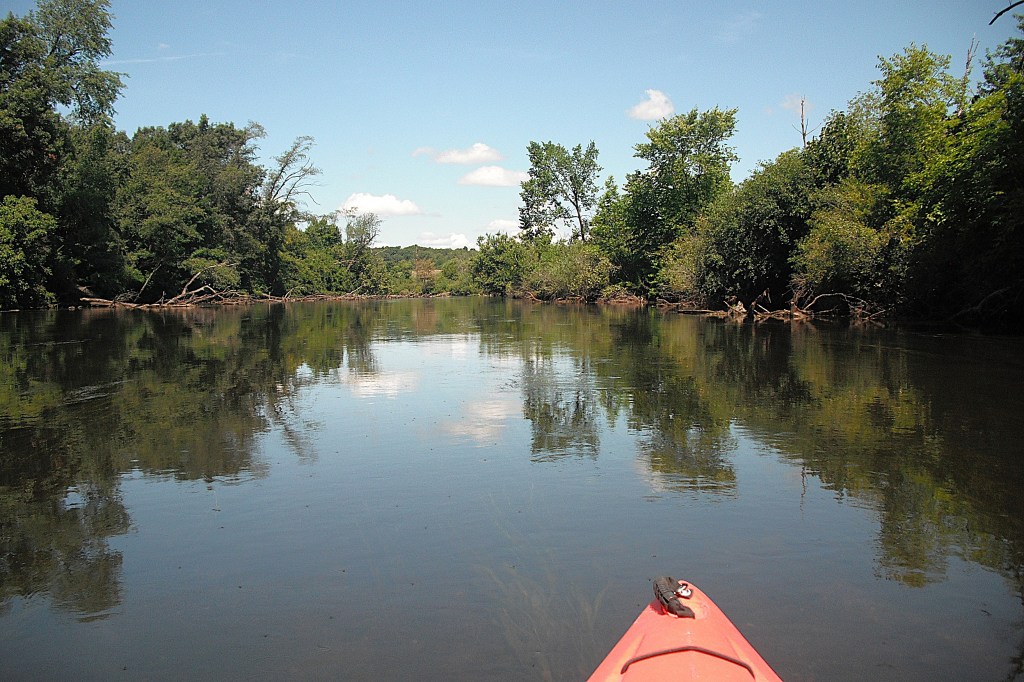
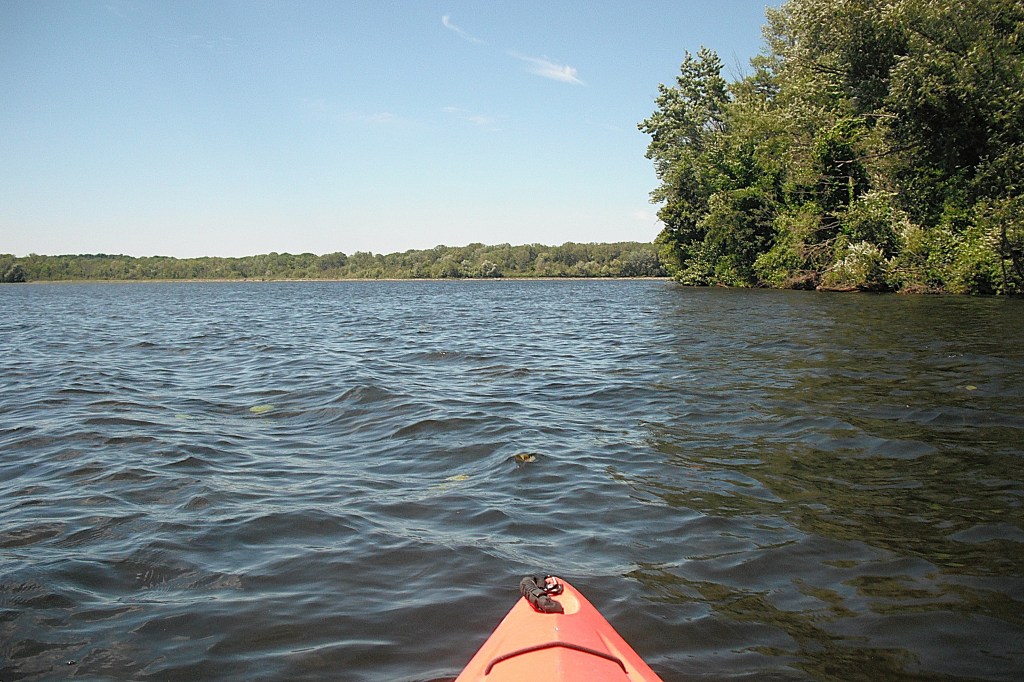
Head south on the impoundment toward the creek.
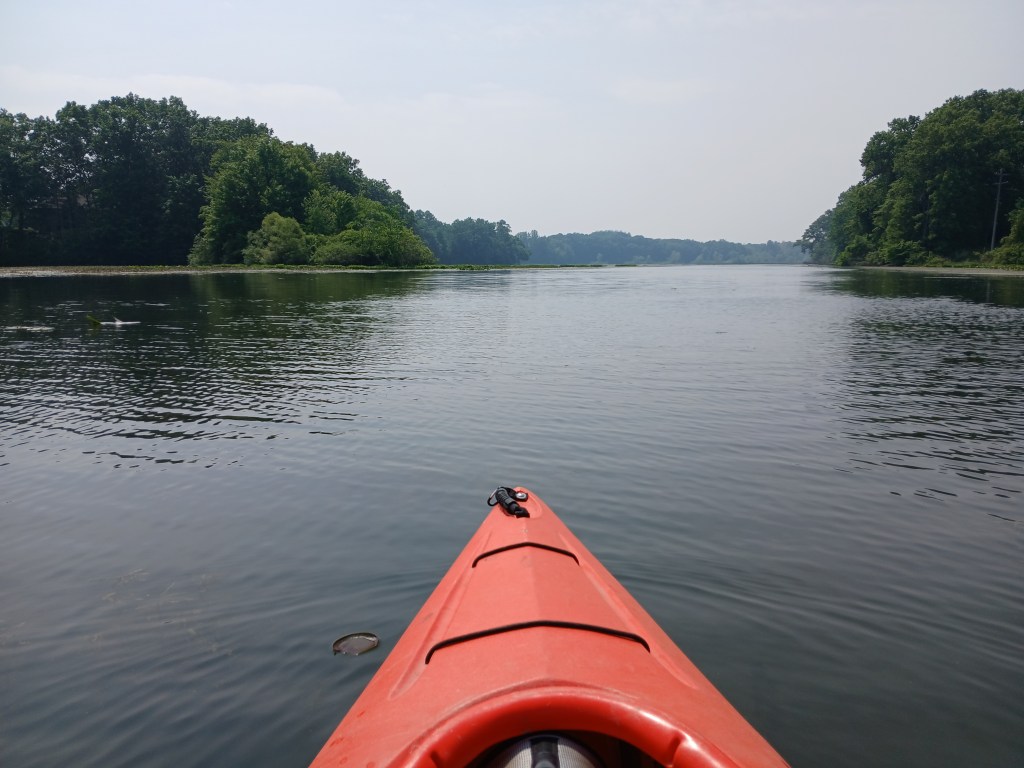
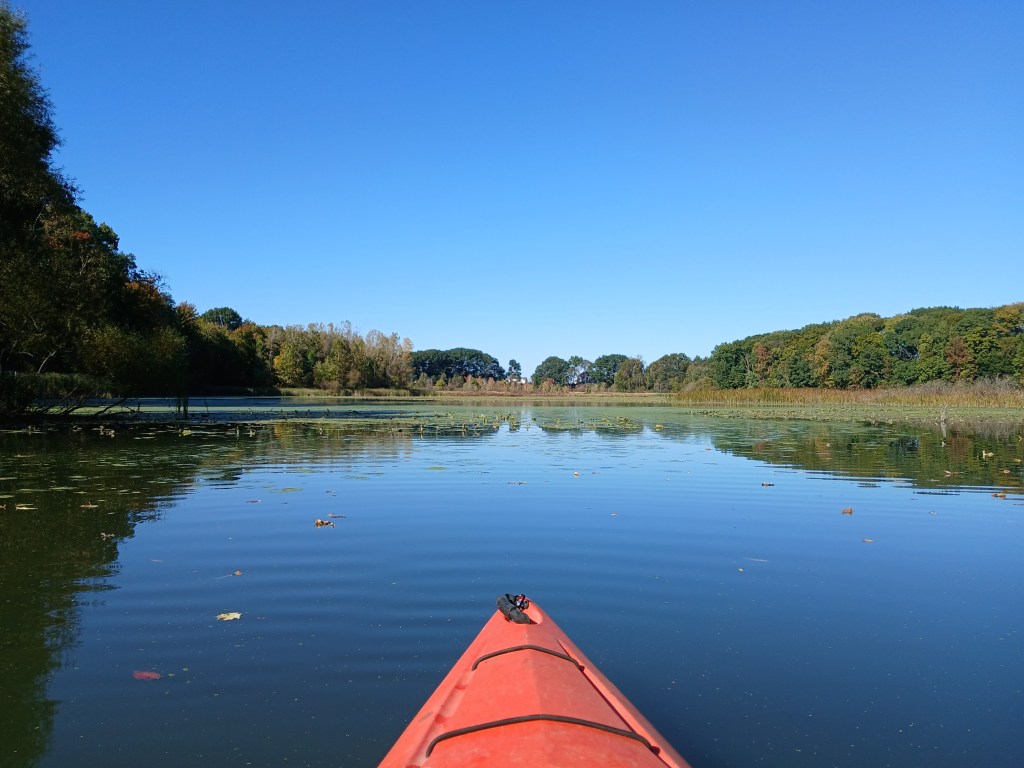
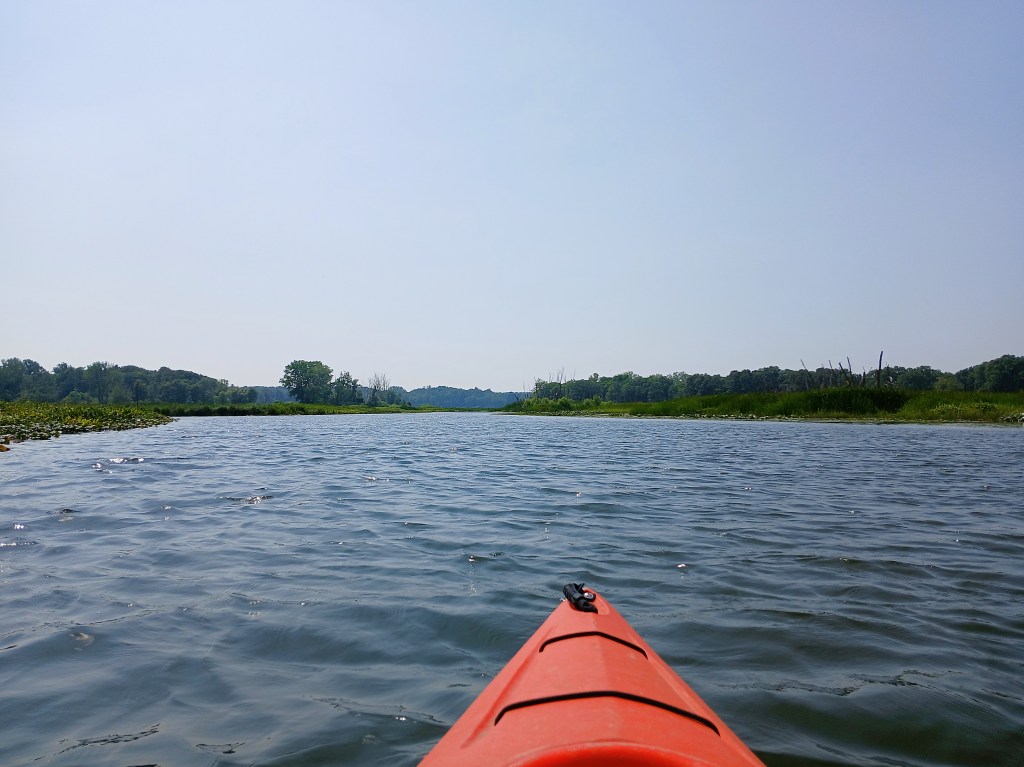
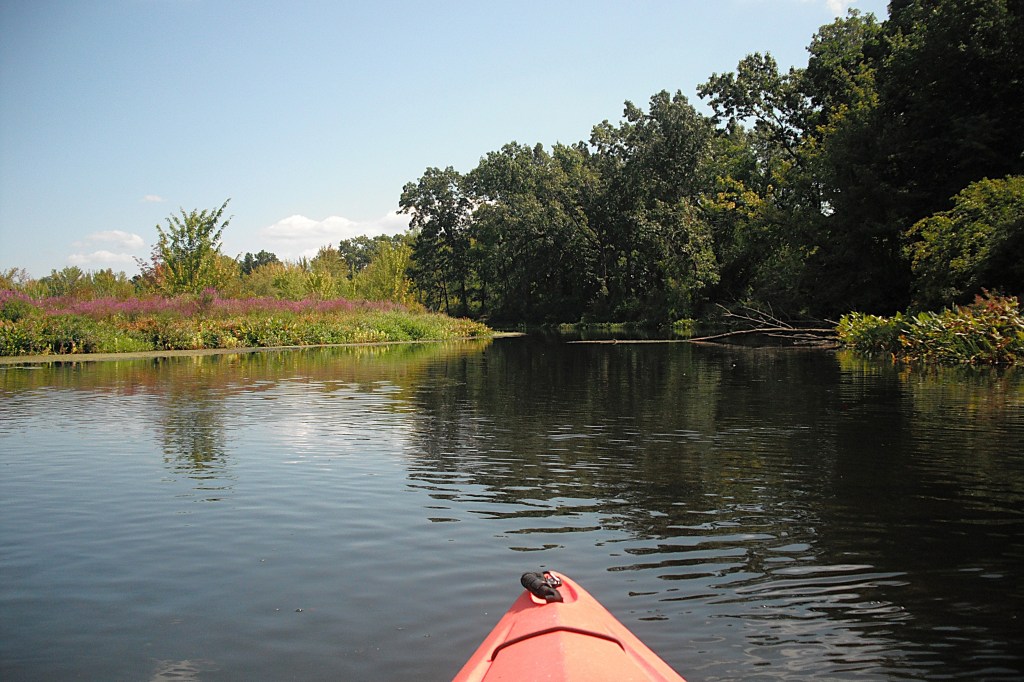
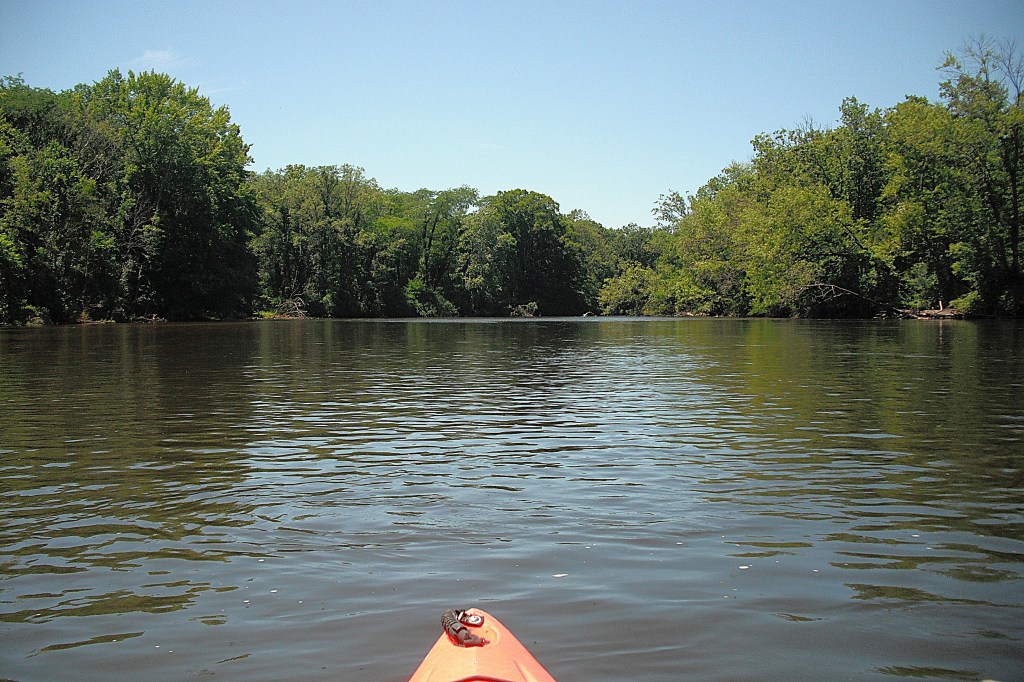
As you head south, the lake gets narrower and the east side of the impoundment deserves exploration.
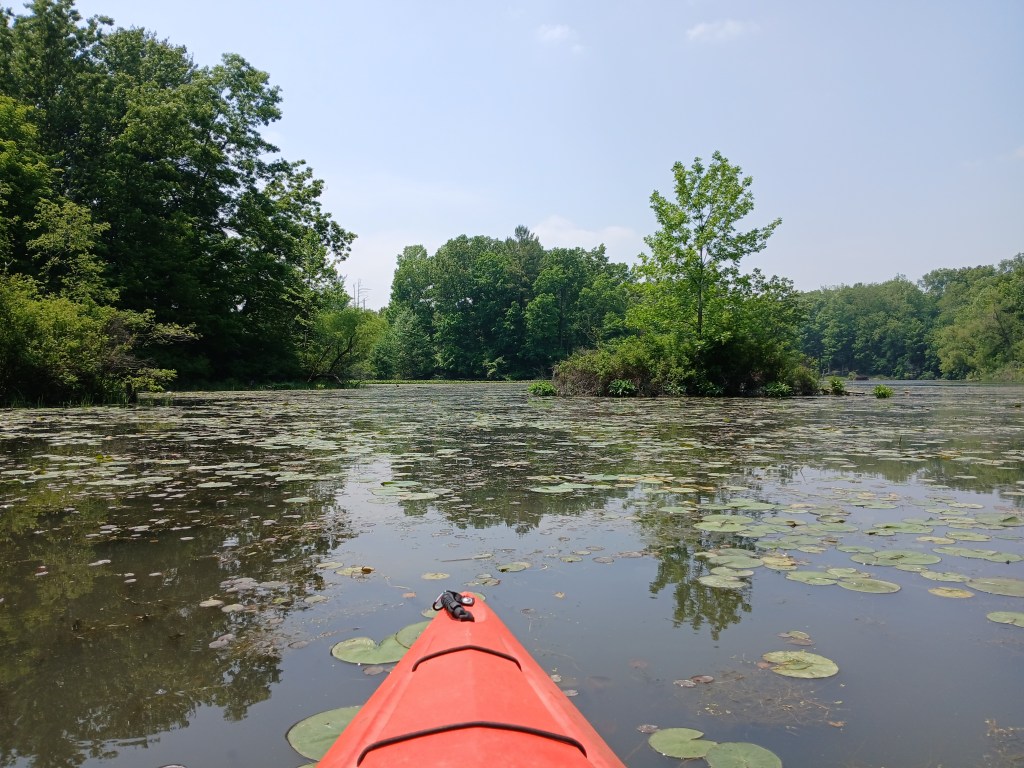
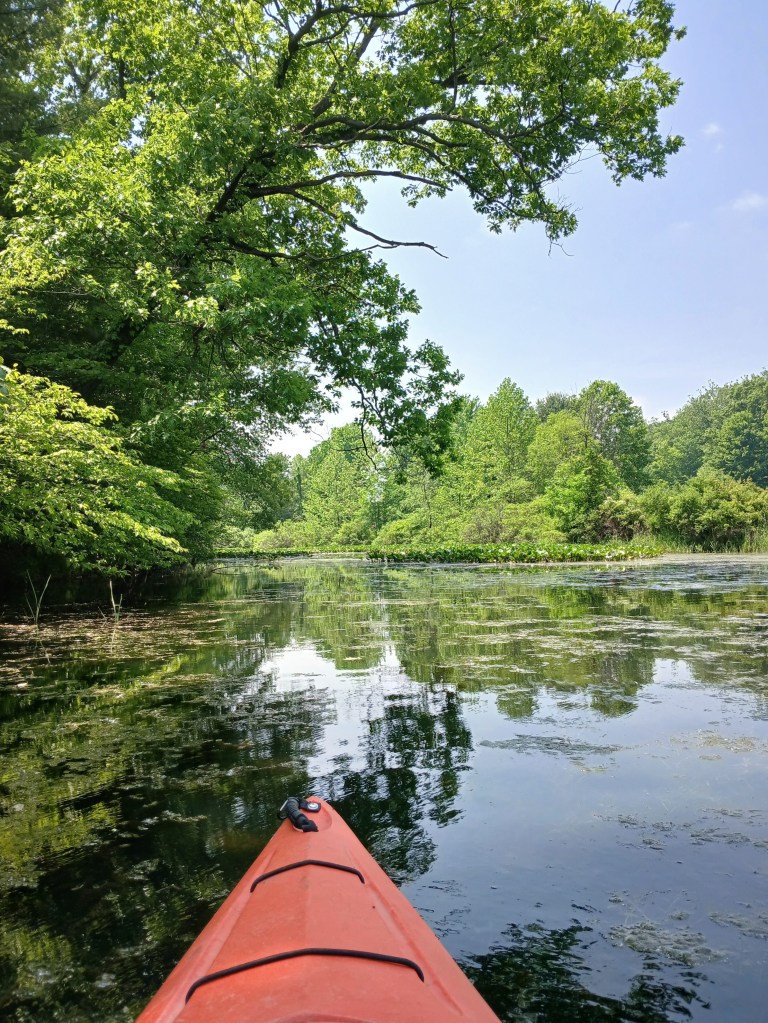
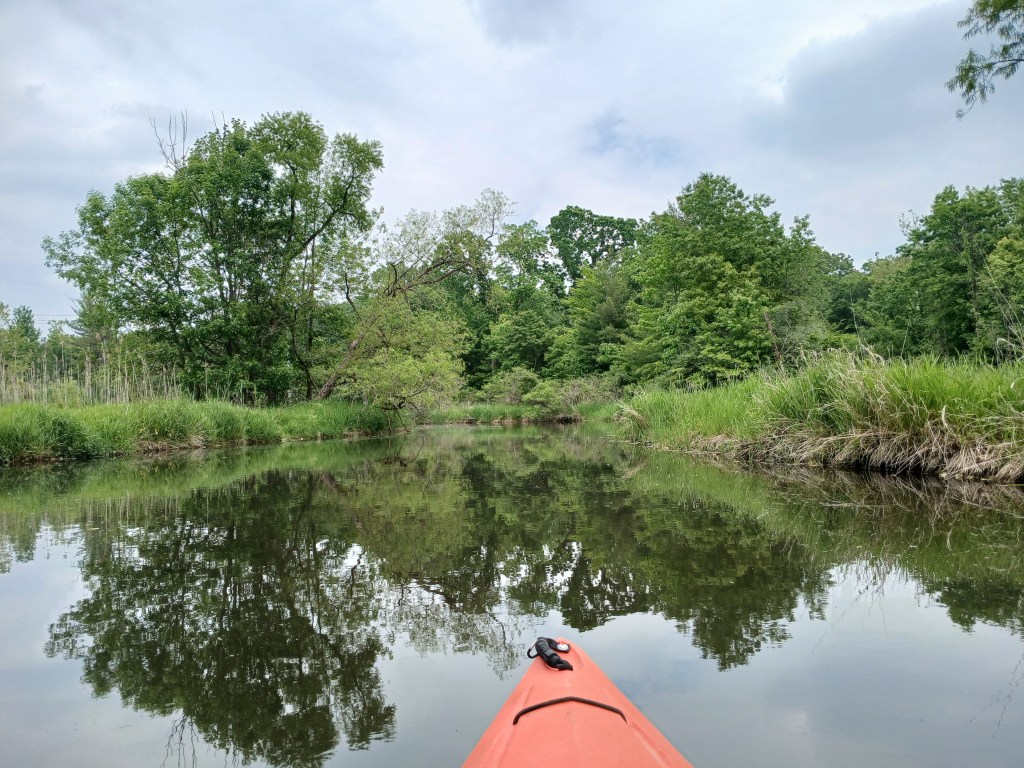
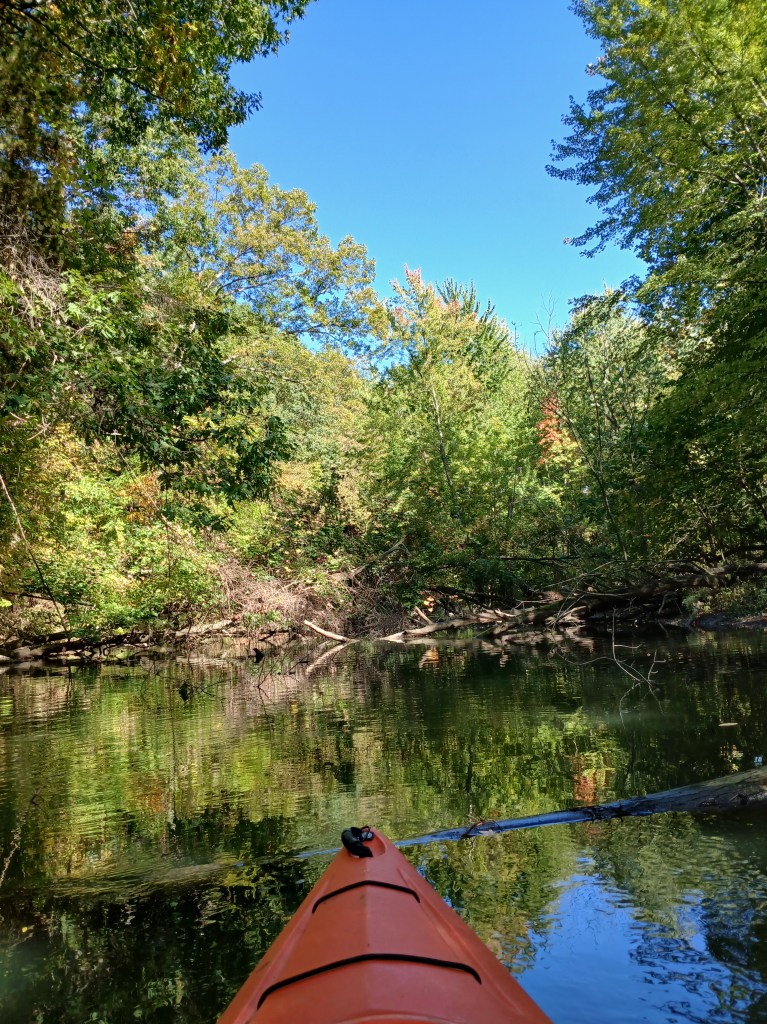
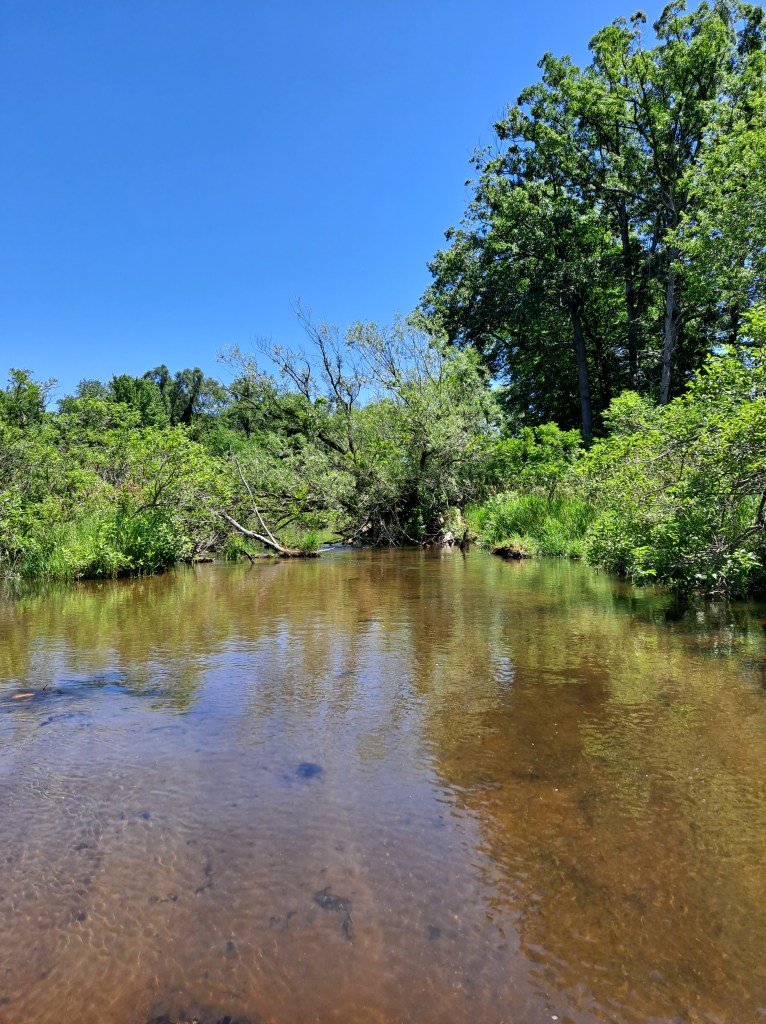
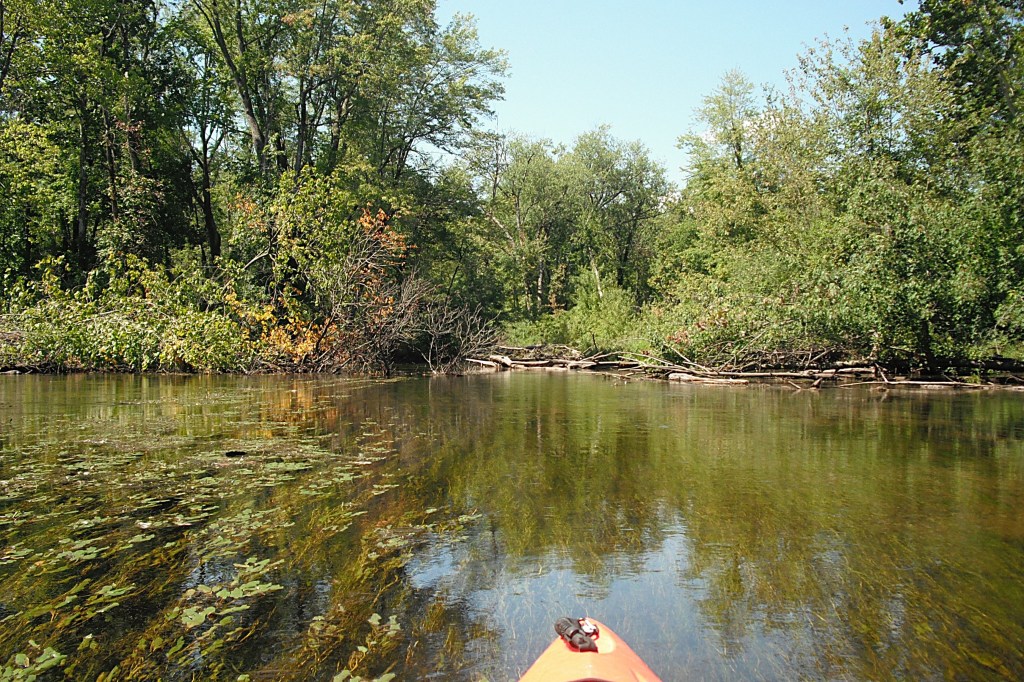
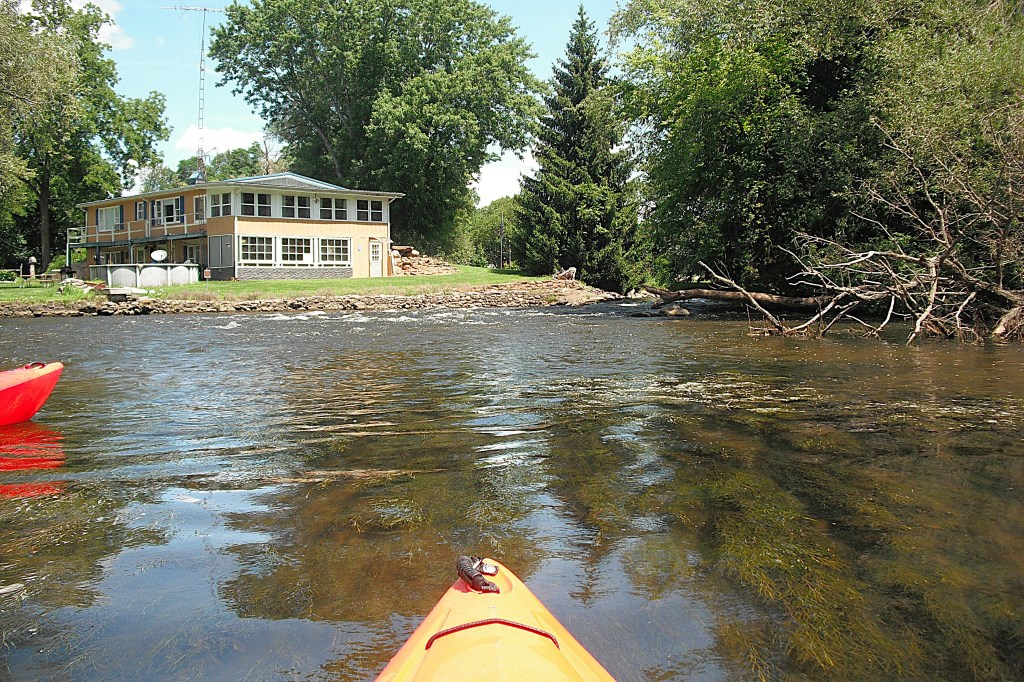
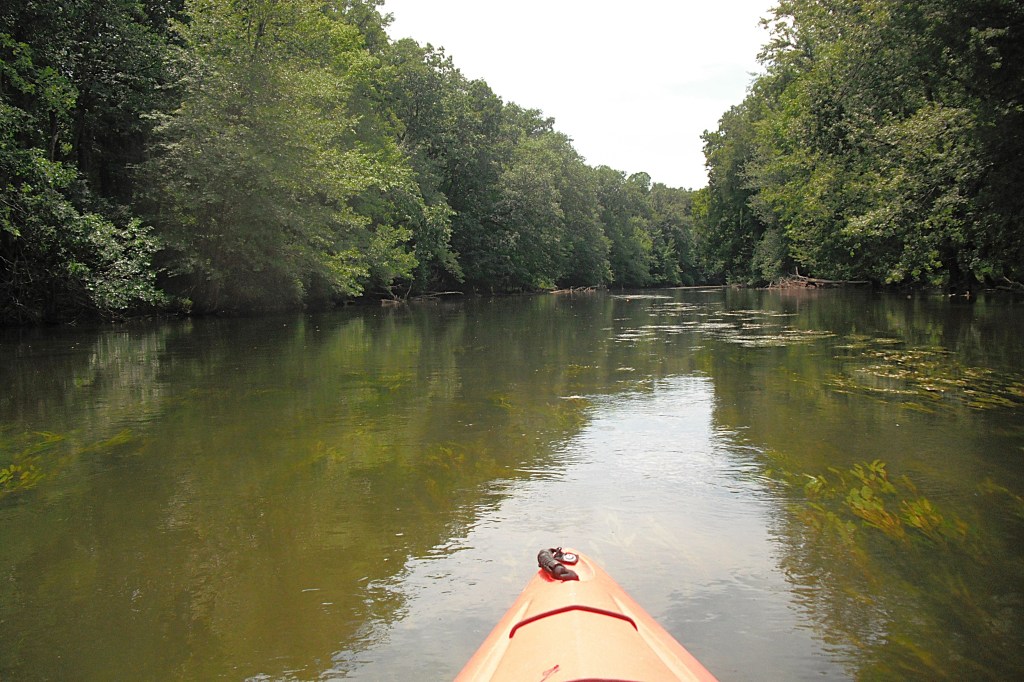
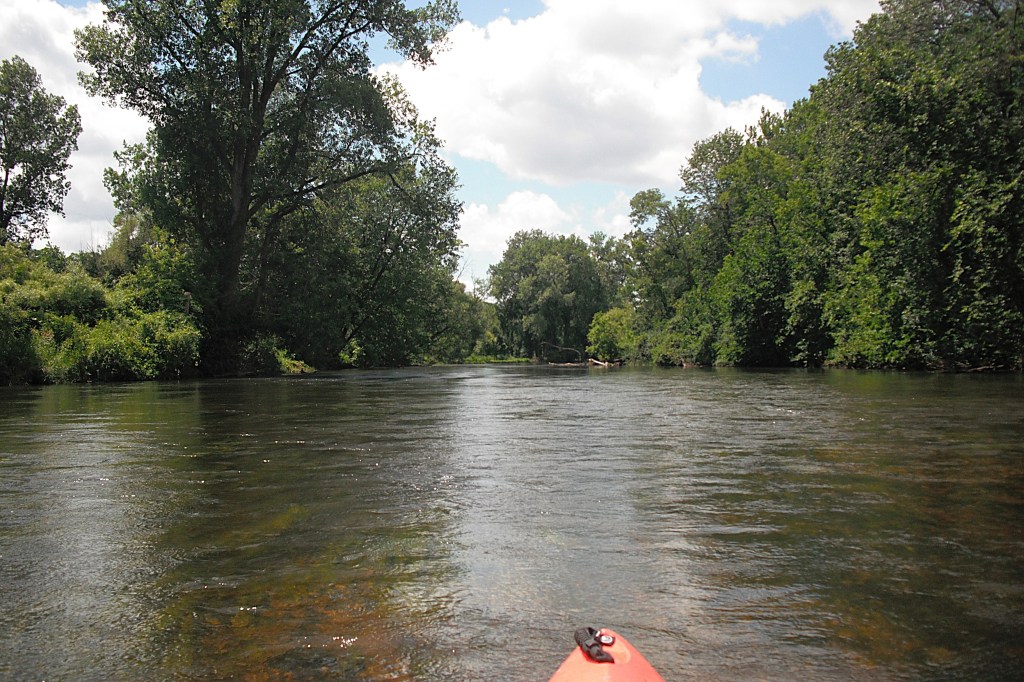
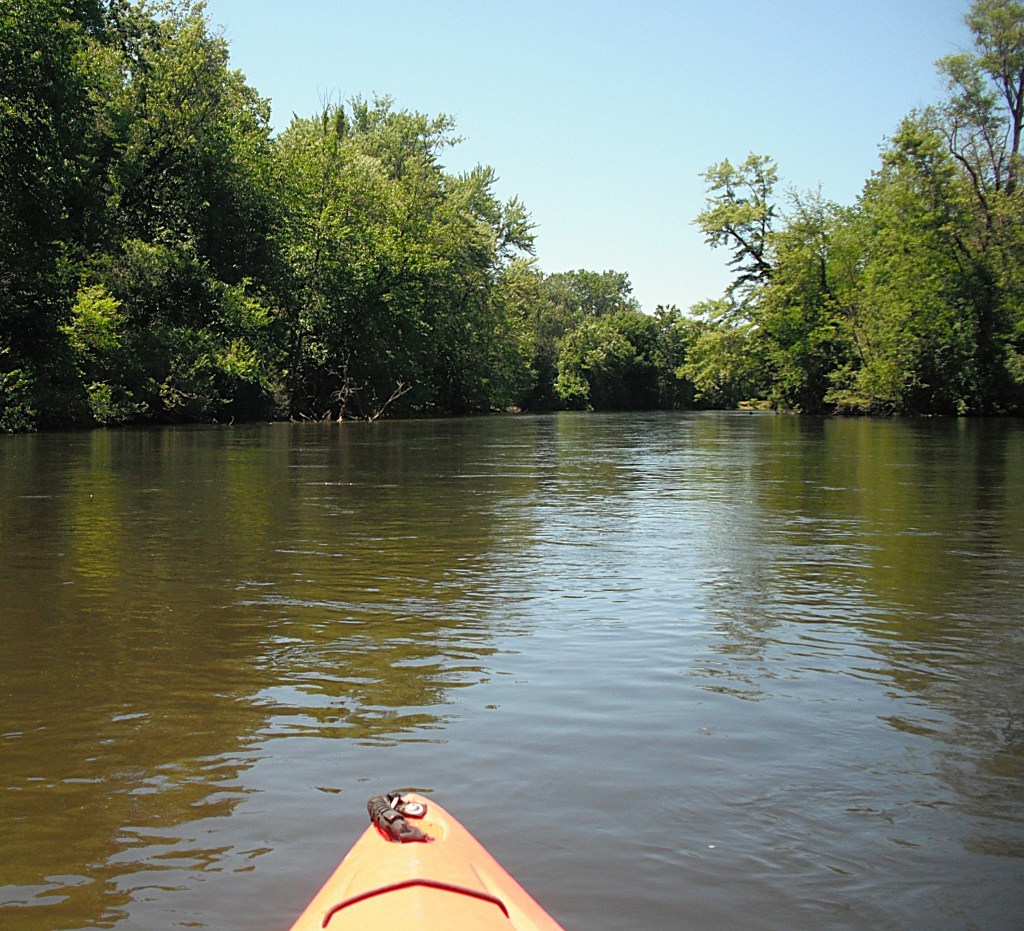
The water clears up when the impoundment transitions to the creek.
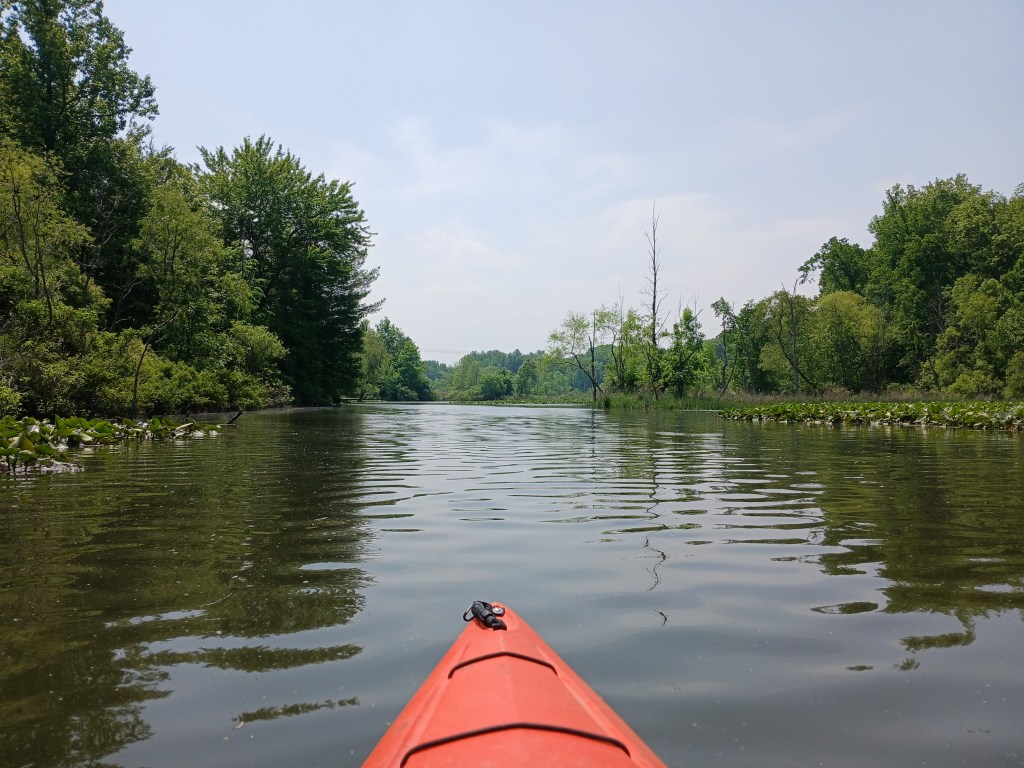
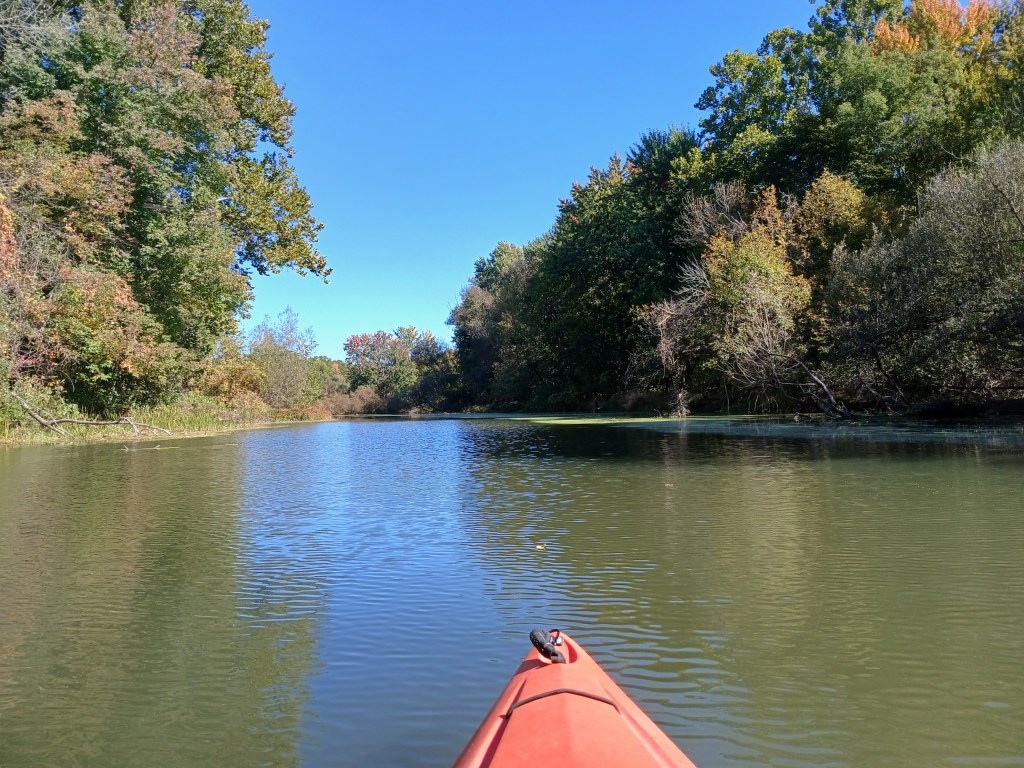
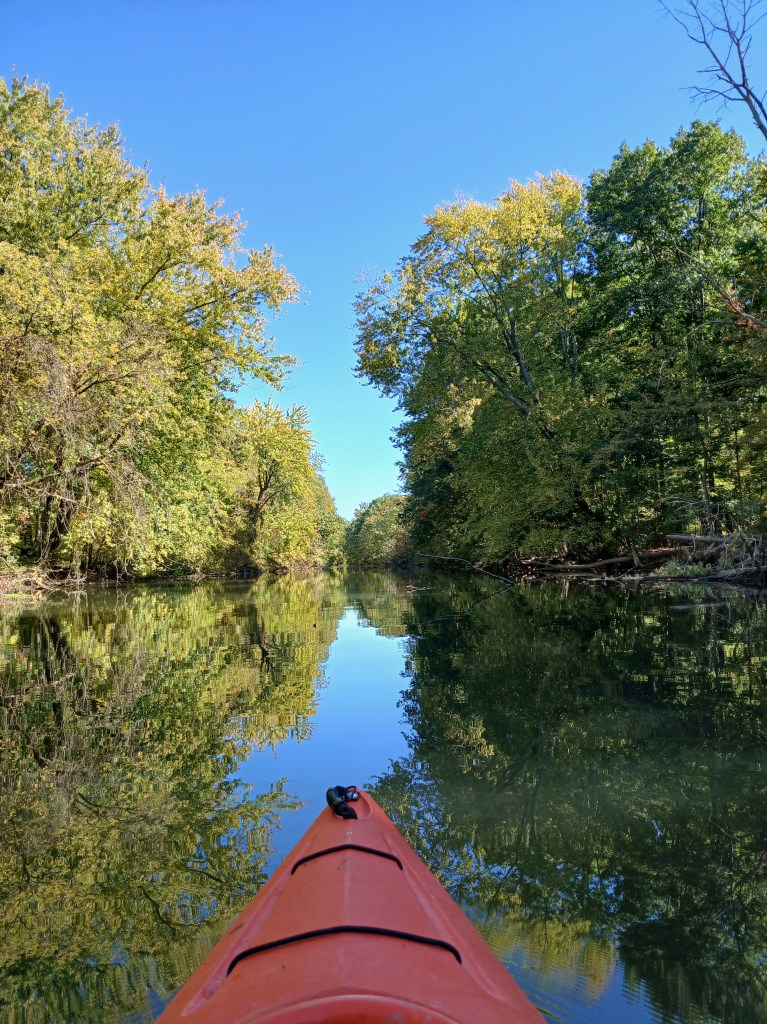
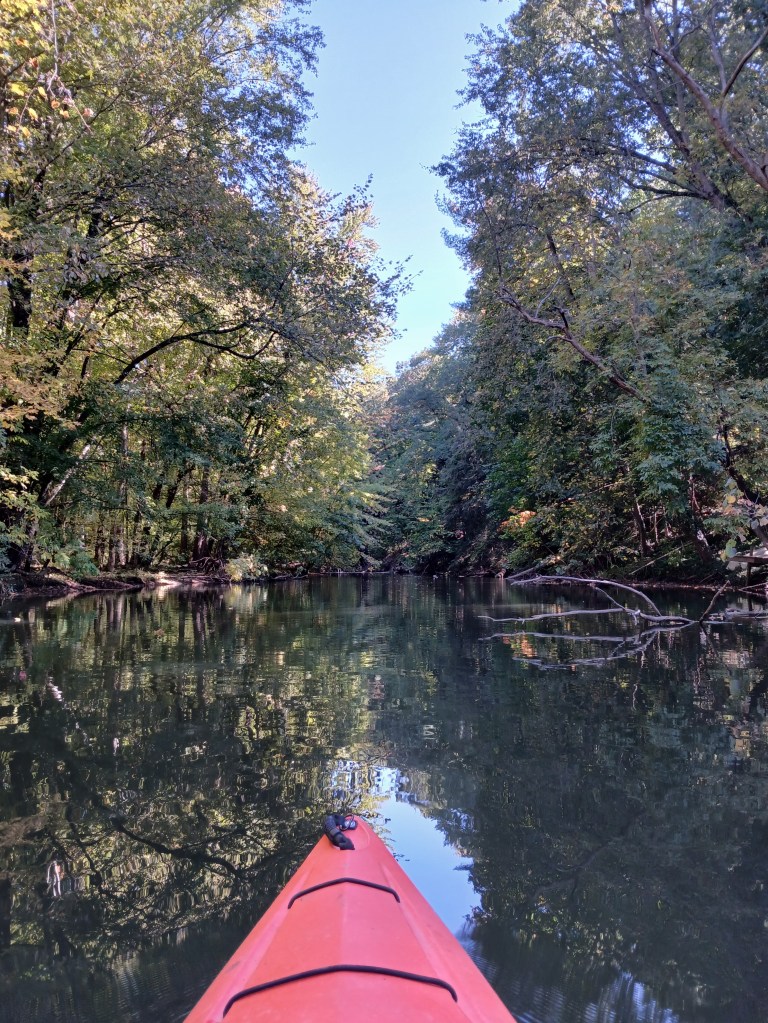
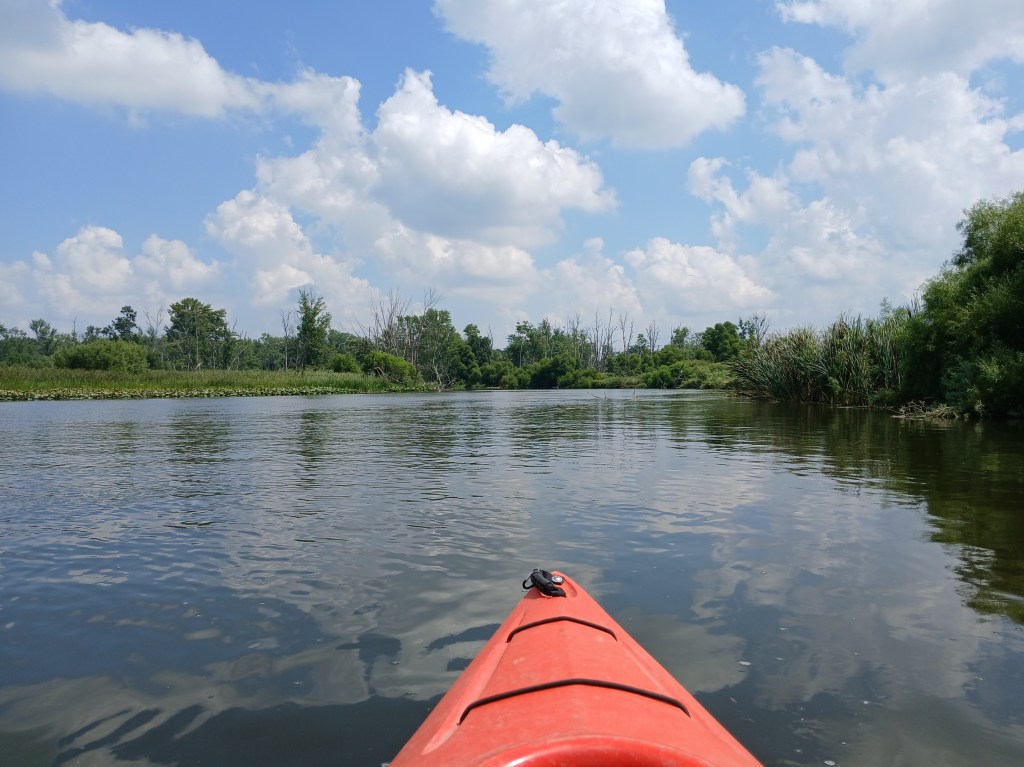
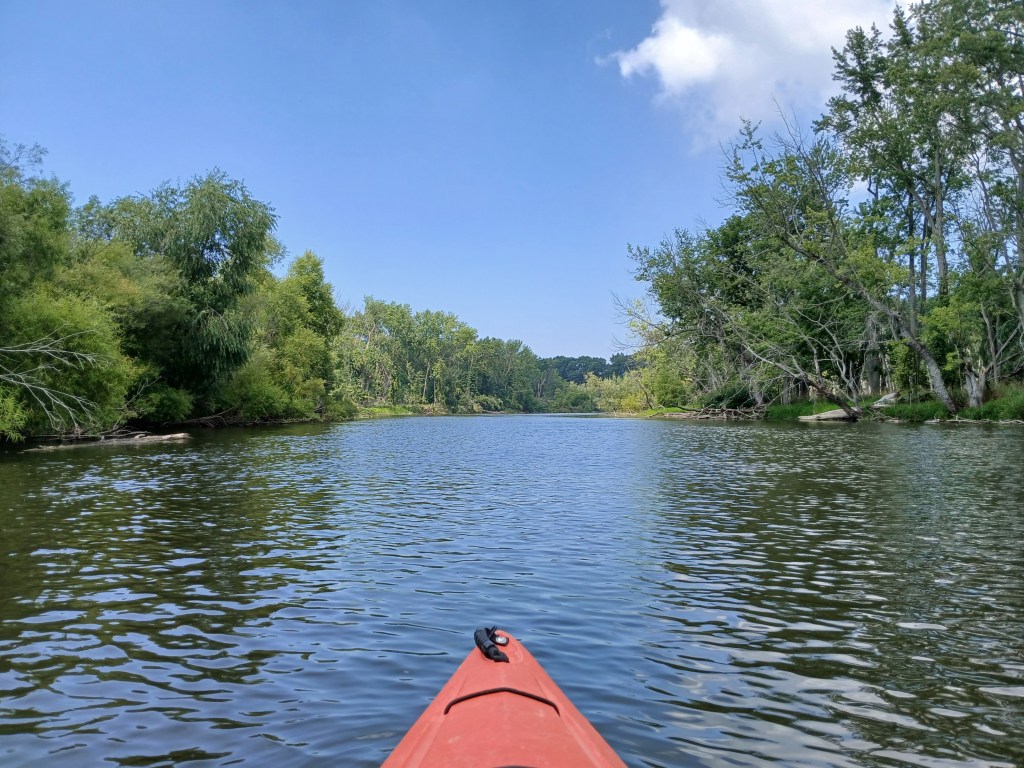
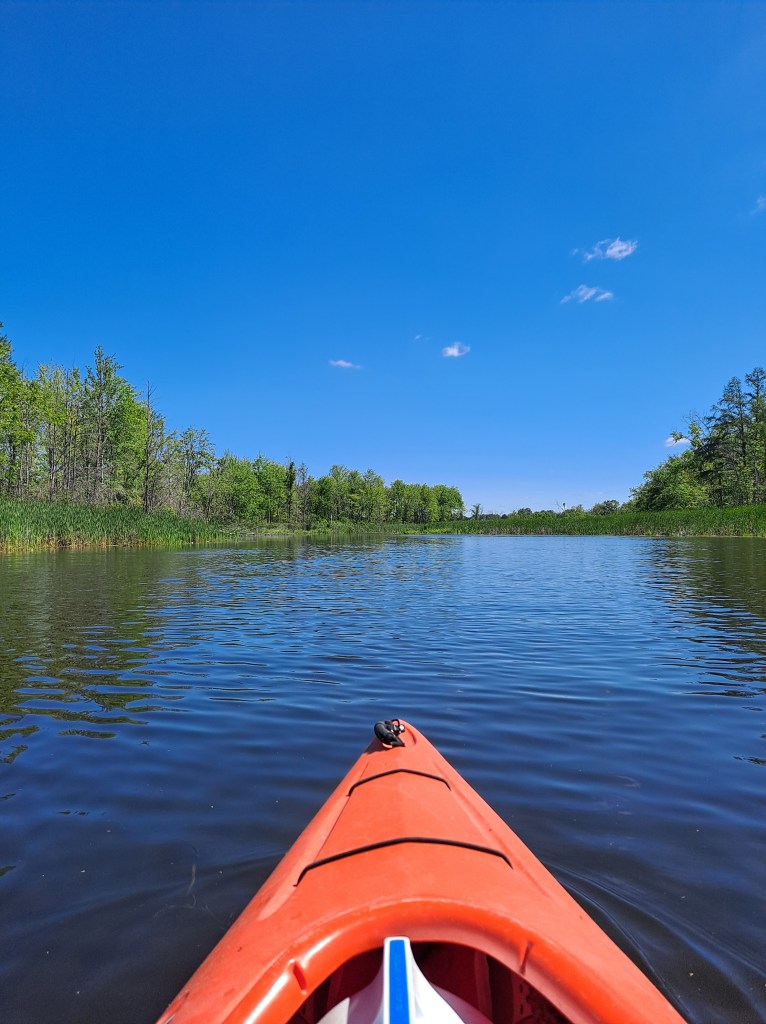
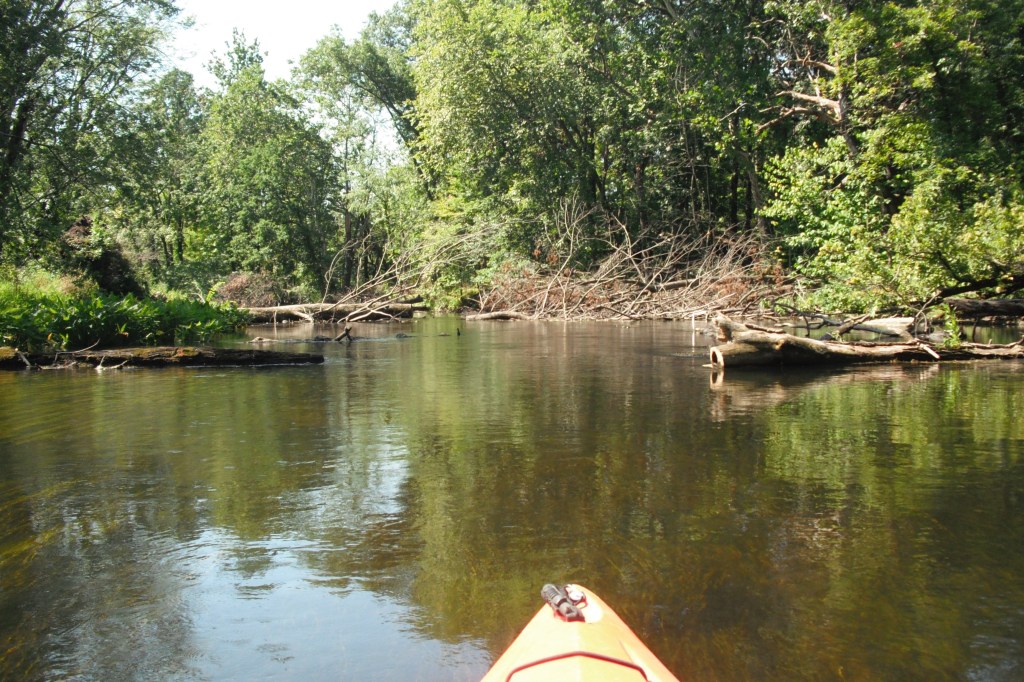
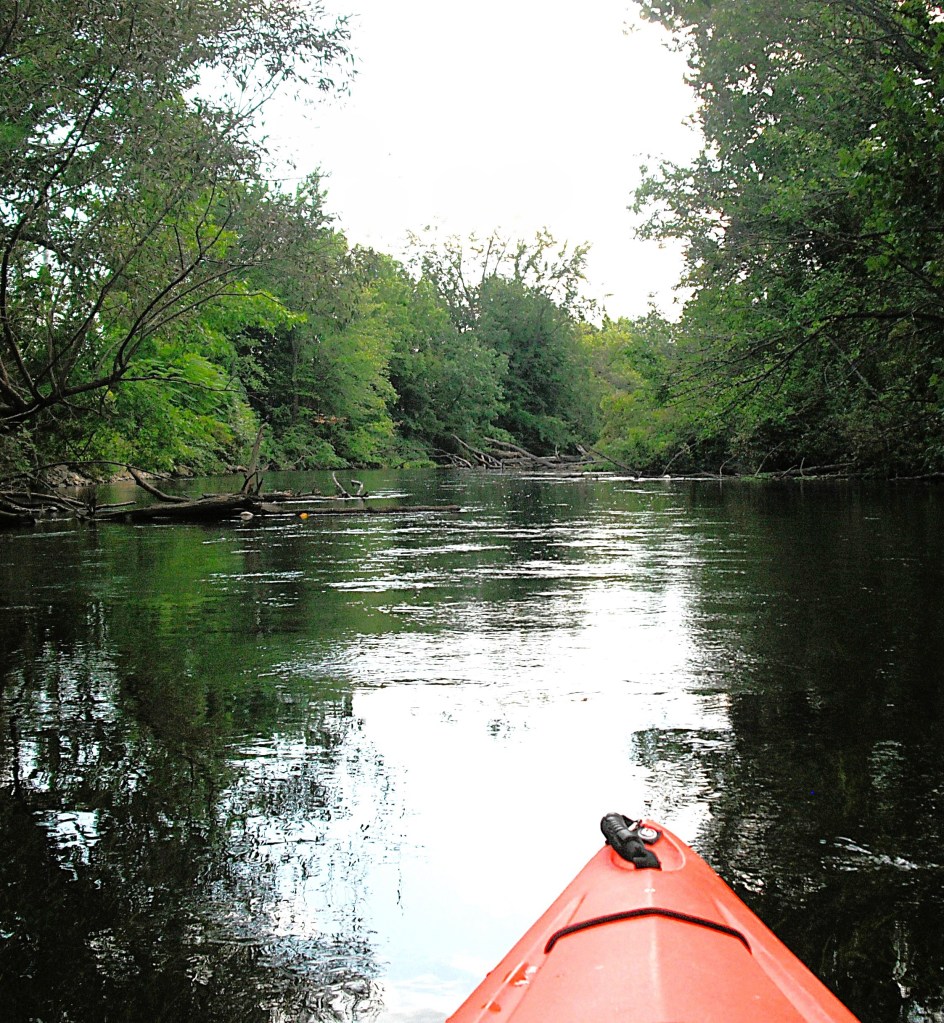
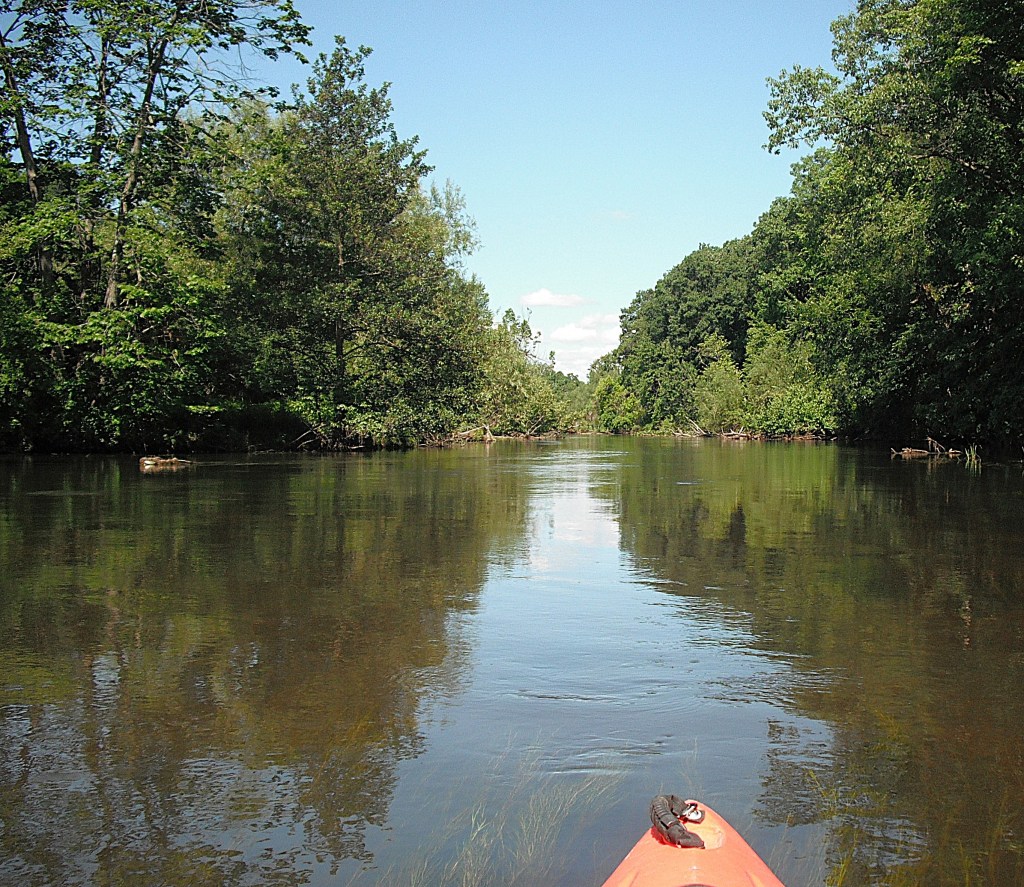
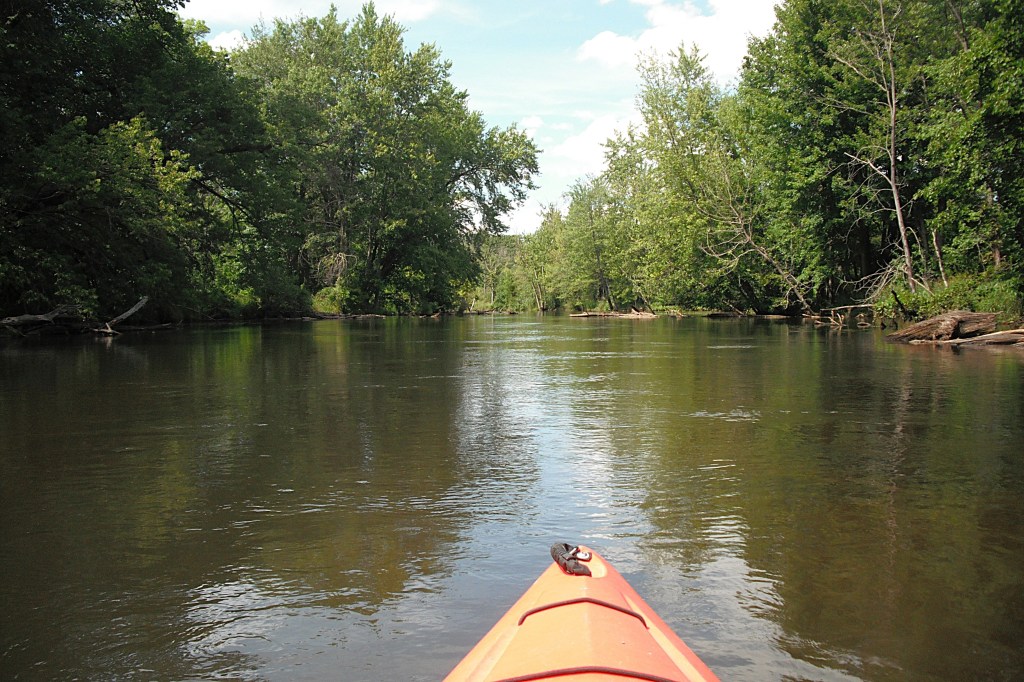
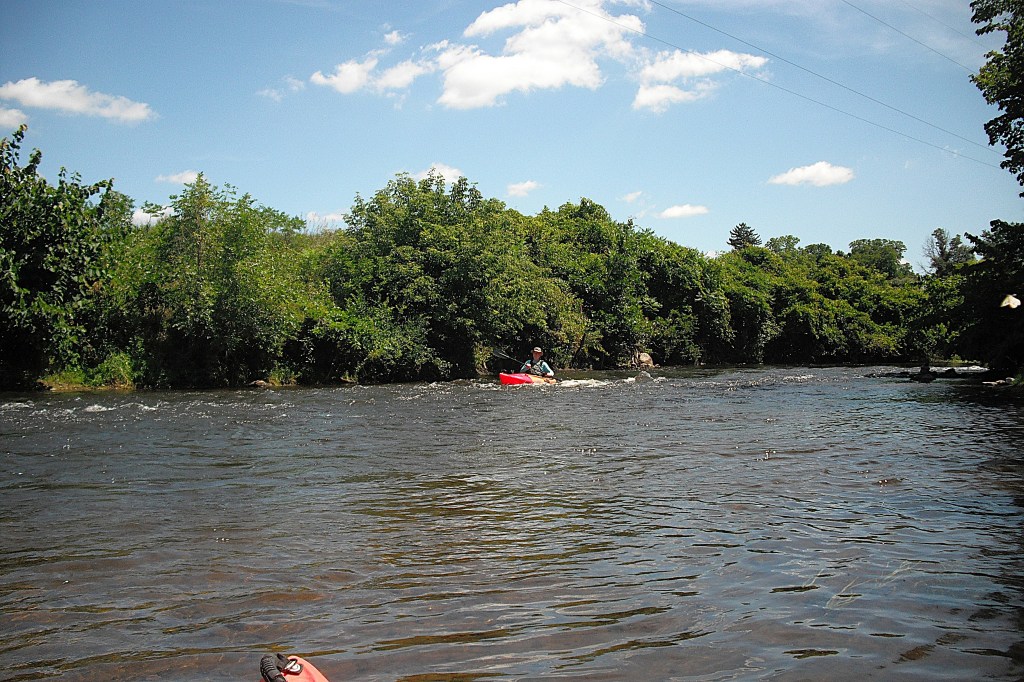
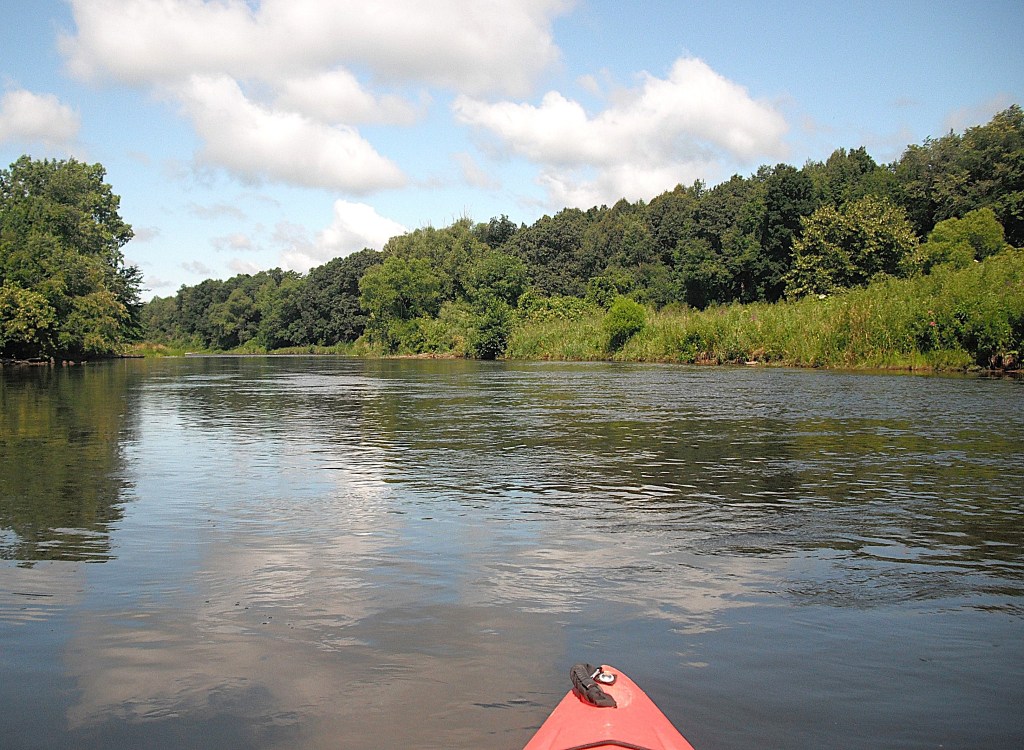
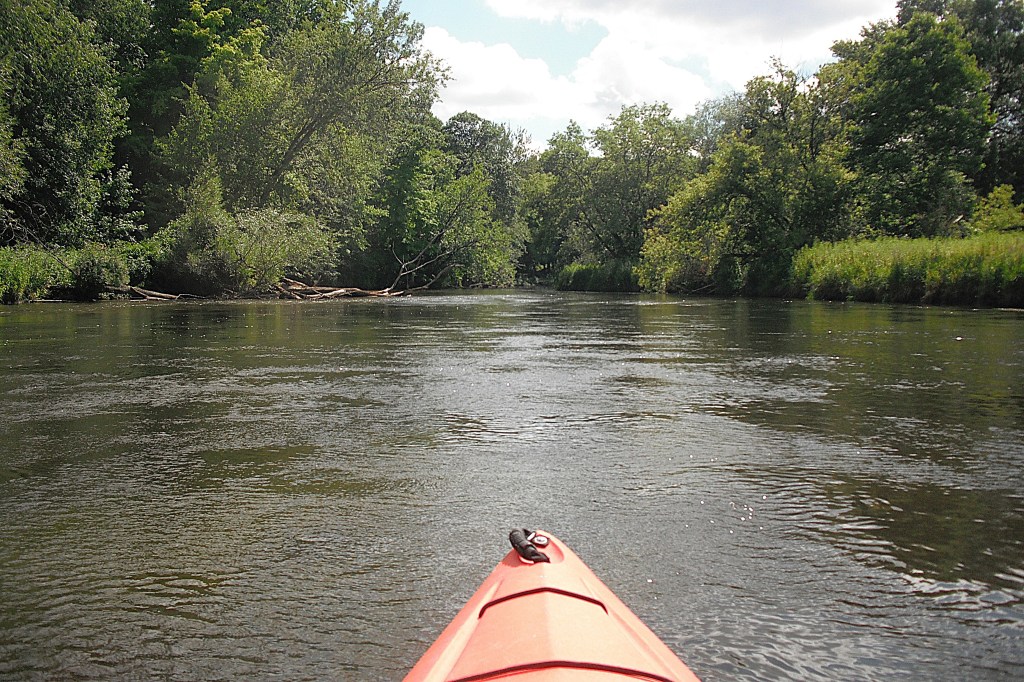
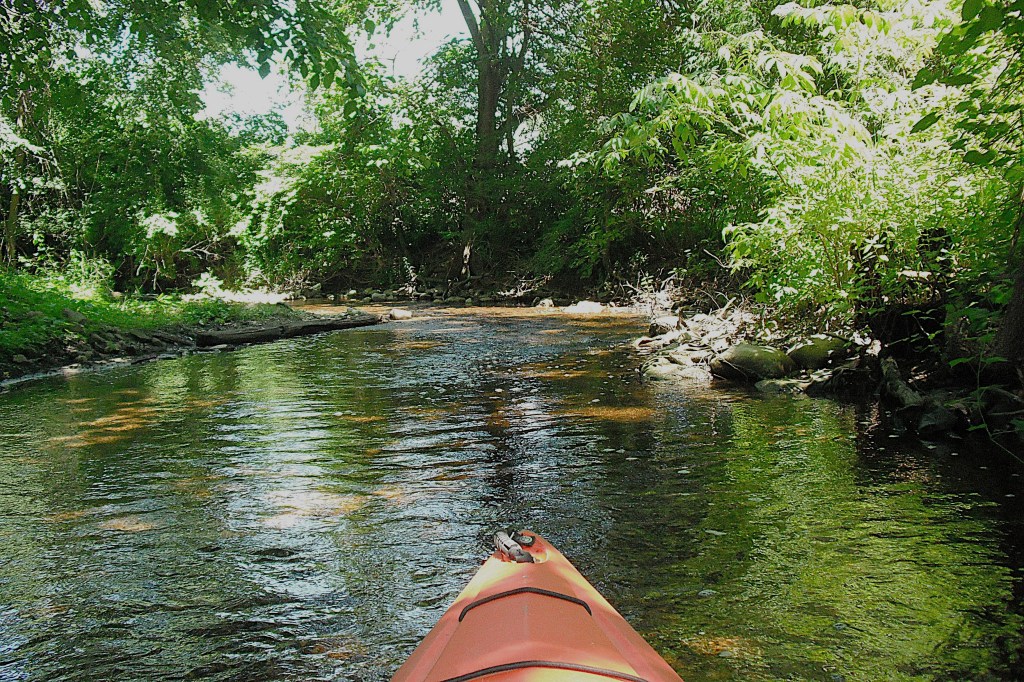
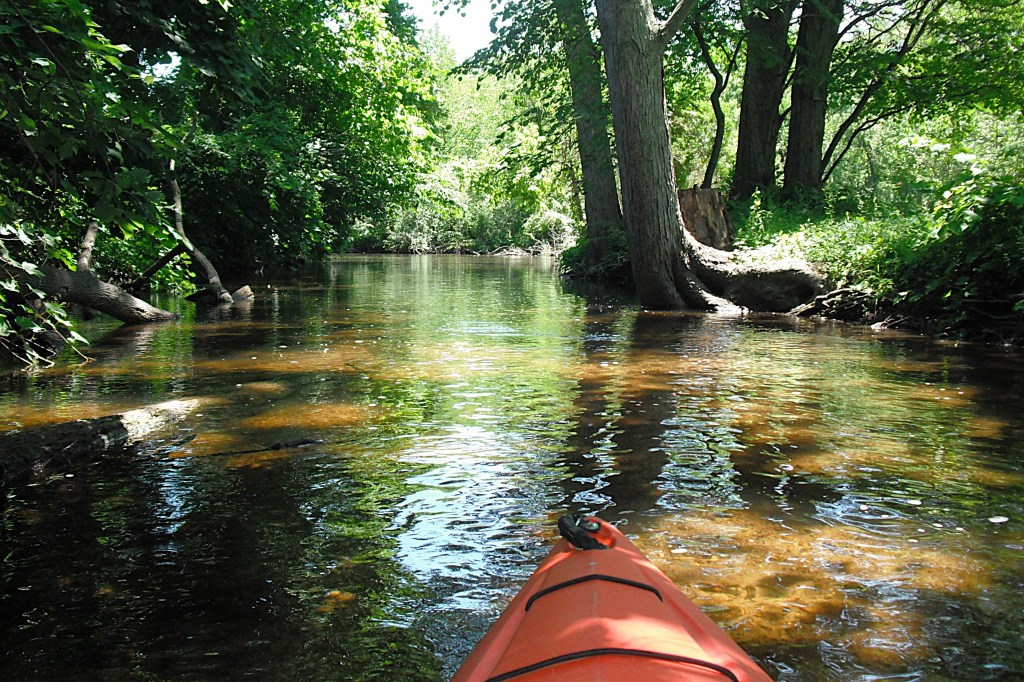
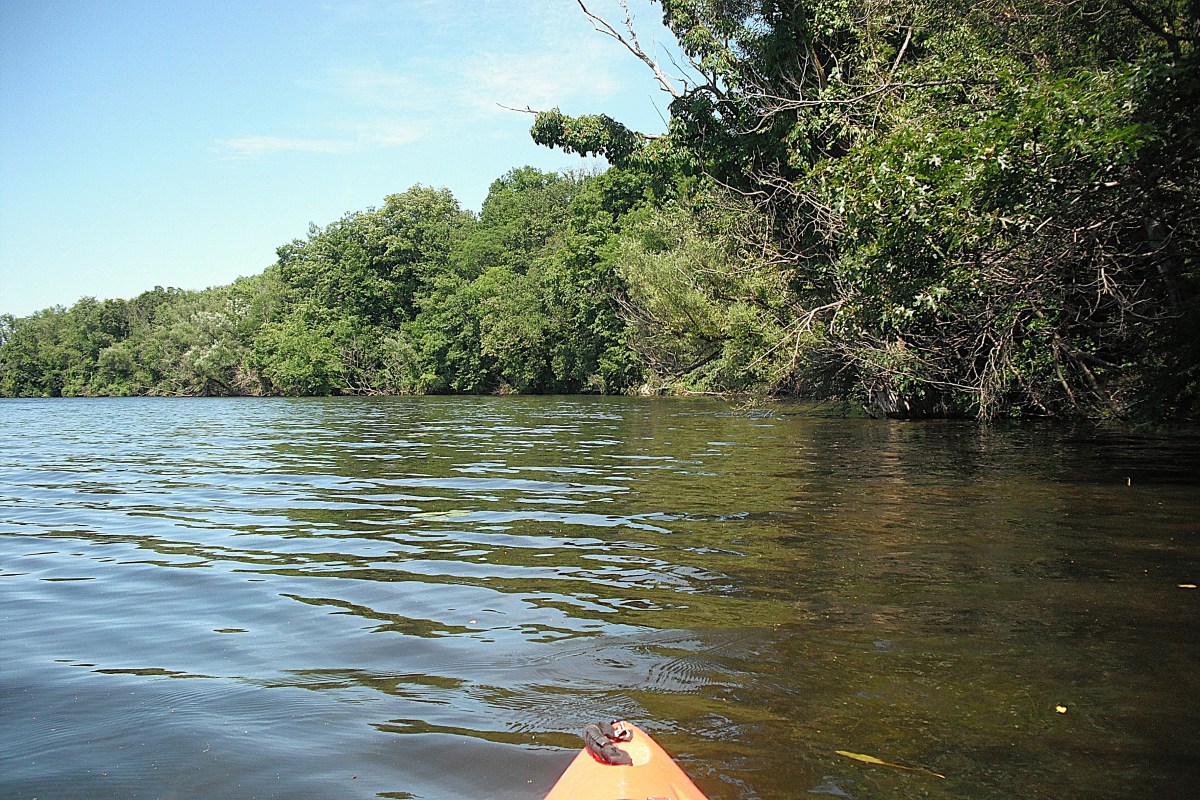
The current in the creek is very slow and the bottom is mud. Paddling upstream on the creek is the best part of the trip.
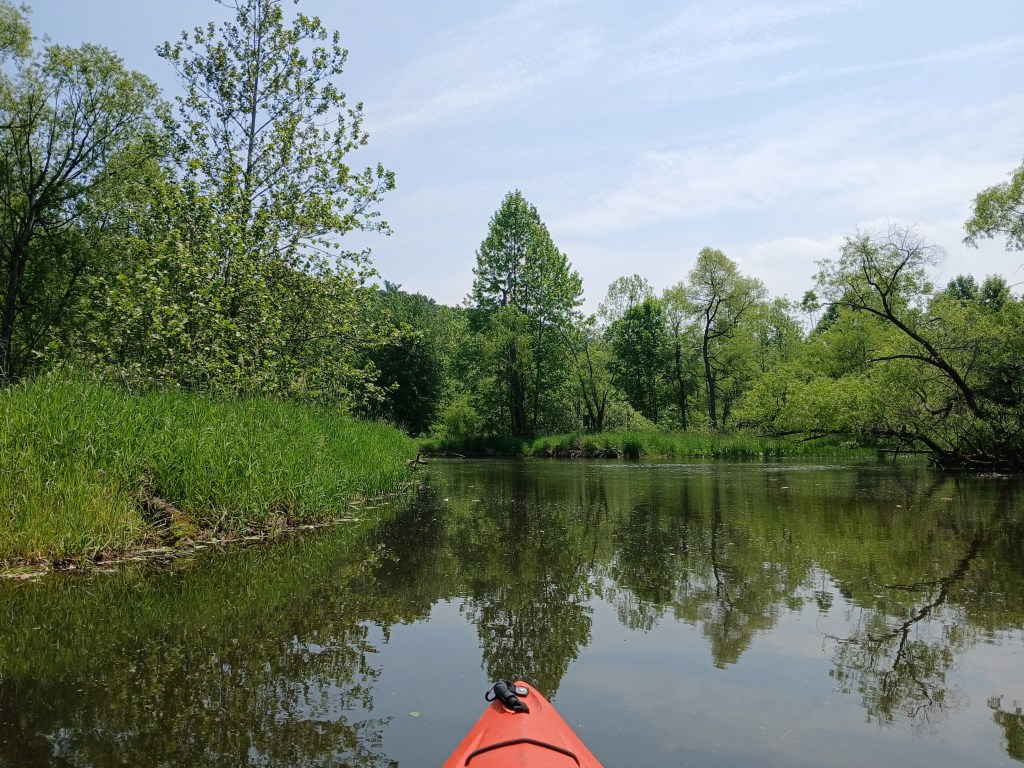
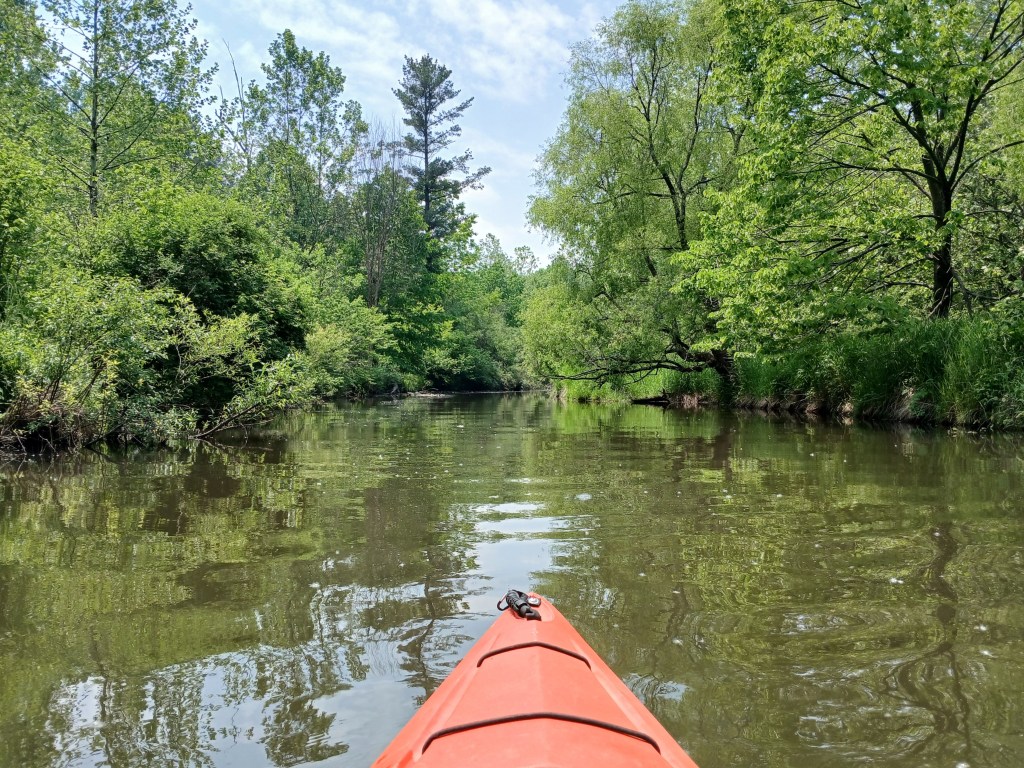
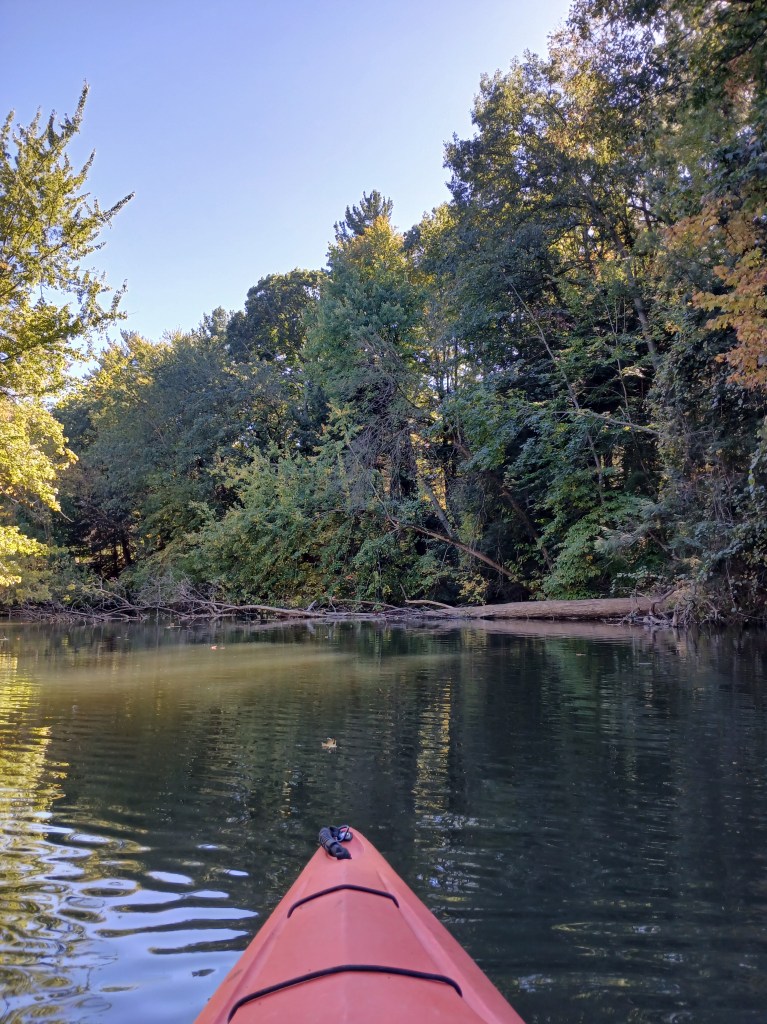
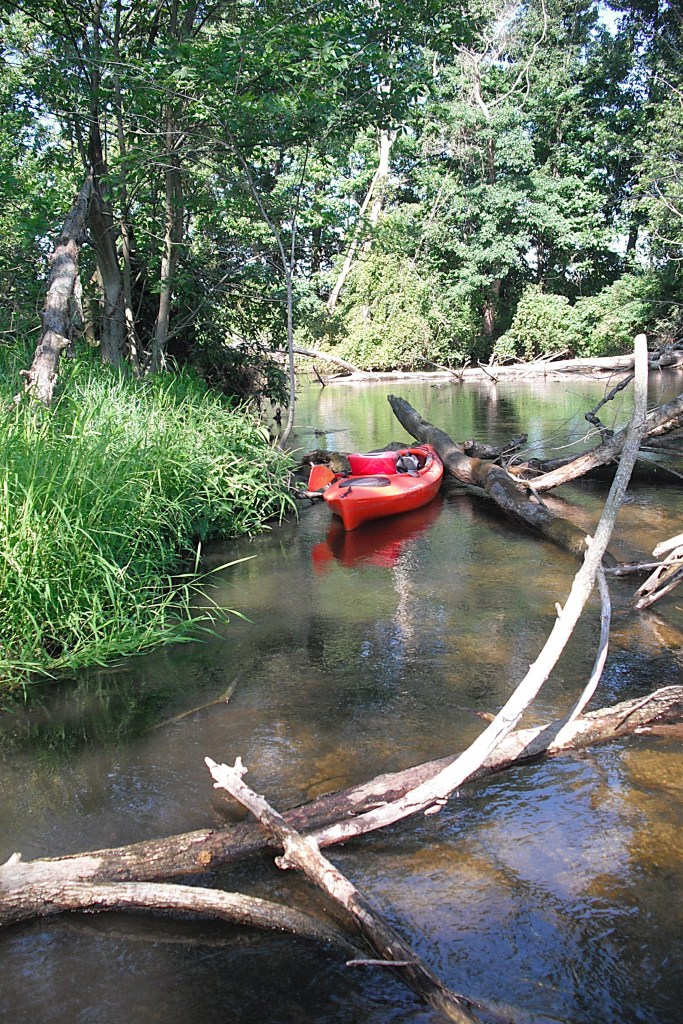
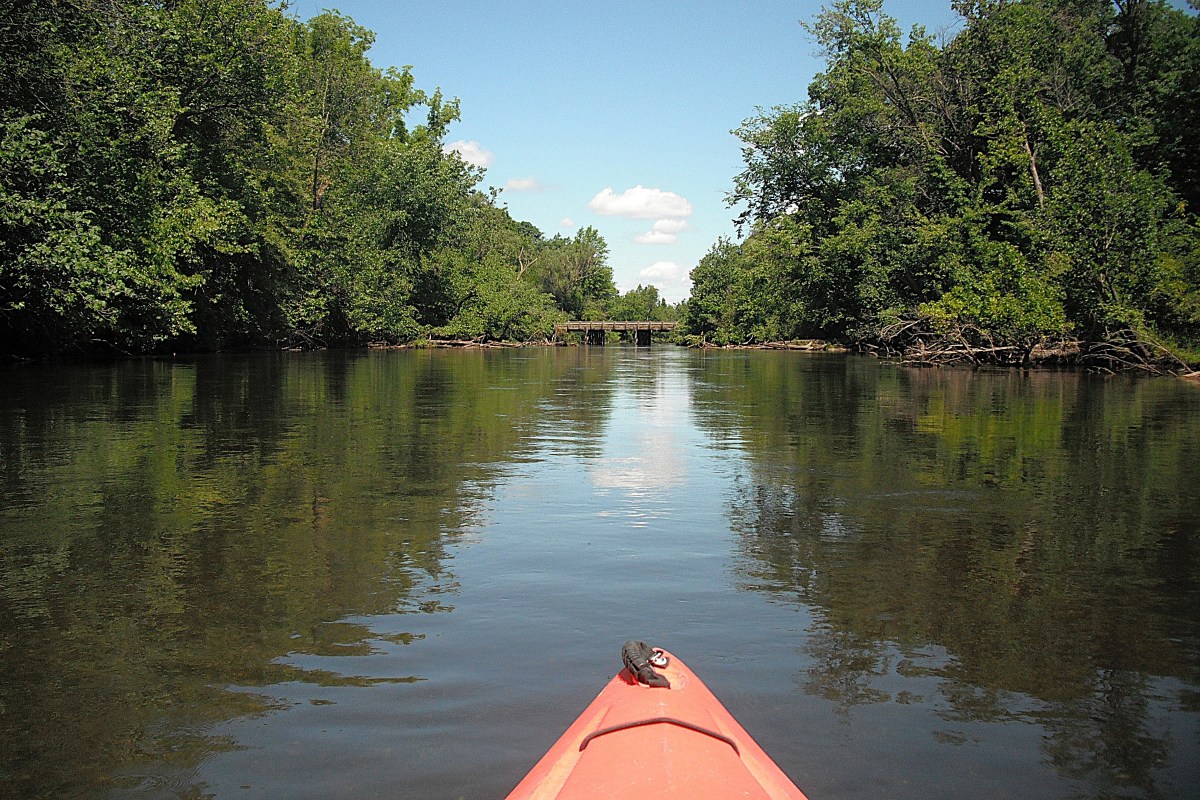
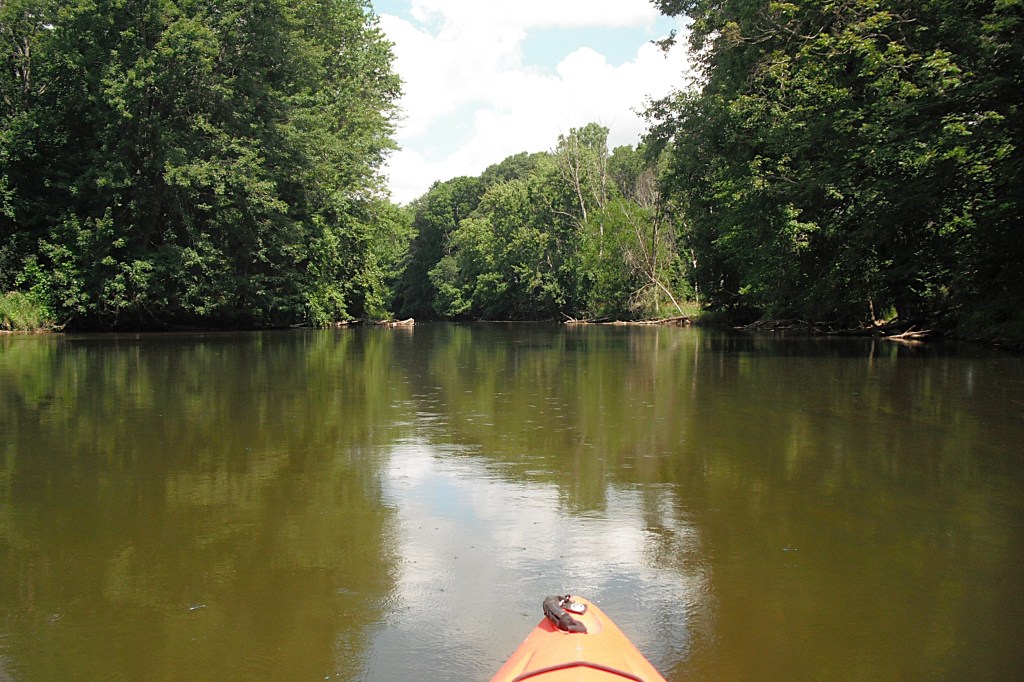
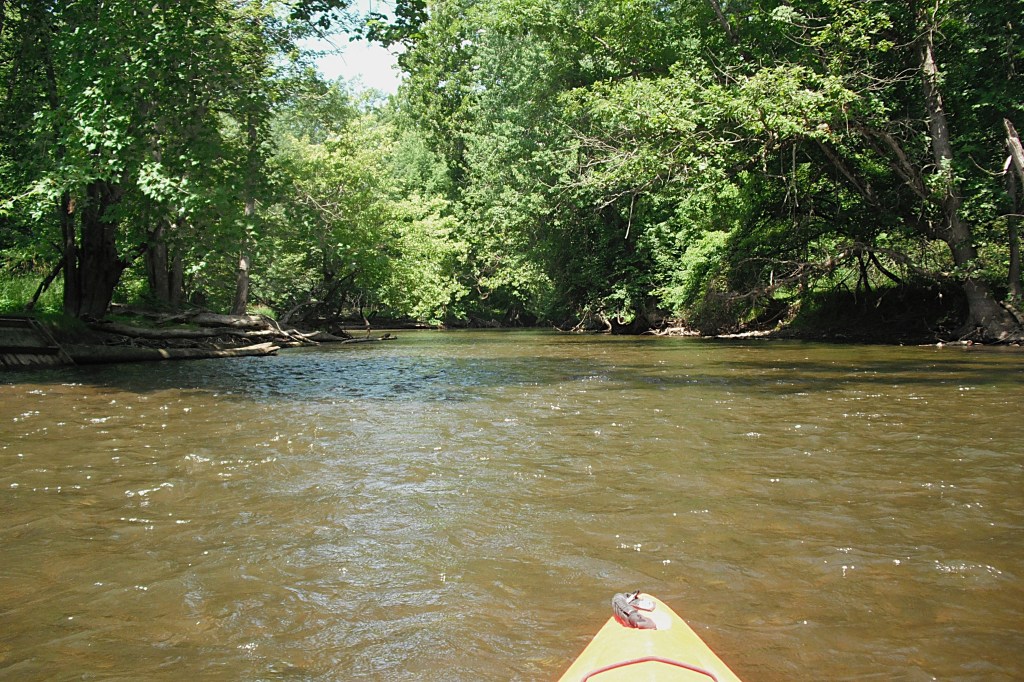
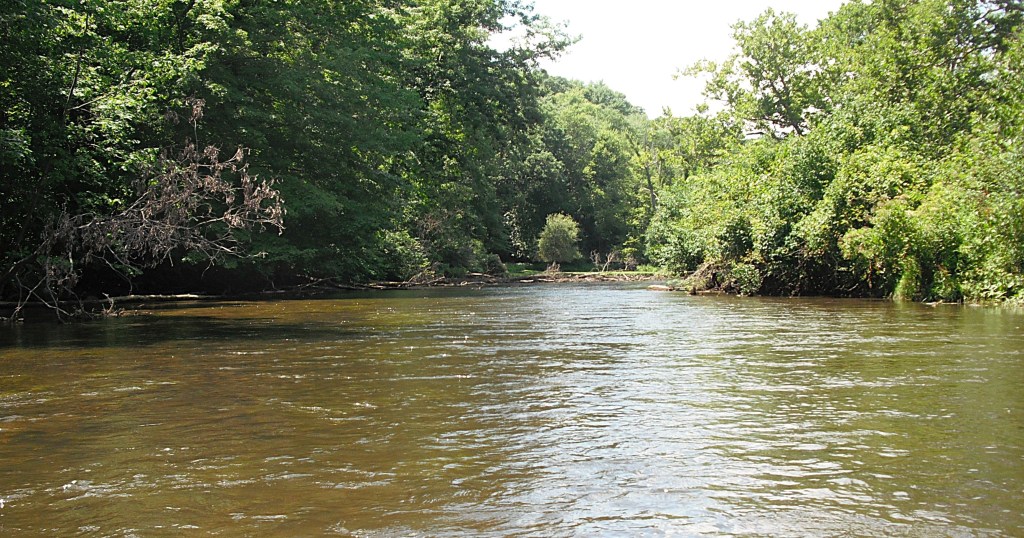
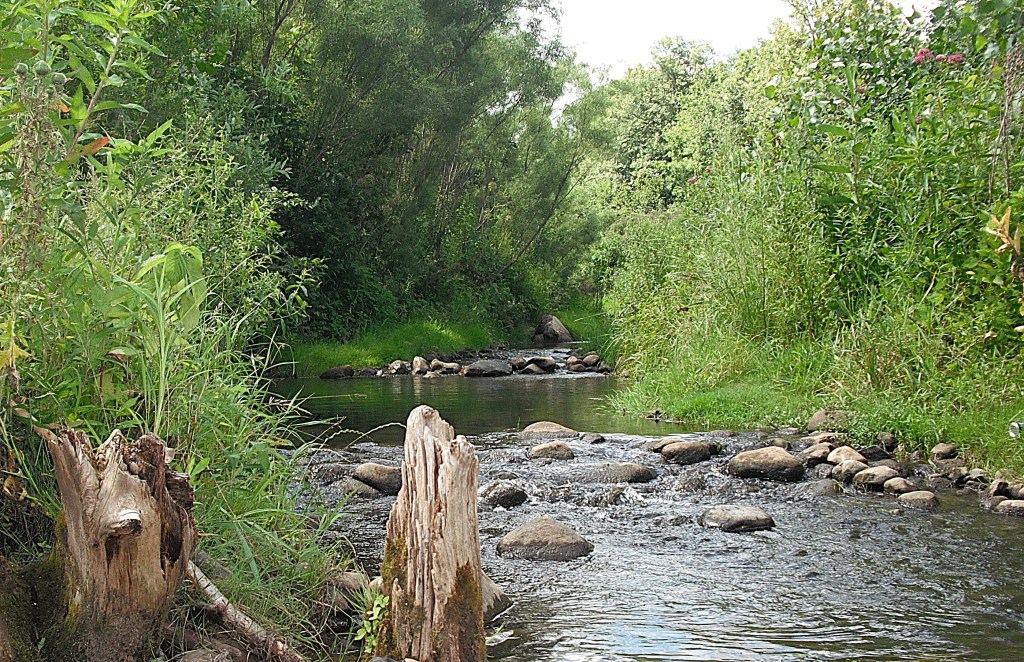
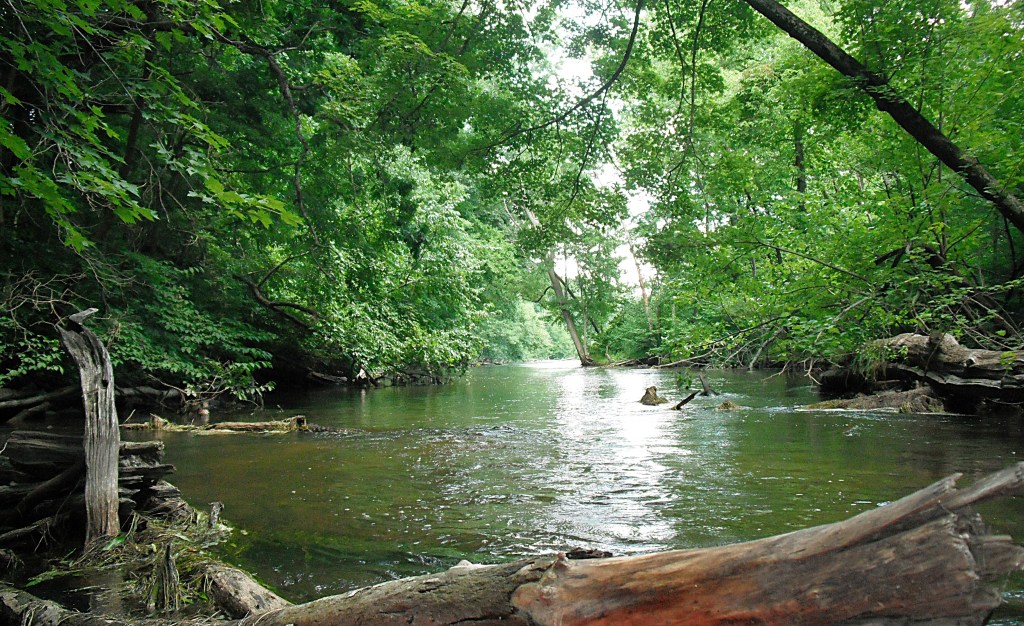
Eventually, the creek narrows and fallen trees will challenge kayakers. I turned around when several trees blocked the creek from bank to bank. I did not try to portage. The mud bottom and the swampy terrain kept me in my kayak. Paddling downstream on the creek to the impoundment was just as enjoyable as the upstream portion of the trip.

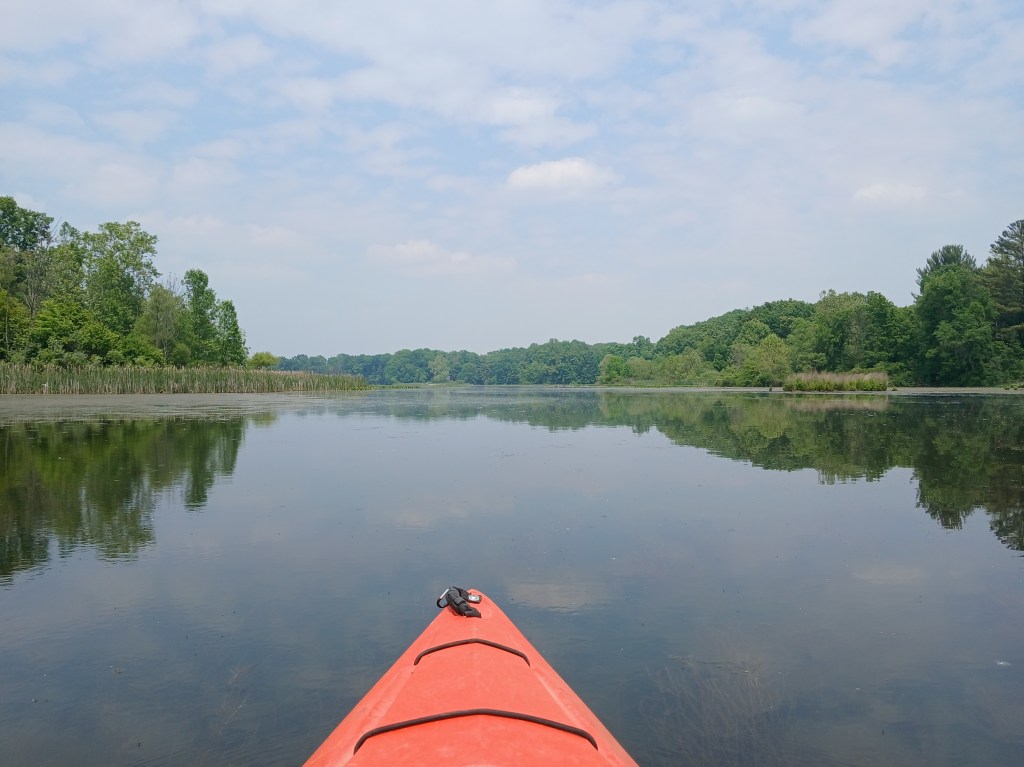
I thought that the waters of the Pine Creek Impoundment were not very appealing at times. The southeast end of the lake was fun to explore. The scenery of Pine Creek was exceptional. Load up your kayaks and go!
RABBIT RIVER, ALLEGAN COUNTY, HAMILTON

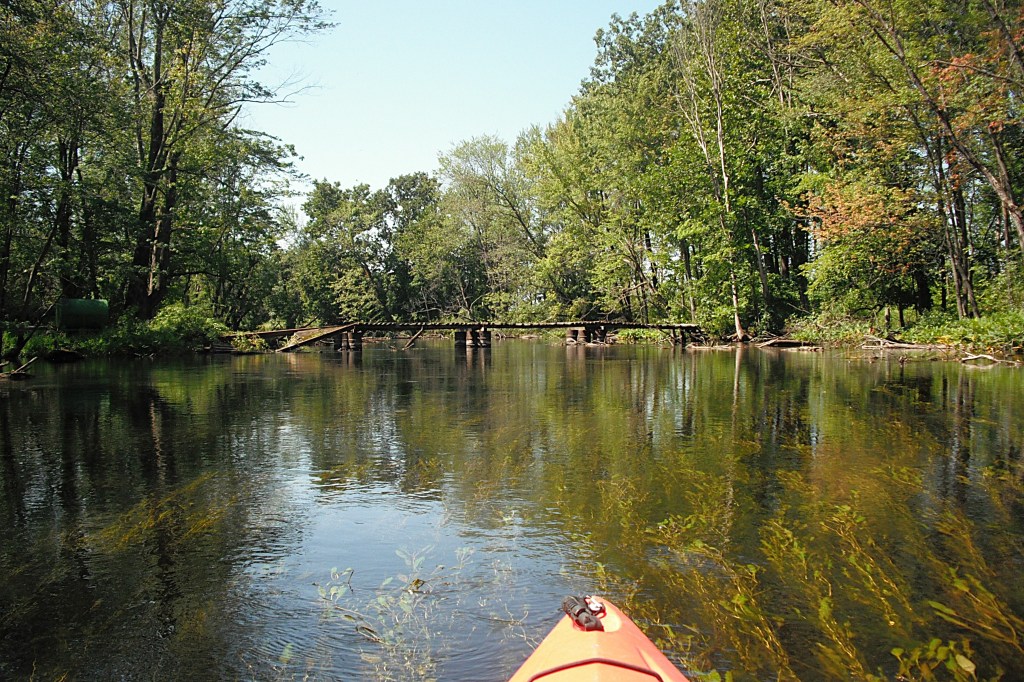
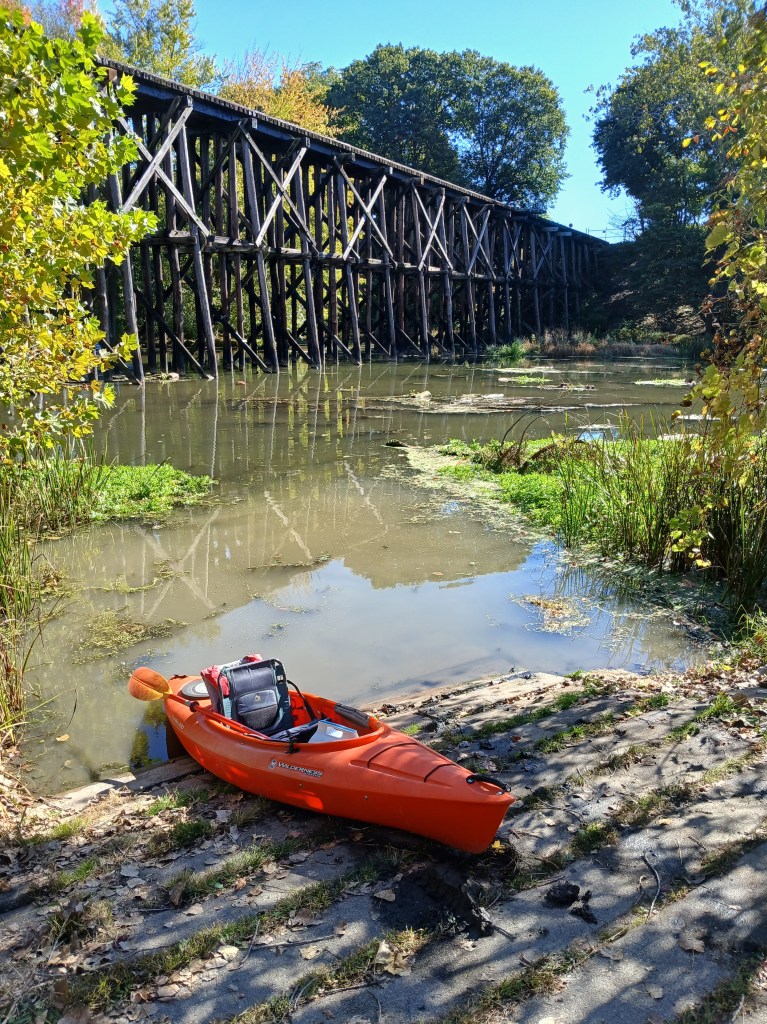
Hamilton is a small town on Highway M40, between Allegan and Holland, in Allegan County. The Rabbit River flows through town on its way to the Kalamazoo River near New Richmond. The river access is a Heath Township park named Schutmaat Park. It’s better known as Trestle Park. The park is at the end of Willyard Street. The features of the park are the railroad trestle and the dam. The boat ramp is above the dam.

This trip explores the backwaters of the dam and the river upstream from the backwaters. The river portion of the trip was about a mile in length as the crow flies. It’s a bit longer than that in river miles. The voyage then returns to the boat ramp.

After paddling under the trestle, the waterway splits in two. To the right, northeast, the dam has created a scenic lake.

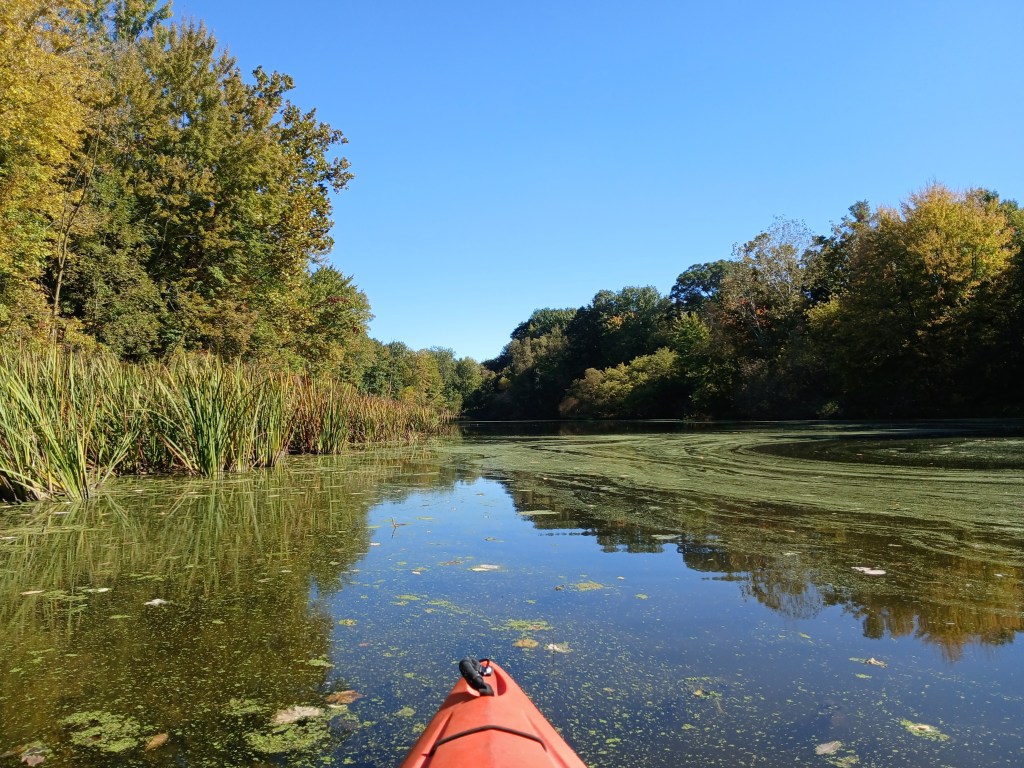
To the left, north-northeast, the backwater handles the primary flow of the river. Eight hundred feet upstream from the trestle, a short, wide channel branches off to the northwest and opens up into a good sized lake. Much of the shallow lake is covered with aquatic vegetation, but it’s still fun to explore.

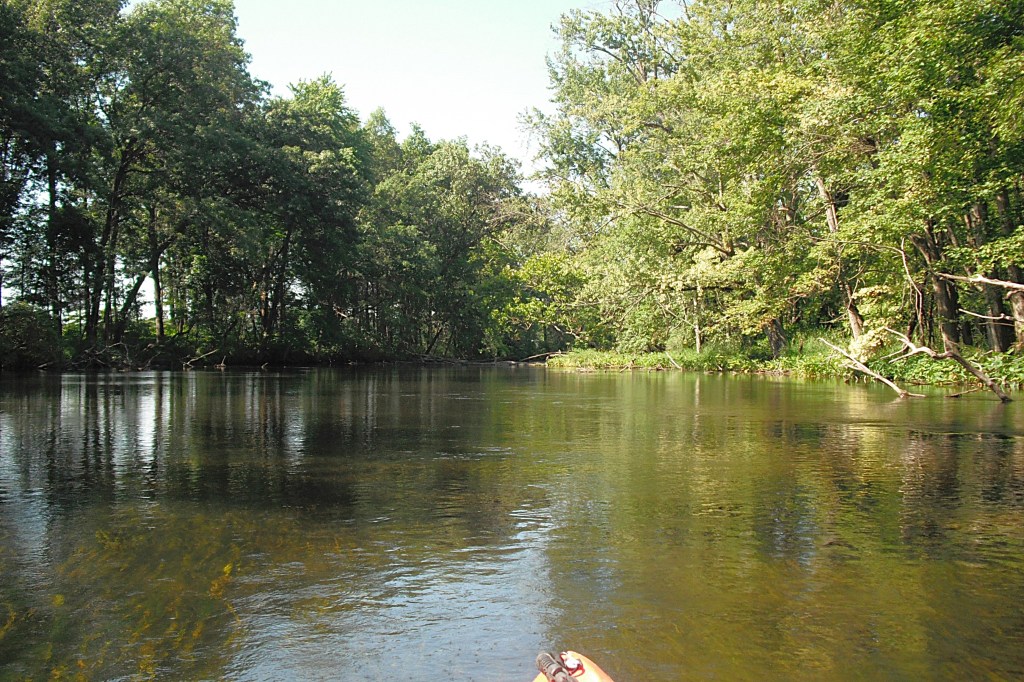
After returning to the river, turn left and resume the north-northeast course. It’s easy to paddle upstream against the light current.

Some of the downed trees were challenging to paddle through or around, but I never had to portage.

Eventually, a massive tangle of fallen trees stopped my progress.

I reluctantly turned around and paddled back to the boat ramp, enjoying the beauty of the river for a second time. The scenery of the Rabbit River is hard to beat!
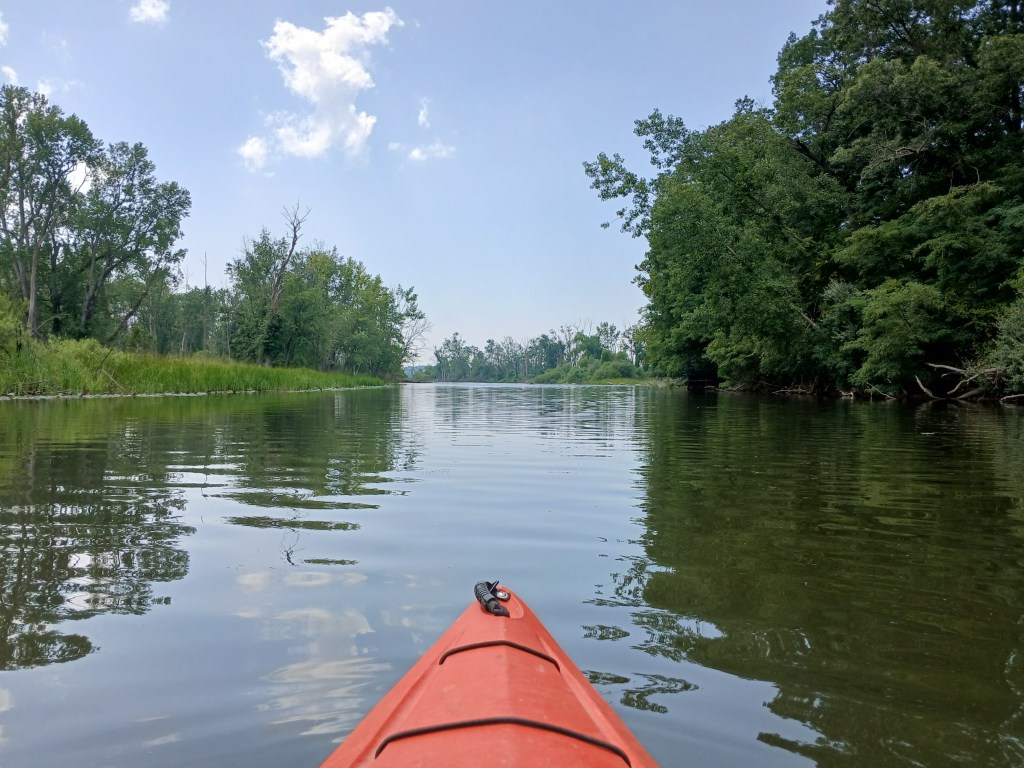
KALAMAZOO RIVER, NEW RICHMOND TO SAUGATUCK, ALLEGAN COUNTY

I was unable to photograph while kayaking this trip. I used shoreline photos that were taken from a variety of vantage points along the river.

New Richmond County Park is a great place to start a voyage.

The park features two historic bridges, boardwalks, picnic tables, a boat ramp, and a clean vault toilet. I recommend taking a tour of the park before launching your boat.

Downstream from the landing, a small oxbow lake is on the east (left) side of the river. Farther downstream, the 58th Street bridge spans the river. This bridge was built to replace the old New Richmond swing bridge. Just upstream from the 58th Street bridge, on the north (right) side of the river, there is a small bayou to explore.

Continuing down the river, the Kalamazoo enters the Pottawatomi Marsh.

Kayakers can choose between two different river channels through the marsh: Indian Cut to the north or Morrison Bayou to the south.

I recommend checking satellite photos on Google Maps to familiarize yourself with the layout of the marsh and the channels. This will help you decide which channel to take. I have published a post titled “Pottawatomi Marsh, Allegan County”. The post has detailed info and photos about kayaking the marsh.

The two channels converge just upstream from the Hacklander Landing. This MDNR Kalamazoo River Access Site is a good place to take a break. Vault toilet.

The river leaves the huge marsh behind at the US31/I196 bridge. Immediately after passing under the bridge is Schultz Park. The boat landing at the park is the first of three landings to end the trip. Restrooms.

After passing Schultz Park, the Kalamazoo River flows through a lake called Wades Bayou.

A boat landing at Wades Bayou Memorial Park is the second of three landings to end the trip. Restrooms.

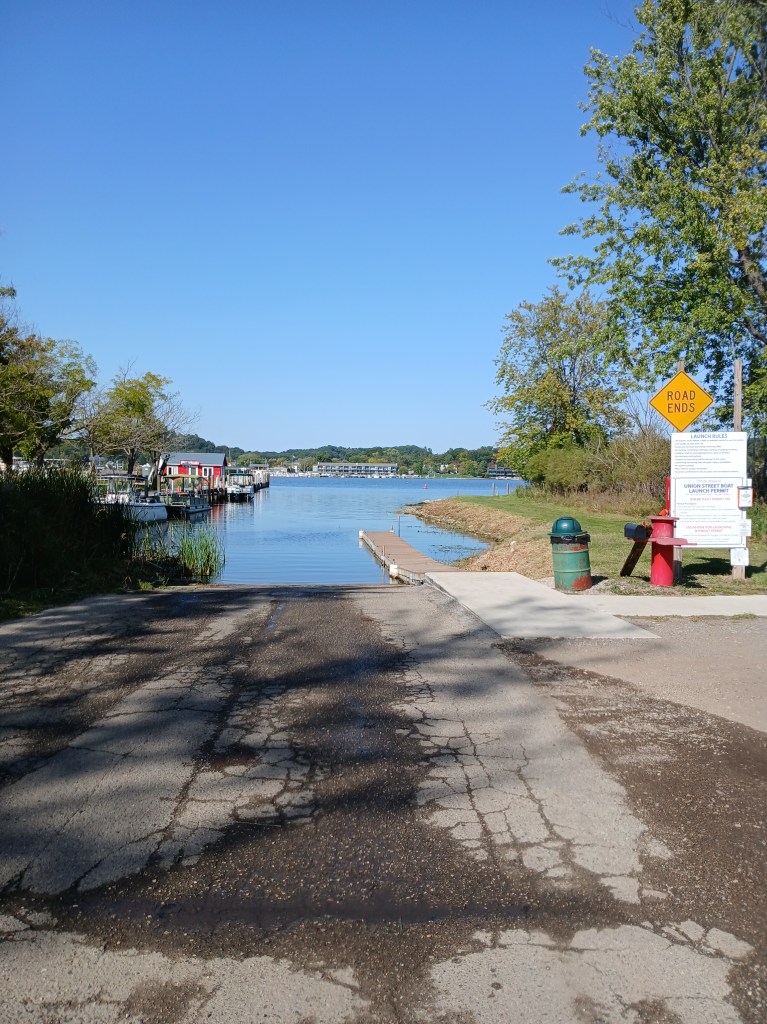
The river leaves Wades Bayou at the Blue Star Highway bridge and flows into Kalamazoo Lake. Bear to the left after paddling under the bridge and you will arrive at the Union Street Landing, the third of three landings to end the trip. Downtown Saugatuck is straight across the lake.

POTTAWATOMI MARSH, ALLEGAN COUNTY

The Pottawatomi Marsh lies within Saugatuck and Manlius Townships, between New Richmond and Douglas in western Allegan County. The Kalamazoo River flows through the north end of the wetland. The Morrison Bayou branches off the river in the northeast corner of the marsh and rejoins the river in the southwest corner of the marsh, creating a circle tour for kayakers.

I’ll be the first to admit that parts of this trip can be monotonous. Some boaters may find that kayaking long distances through swampy terrain is boring. I found that the scenery of the marsh was in sharp contrast to the geography of most of my trips. I enjoyed the difference.

Throughout most of the circle tour, the Pottawatomi Marsh is treeless. Skeletons of dead trees are scattered around the wetland. The shoreline is mostly cattails, grasses, lily pads, and brush. Two areas of wooded riverbank are at the northeast and the northwest corners of the circle tour. The water clarity of the swamp is mostly cloudy. It’s easy to run aground on the many sandbars if you aren’t paying attention. Places to get out of your kayak and take a break are limited and dependent on water level. The current ranges from slow to moderate. I’m an old fart in my early seventies and I had no problem navigating against the current. Remember, the last half of the circle tour is downstream. It’s somewhat easier paddling.

Waterfowl constitutes most of the wildlife in the Pottawatomi Marsh: ducks, geese, herons, and snowy egrets. Birds of prey soared overhead, but they were too far away for me to identify.

The boat landing for this trip is the MDNR Hacklander Landing. The entrance to this Kalamazoo River access is at the intersection of 130th Avenue, Riverside Road, and 63rd Street. The landing features a concrete boat ramp, a dock, and a vault toilet. A very short channel leads to the river.

The Kalamazoo River and the Morrison Bayou join together at the landing. Since this is a circle tour, it doesn’t matter which waterway a kayaker chooses to start on. Both choices cover the same water, only in different directions. Both trips head upstream from the landing. I arbitrarily chose to start out on the Morrison Bayou.

Shortly after leaving the landing, the south riverbank is occupied by the Deep Harbor Marina and the Riverside Estates Mobile Home Community.

Continuing upstream, the bayou snakes its way through the marsh.

Trees in the distance indicate that the Kalamazoo River is getting closer.

Just before I turned west (left) from the Morrison Bayou to the Kalamazoo River, a conveniently located sandbar offered a place to stop for an extended break. This is the last chance to get out of your kayak until the boat landing.

A look upstream at the Kalamazoo River:

A view downstream at the Morrison Bayou:

I felt rejuvenated after the break and paddled with renewed energy. The wooded riverbanks were a welcome change of scenery.

When the shoreline transitions from woods to marsh, the river splits in two around an island. Take the channel on the right. The left channel is wider with less trees in the water, but it is blocked by fallen trees farther downstream. How do I know all this? I went the wrong way!
After a series of curves, the Kalamazoo heads west on the north side of the marsh.

The river changes directions and flows south along a wooded shoreline.

The scenery returns to marshland.

When the Morrison Bayou joins the Kalamazoo River, the boat landing is on the south riverbank, marking the end of the trip. It’s difficult to see the bayou and the landing from a distance. The bayou is on the left and the landing is at the narrower channel that’s just left of center in the photo:

A circle tour is a great way to see the Pottawatomi Marsh. If you’re looking for a different kayaking experience, then this wetland is for you.

PORTAGE CREEK, BARTON LAKE TO VICKSBURG, KALAMAZOO COUNTY

Kalamazoo County is home to two Portage Creeks. One is in the Kalamazoo River watershed. This Portage Creek is in the St. Joseph River watershed. I originally planned to kayak Portage Creek from Sunset Lake in Vicksburg to Barton Lake. I soon found out that the creek was not navigable for the first mile downstream from the Sunset Lake dam. There were too many downed trees to contend with. Instead, I kayaked upstream from Barton Lake to Vicksburg and returned to Barton Lake.

The creek is bordered by wetlands, mostly cattail marsh. The stream meanders a lot. I found it easy to paddle against the light current of the creek.

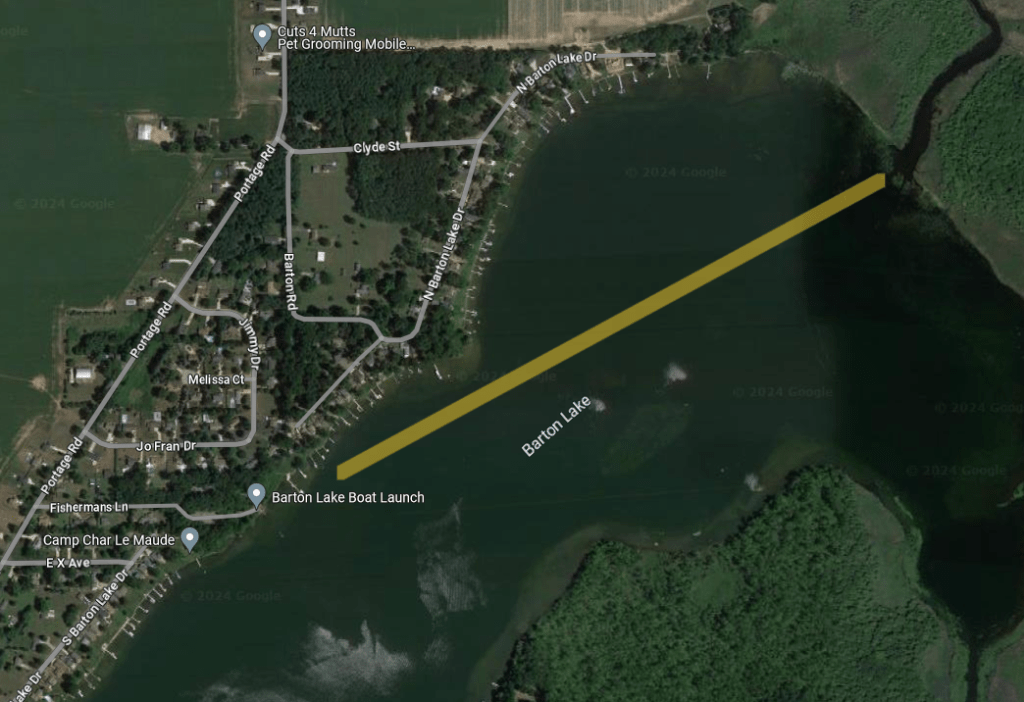
The MDNR Barton Lake Public Access is off Portage Road, Between W Avenue and X Avenue, at the end of Fisherman’s Lane.

Head northeast from the boat landing to Portage Creek. It’s a one mile paddle. The creek mouth is difficult to spot from a distance because the shoreline all looks the same – cattail marsh. There aren’t any landmarks to go by.

Upstream from the creek mouth, the waterway is wide with very little current.

The stream flows through Angel’s Crossing Golf Club and some of the course can be seen from the creek. The clubhouse and a few residences are visible, but most of the creek banks are undeveloped.

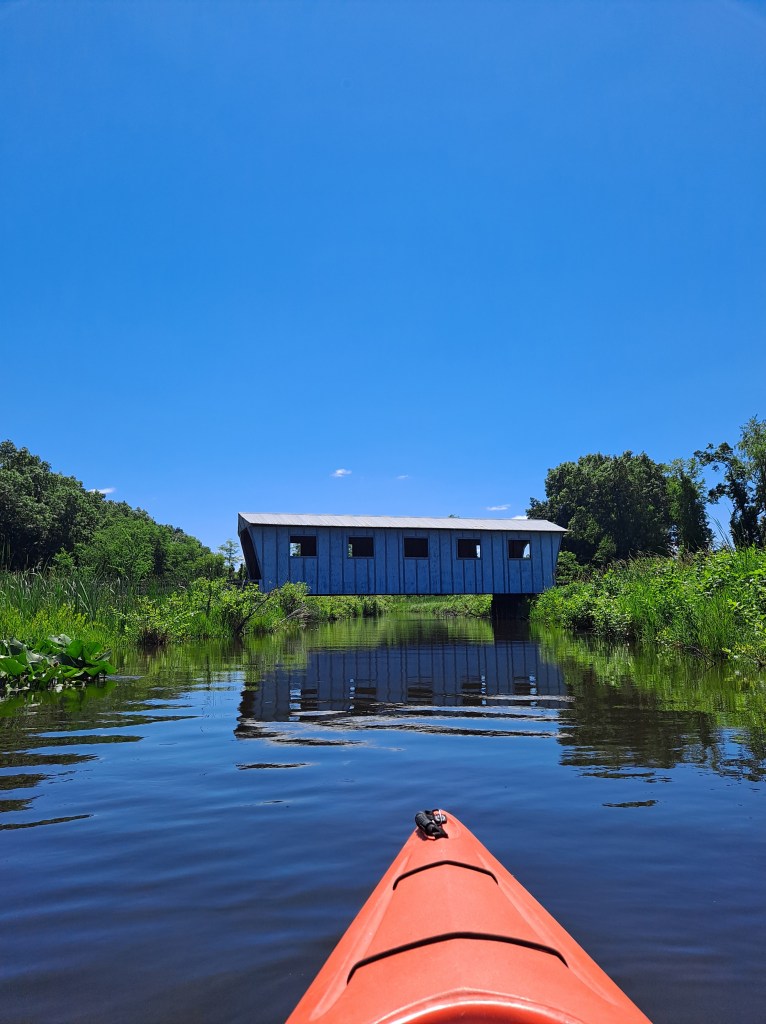
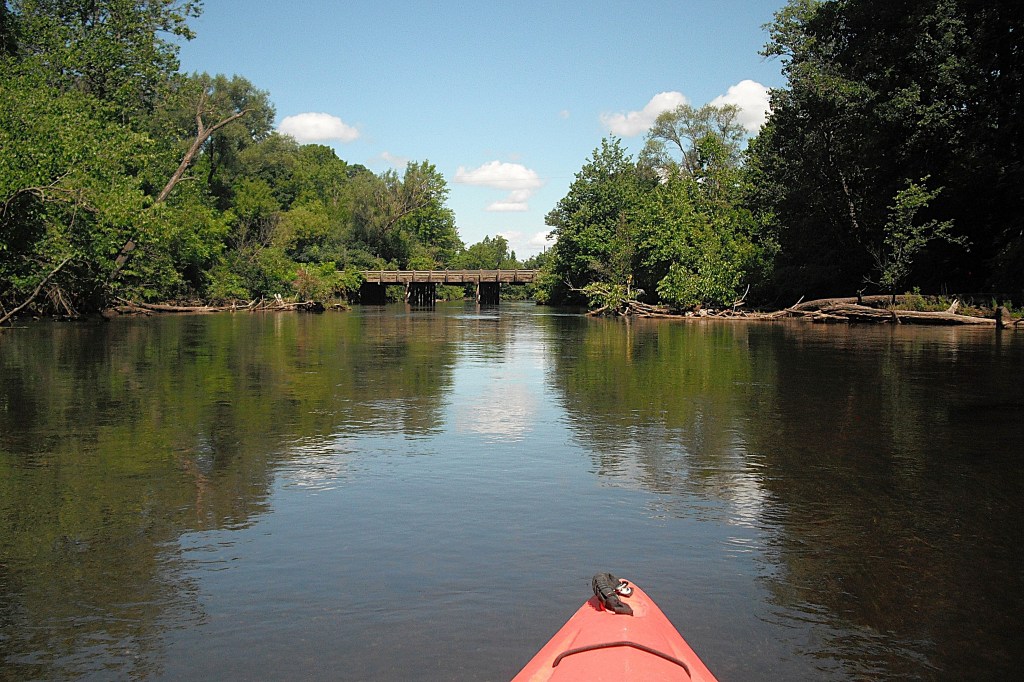
Continuing upstream, the creek gradually narrows. A covered bridge spans the creek.

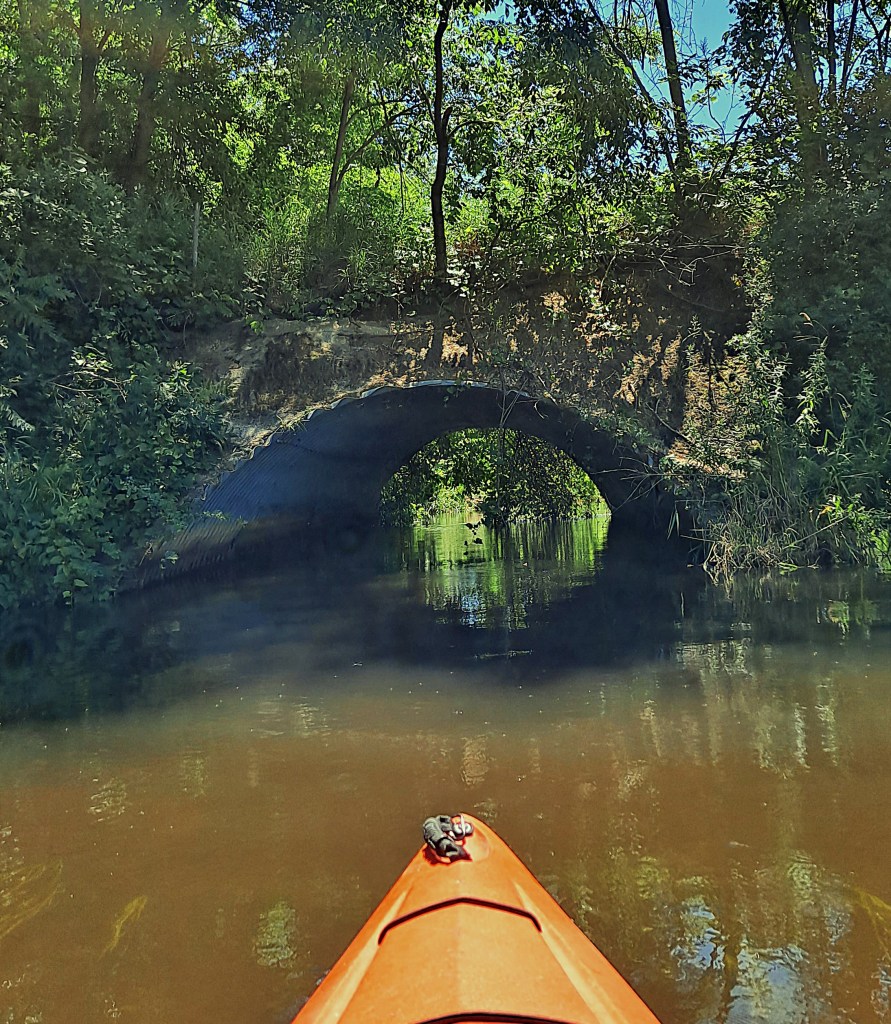
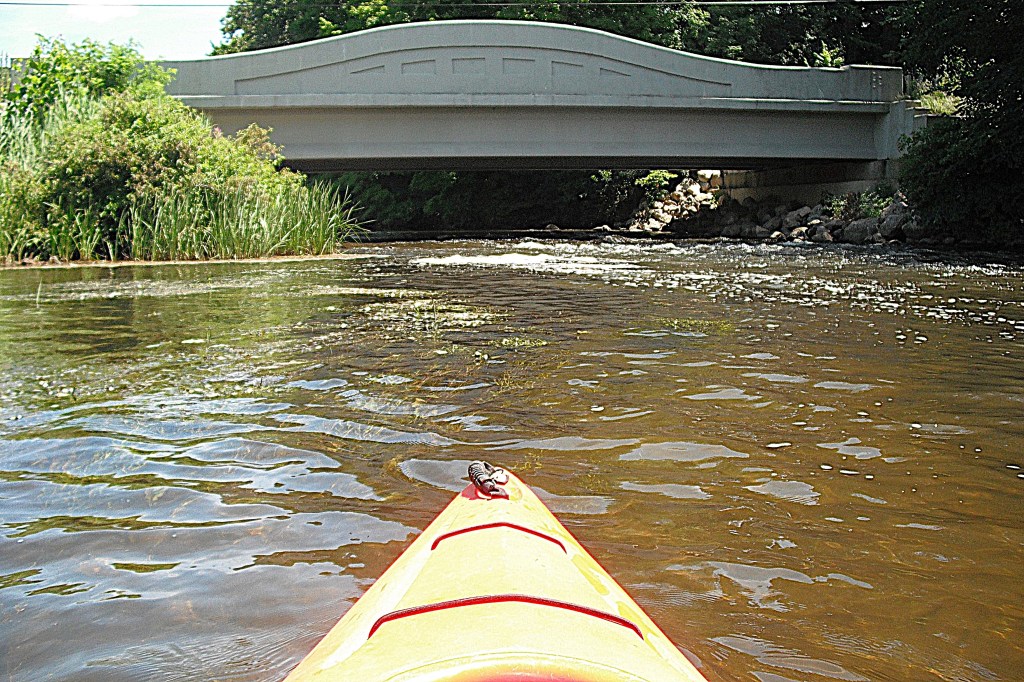
The stream passes through a pair of navigable culverts.

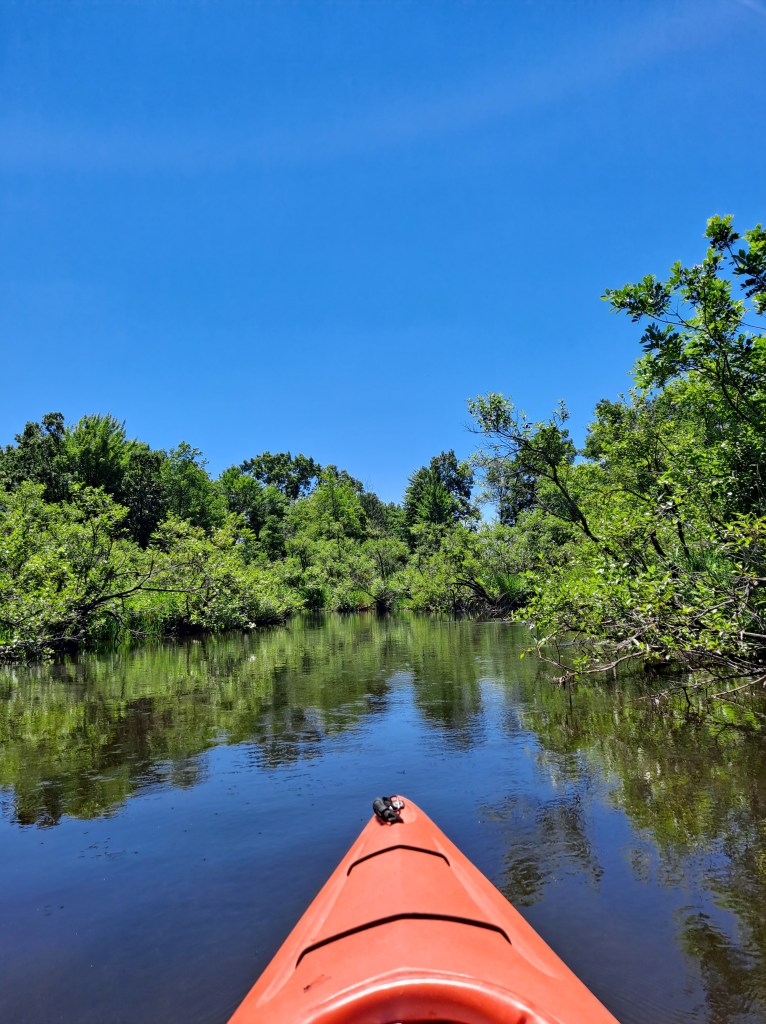
There are some tree branches and tree limbs in the water, but they were easy to paddle around or through. I never had to portage. I found the marshland to be very scenic.

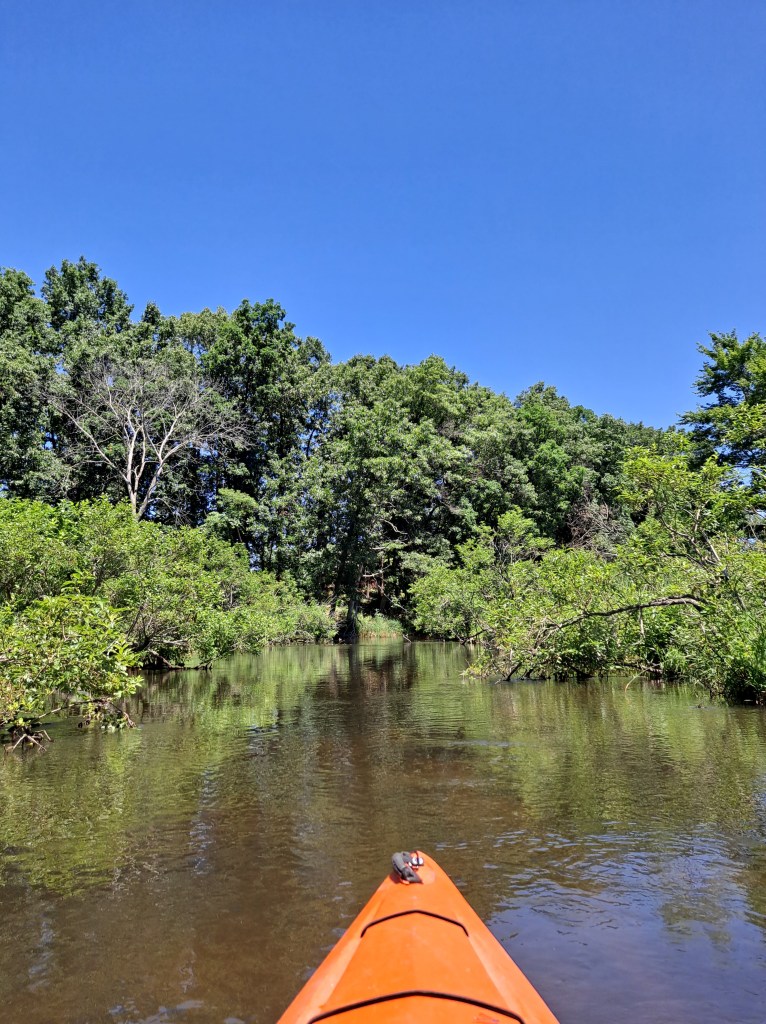
My progress was halted by a big willow tree that blew down across the creek.

I decided to to turn around and head back to Barton Lake. If I was really determined, I could have found a way through, but it would have been difficult. A little ways upstream from the willow, the downed trees become more frequent. Another good reason to turn back. On the return trip, drifting with the current in the upper portion of the creek is a good way to rest up for paddling the no-current lower portion of the creek and the one mile Barton Lake crossing. Kayaking a small stream through picturesque wetlands is a great way to spend an afternoon!

PORTAGE RIVER, NORTH FISHER LAKE ROAD TO THREE RIVERS, ST. JOSEPH COUNTY

This stretch of the Portage River offers some challenges, but it’s not too difficult for beginners. There is a dam to be portaged. The river averages about fifty feet wide and is one to three feet deep over a sand and gravel bottom. There are some deeper holes.

The Portage River flows through a agricultural region. The riverbanks are lined with hardwoods. There are swampy areas scattered along the shore.

Northeast of Three Rivers, the North Fisher Lake Road bridge marks the start of the trip. A small launch area is on the east side of the road, on the north side of the river. Parking is on the side of the road.

There is no shortage of fallen trees in the river. Most of the trees are easy to maneuver around.

There is the occasional downed tree that is difficult to negotiate.

I only had to portage over trees once.

Downstream from the South Fisher Lake Road bridge, the river enters open country, widens, and divides into several channels.

Keep an eye out for shallow water. It’s easy to run aground here. The channels eventually combine, farther downstream.

The current will slow as the river enters Hoffman Lake, a backwater of the Boy’s Dam.

When approaching the dam, the portage is on the left. It’s a small opening in the shoreline brush.

A path leads to the top of a small hill and continues on to the dam. The trail descends a steep hill down to the river.

Below the dam, the river moves at a moderate to fast pace. Watch out for rocks. There are some fallen trees to negotiate as the river winds its way through the City of Three Rivers. Most of the city is hidden from view by trees and brush along the riverbanks.

Downstream from the dam, the Portage River passes under three bridges before it flows into the St. Joseph River. Hang a right after you pass the wall.

Follow the St. Joe downstream as it flows under the Main Street bridge and a railroad bridge.

Continue downstream. The trip ends at the Conservation Park boat ramp, on the east (left) side of the river.

KALAMAZOO RIVER, ALBION TO MARSHALL, CALHOUN COUNTY

On a early spring scouting trip, I couldn’t find a really good Kalamazoo River boat landing in Albion. The best one looked like the Porter Street Landing. There is a public parking lot on the north side of Erie Street, east of Superior Street. Park on the north end of the lot by the Farmer’s Market, next to a flight of concrete steps. At the bottom of the steps, head east one hundred yards to a pedestrian bridge across the river. After crossing the bridge, there is a sidewalk that dead-ends at the edge of the river, in the backyard of the Riverview Apartments.

My friend Dan always enjoys a good river trip, so we teamed up for a July trip on the Kalamazoo. It’s a pleasant paddle through the city of Albion. The Cass Street bridge is just downstream from the Porter Street Landing.

The rather large Superior Street bridge is next. The road and several large buildings occupy the bridge deck. Kayaking under the bridge feels like going through a large, dark cavern.

After leaving the Albion city limits, the river takes on a rural character that lasts until the end of the trip in Marshall. This voyage is over twelve miles long, so plan accordingly.

The river makes a long, gently curving loop to the north, intersecting B Drive North twice.

The community of Marengo is on the north bank of the Kalamazoo, near the middle of the loop. The Broad Street bridge spans the river at Marengo.

Of special interest to kayakers: There are three separate sets of Class I rapids on the north loop of the river. You can hear the rapids before you can see them. From the photos, the rapids don’t appear to be difficult. Looks can be deceiving. Always paddle within your limits and experience level.

The last set of rapids was formed when a dam washed out.

About two miles downstream from the second B Drive North bridge, the river begins to widen and the current slows to a crawl.

The river gradually transitions to a lake, formed by the Marshall Dam. During the final four miles of the trip, there is no current to speak of. This final stretch to the landing can be tiring.

On the south shore of the west end of the lake, near the dam, is Stuarts Landing Park. Don’t go there. The boat landing is terrible. The restrooms are dark and dirty with no T.P. or door locks. If you’re desperate, It’ll do.

About a hundred yards east of Stuarts Landing Park is a unnamed, unmarked boat landing with a concrete ramp. Sadly, there are no restrooms. By vehicle, turn north on Willow Road from Homer Road. After traveling a hundred feet, go east for two hundred feet, then turn north. The ramp is at the end of the road. The photo was taken in early spring, looking east.

I enjoyed the scenery on this voyage. The rapids added adventure to the trip. The long final stretch with no current was tiring, but still fun. I’ll do it again!

THORNAPPLE RIVER, CHARLTON PARK TO HASTINGS, BARRY COUNTY

This trip on the Thornapple River is never very far from civilization. There are some homes on the riverbank and near the river. Roads are nearby and bridges span the river. Despite all this, I still found the river to be scenic and enjoyable. I went on a weekday in July and I didn’t see another boater until I arrived in Hastings.

There is a watercraft livery in Hastings, but they don’t always provide shuttle service. I felt extremely lucky to get shuttle service from them. If you’re interested in renting watercraft, then the livery is a good choice. The livery boat landings are off-limits to non-customers.

If you are providing your own car spotting, then Charlton Park is a good place to launch kayaks. Take Charlton Park Road north from highway M79. The Barry County park is on the north side of Thornapple Lake, on the east side of the road. Follow the park signs to the boat landing.

To begin, head west from the Charlton Park boat landing. The first mile and a half of the voyage has no current. Eventually, the river shows signs of current.

This part of the Thornapple is characterized by long stretches of slow current with water depths of one to three feet.

The slow stretches are followed by brief sections of shallow, fast, riffled water (not quite rapids). The water depth in these riffles ranges from a foot to only a few inches.

The riffles are visible from a distance, giving kayakers time to look for the best path through the shallow water.

It’s difficult to keep from scraping the rocky bottom in the riffles. No matter how hard I tried, I still got hung up a few times. Maybe water levels will be higher when you are on the river.

A mile and a half downstream from the Charlton Park Road bridge, the historic McKeown Road bridge spans the river at McKeown Bridge Park. The bridge was built in 1903 and was restored in 1975 for pedestrian use.

In all parts of the river, keep an eye out for large rocks and small boulders. They have a bad habit of showing up when you least expect them.

There are plenty of places to stop for a break. I pulled up on a gravel bar for lunch and a cool swim.

The final portion of the trip is in the city of Hastings. This section of the river is very popular with tubers. Tube traffic can be heavy at times.

Tyden Park in Hastings is a good place to end a trip. It doesn’t have a designated boat landing, but there are several places that will suffice. The wooded park is well kept with picnic shelters and modern restrooms.

KALAMAZOO RIVER, MARSHALL TO BATTLE CREEK, CALHOUN COUNTY

SAYLORS LANDING TO PADDLERS GROVE

This stretch of the Kalamazoo River is pretty mellow for the most part. It is wide and shallow with a mostly gravel bottom. The current is moderate with a few fast sections. There are some islands scattered throughout the trip.

My friend Dan and I chose Saylors Landing as our starting point. It’s southwest of Marshall at the Fifteen Mile Road bridge over the river. The landing is beautiful with a concrete boat ramp, a clean modern restroom, and picnic tables.

This trip is a little over twelve miles long, so plan accordingly.

There are over a half dozen sections of fast water throughout this part of the Kalamazoo. Some could be technically classified as Class I rapids. I thought that most of the rapids were mild and easy to paddle.

We came across an unnamed creek that flows into the river.

There aren’t very many downed trees and tree limbs to paddle around, so the river is suitable for kayakers of all skill levels. Keep an eye out for occasional large rocks and shallow water.

Paddling around an island required some maneuvering.

Our trip ended at Paddlers Grove, south of Battle Creek. Head north on Beadle Lake Road from I94. Take South River Road east from Beadle Lake Road. The park is on the north side of the road. This park is just as nice as Saylors Landing, with a clean modern restroom and picnic tables. The boat landing is a floating dock with a attached watercraft slide. I wish more river access sites were like this one!

This voyage isn’t particularly challenging, but the scenery makes up for it!

MORROW LAKE and KALAMAZOO RIVER, COMSTOCK TOWNSHIP, KALAMAZOO COUNTY

MDNR MORROW LAKE ACCESS SITE TO COMSTOCK MERRILL PARK

This relatively short water trail takes kayakers on a tour of a portion of Morrow Lake. There is a portage at Morrow Dam followed by a short trip down the Kalamazoo River.

Morrow Lake was formed by the construction of Morrow Dam on the Kalamazoo River in 1941. The lake was a source of cooling water for a power plant at the dam. The plant closed in 1983 and a hydro-electric power plant was built. That plant is still in operation.

The lake was drained in 2019 for dam repair. It was refilled in 2021. Since the refill, some areas of the lake that were previously open water are now covered with vegetation. Floating mats of algae are scattered around the lake.

The trip starts at the MDNR Morrow Lake Access Site. Take Rosemont Road south from highway M96, about halfway between Comstock and Galesburg. The boat landing is at the end of Rosemont Road, on Plaza Avenue.

The water trail follows the north shore of Morrow Lake west to the dam. The wooded shoreline makes for a scenic paddle.

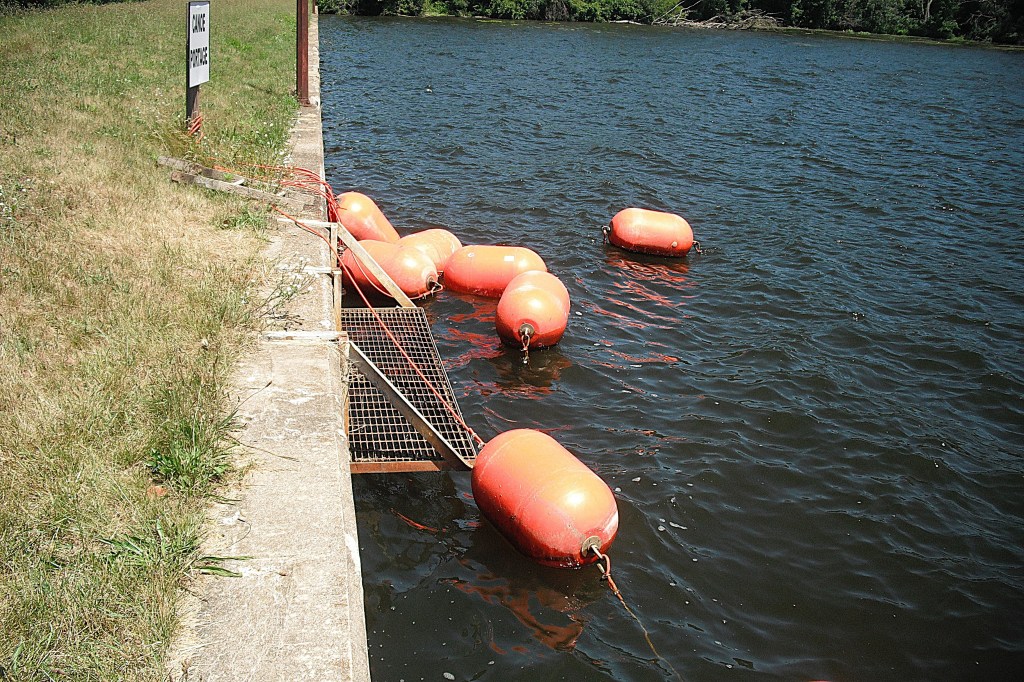
At the dam, there is a concrete seawall extending north from the hydro-electric power plant. Next to a “Canoe Portage” sign, there is a steel platform hanging from the wall that is suspended above the water. Slide out of your kayak onto the platform, stand up, and lift your kayak over the wall. I thought the process was rather awkward, almost difficult. I still have the imprint of that grate on my butt.

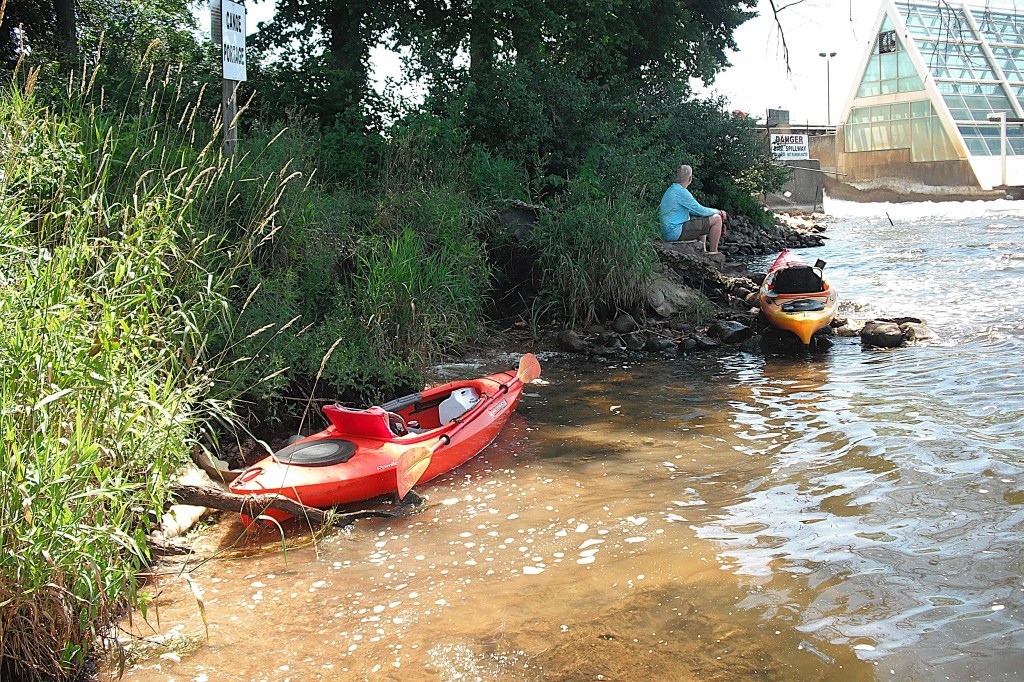
West of the wall, at the bottom of an embankment, there is a short trail through a small wooded area. At the end of the trail, concrete steps lead down to the river. At the bottom of the steps, rough water from the spillway can be expected. There is a better place to get in your kayak that is slightly downstream from the steps.

The river flows west from the dam to Merrill Park. The water depth varies from a foot deep to over six feet deep. The current is moderate to fast over a sand, gravel, and rock bottom.

Heading downstream from the dam, there is a mid-river island and a power plant access bridge. The river is navigable on both sides of the island. Past the bridge, there are two sections of riffled fast water.

At the end of a long straight stretch of the river, there is another island.

Comstock Creek flows into the river on the north side of the island. The creek is only navigable for a short distance, but it’s worth checking out.

Between the island and the River Street bridge, there is a small rapids on the south half of the river.

The trip ends at Merrill Park, downstream from the River Street bridge, on the south side of the river. The park is south of Highway M96, on the corner of River Street and Comstock Avenue.