INTRODUCTION
The water trail begins at Hogset Lake in Portage, Kalamazoo County and ends at Conservation Park in Three Rivers, St. Joseph County. I recommend dividing the water trail into six or seven individual trips. I will provide information on each segment. The primary waterways are Gourdneck Creek, Portage Creek, the Portage River, and the St. Joseph River. There are seven lakes to cross: Hogset, Gourdneck, Sunset, Barton, Kimbal, Portage, and Hoffman.
HOGSET LAKE TO SUNSET LAKE ON GOURDNECK CREEK
There are two access sites on Hogset Lake.

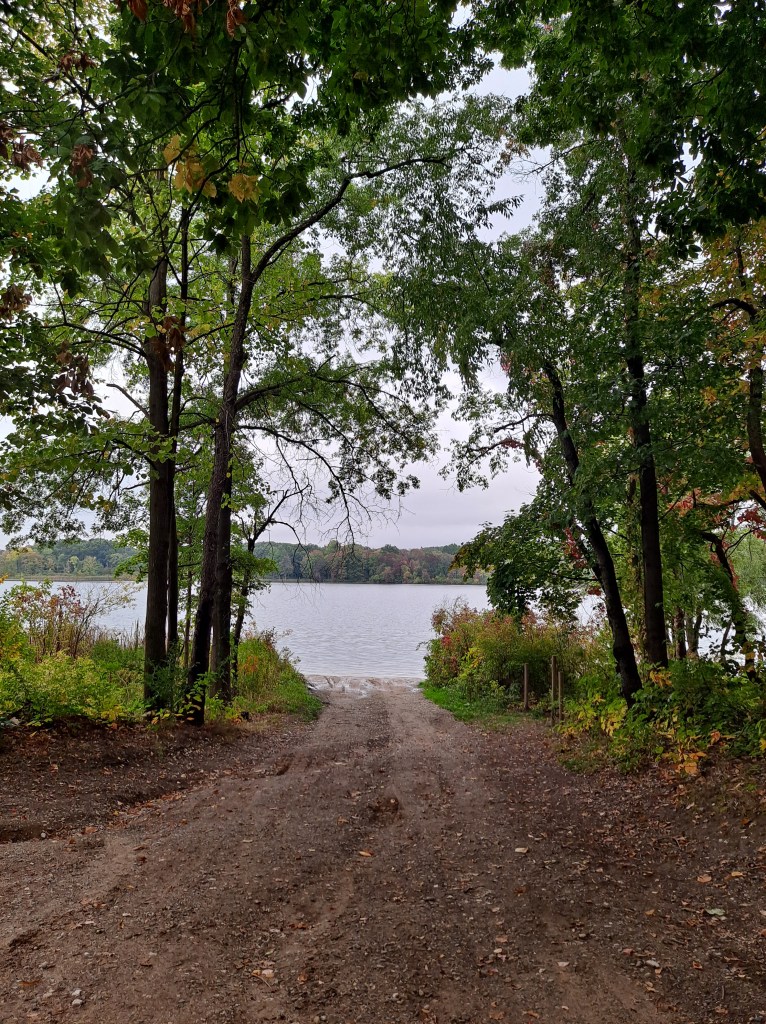
A short channel connects Hogset Lake to Gourdneck Lake. Gourdneck Creek flows out of the southeast corner of Gourdneck Lake.
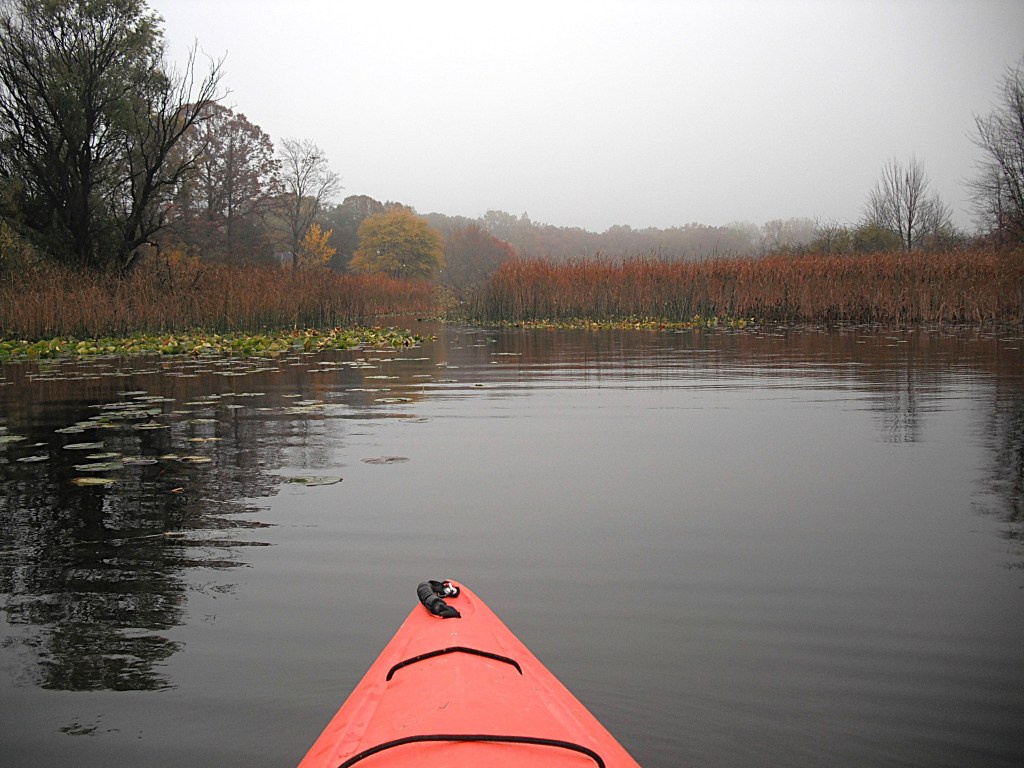
Some stretches of Gourdneck Creek can become choked with lily pads in the warmer months of the year. Spring or fall are the best times to paddle this segment.
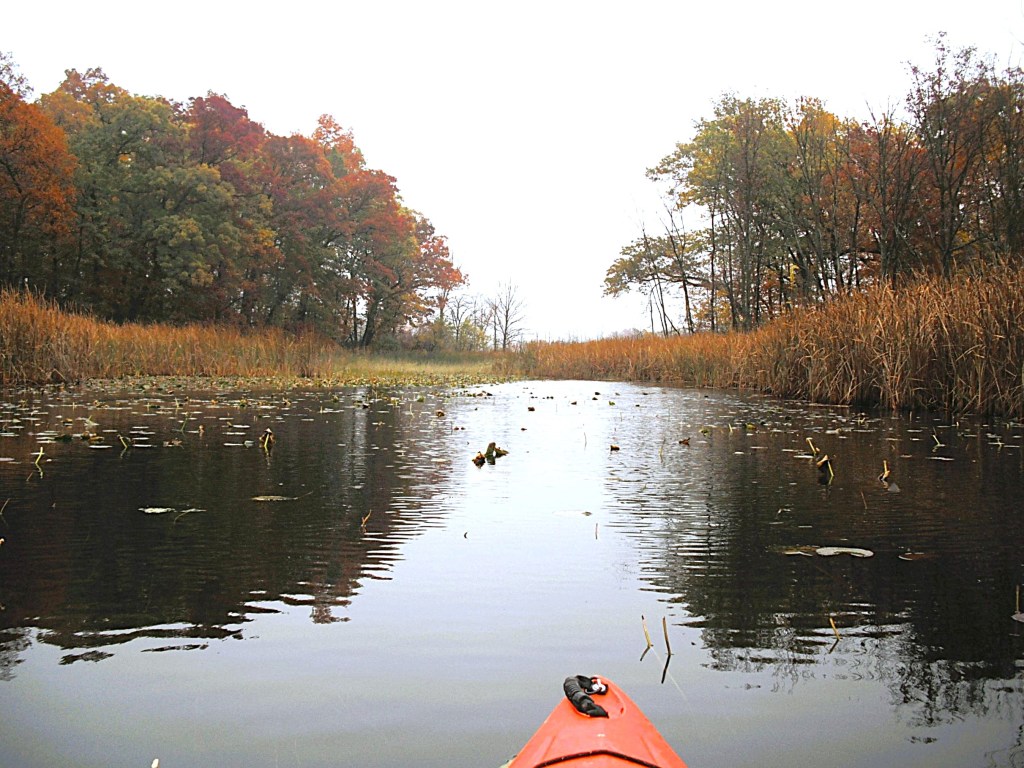
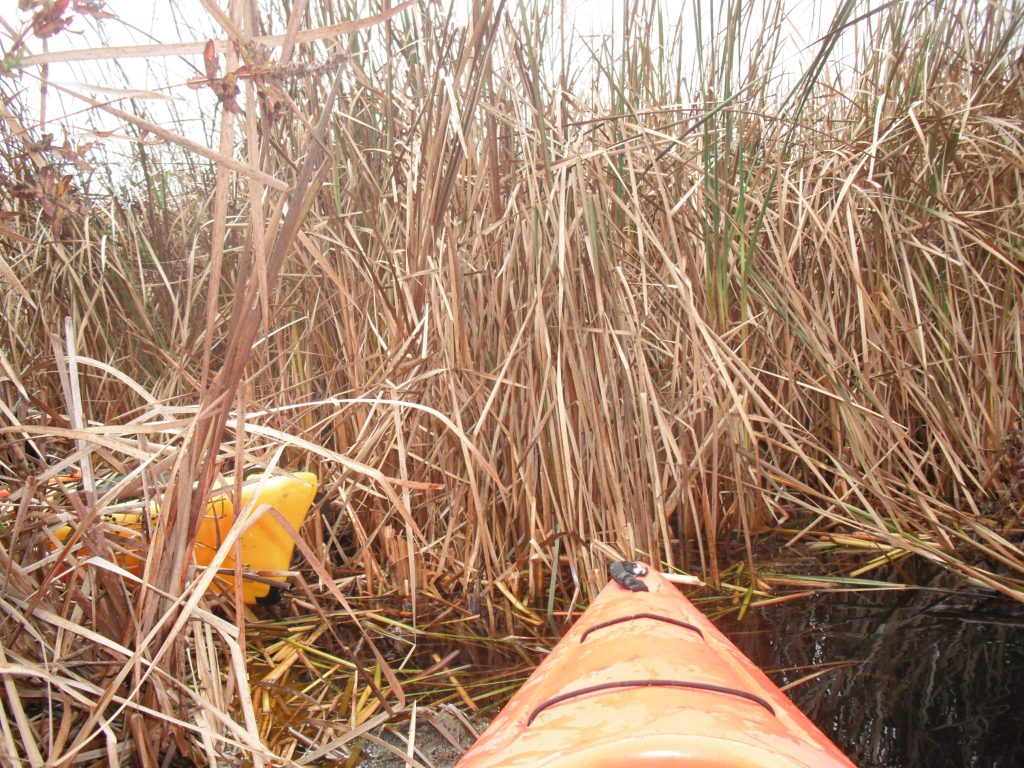
Kayaking Gourdneck Creek from Gourdneck Lake to Sunset Lake is mostly through cattail marshes. Sometimes, clumps of cattails break off from the cattail bed and float downstream, collecting in curves and narrow spots, blocking the creek. On my most recent trip, we fought our way through a blockage and it took us a half hour to go forty feet. Turning around and going back never entered our minds because quitting is for sissies. Be prepared!
The creek passes under a low clearance bridge at 23rd Street. The banks on the side of the road are steep. The streamside is thick cattails and brush. Portaging over the road is not an option. I slouched way down in my kayak and barely made it under the bridge. Another time, I had to get out of my kayak and wade it under the bridge. Water levels may vary.
After the bridge, it’s pretty much clear sailing. There may be some downed trees to contend with.
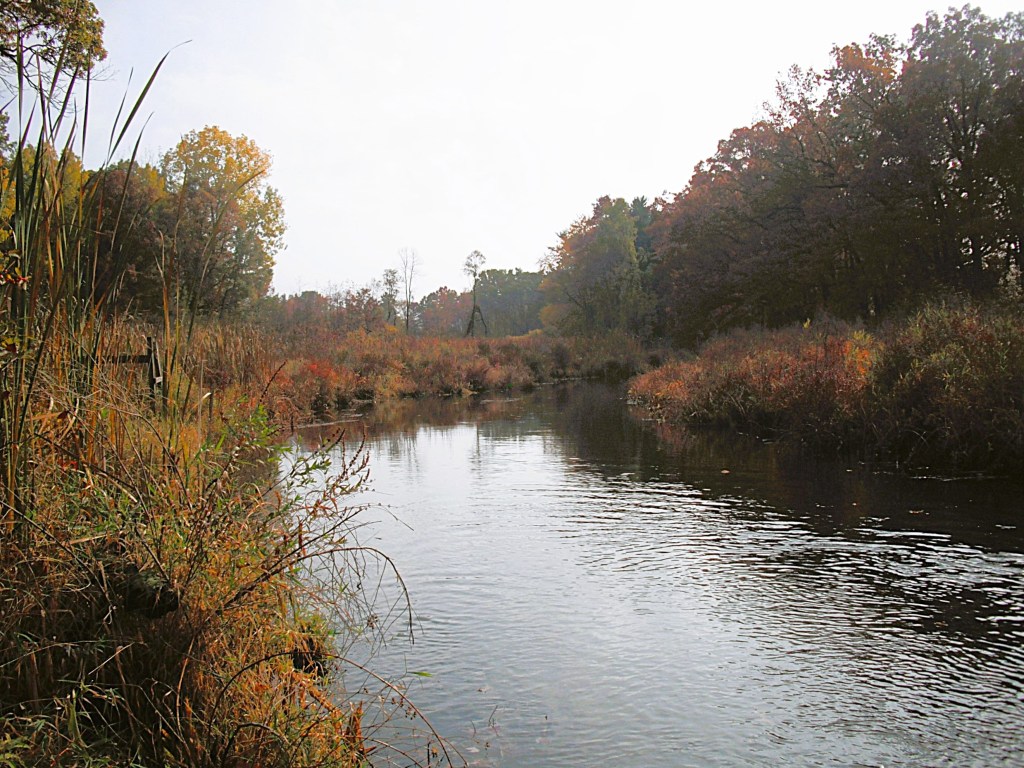
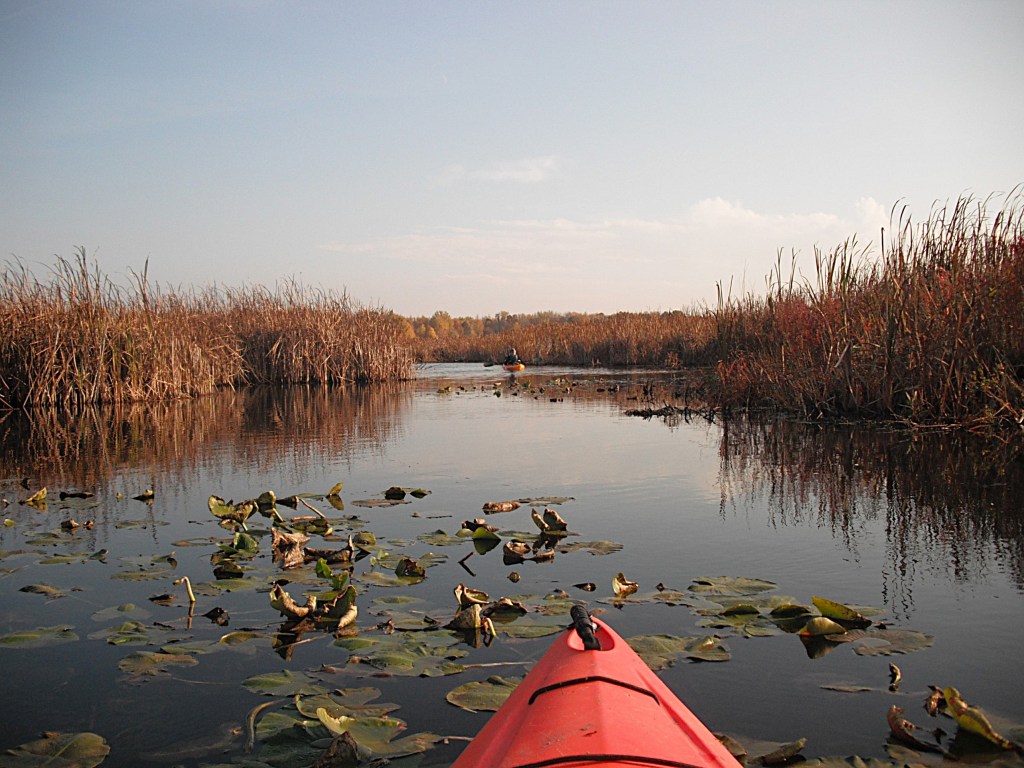
Gourdneck Creek flows into the north end of Sunset Lake. A mile-long bayou begins at the creek mouth and connects to the main basin of the lake.
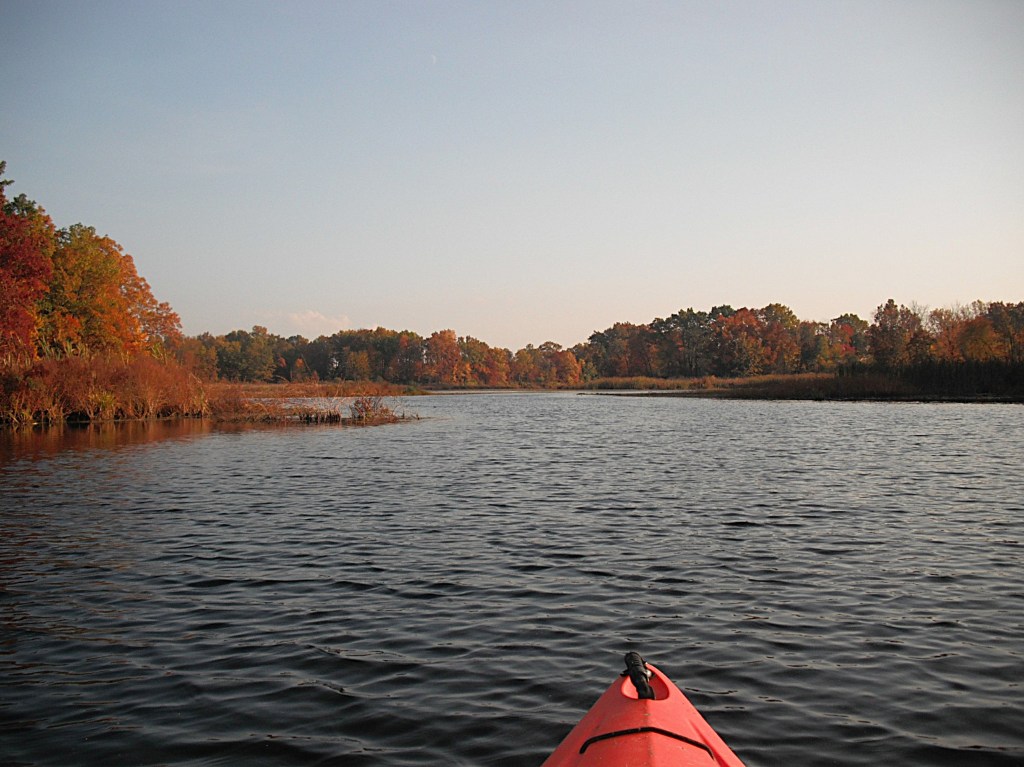
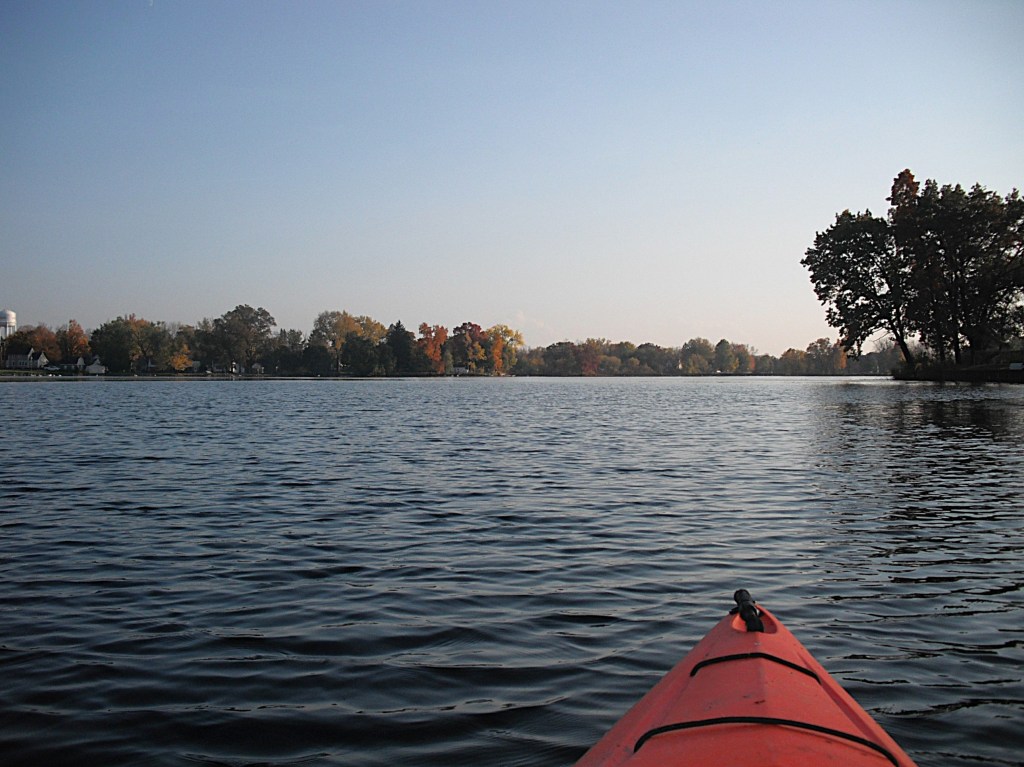
The boat landing is in Sunset Lake Park, on the west side of the main basin.
SUNSET LAKE TO BARTON LAKE ON PORTAGE CREEK
There are two Portage Creeks in Kalamazoo County. The Portage Creek in this water trail is in the St. Joseph River watershed.
The first mile of this segment is not navigable. I still wanted to kayak it, so I did the next best thing. I launched my kayak at the MDNR Barton Lake access. I paddled across Barton Lake and upstream on Portage Creek as far as I could go. Then, I returned to the Barton Lake landing.
Head northeast across the lake from the boat landing to the mouth of the creek. The creek mouth is difficult to spot from a distance because all of the shoreline looks the same – cattail marsh. The stream is bordered by wetlands for most of this segment. The lower portion of the creek is wide with very little current.
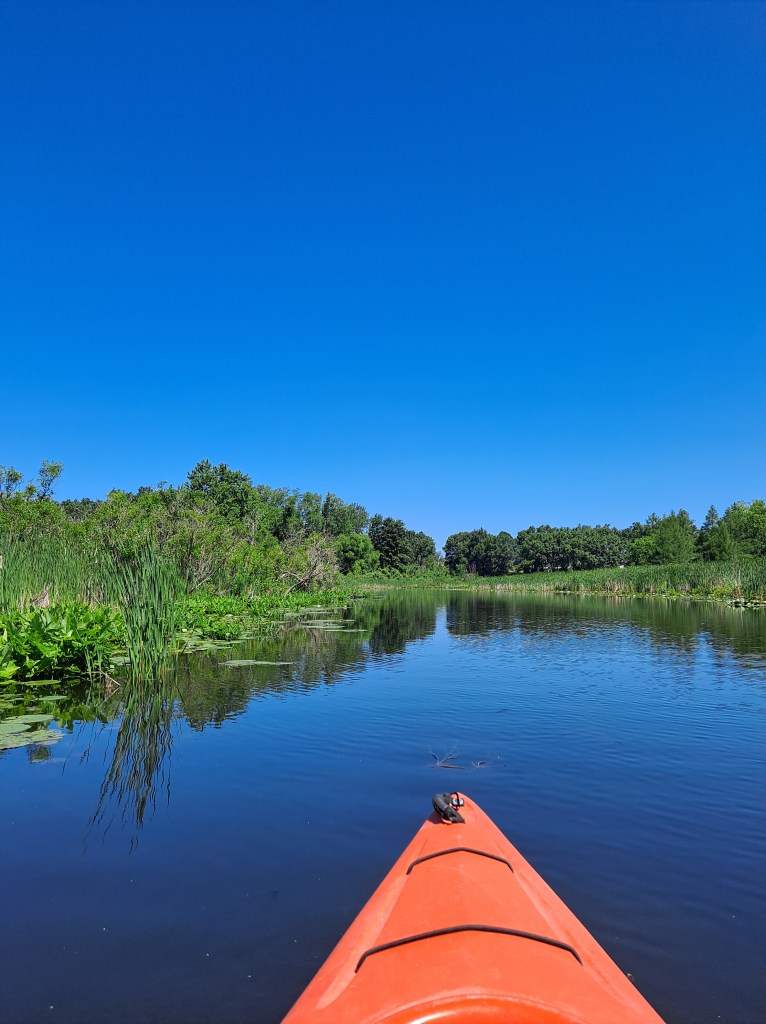
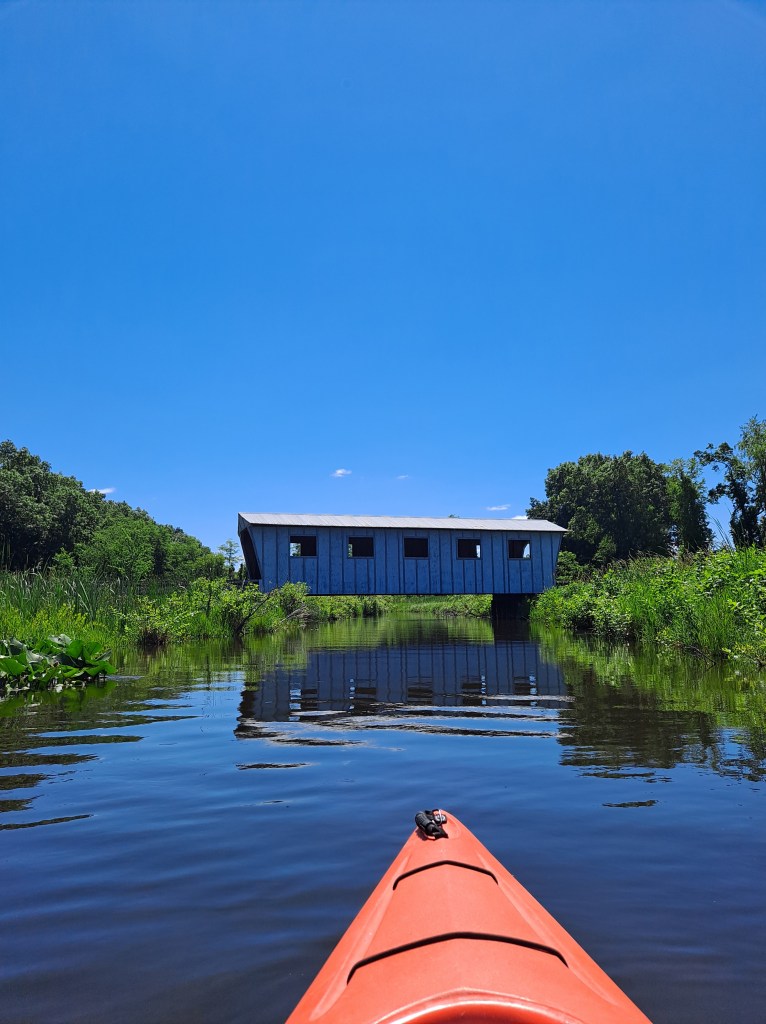
A covered bridge spans the creek.
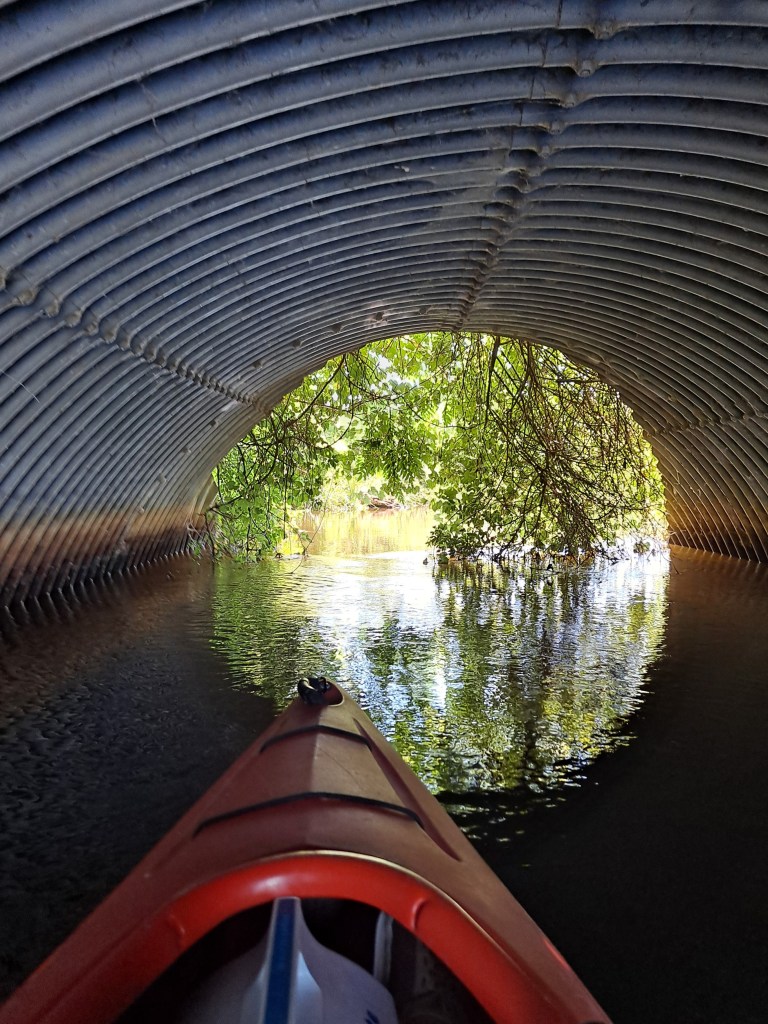
The creek passes through two large side-by-side culverts, but only one is navigable.
The creek gradually narrows as you go upstream and the current picks up speed. It’s not difficult to paddle against the current.
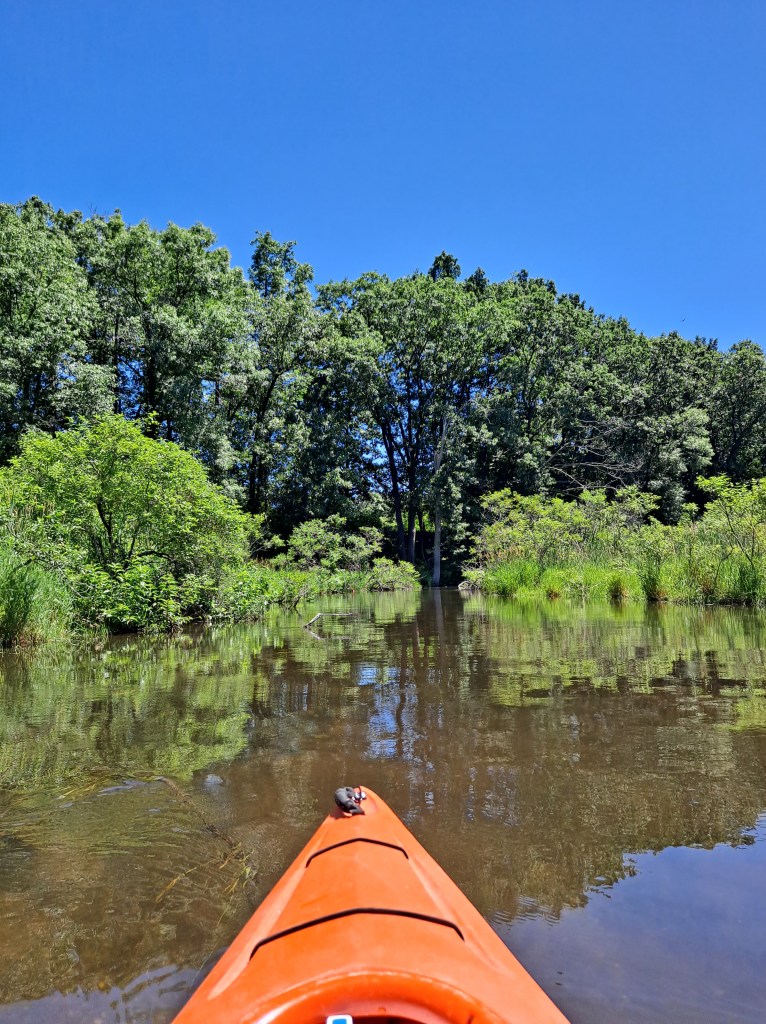
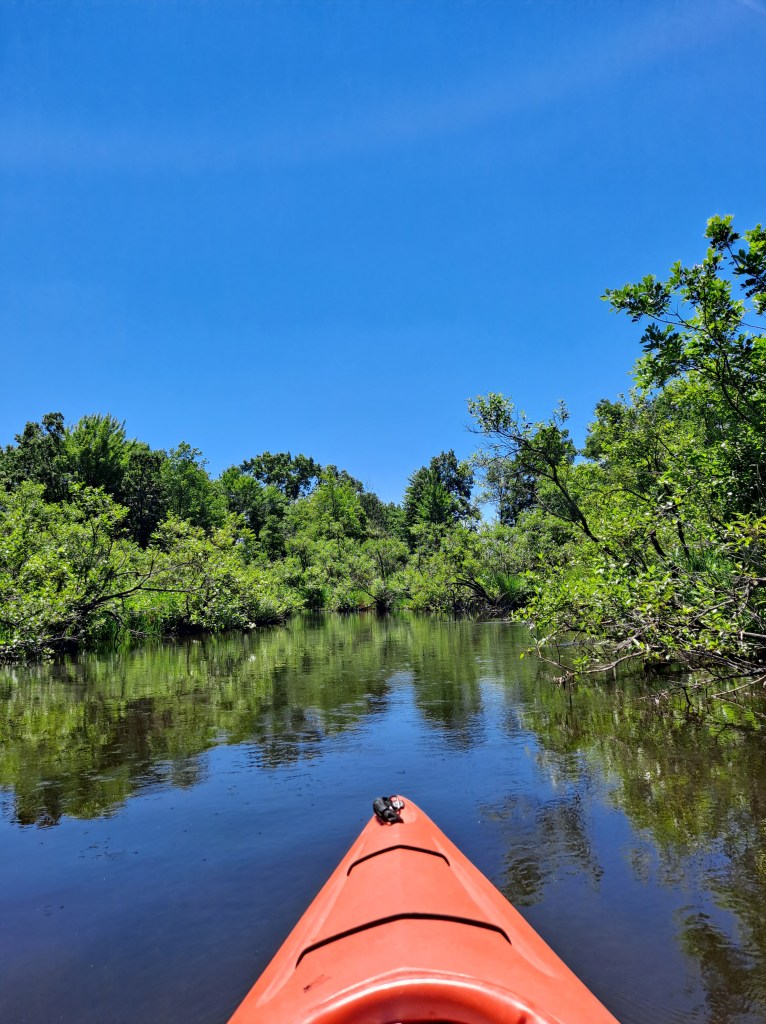
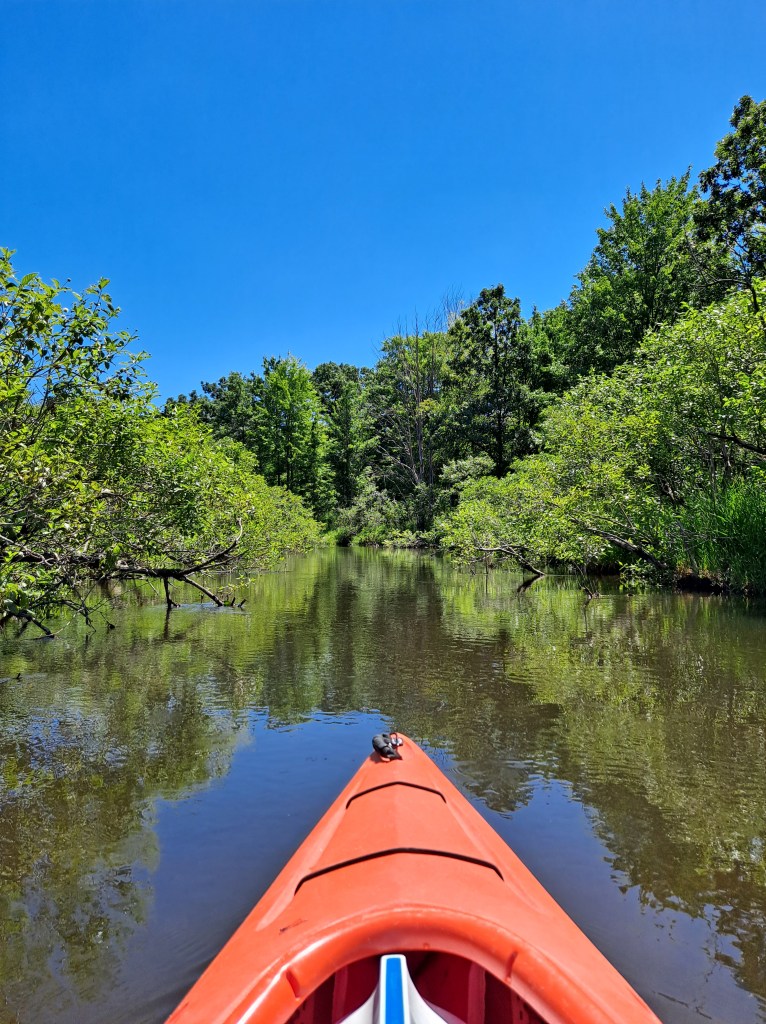
The point at which you turn around and paddle back to Barton Lake and the landing is up to you.
PORTAGE CREEK, FROM BARTON LAKE TO THE SILVER STREET BRIDGE
This segment begins at the MDNR Barton Lake access. From the boat landing, head southeast across the lake to Portage Creek.
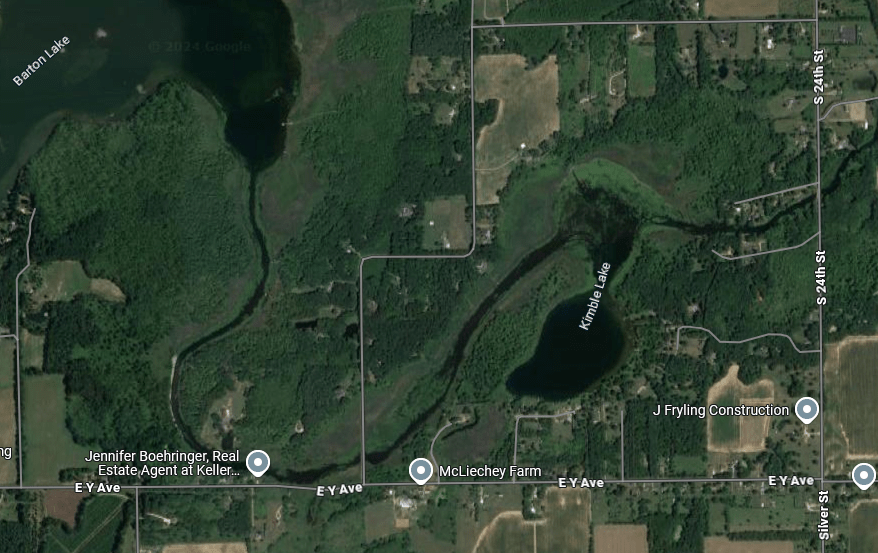
The creek flows south, then east to 22nd Street. The culverts under the road are not navigable, so a portage is necessary. The water depth on each side of the road drops off quickly, so use caution when portaging.
Below 22nd Street, the creek heads northeast and passes through the north end of Kimbal Lake before intersecting the Silver Street (South 24th Street) bridge, south of Vicksburg.
There is no formal boat landing. The best place to take out is on the south side of the river, on the west side of the bridge. Parking is on the side of the road. If you are spotting a vehicle on Silver Street, be mindful of the “No Parking” signs. I didn’t get ticketed, but I can’t guarantee that you won’t be cited.
PORTAGE CREEK, FROM THE SILVER STREET BRIDGE TO PORTAGE LAKE
The Silver Street (South 24th Street) bridge is the beginning of this segment. The day trip ends at the MDNR Portage Lake access site. When I look back at this trip, it was a long day of paddling. I wish that I would have divided it into two trips. There are two places to access Portage Creek that are in the middle of the lengthy segment: the Y Avenue bridge and the YZ Avenue bridge. Either one of these two bridges is a good place to break the segment into two separate voyages. There are no formal boat landings at the bridges. Put-in, take-out, and parking are on the side of the road.
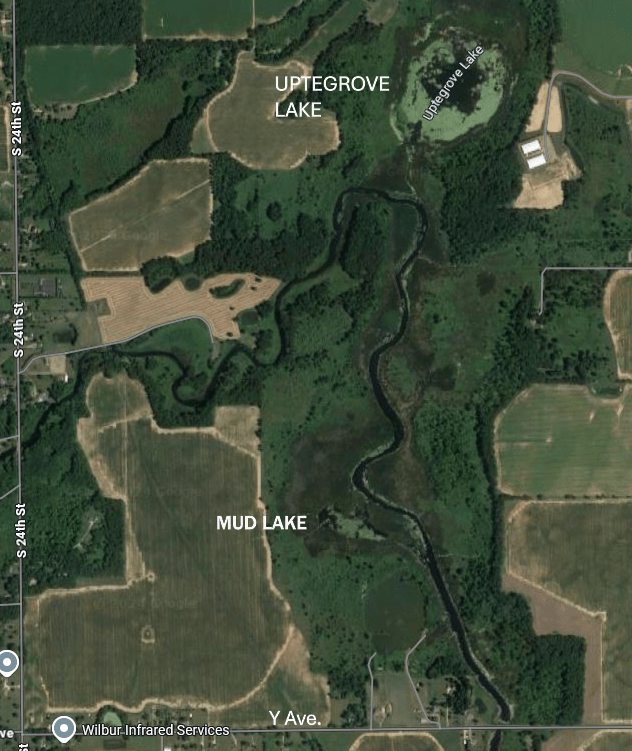
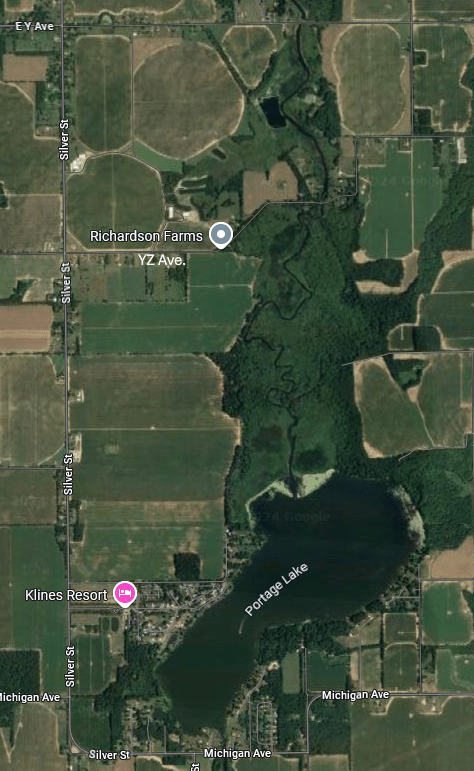
For most of this trip, the creek flows through cattail marshes. Places to get out of your kayak and take a break are few and far between. The creek heads northeast from the Silver Street bridge, then turns south to Portage Lake.
There are two side trips between the Silver Street bridge and the Y Avenue bridge. When the creek changes direction from northeast to south, a channel on the north side of the stream leads to Uptegrove Lake. Farther south, on the west side of the creek, a channel leads to Mud Lake.
Just north of Portage Lake, Portage Creek flows into the Portage River. The Portage River flows into the north end of Portage Lake. It’s a two mile open water crossing to the boat landing on the south end of the lake.
PORTAGE RIVER, PORTAGE LAKE TO NORTH FISHER LAKE ROAD
This trip on the Portage River begins at the MDNR Portage Lake access site. Head east from the landing. The river mouth is at the southeast corner of the lake.
The river corridor is wooded and the riverbanks are mostly undeveloped.
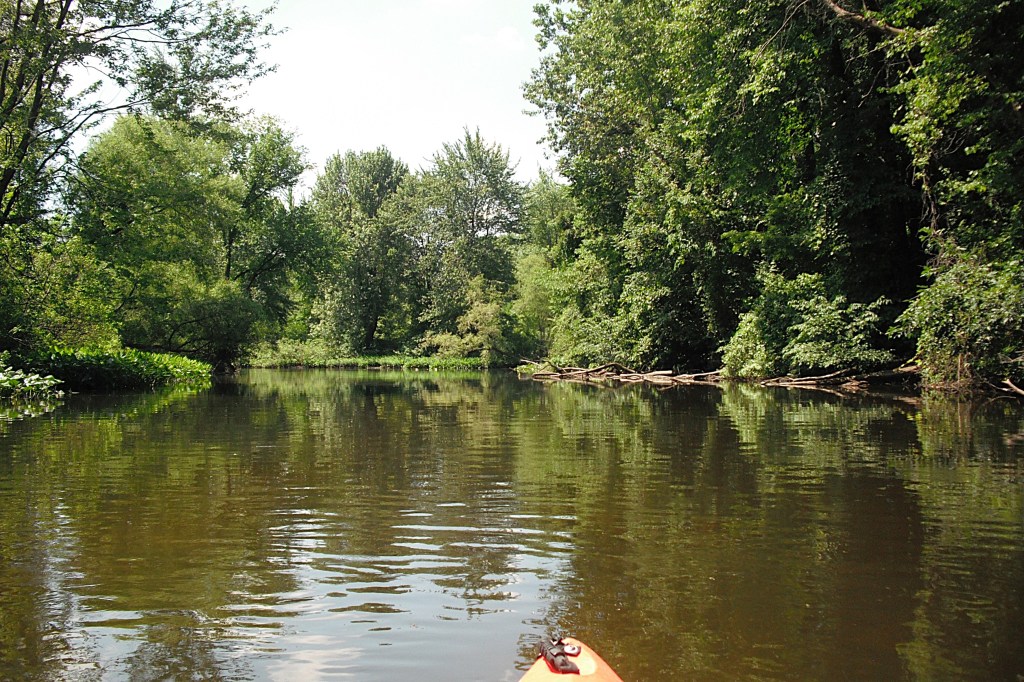
The current is slow and the depth ranges from one to three feet with some deeper holes. From Portage Lake to Parkville, the river is wide and mostly clear of obstructions.
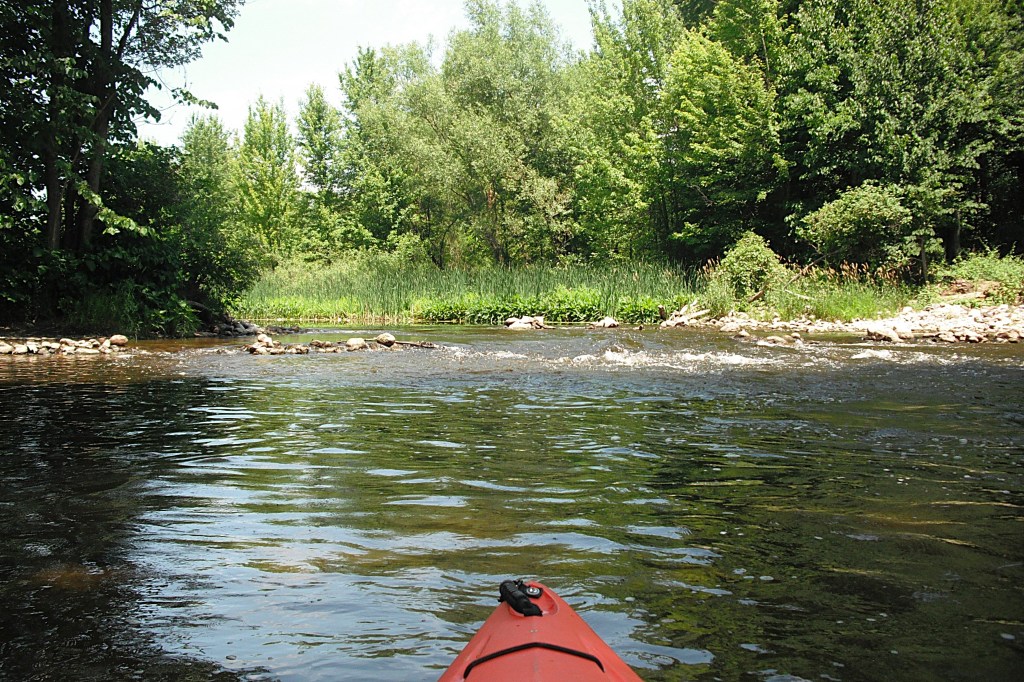
In Parkville, the remnants of an old dam has created a small rapids.
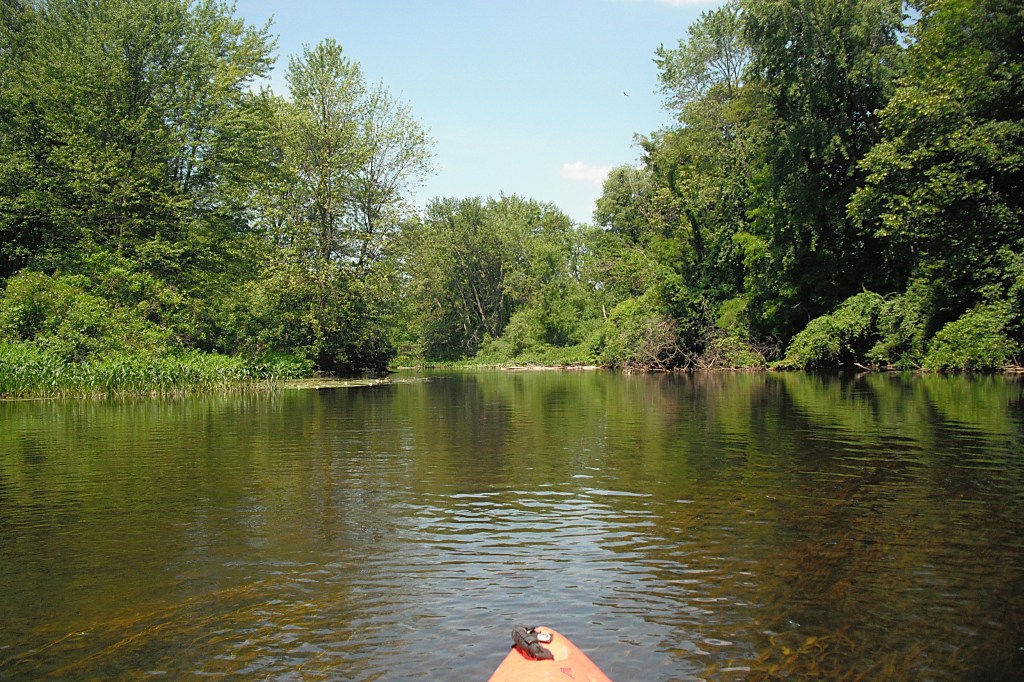
Between Parkville and North Fisher Lake Road, there are a lot of fallen trees in the river. The last time that I paddled this segment, I didn’t have to portage any of the trees.
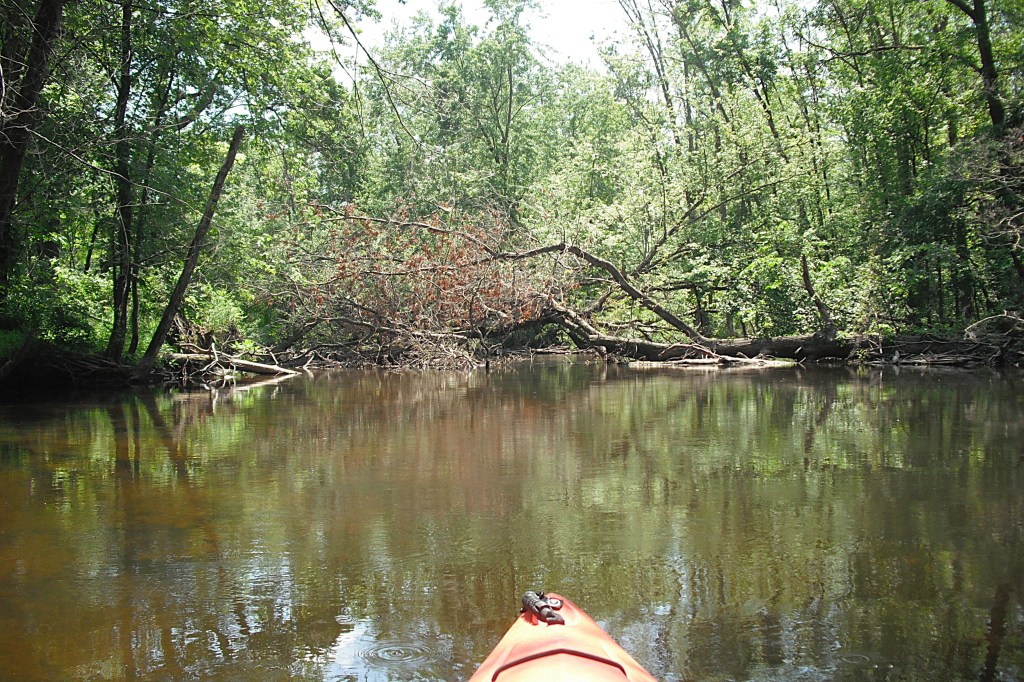

The next bridge past Parkville is the North Fisher Lake Road bridge, marking the end of this segment. The small landing is on the north side of the river, on the east side of the bridge. Parking is on the side of the road.
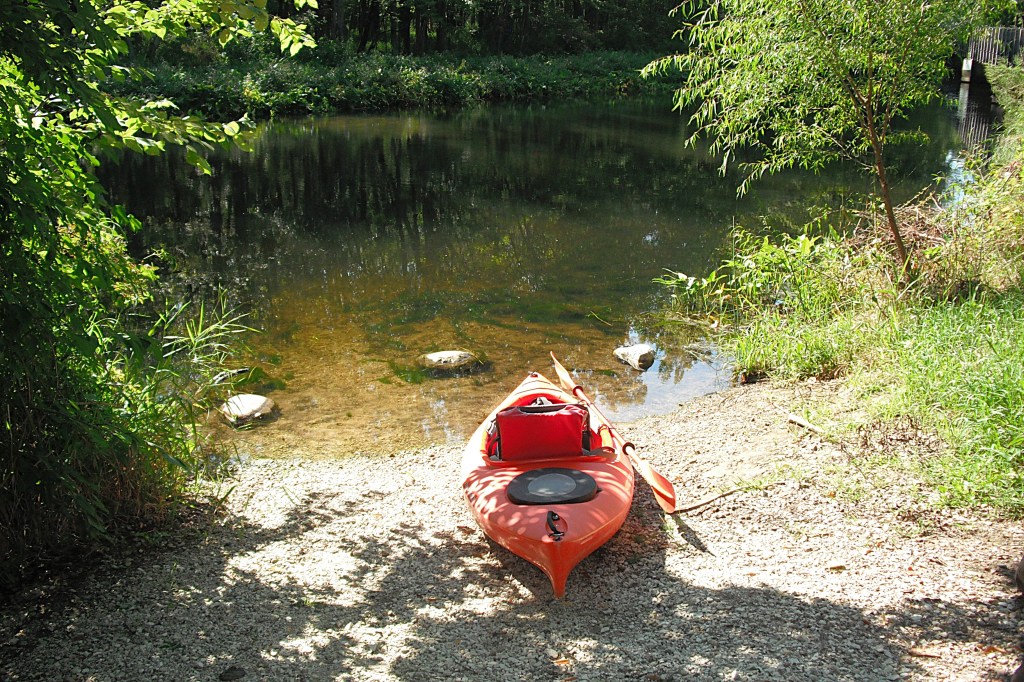
PORTAGE RIVER, FROM NORTH FISHER LAKE ROAD TO THREE RIVERS
The beginning of the final segment of the water trail is at the North Fisher Lake Road bridge.
The riverbanks are wooded and the river ranges from one to three feet deep with a few deeper holes. The current is slow.
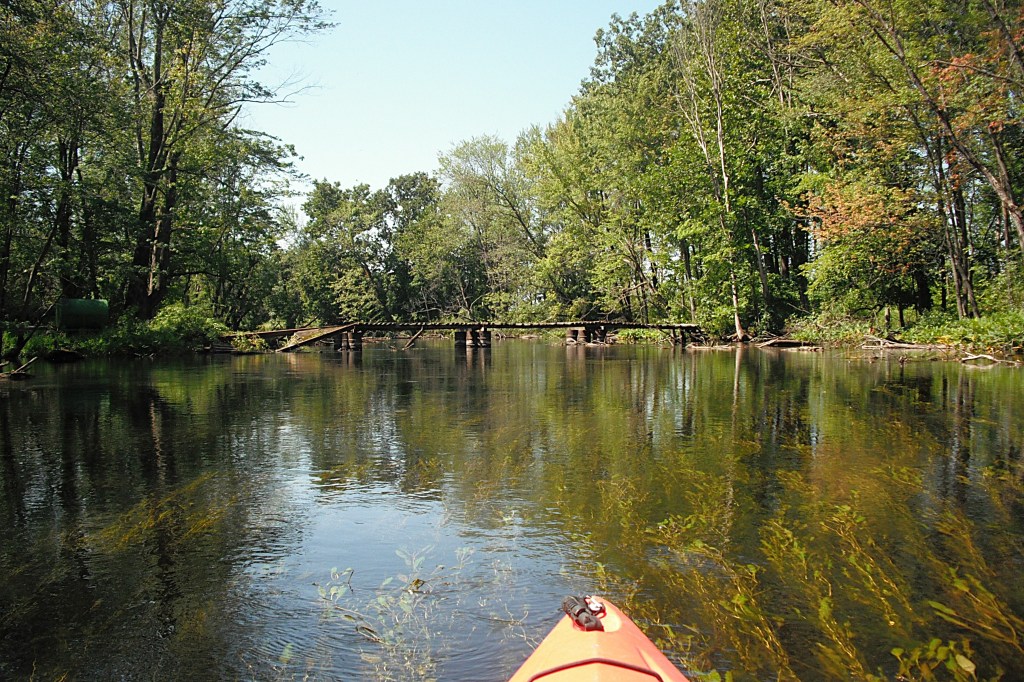
There are many downed trees in the river to test your kayaking skills. The last time that I was on this section, I only had to portage trees once.
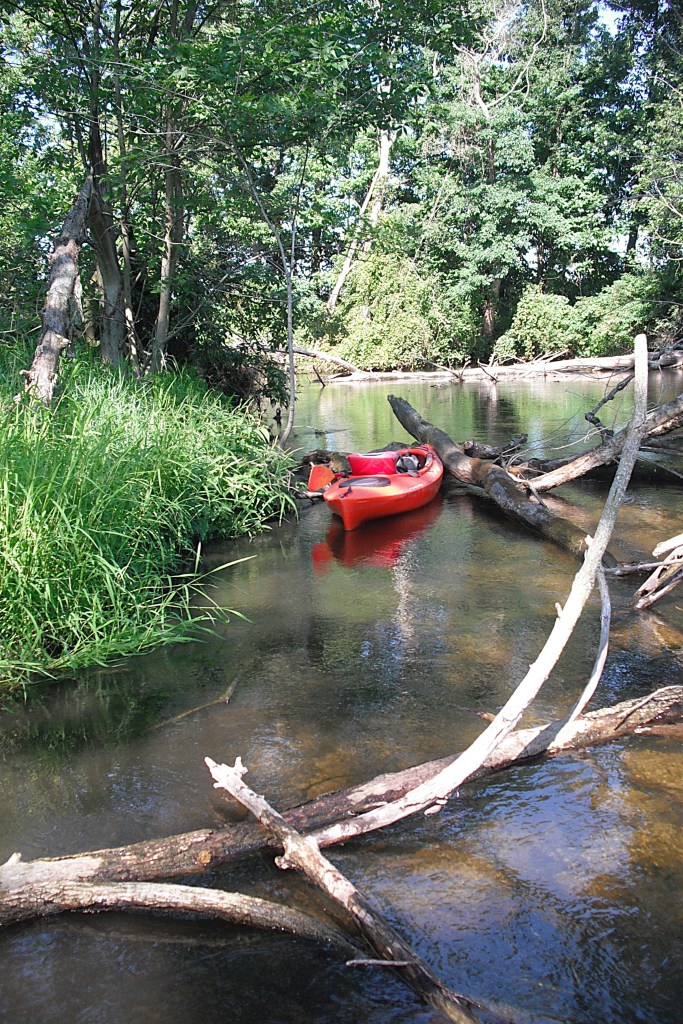
Downstream from the South Fisher Lake Road bridge, the river widens and divides into several channels. Keep an eye out for shallow water. Farther downstream, the channels combine into one.
Approaching Three Rivers, the Portage River enters Hoffman Pond, the backwater of the Boy’s Dam.
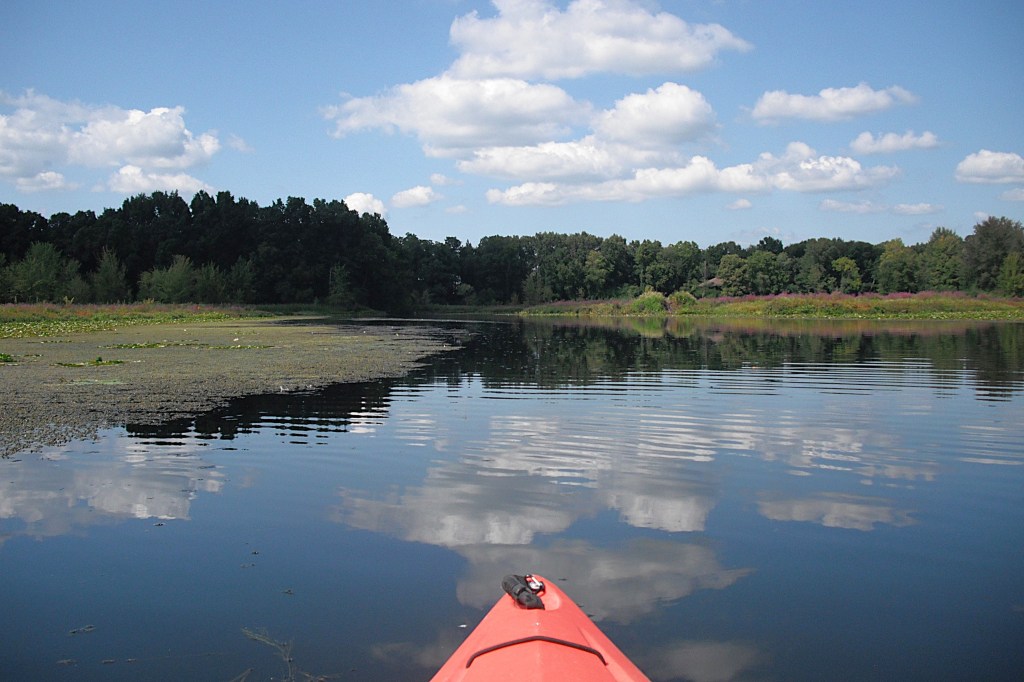
When approaching the dam, a small opening in the shoreline brush on the left marks the beginning of the portage trail.
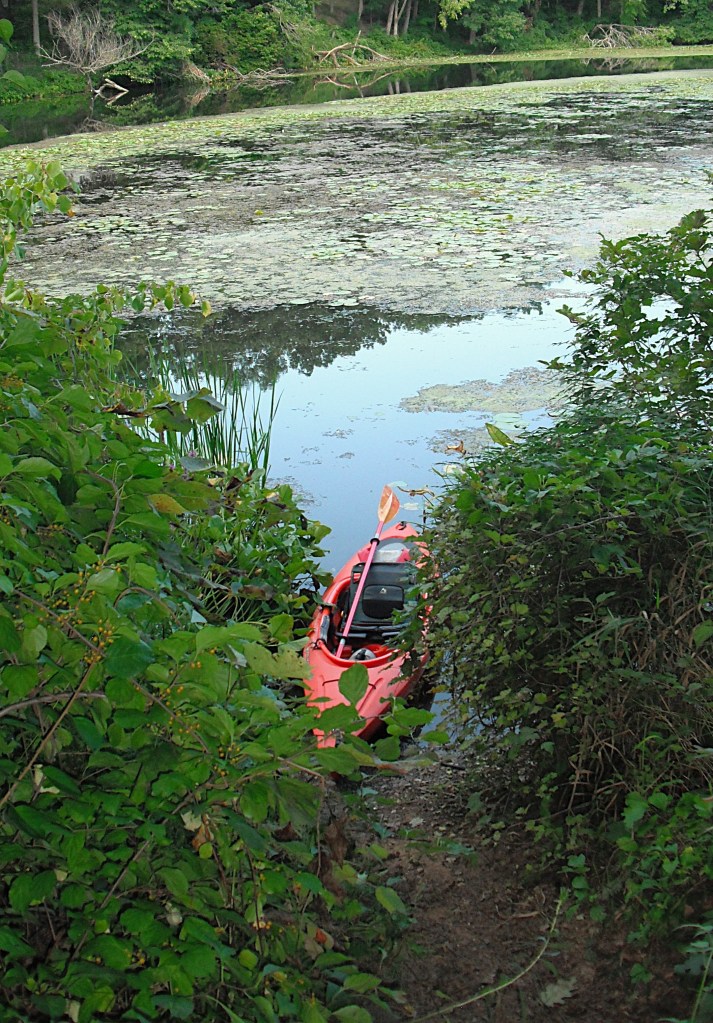
A path leads to the dam. At the dam, a steep hill descends down to the river.
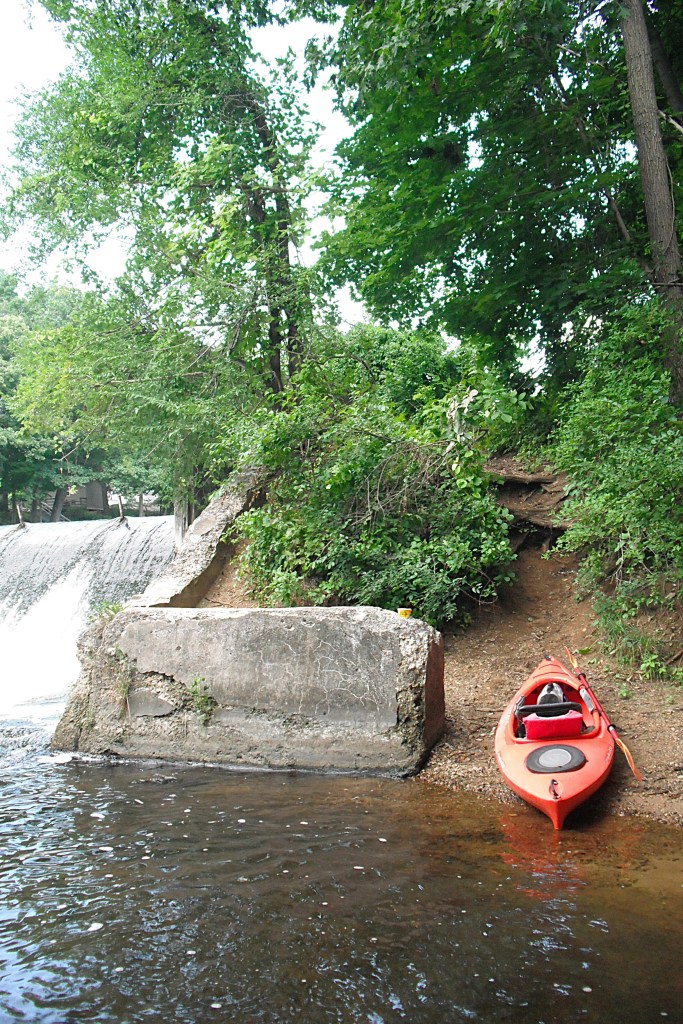
The river then winds through the city of Three Rivers and flows into the St. Joseph River. Head downstream on the St. Joe and pass under two bridges.
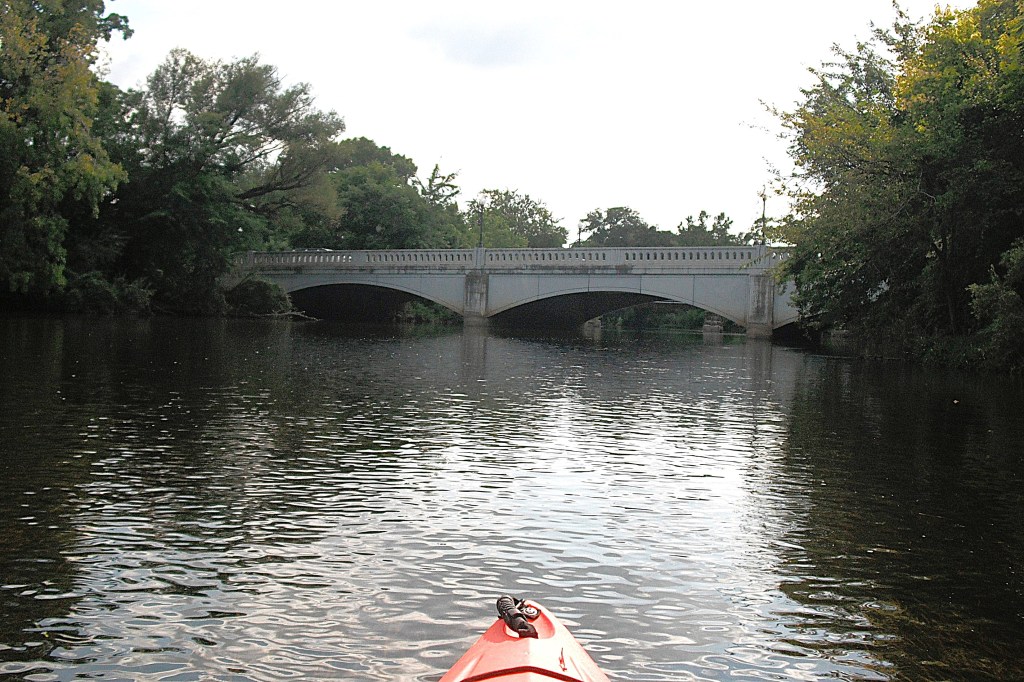

The trip ends at the Conservation Park boat landing on the left.
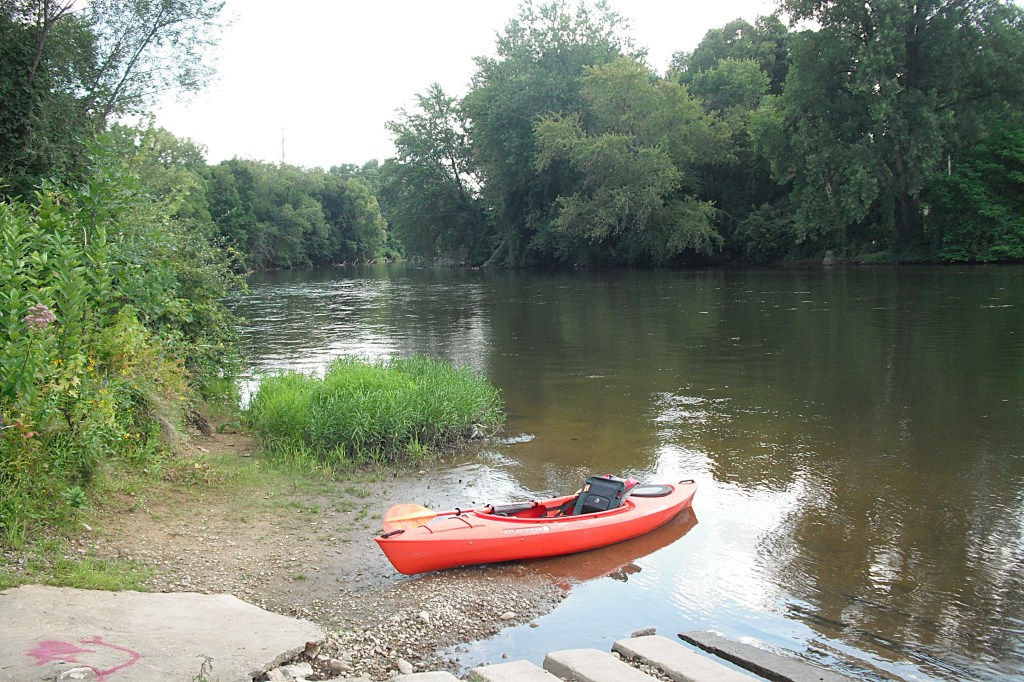
Congratulations! You have now completed the Portage to Three Rivers water trail!

 KAYAKING SOUTHWEST MICHIGAN