I have kayaked three different tributaries of the St. Joe River, but never the St. Joe itself. Curiosity finally got the best of me, so I paddled the river on a hot Saturday in August of 2020. My brother Randy helped me with car spotting. In the past, he has willingly hauled me and my kayak on numerous river voyages and I always appreciate all that he does.
The St. Joe River flows through Sturgeon Lake on the north side of the village of Colon. I decided to start my trip at the first bridge downstream from Sturgeon Lake, the Farrand Road bridge. To get to the bridge, take Farrand Road north from Colon Highway. The primitive access is on the south side of the river, right next to the bridge, on the downstream side.
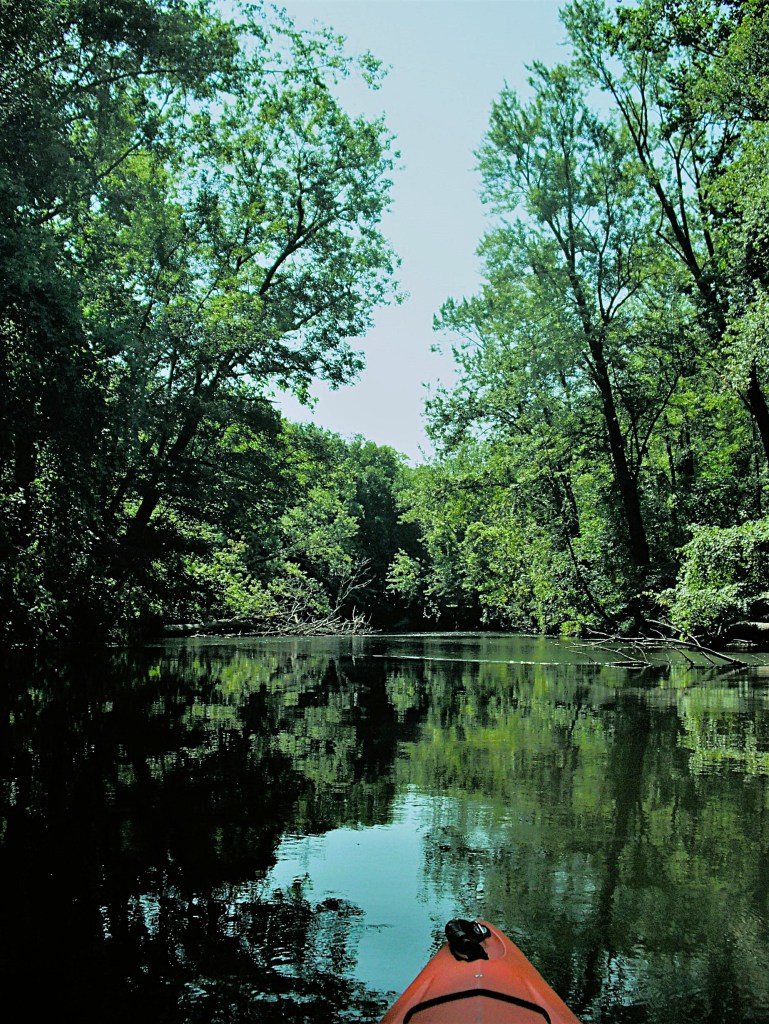
The river is wide, clear, and mostly shallow. The current is slow and there are only a few obstacles to maneuver around. It is probably one of the easiest rivers to paddle in southwest Michigan. Even though the river isn’t very challenging, the scenery makes it worth the visit.
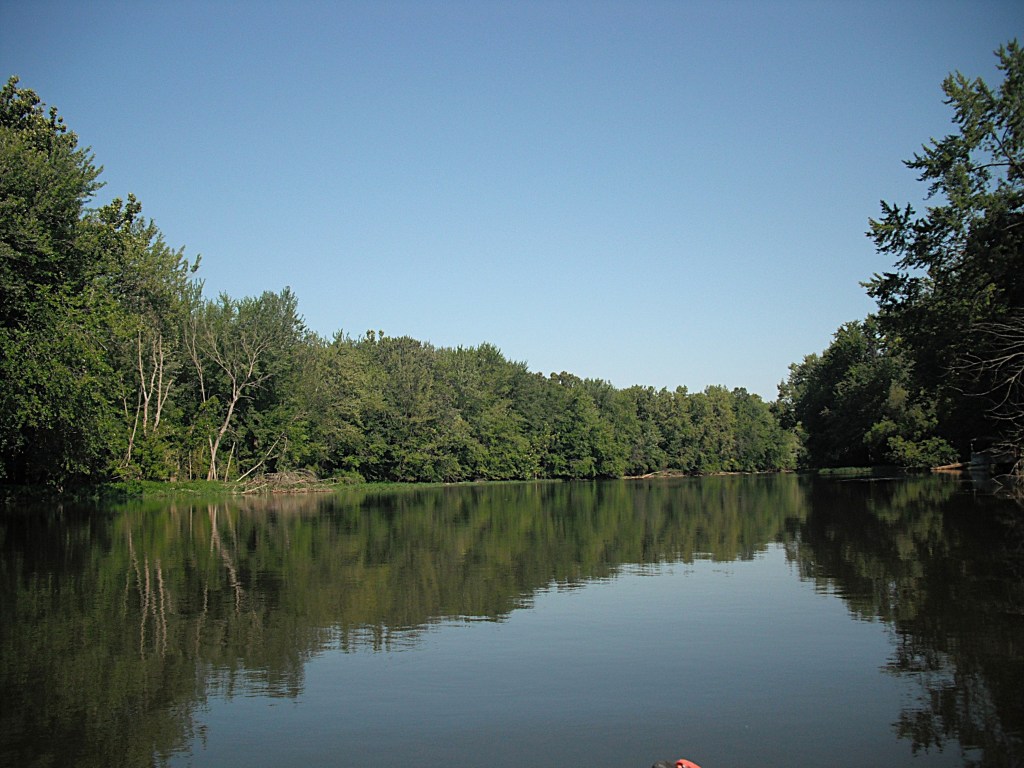
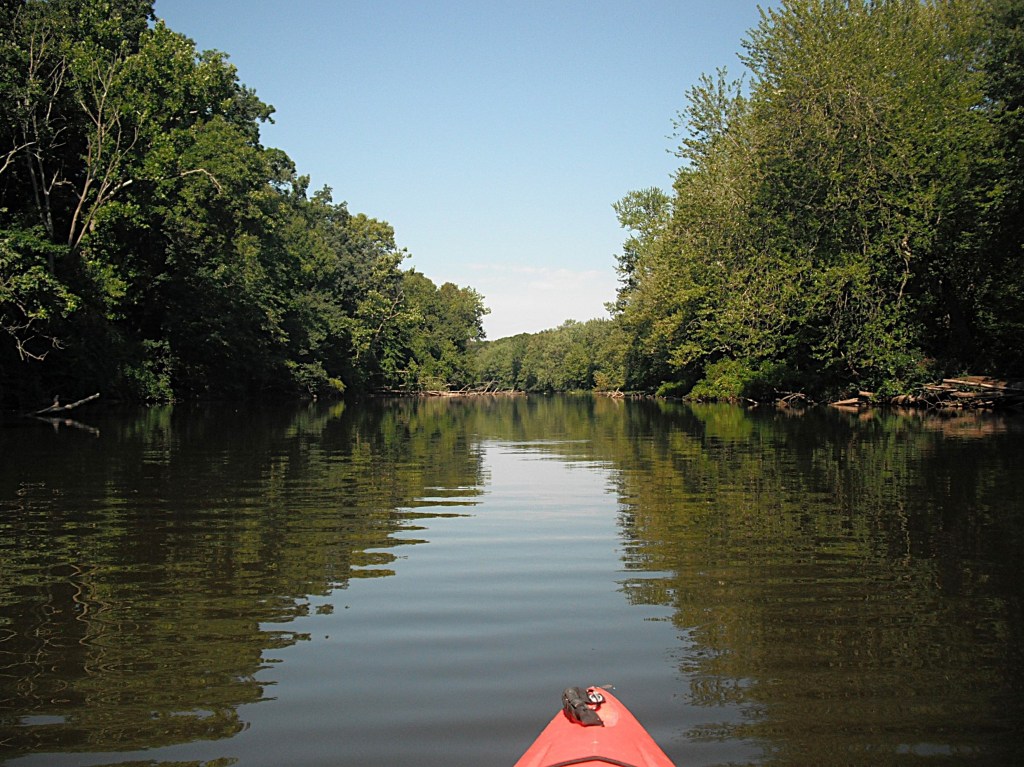
The St. Joe water level varies from week to week. It was very low when I made this trip and shallow, rocky shoals extended across the river in places. I scraped bottom more than once, so be observant.
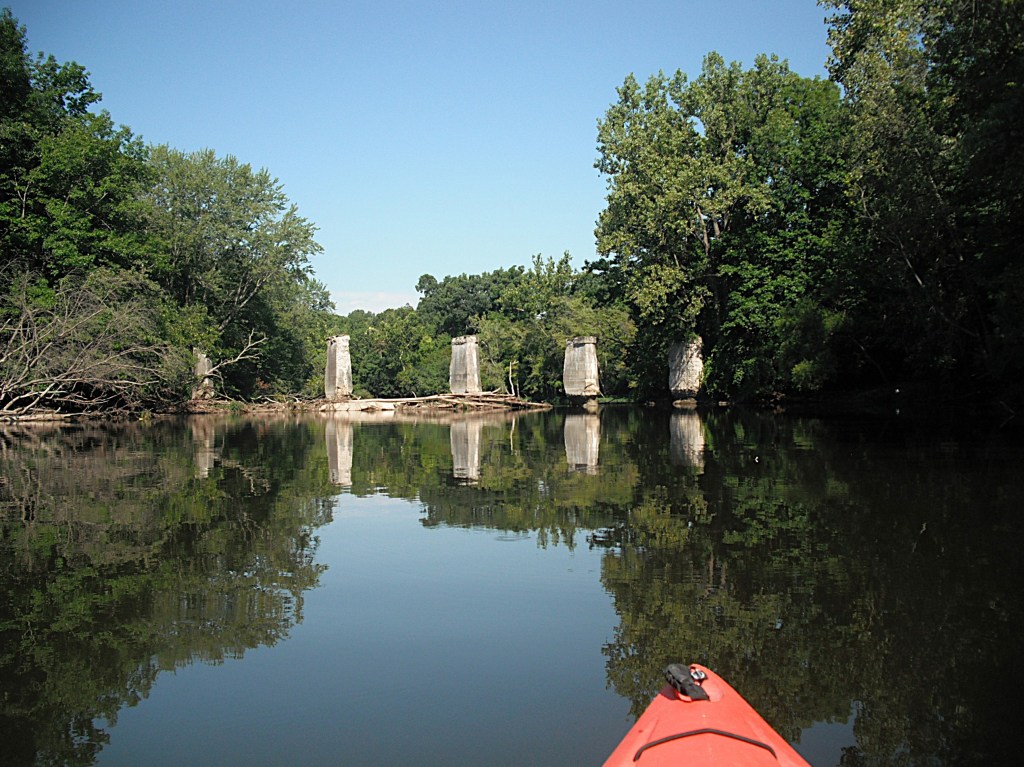
Just after you push off from the landing, you will pass by the supports of the old Farrand Road bridge. About a mile downstream are the remains of a railroad bridge that dates to 1889.
Further downstream, the river passes under a bridge that is called either Olney Bridge or Matthews Bridge. The road over the bridge is called either Bennet Road or Jacksonburg Road.
I found a nice sandbar and stopped for lunch and a cool swim.
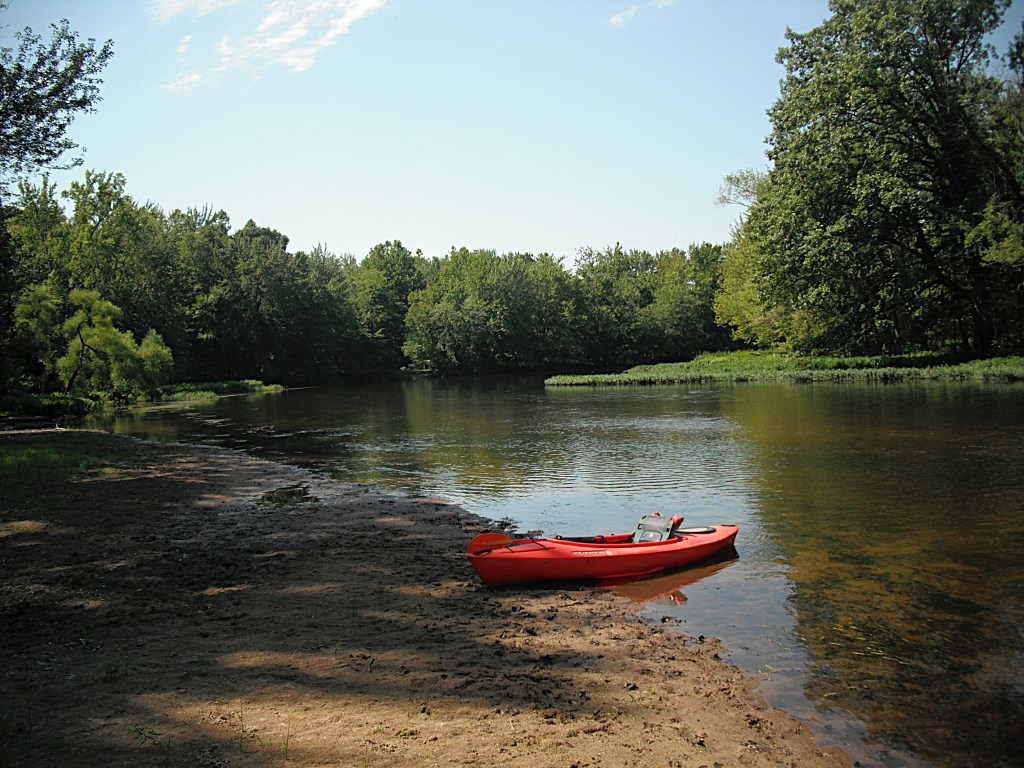
The St. Joe flows in a westerly direction on this trip and I enjoyed the scenery of the wooded river corridor.
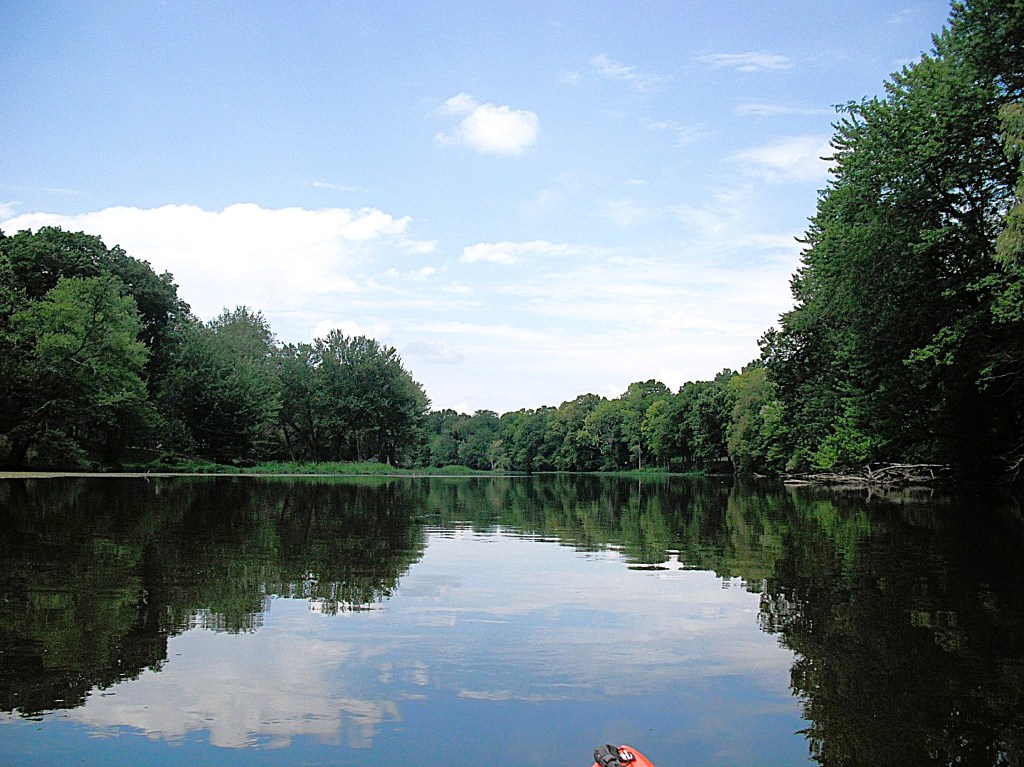
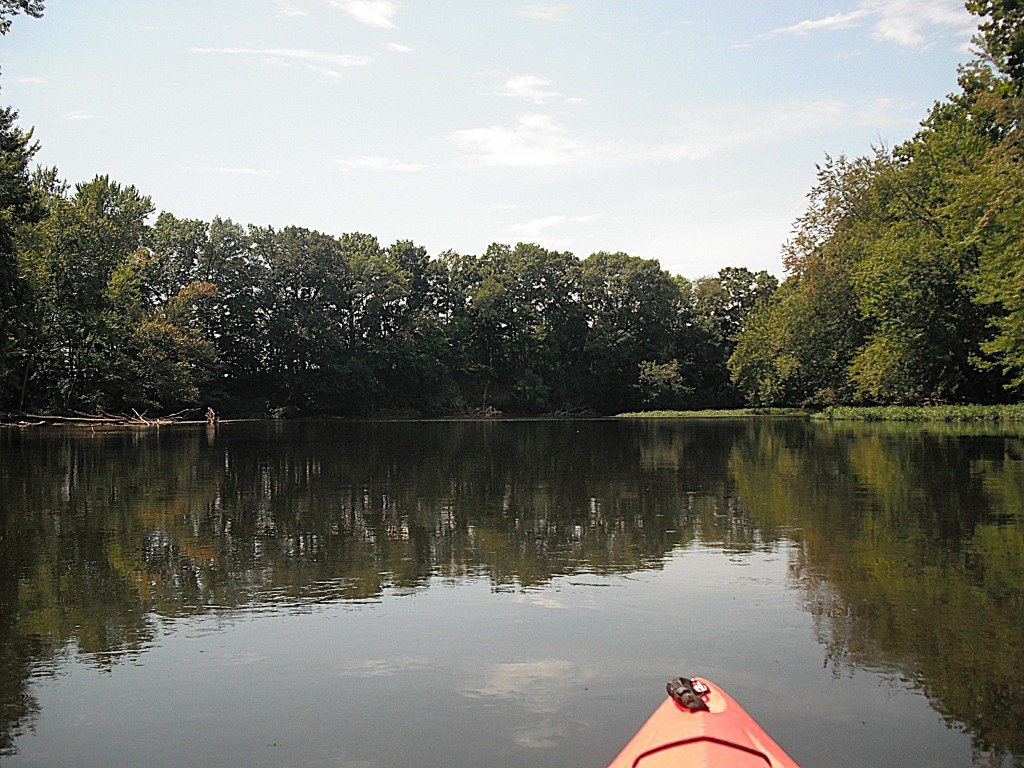
After crossing under the M66 highway bridge, M60 highway parallels the river’s north shore. There is some traffic noise but it’s not unbearable.
The Nottawa Road bridge marks the river’s entry into the village of Mendon. After the bridge, Reed Riverside Park and the Mendon business district are on the north side of the river. The village is pleasant to paddle through.
A brief history note: This area was first explored by a La Salle expedition in 1679.
Downstream from Mendon, the historic Marantette Bridge spans the river. It was built around 1900 and serves pedestrian traffic.
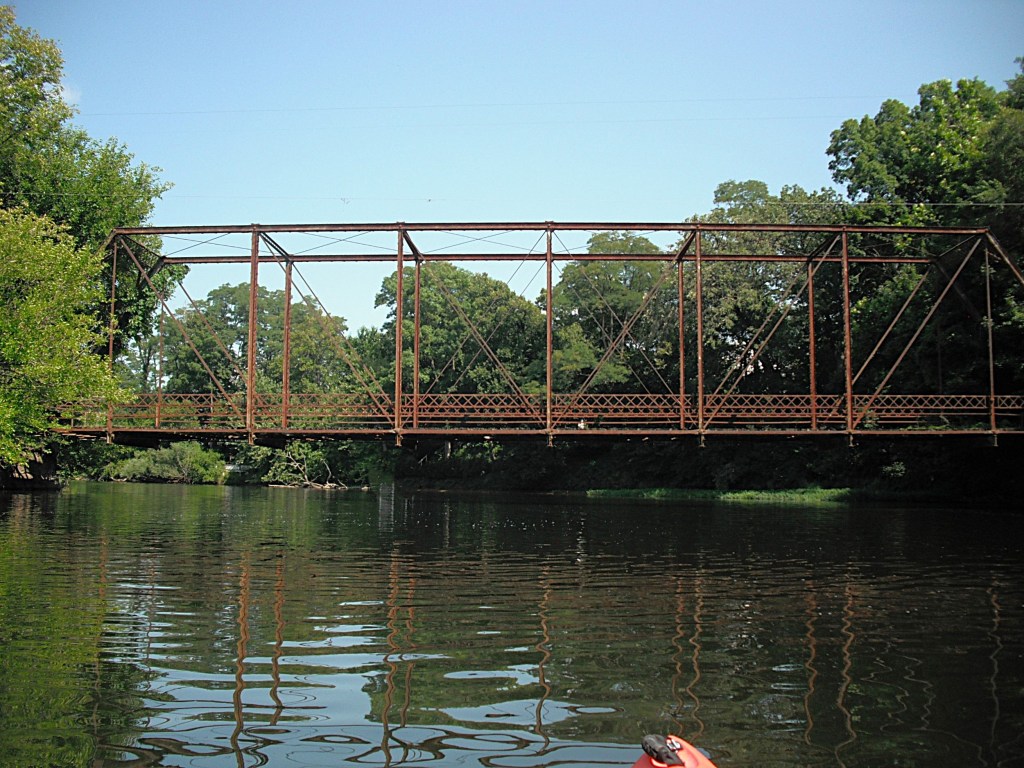
Immediately downstream is a abandoned railroad bridge that was constructed in 1873.
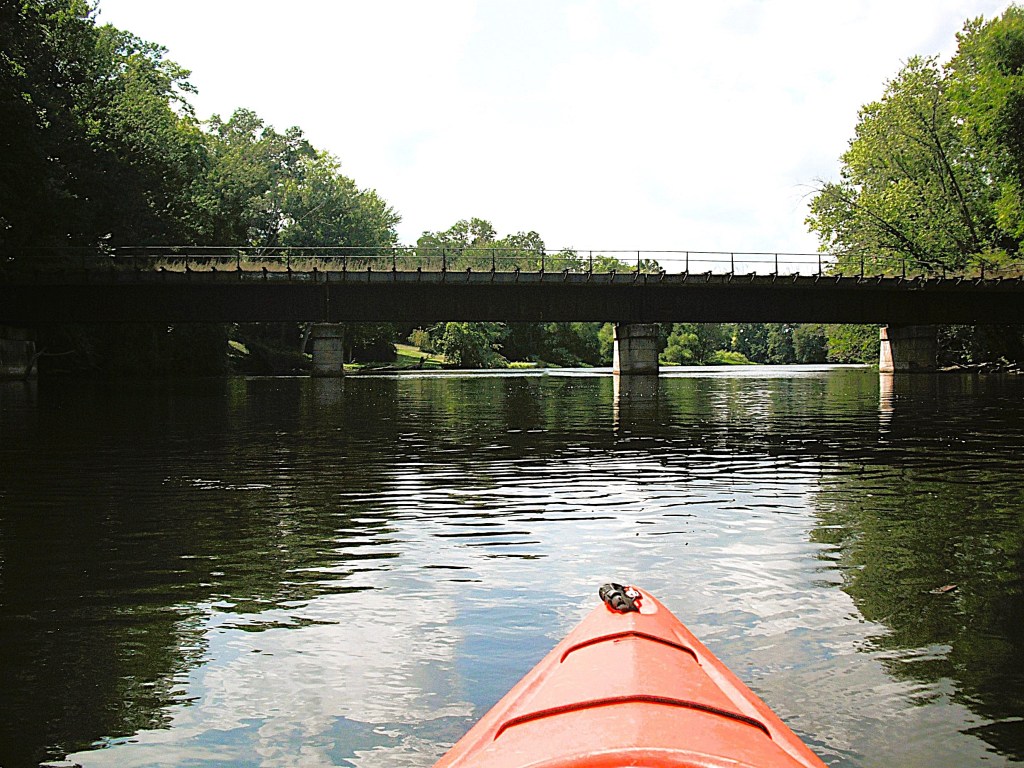
Sandwiched between the two bridges, on the north side of the river, is the MDNR boat landing where I ended my trip. From the landing, Railroad Street heads north and intersects with highway M60.
I was impressed with the scenery and history of this stretch of the St. Joseph River and I will gladly visit it again.

 KAYAKING SOUTHWEST MICHIGAN