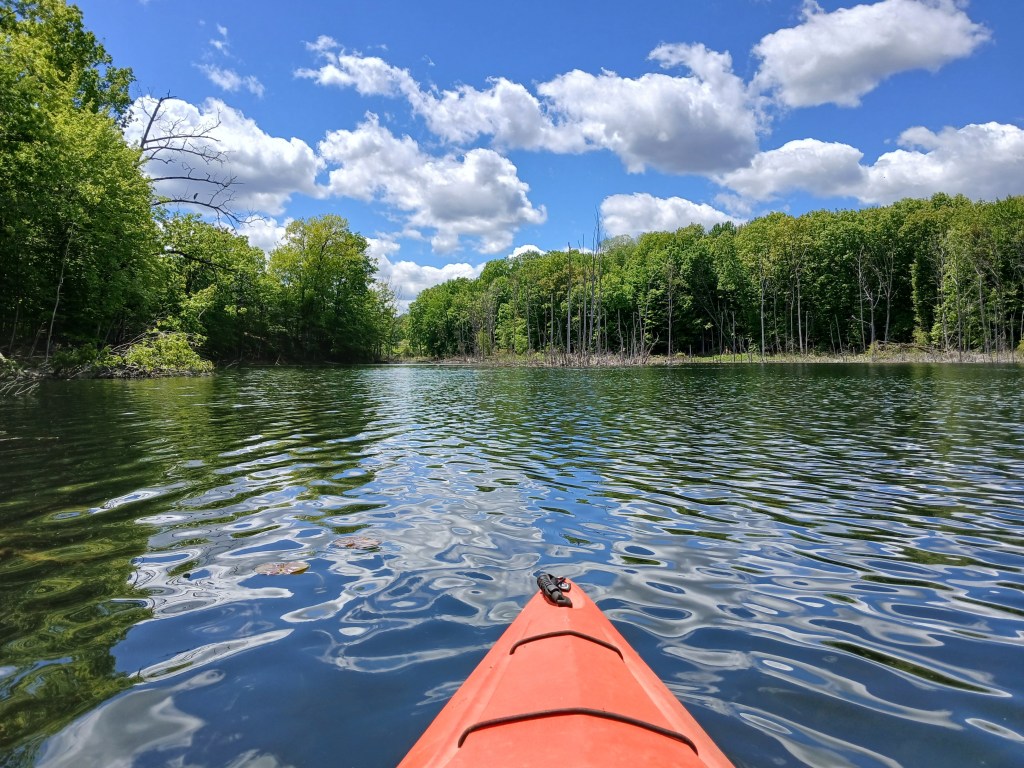
Twin Lakes are located on Ravine Road in Kalamazoo County and the road separates the two lakes. Twin Lakes are named collectively, but not separately. I will name them for their geographical position: Twin Lakes East and Twin Lakes West. Twin Lakes East lies on the border of Cooper and Kalamazoo Townships. Twin Lakes West is in Alamo Township. The access for the two lakes is a spot where they are closest together, on Ravine Road, between Winding Way and 12th Street. There is no formal boat landing. Launch and parking are at the side of the road. The speed and close proximity of the traffic can be rather unnerving when loading and unloading. Be mindful of the “no parking” signs. I always park on the shoulder, as far from the paved surface as possible. I’ve never been ticketed. Knock on wood!
TWIN LAKES EAST
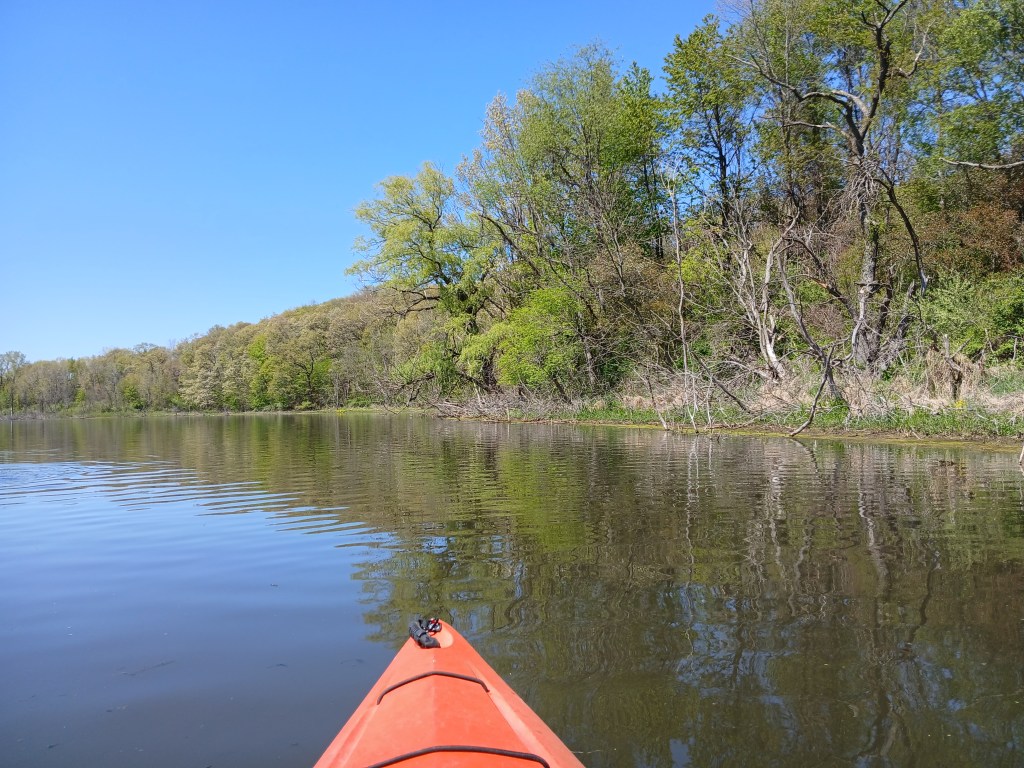
Twin Lakes East is not very popular for boating or fishing because of excessive aquatic vegetation growth. During summer, much of the lake is covered by algae and other vegetation. I kayaked the lake in early May and the algae was limited to shoreline areas. I recommend kayaking the lake in early spring, before the vegetation blooms. Another option is late fall, after the seasonal vegetation die-off. On my May trip, I observed hundreds of carp in the shoreline shallows. Many of them were in a foot of water or less with their backs out of the water. Fun to watch!
About a third of the shoreline is developed with homes, all on the south end of the lake. Most of the photos feature the undeveloped portions of the lake. A large farm is situated on the north corner of the lake. If the wind is from the north, kayakers can expect an unpleasant odor coming from the farm.
The boat landing area is on the northwest end of the lake.

Some parts of the lake are bordered by dead trees and dead brush.
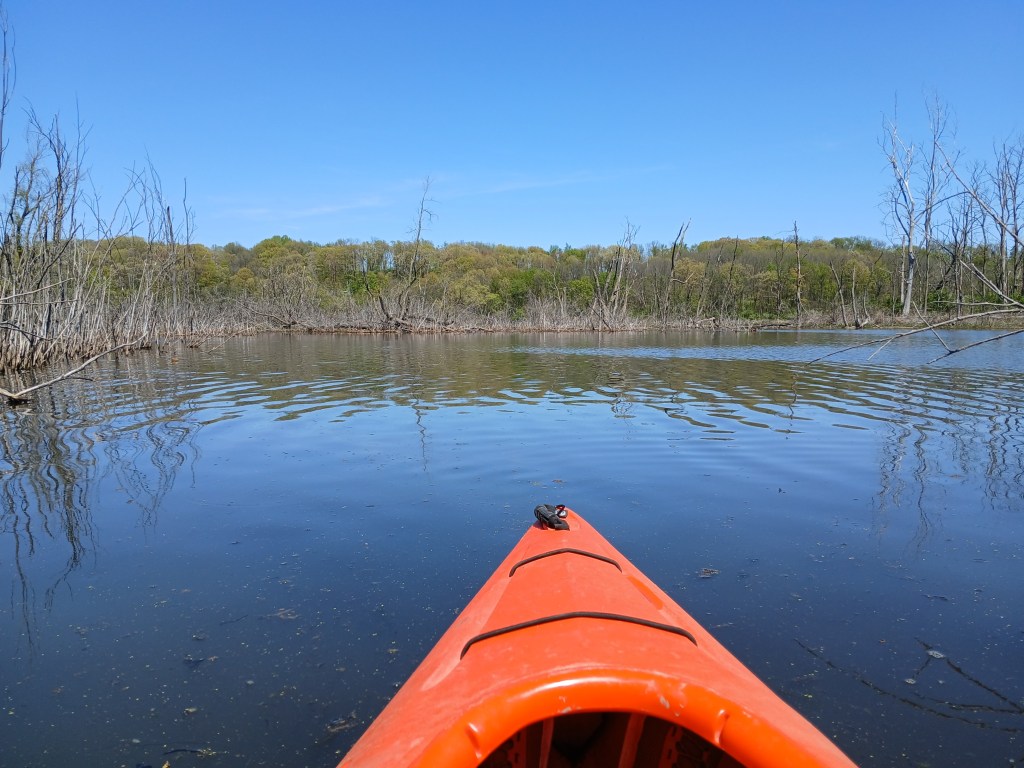
An island is on the southwest end of the lake.
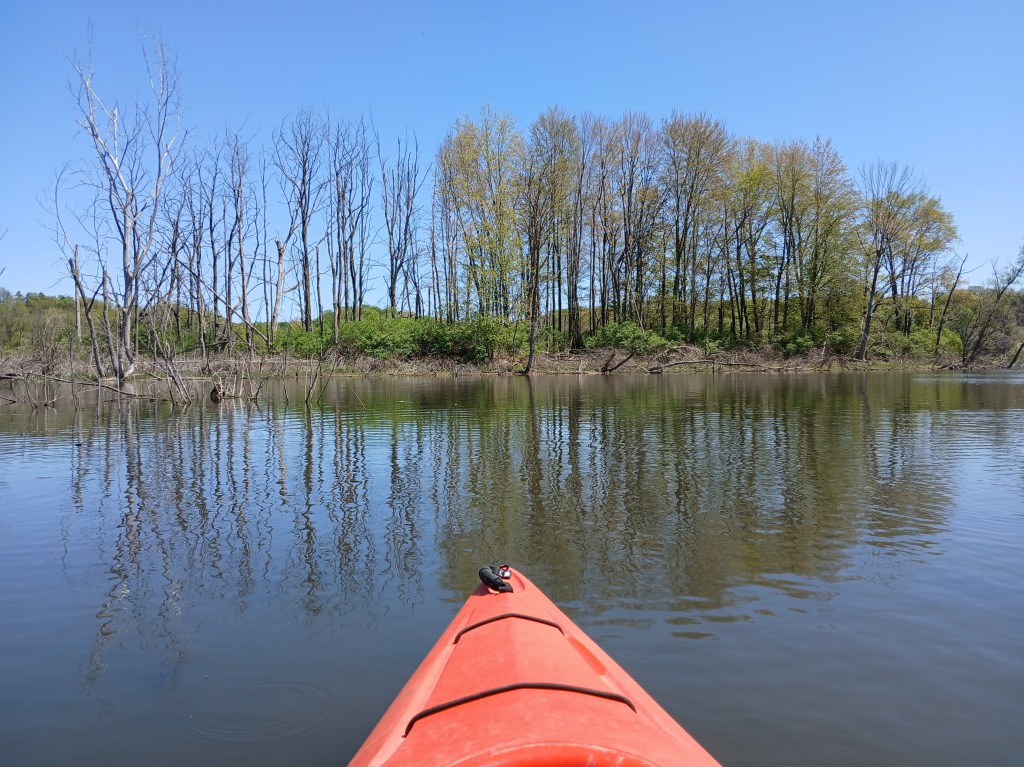
My favorite part of the lake was the undeveloped northeast shore.
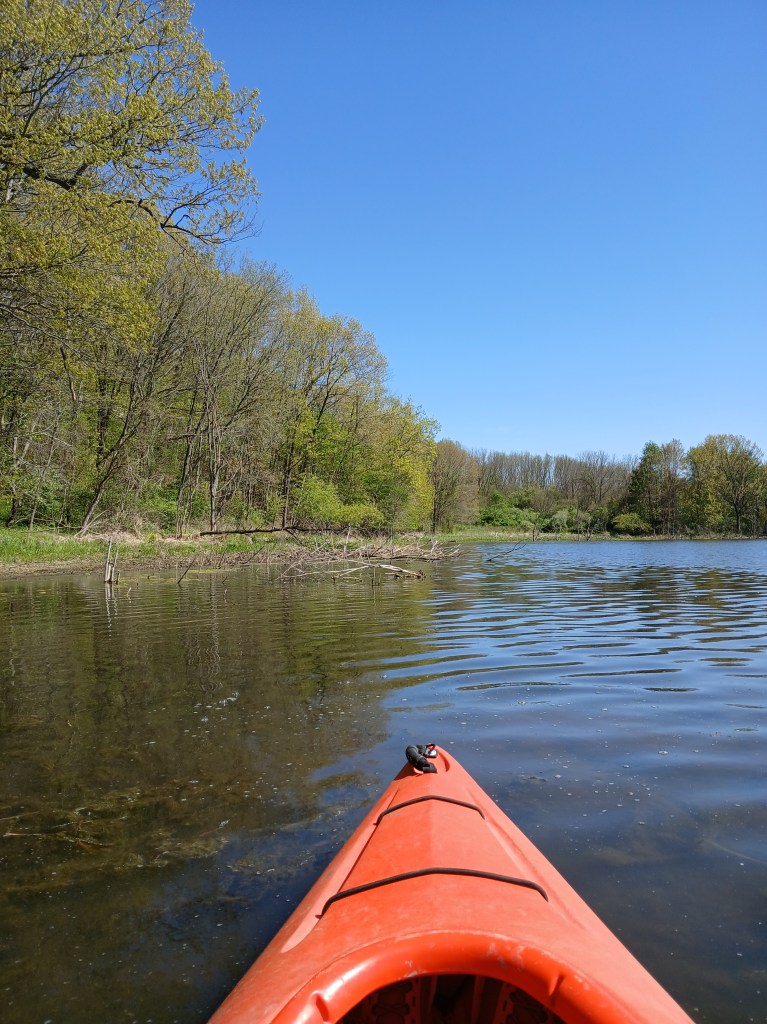
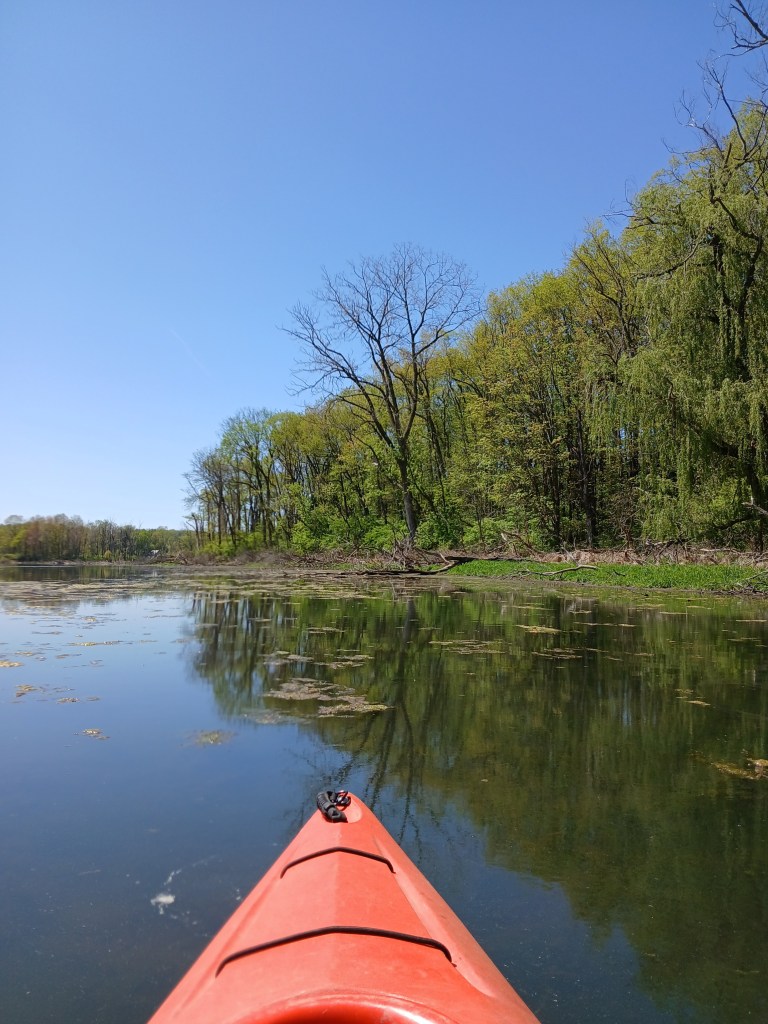
Despite all of its negatives, I found Twin Lakes East to be an enjoyable lake to kayak.
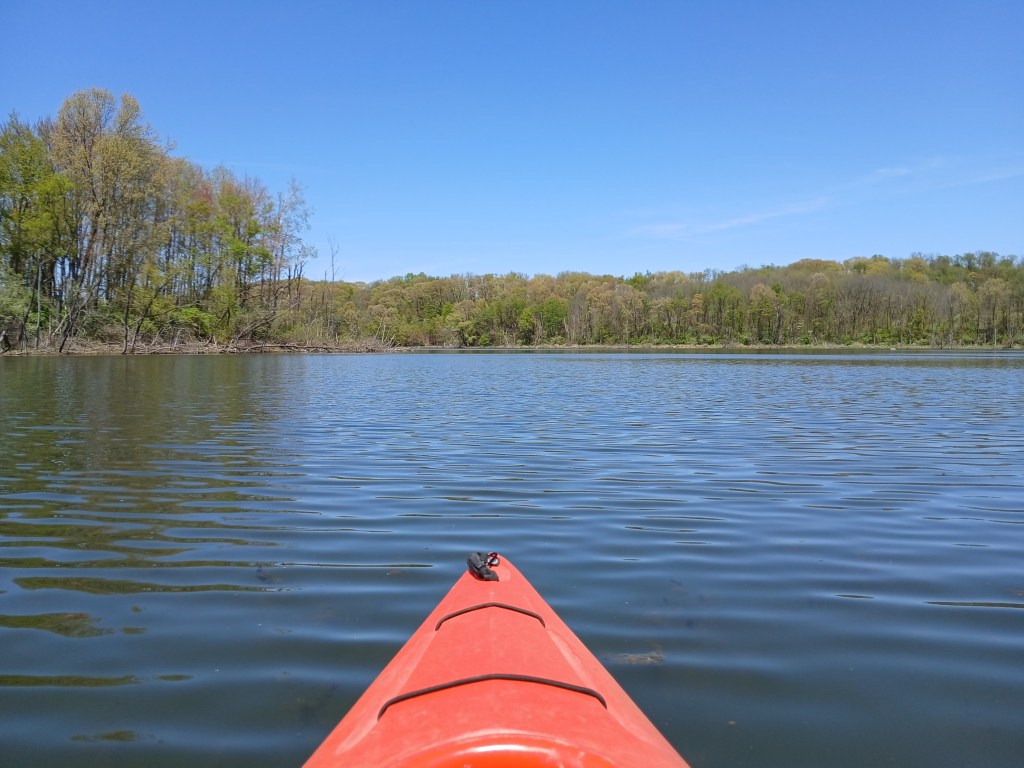
TWIN LAKES WEST
Twin Lakes West is the more scenic of the two lakes.
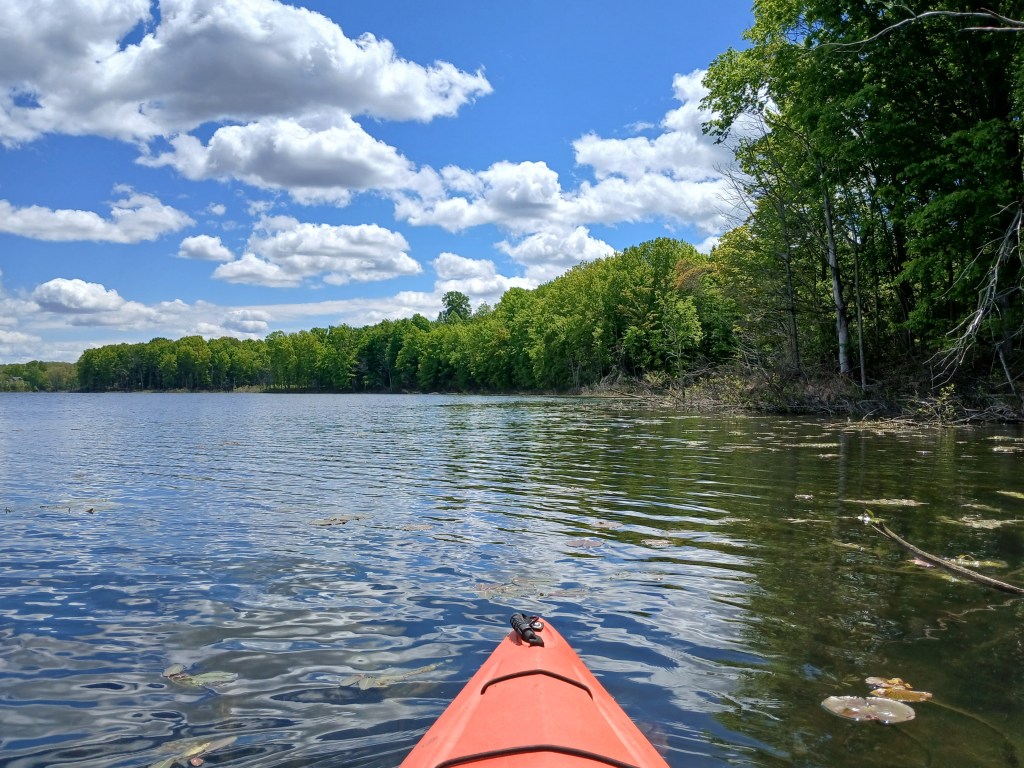
There are a few homes on the east end of the lake. The homes are concentrated in two spots. The rest of the lake is undeveloped. Some kayakers may not like Twin Lakes West because of the road noise from highway US131. This is especially true on the far west end. Also, a power line interrupts the landscape on part of the lake.
In the summer, some parts of the lake are overgrown with aquatic vegetation. Most of the lake remains open and is easily paddled. There are a lot of dead trees and dead brush along the shoreline.
Twin Lakes West consists of a south basin and a north basin that are connected at the narrows. The boat launch area is on the east end of the south basin.
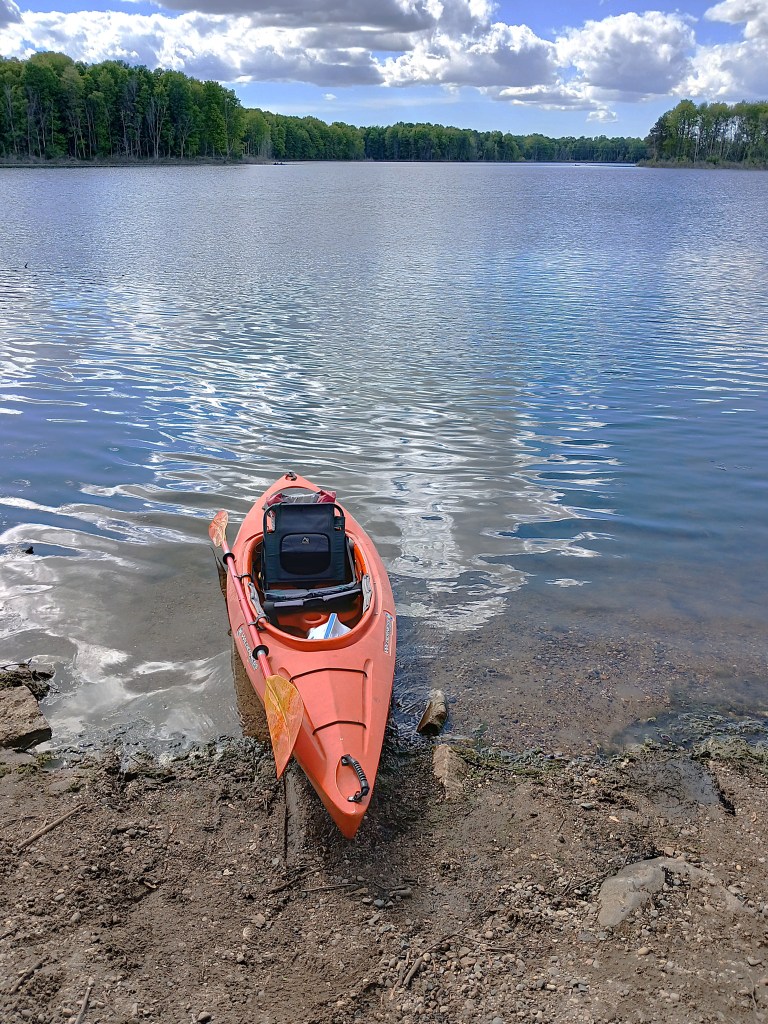
The west side of the south basin offers a scenic shoreline to paddle.
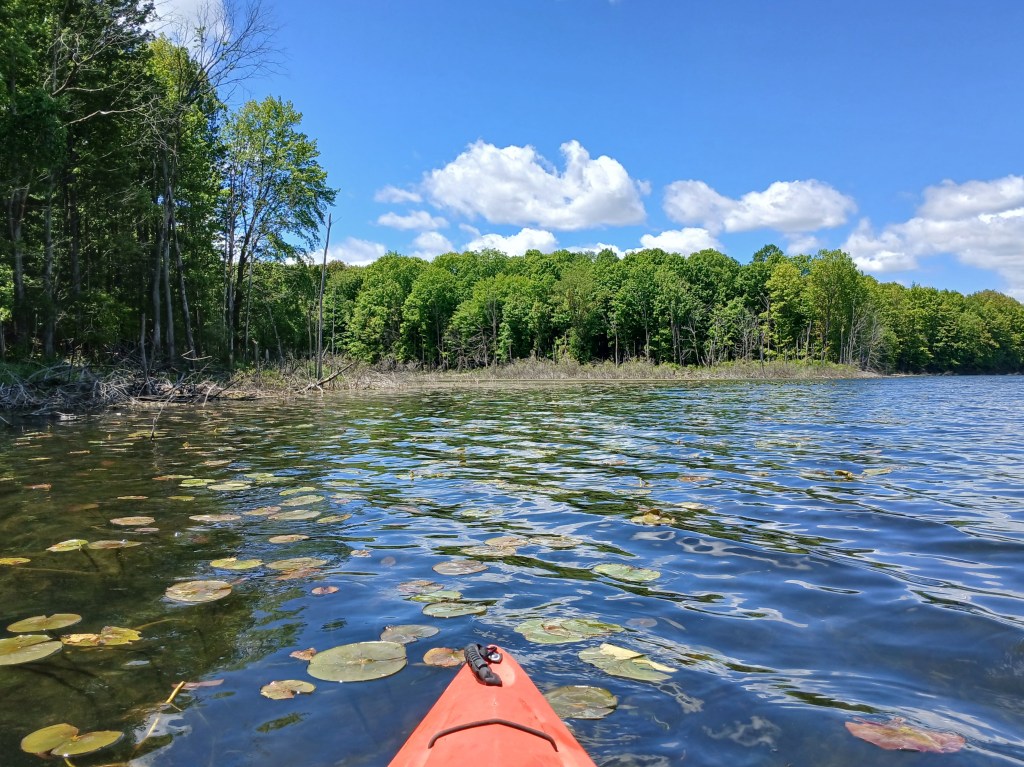
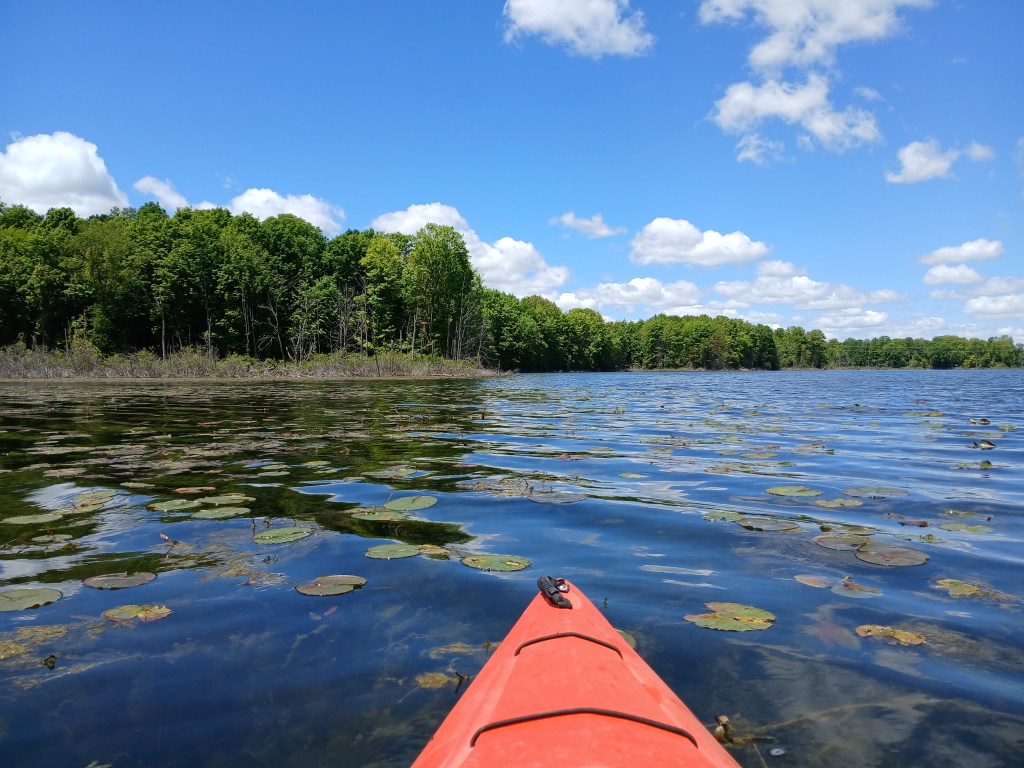
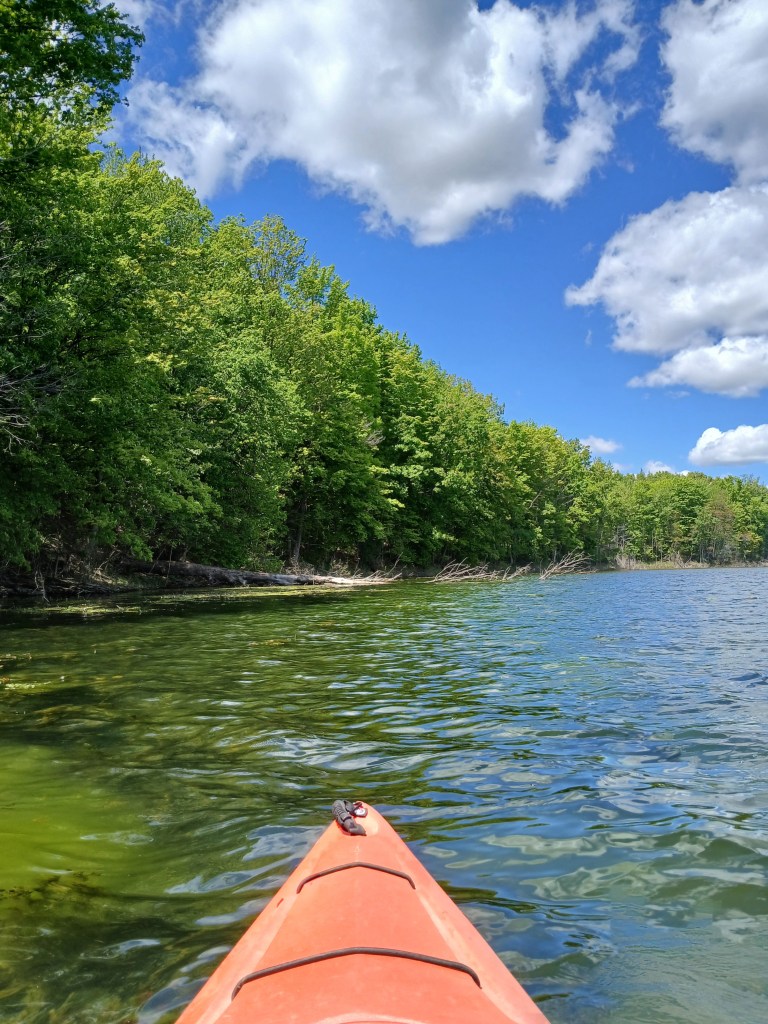
On the north corner of the south basin, the narrows provides access to the north basin.
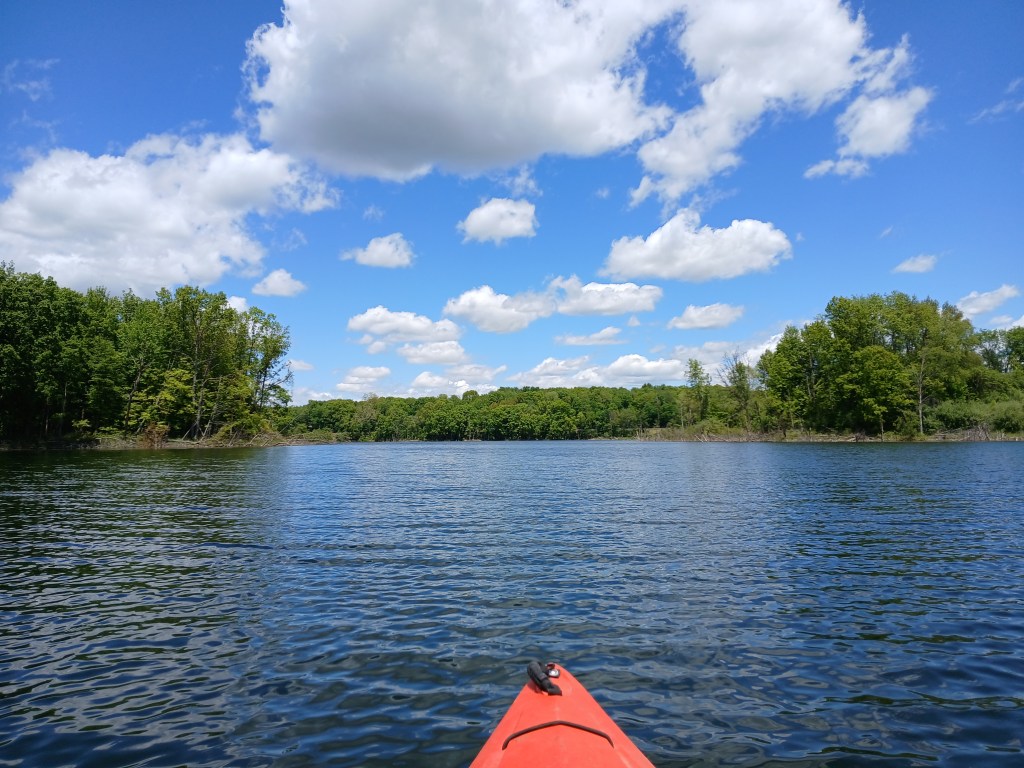
As you enter the north basin, there is a cove to explore to the east. This photo looks west from the back of the cove. It may be coincidence, but I always seem to find something interesting in this cove. On my latest visit, I watched two huge snapping turtles fighting. I was only four feet away from them!

I recommend kayaking the shoreline of the north basin. Ravine Road travels along the north shore of the north basin, but it’s not all that noticeable.
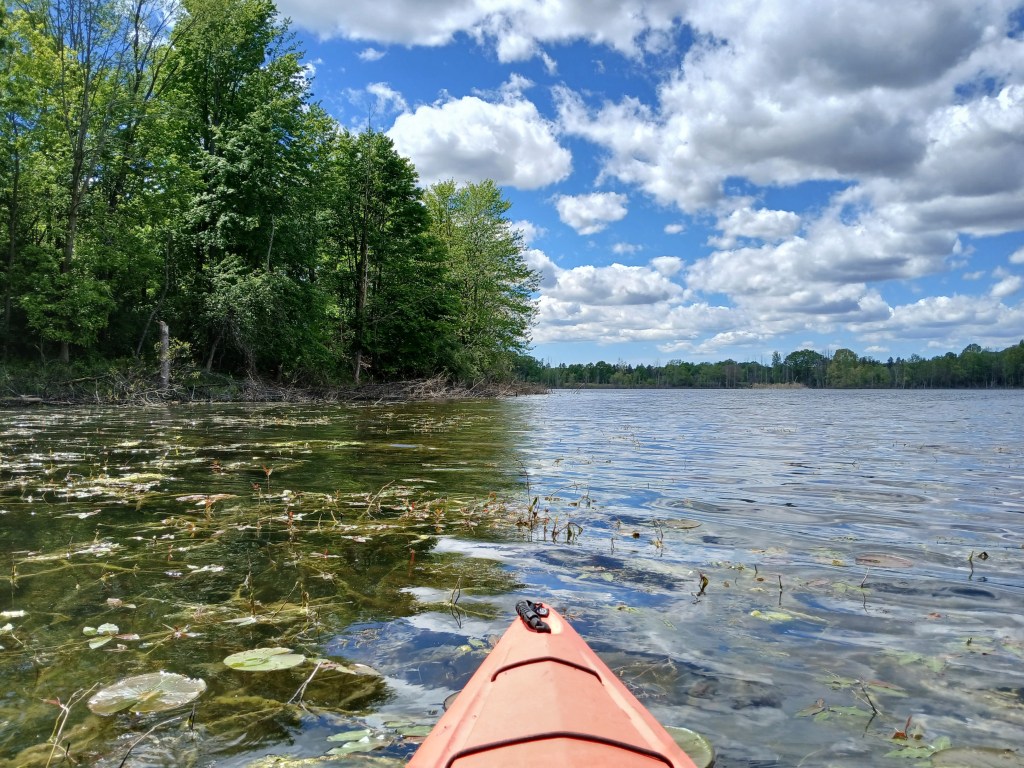
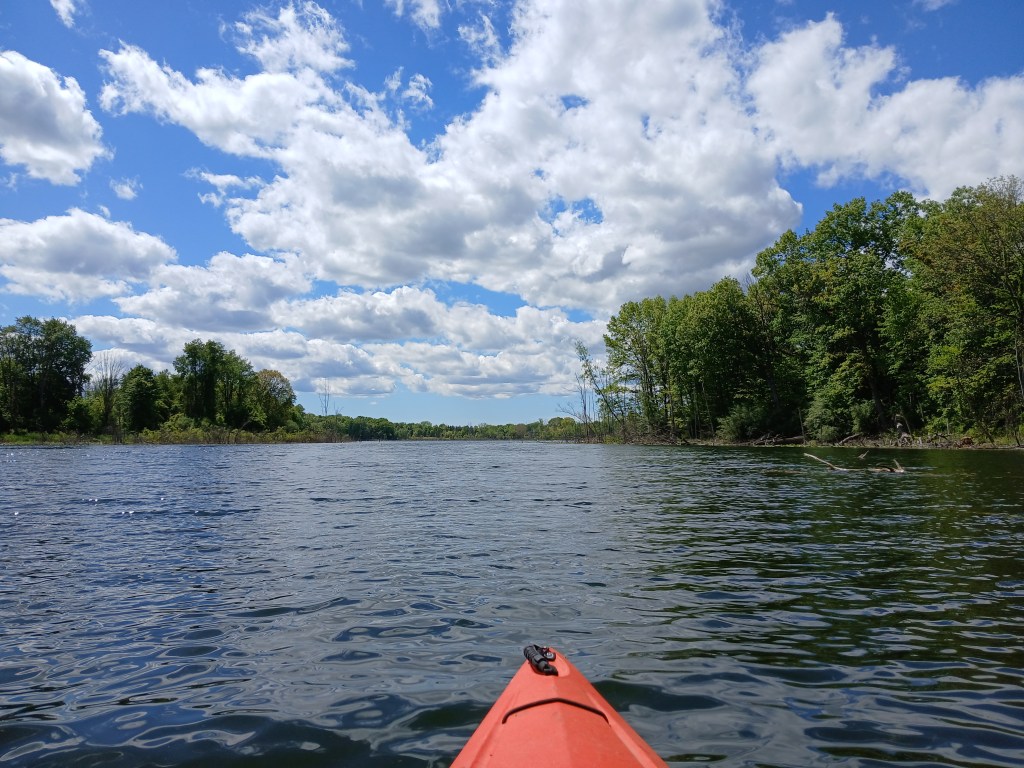
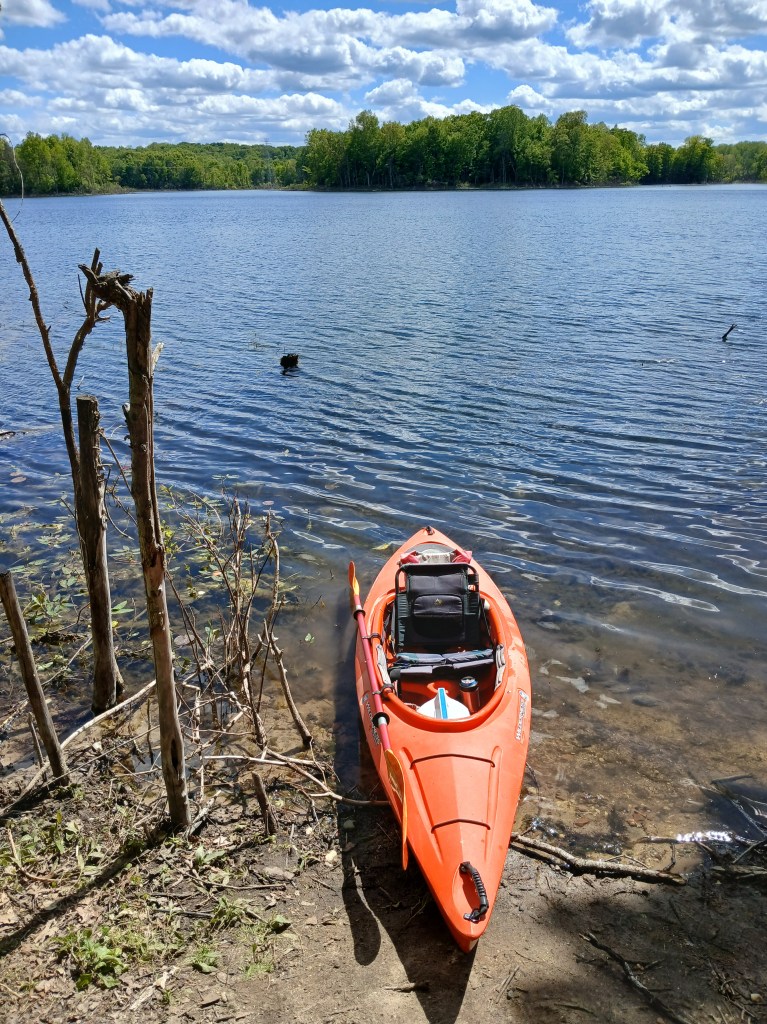
In the northwest corner of the north basin, a small area on shore has been cleared of brush. It’s a good spot to get out of your kayak, stretch, and take a break. The narrows is straight across the lake.
There are two ponds connected to the southwest corner of the north basin.
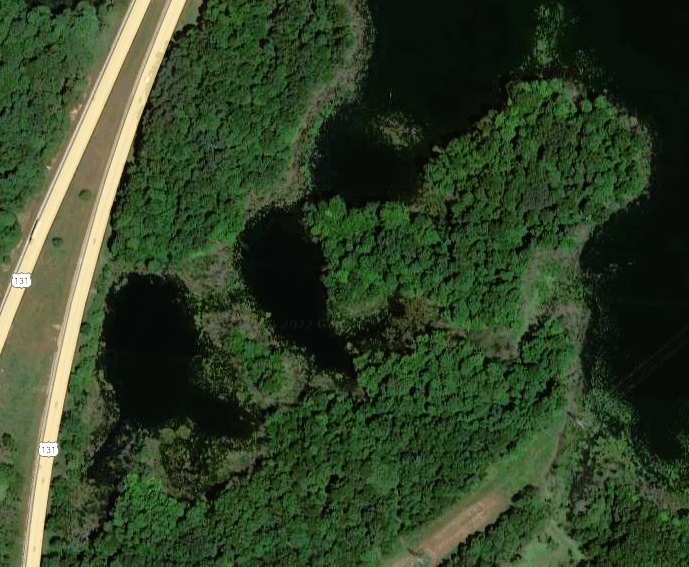
I think that the ponds are the highlight of the lake. The only drawback is their close proximity to US131 and the accompanying noise. The channel to the ponds is easy to find.

The ponds are a cool place to explore.
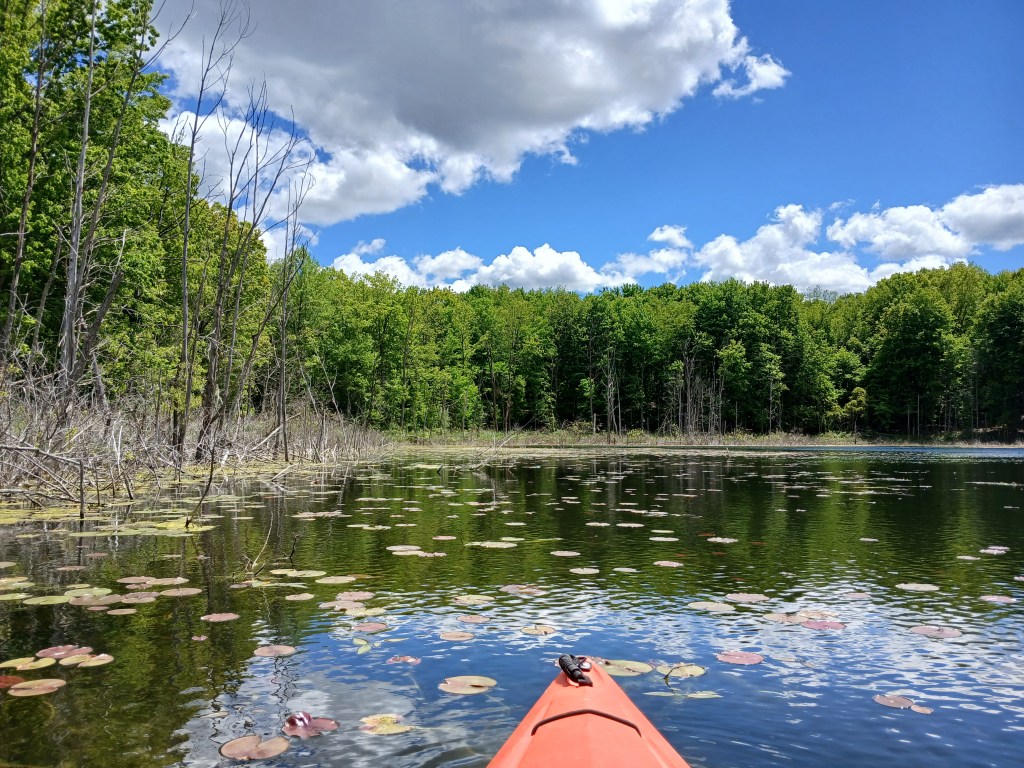
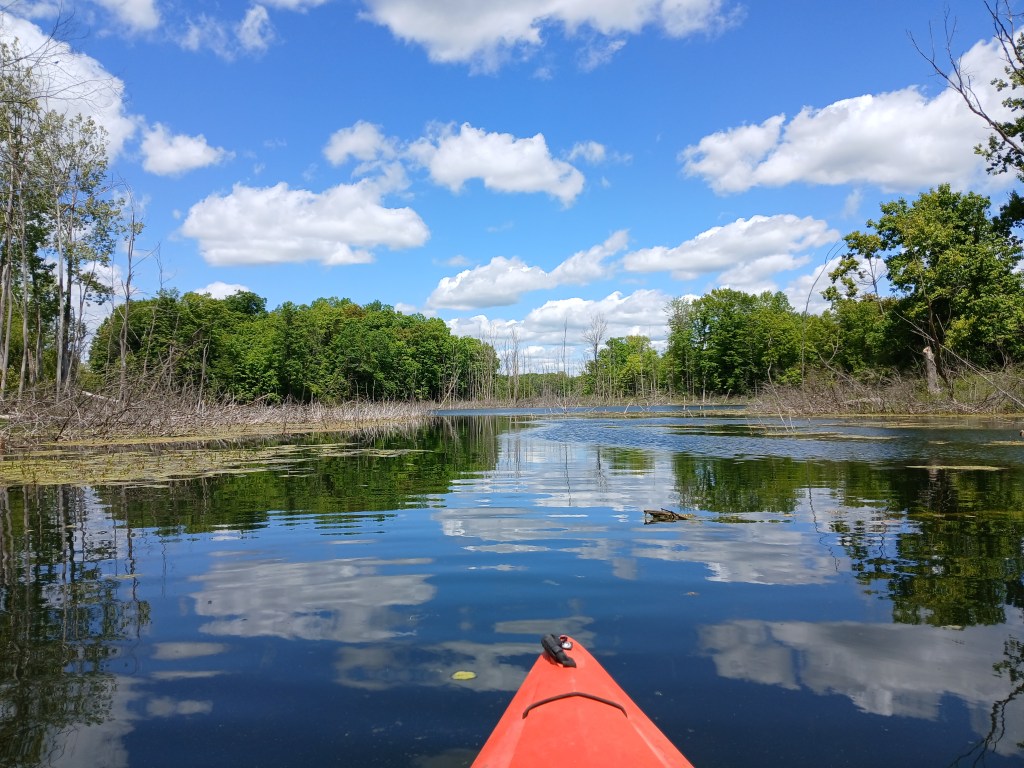
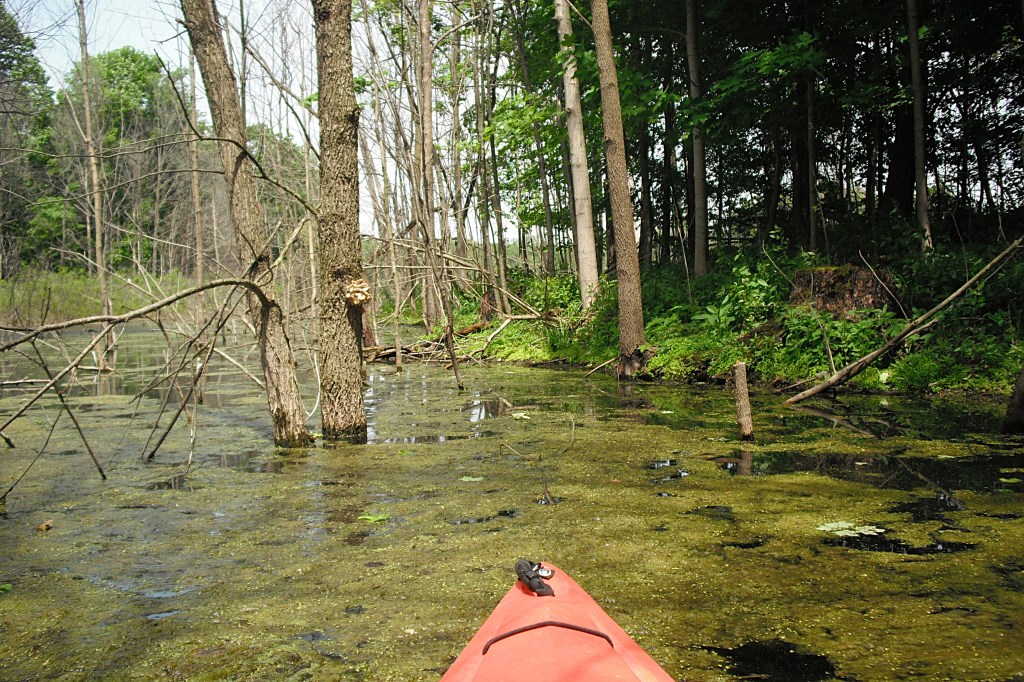
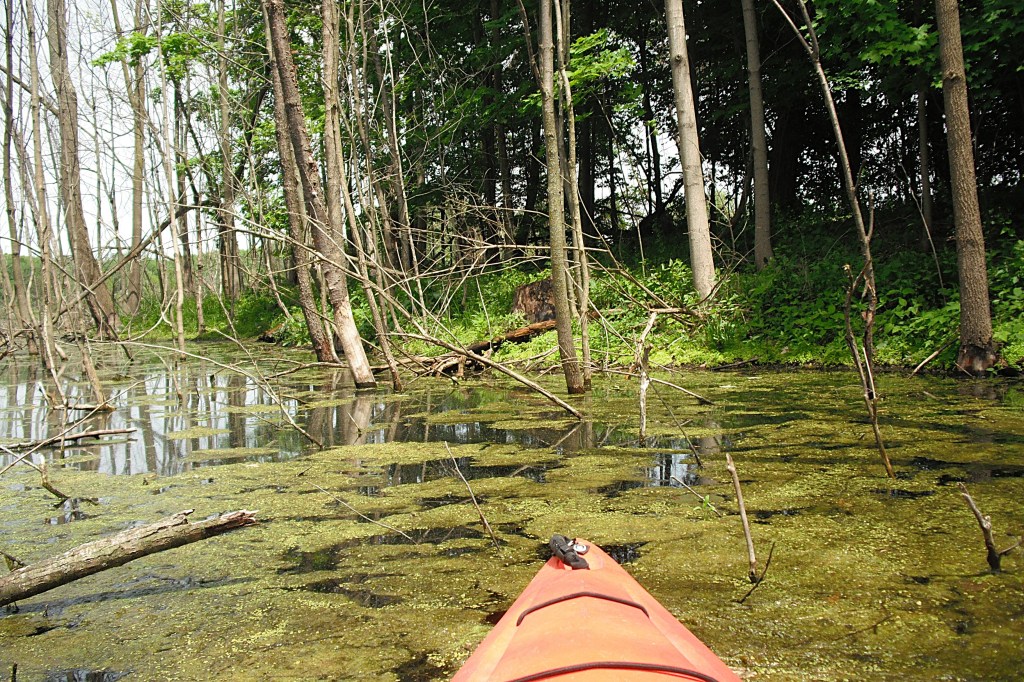
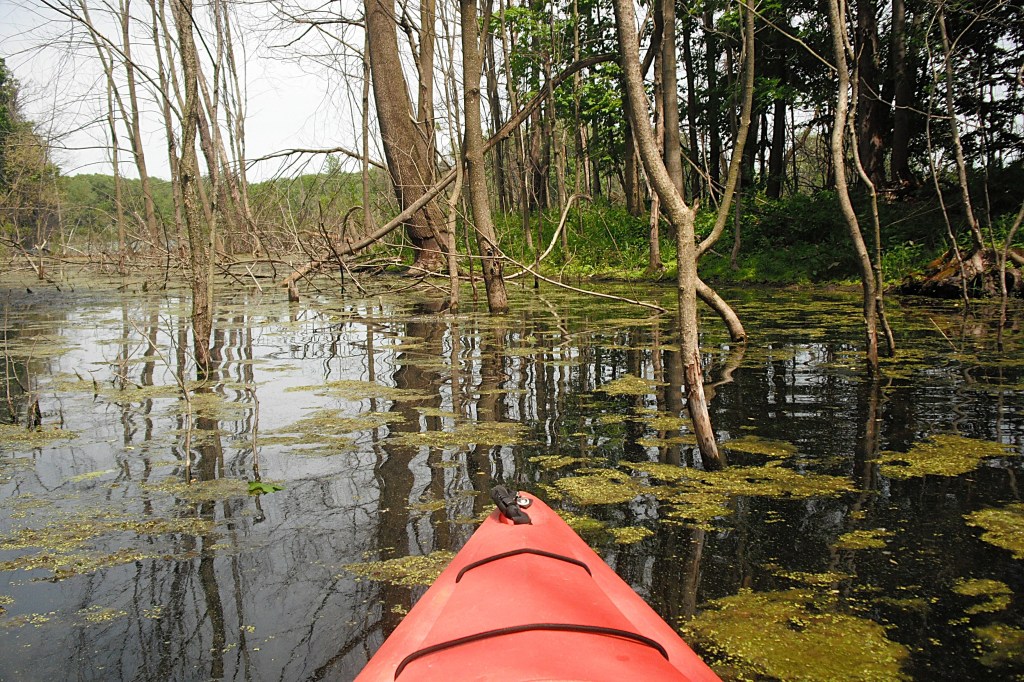
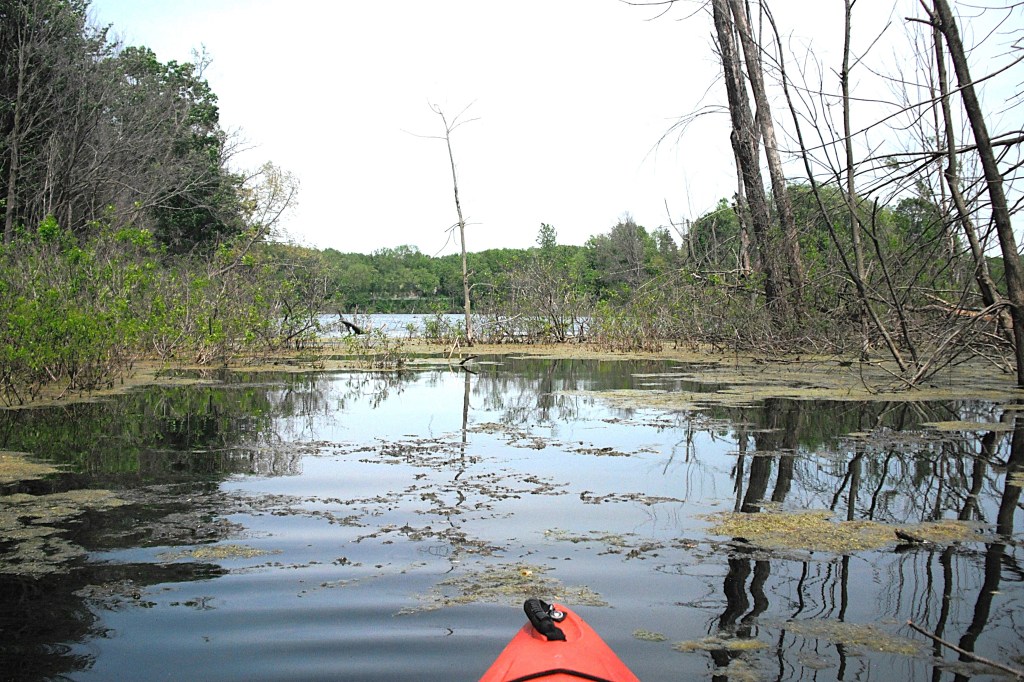
On one of the ponds, I blazed a water trail through the woods and ended up on the south basin. The following photos trace my route through the flooded brush and trees. During low water levels, the water trail may be impossible to paddle.
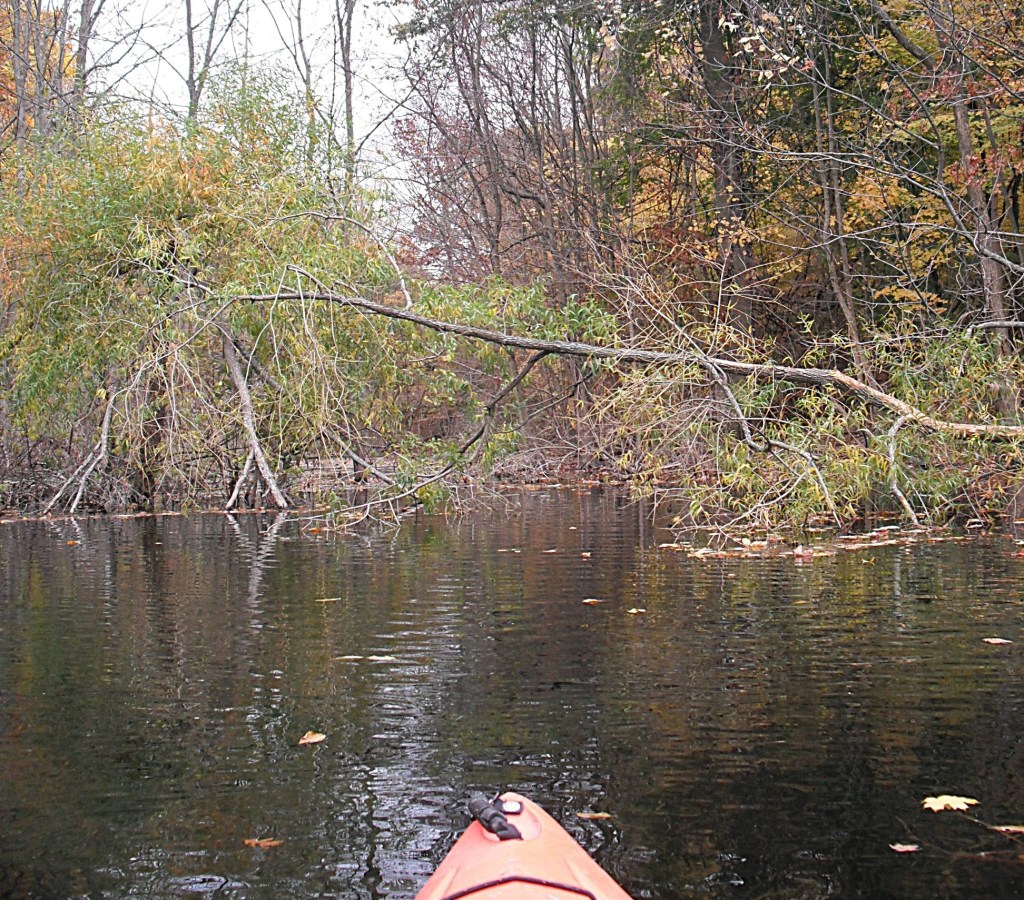

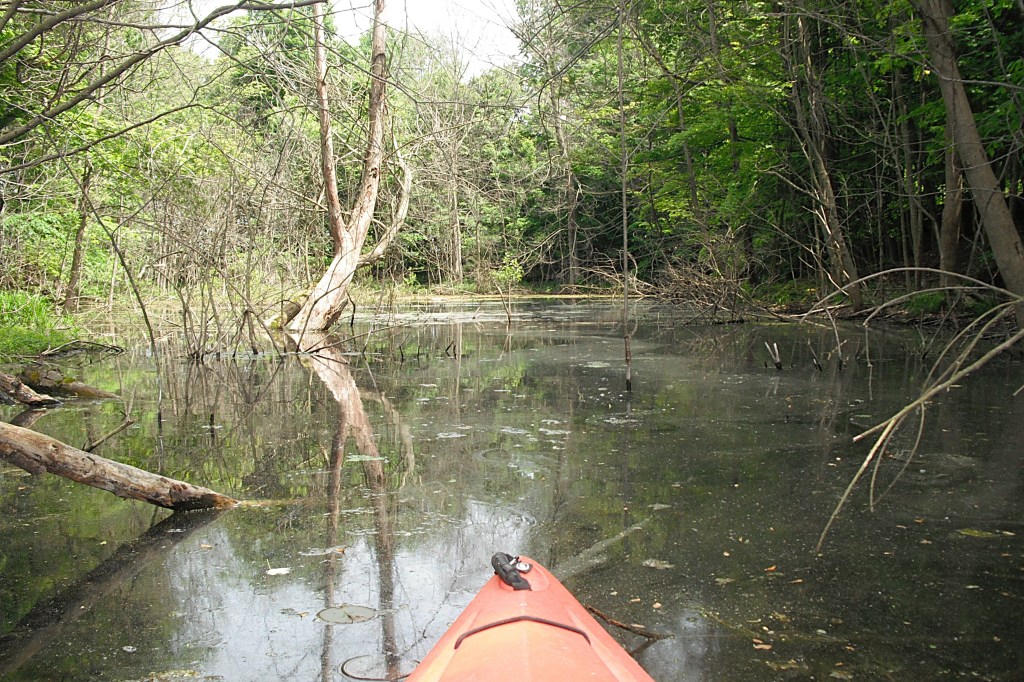
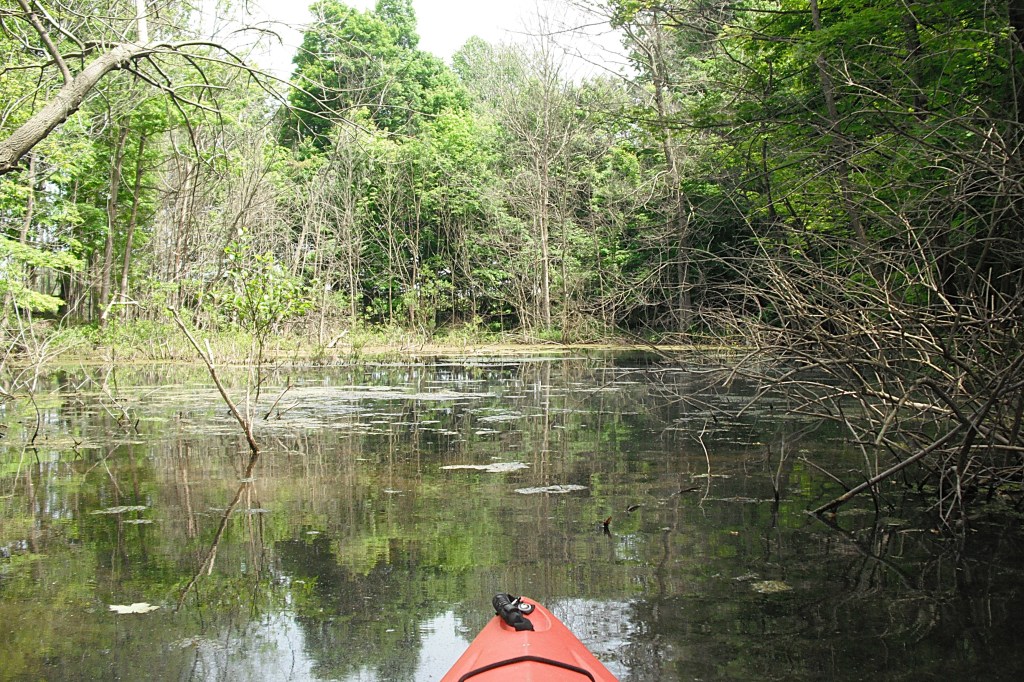
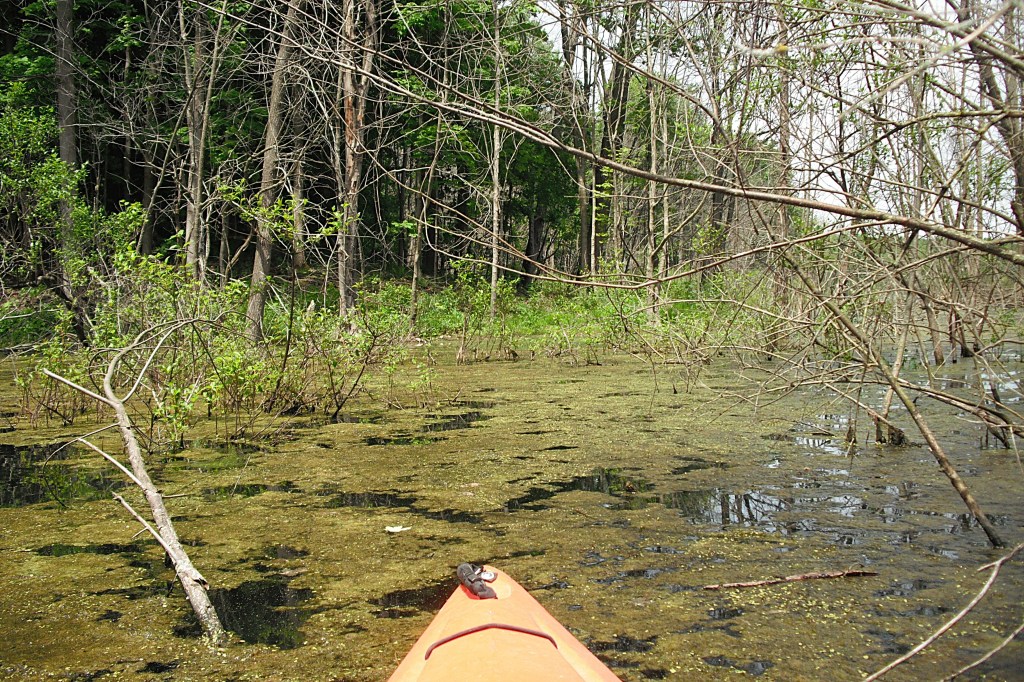
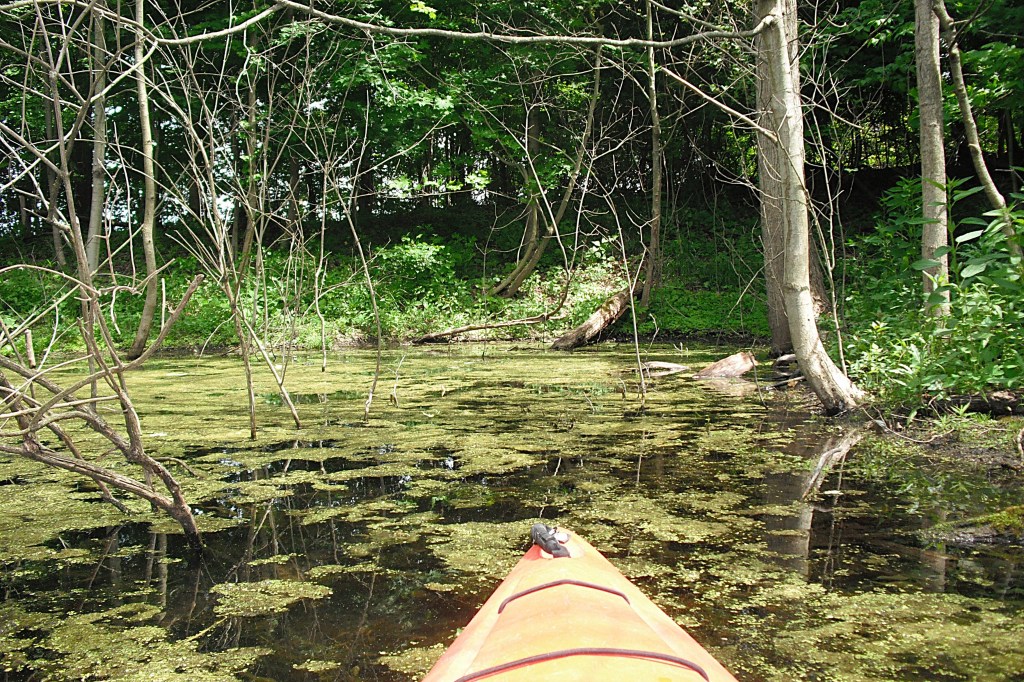
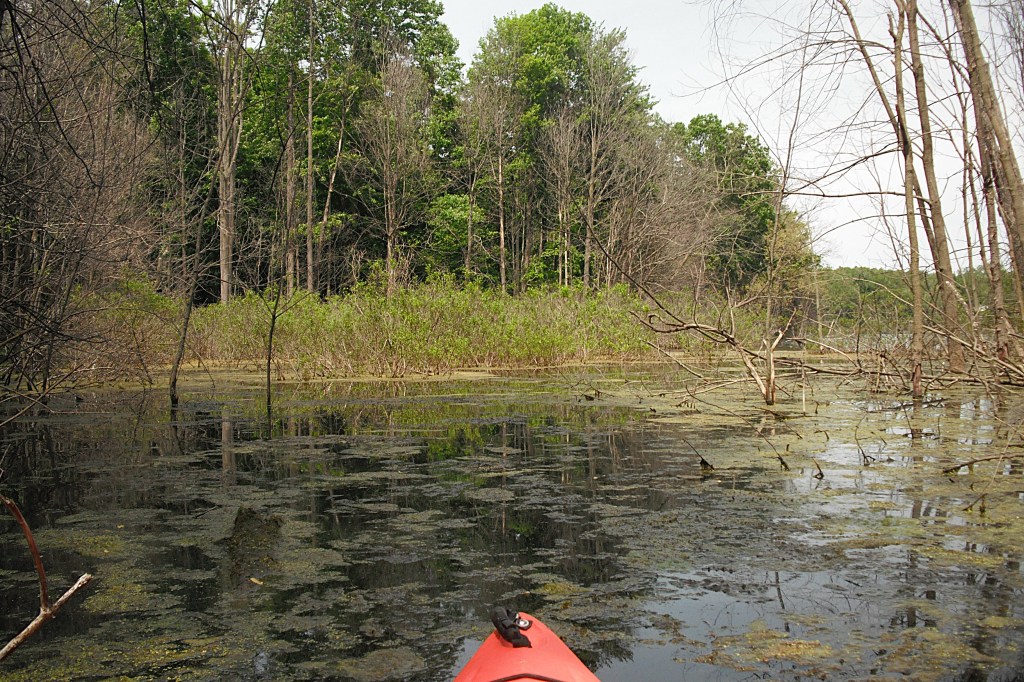
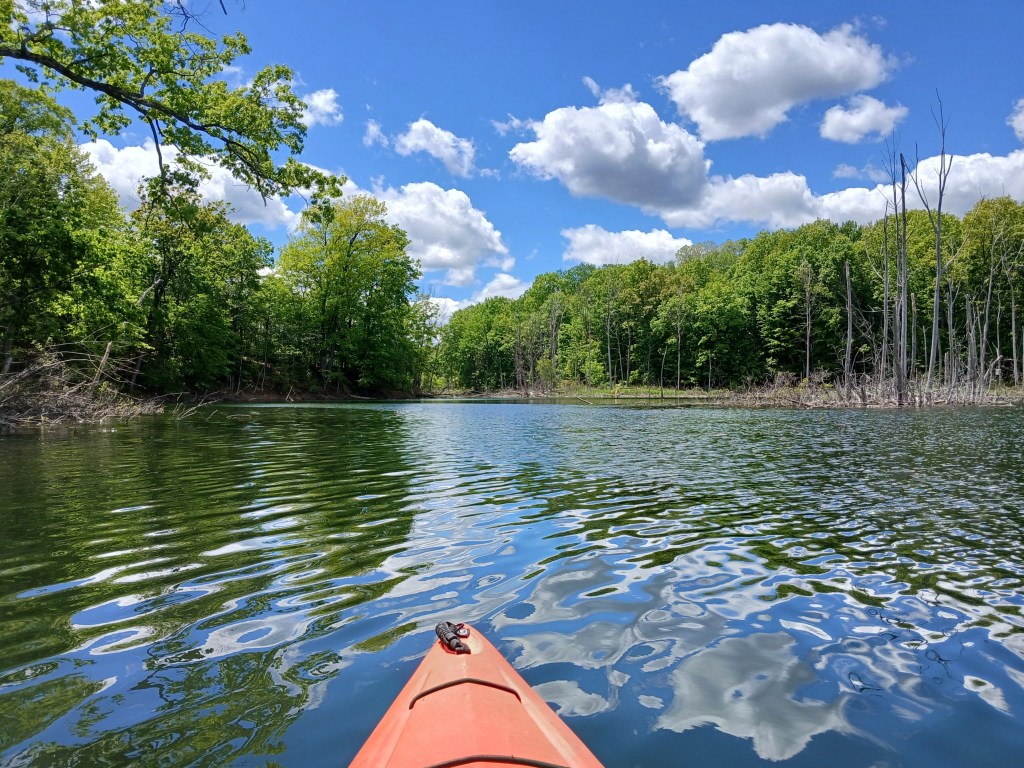
It’s unusual to find a lake that’s mostly undeveloped, yet close to a large urban area. Here’s one last look at Twin Lakes West.

 KAYAKING SOUTHWEST MICHIGAN